Content
All issues / Volume 20 (2026) / Issue 11 (November)
Tamás Tábi
Vol. 20., No.11., Pages 1104-1106, 2026
DOI: 10.3144/expresspolymlett.2026.80
Vol. 20., No.11., Pages 1104-1106, 2026
DOI: 10.3144/expresspolymlett.2026.80
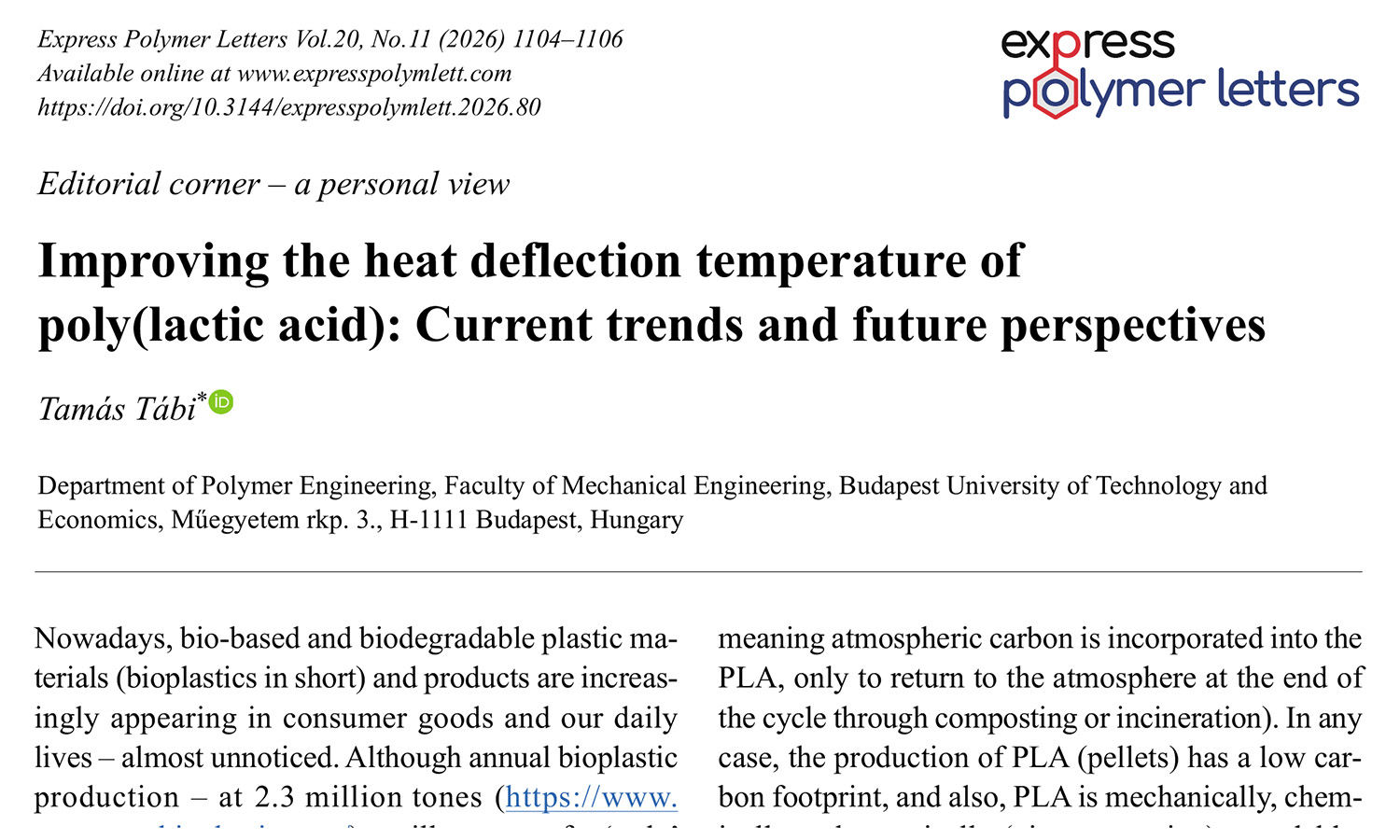
This is an editorial article. It has no abstract.
Chathura Gunarathna Bandara, Suranga Mahesh Rajapaksha, Gayan Adikari Appuhamillage, Gayan Adikari Abeygunawardane, Renuka Nilmini Liyanage
Vol. 20., No.11., Pages 1107-1123, 2026
DOI: 10.3144/expresspolymlett.2026.81
Vol. 20., No.11., Pages 1107-1123, 2026
DOI: 10.3144/expresspolymlett.2026.81
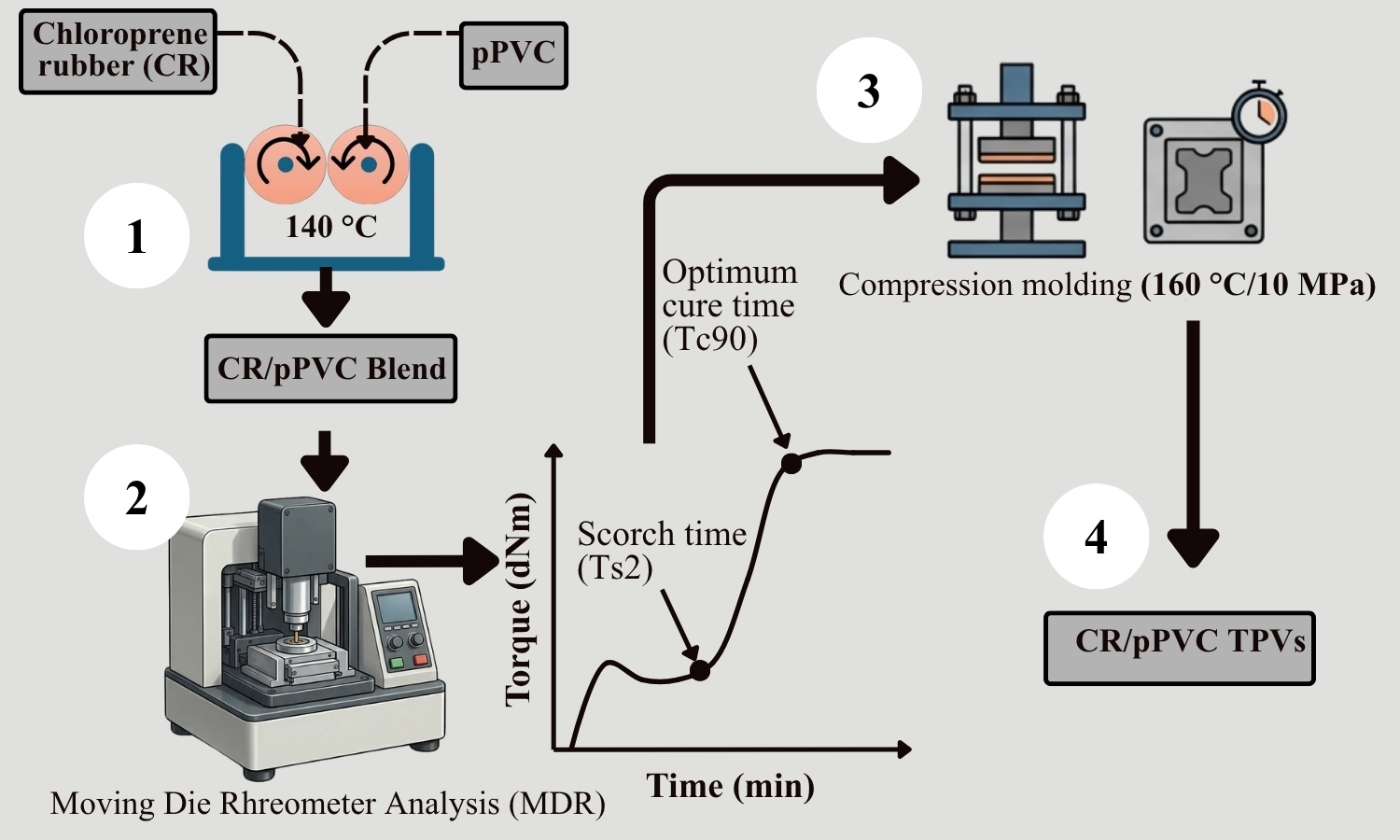
The relationship between composition and mechanical performance in the chloroprene rubber (CR)/dioctyl terephthalate–plasticized poly(vinyl chloride) (pPVC) (CR/pPVC) system remains unexplored. We prepared eleven CR/pPVC compositions by two-roll-mill melt mixing and statically cured the CR phase by compression molding for a compositionspecific time (Tc90), determined by moving die rheometry. Dynamic mechanical analysis of seven compositions confirmed two distinct, phase-separated tanδ relaxations across most of the series; the pPVC-associated relaxation shifted monotonically from 74.5 to 95.4 °C with increasing CR content, while the CR-associated relaxation weakened and became unresolvable at the lowest CR loading. Tensile, flexural, and impact testing showed a progressive transition from rubber- to thermoplasticdominated deformation with increasing pPVC content. Flexural modulus, strength, and energy to peak increased with increasing pPVC, accompanied by reduced strain capacity, pointing to a strength- rather than toughness-dominated energy response. The most pronounced compositional changes occurred across the CR(50):pPVC(50) to CR(20):pPVC(80) range, consistent across tensile, hardness, and dynamic mechanical measurements, marking a shift in the mechanically dominant phase. We show that composition governs mechanical response in this phase-separated CR/pPVC system.
Octavio Maldonado Saavedra, Juan Carlos Núñez Dorantes, Claudia Ivette Rivera Vera, Jonathan Josué Cid Galiot, Roberto Alvarado Juárez, José Roberto Grande-Ramírez, José Ernesto Domínguez Herrera
Vol. 20., No.11., Pages 1124-1144, 2026
DOI: 10.3144/expresspolymlett.2026.82
Vol. 20., No.11., Pages 1124-1144, 2026
DOI: 10.3144/expresspolymlett.2026.82
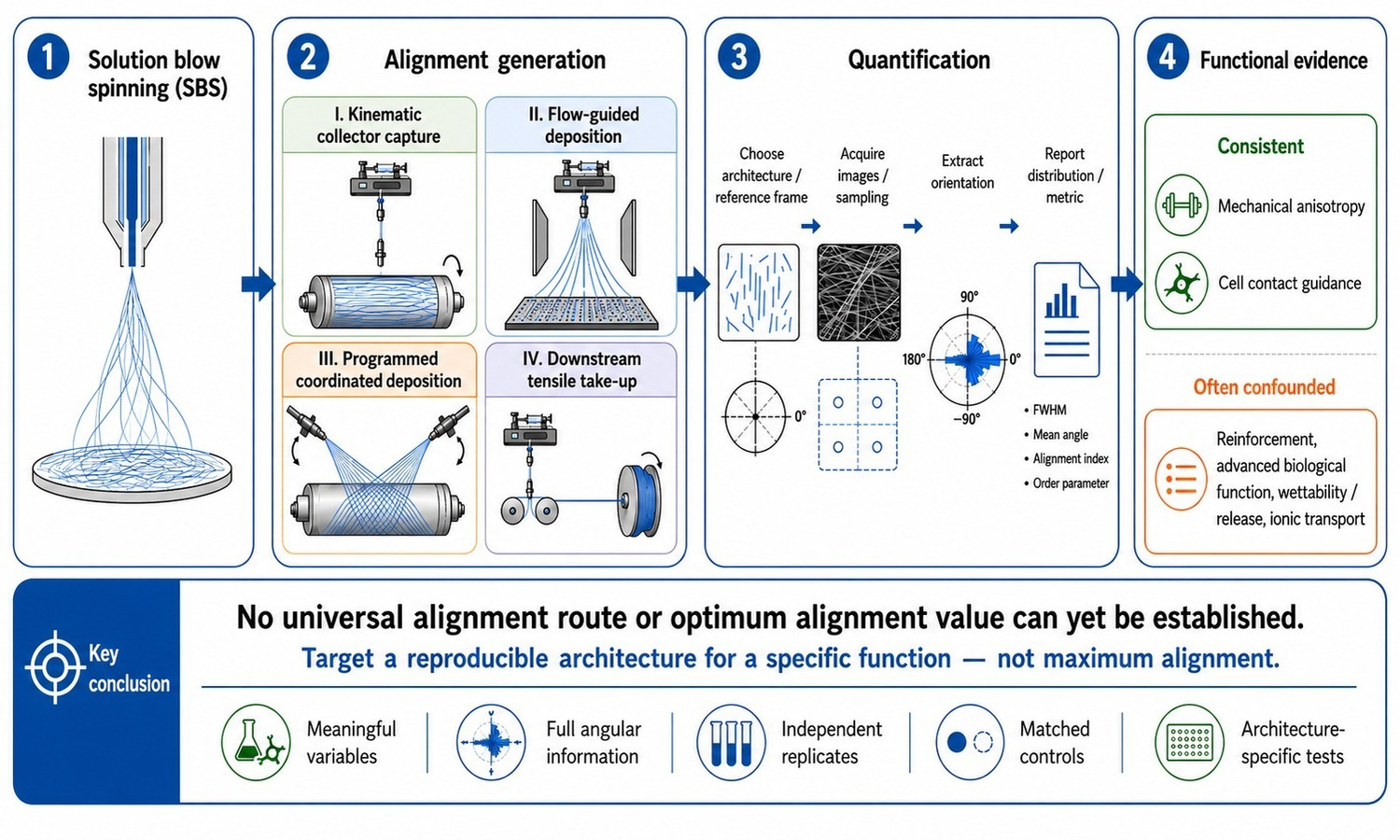
In this systematic scoping review, we critically evaluate the mechanisms, quantification and functional implications of fiber–network alignment in solution blow spinning (SBS). Four mechanisms were identified: kinematic collector capture, flow-guided deposition, programmed coordinated deposition, and downstream tensile take-up after coagulation. These mechanisms generated unidirectional, crossing, helical, radial, multilayer and continuous-bundle architectures. Of the 20 included publications, 12 quantified network orientation using non-equivalent angular conventions and metrics. Mechanical anisotropy and cellular contact guidance currently exhibit the strongest and most consistent functional evidence in SBS. Evidence for absolute reinforcement, advanced biological function, wettability, dissolution, release and ionic transport remains constrained by concurrent variations in fiber diameter, porosity, topology, composition, crystallinity or processing history. The available evidence therefore does not establish a universal alignment mechanism, operating threshold or optimum alignment value. Predictive design requires physically meaningful process variables, complete angular distributions, independent fabrication replicates, matched fibrous controls and architecture-specific functional testing. Fiber alignment should consequently be interpreted as a direction-selective architectural variable whose functional significance depends on the intended application.
Patladda Jerawon, Bencha Thongnuanchan, Subhan Salaeh, Rattanawadee Ninjan, Natinee Lopattananon, Phakawat Tongnuanchan, Tulyapong Tulyapitak, Anoma Thitithammawong, Yeampon Nakaramontri, Suppachai Sattayanurak
Vol. 20., No.11., Pages 1145-1166, 2026
DOI: 10.3144/expresspolymlett.2026.83
Vol. 20., No.11., Pages 1145-1166, 2026
DOI: 10.3144/expresspolymlett.2026.83
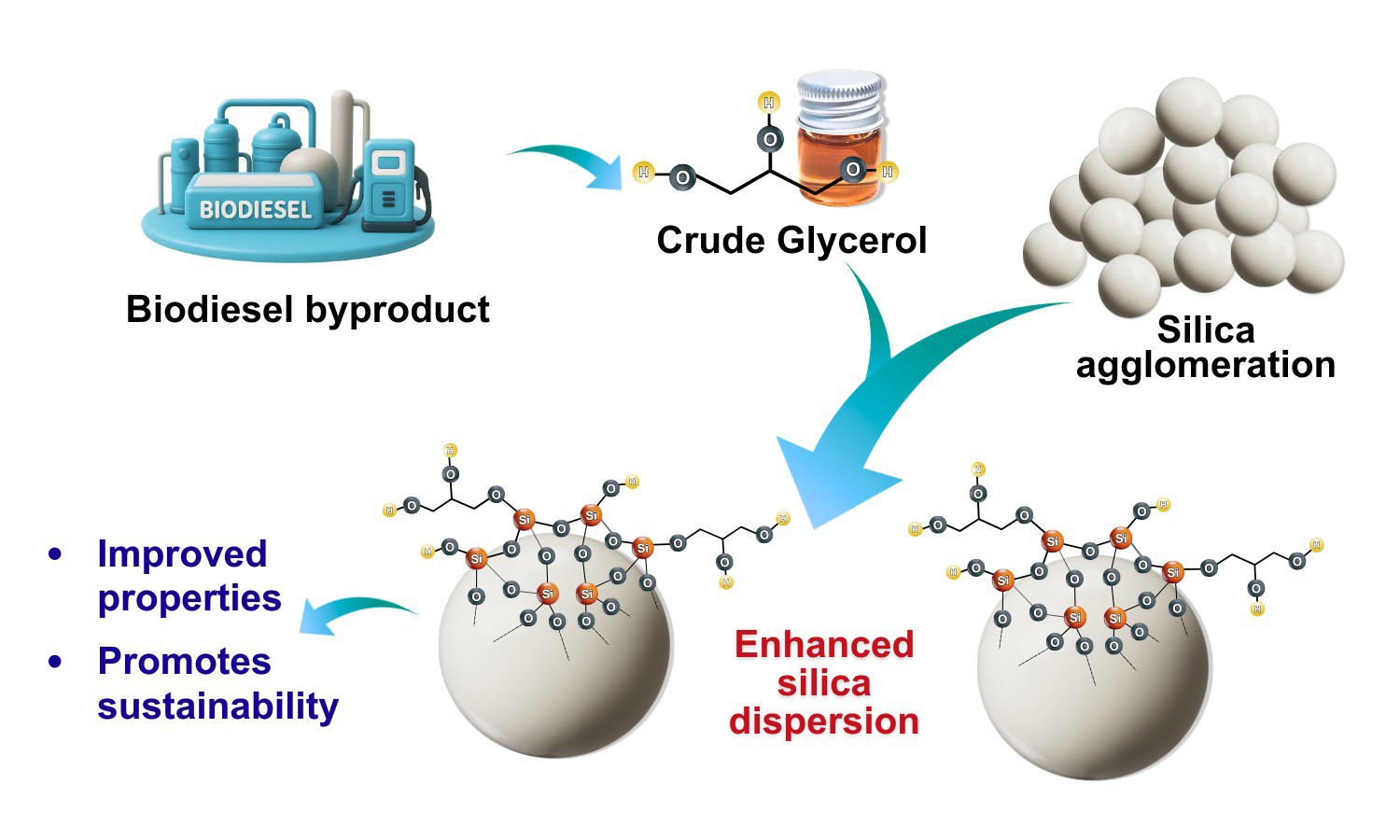
We studied the feasibility of using crude glycerol (CG) as a processing oil in silica-filled natural rubber (NR) compounds. The CG was obtained from biodiesel production and contained ~68 wt% glycerol (Gly). We investigated the properties of silica-filled NR compounds in the presence of CG and compared them to those obtained with the use of treated distillate aromatic extract (TDAE). The results showed that incorporating CG significantly improved both the torque difference and the cure rate index compared with TDAE. This finding suggested complex formation during vulcanization by reactions between the glycerol present in CG and zinc-containing species. We also demonstrated changes in the structure and electronic properties of zinc oxide (ZnO) using X-ray diffraction (XRD) and X-ray photoelectron spectroscopy (XPS) analyses. We attained a decrease in the Payne effect when incorporating either CG or TDAE into the compounds. However, TDAE decreased the mechanical strength of the compounds with increasing oil loading. In contrast, incorporating CG increased the crosslink density of the vulcanizates, with an optimal loading of 10 phr (parts per hundred rubber). CG vulcanizates also showed a lower loss tangent (tan δ) at 60 °C and less heat buildup than those containing TDAE. While TDAE displayed a better plasticizing effect than CG, CG proved to be a multifunctional additive rather than just a processing oil.
Nebiyu Chali Yadeta, Chang-Mou Wu, Mohit Sood, Kebena Gebeyehu Motora, Tsung-Chi-Shen, Jia-Yan Yang
Vol. 20., No.11., Pages 1167-1181, 2026
DOI: 10.3144/expresspolymlett.2026.84
Vol. 20., No.11., Pages 1167-1181, 2026
DOI: 10.3144/expresspolymlett.2026.84
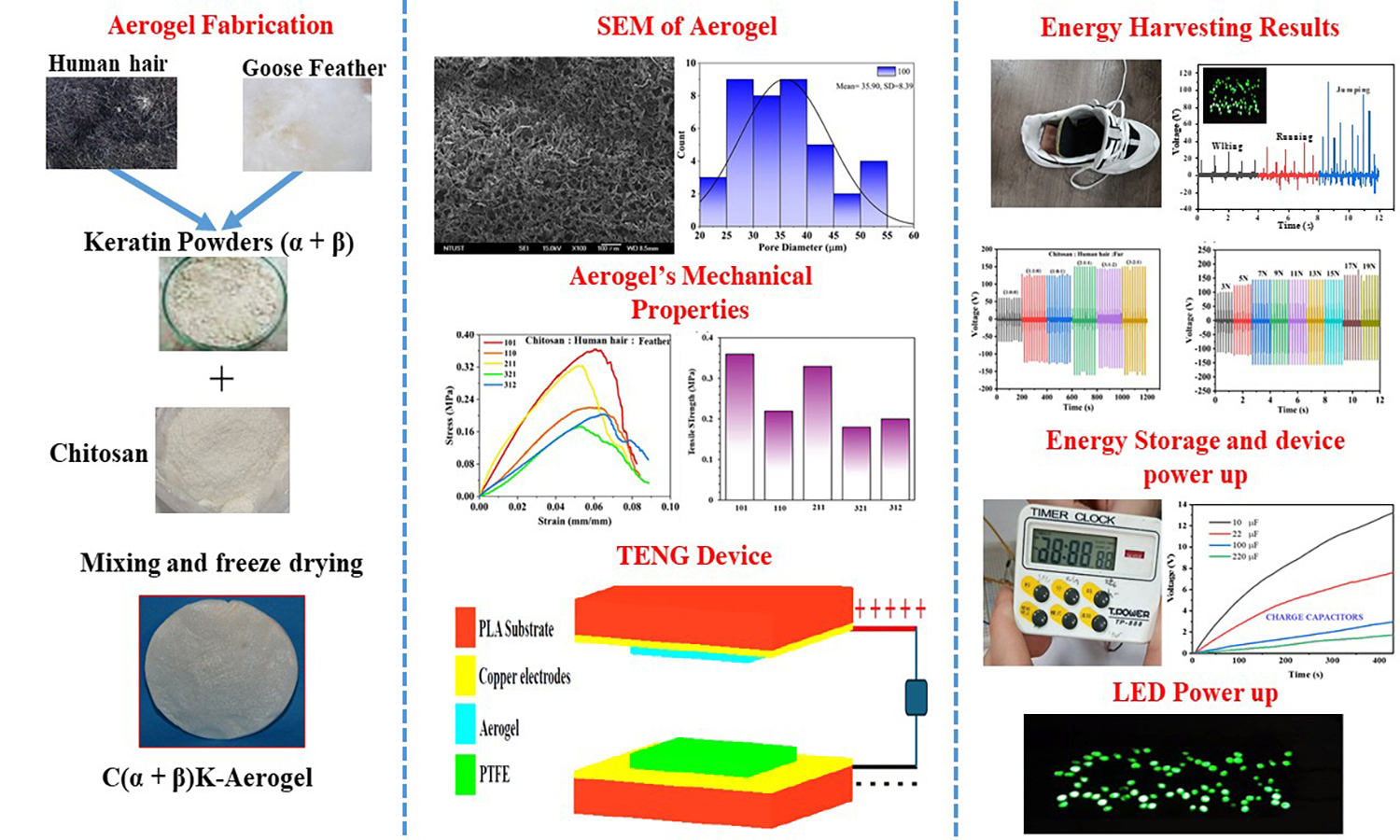
We incorporated hair-derived α-keratin (α-K) and goose feather–derived β-keratin (β-K) into chitosan (CS) to fabricate porous chitosan/α-keratin/β-keratin (CK) aerogels by freeze-drying, and investigated the effects of the α-K/β-K ratio on aerogel structure, mechanical properties and triboelectric performance. At a fixed total keratin content of 50 wt%, the 2:1:1 CS:α-K:β-K weight ratio produced the most favorable combination of a lightweight cellular structure and mechanical robustness. The corresponding triboelectric nanogenerators (TENGs) generated an output voltage of approximately 150 V at 7 N and 5 Hz and had a maximum power density of 5.79 W/m2 at a load resistance of 1·105 Ω. The device also maintained stable output over 12 500 contact–separation cycles and successfully demonstrated mechanical energy harvesting by illuminating 100 LEDs, charging a capacitor, and harvesting energy from human motion. The enhanced performance is attributed to the synergistic contributions of triboelectric-active chemical functionality, lightweight porous architecture, and mechanical robustness.
Fares Dia Eddine Ghorabe, Anna V. Kaplunova, Alexander S. Novikov, Sviatlana A. Ulasevich, Ekaterina I. Kessler Shishatskaya, Ekaterina V. Skorb
Vol. 20., No.11., Pages 1182-1193, 2026
DOI: 10.3144/expresspolymlett.2026.85
Vol. 20., No.11., Pages 1182-1193, 2026
DOI: 10.3144/expresspolymlett.2026.85
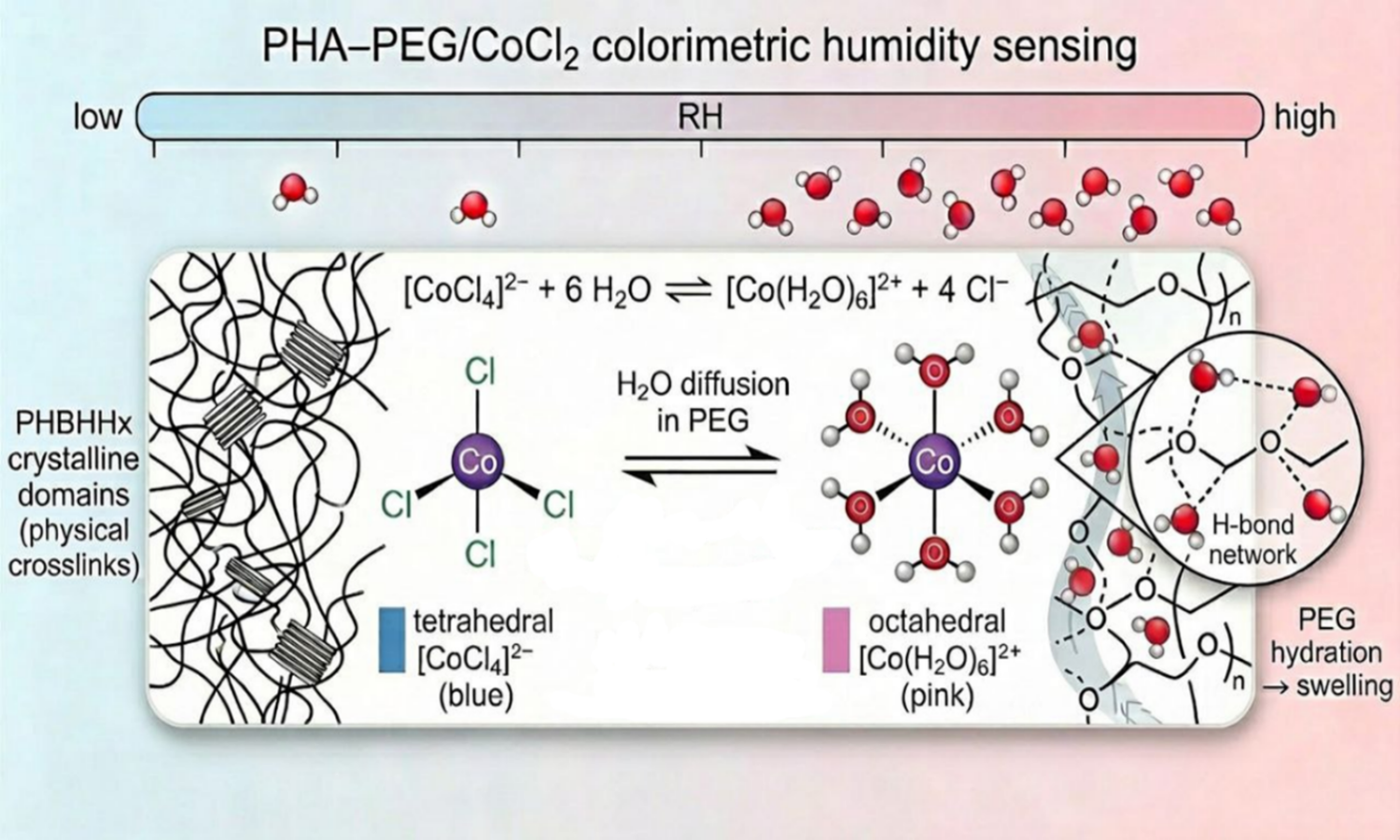
Polymer films that visually indicate environmental humidity are attractive for smart packaging and disposable sensing, but it is challenging to combine strong color contrast, wide humidity range, and biodegradability in a single material platform. We fabricated free-standing humidity-responsive films based on a polyhydroxyalkanoate film (P(3HB-co-3HHx)/PEG) doped with cobalt ions and studied how polymer morphology and coordination environment govern their colorimetric response. Film structure and surface topography were characterized by scanning electron microscopy (SEM) and atomic force microscopy (AFM), while Fourier-transform infrared spectroscopy (FTIR) and UV–vis spectroscopy were used for chemical and optical characterization. DFT calculations were used to correlate polymer–cobalt–solvent interactions with humidity-dependent optical properties. The composite films exhibit a reversible color transition of blue–white–pink across ~11–100% relative humidity, accompanied by a switch in the dominant absorption band from ~655 nm (chloride-rich tetrahedral Co²+ species) to ~520 nm (hydrated octahedral complexes), with PEG rich domains enhancing water uptake and enabling rapid, diffusion-controlled equilibration. Density functional theory (DFT) results suggest that association between PHA and PEG and the stabilization of cobalt complexes in the solvated polymer environment are thermodynamically plausible, consistent with a mechanism in which humidity-driven hydration along PEG pathways reconfigures the Co²+ coordination sphere.
Róbert Gábor Stadler, Gábor Szebényi, Dániel Gere, Richárd Horváth
Vol. 20., No.11., Pages 1194-1206, 2026
DOI: 10.3144/expresspolymlett.2026.86
Vol. 20., No.11., Pages 1194-1206, 2026
DOI: 10.3144/expresspolymlett.2026.86
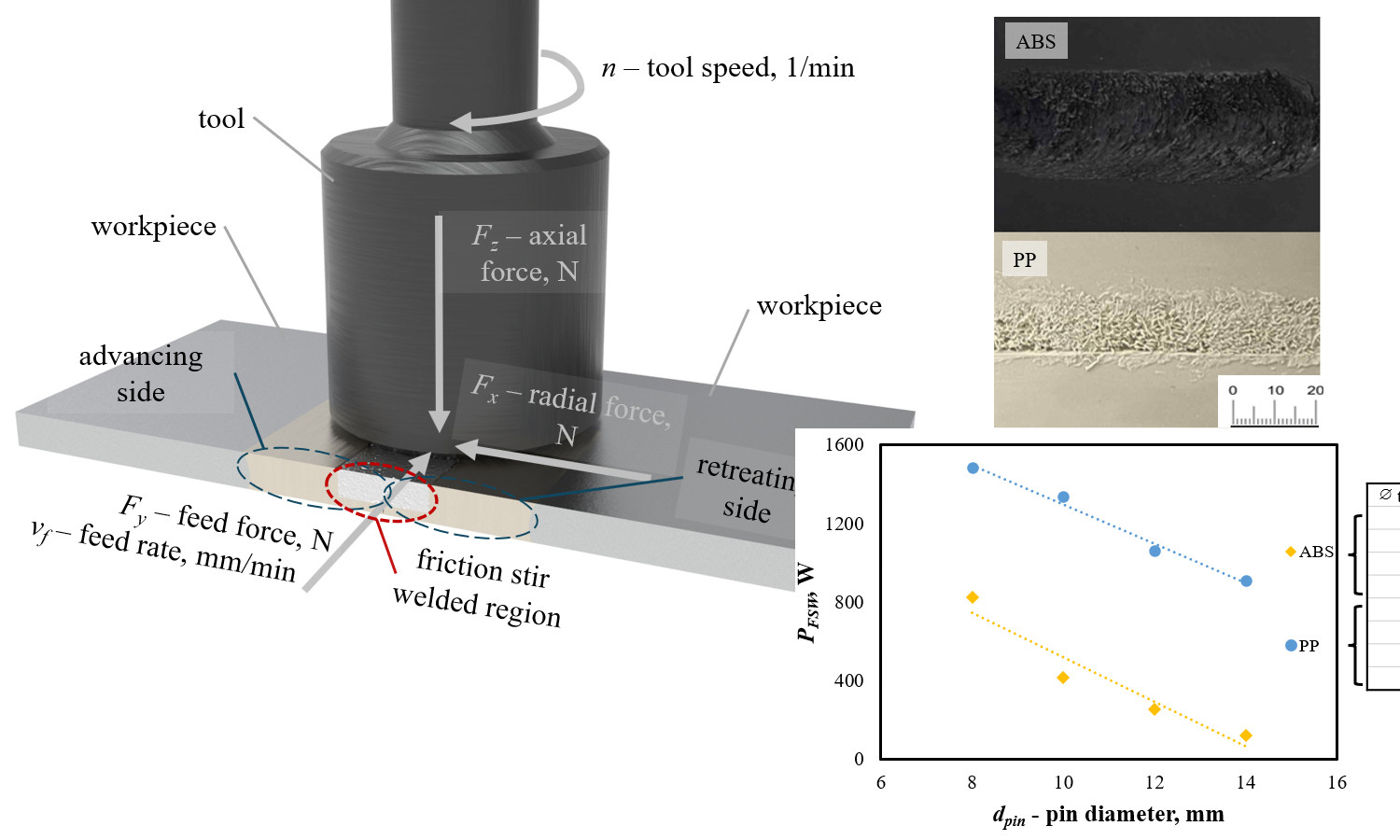
We investigated welding forces and joint strength in friction stir welding of 4 mm thick acrylonitrile butadiene styrene (ABS) and polypropylene (PP) plates using pin diameters of 8–14 mm at constant tangential speed and feed per revolution. We measured three force components, and examined joints by tensile testing, differential scanning calorimetry (DSC) and optical microscopy. PP generated approximately 4.6 times higher welding forces than ABS, consistent with its lower melt flow index (MFI) and melt volume-flow rate (MVR). The highest joint strengths were 10.86 MPa for PP (12 mm pin) and 14.96 MPa for ABS (14 mm pin). DSC revealed a slight decrease in the crystallinity of PP and a small shift in the glass transition temperature of ABS, with no evidence of significant degradation. The estimated volumetric enthalpy requirement of PP was 34–37% higher than that of ABS at 180–200 °C. Microscopy revealed tunnel defects, voids and insufficient root bonding in PP, whereas ABS showed flash formation and weld thinning. These results suggest that the flow behavior of the polymer contributes to welding forces and joint quality.
Kashif Ullah Khan, Ferenc Ronkay, Attila Bata, Andrea Ádámné Major
Vol. 20., No.11., Pages 1207-1227, 2026
DOI: 10.3144/expresspolymlett.2026.87
Vol. 20., No.11., Pages 1207-1227, 2026
DOI: 10.3144/expresspolymlett.2026.87
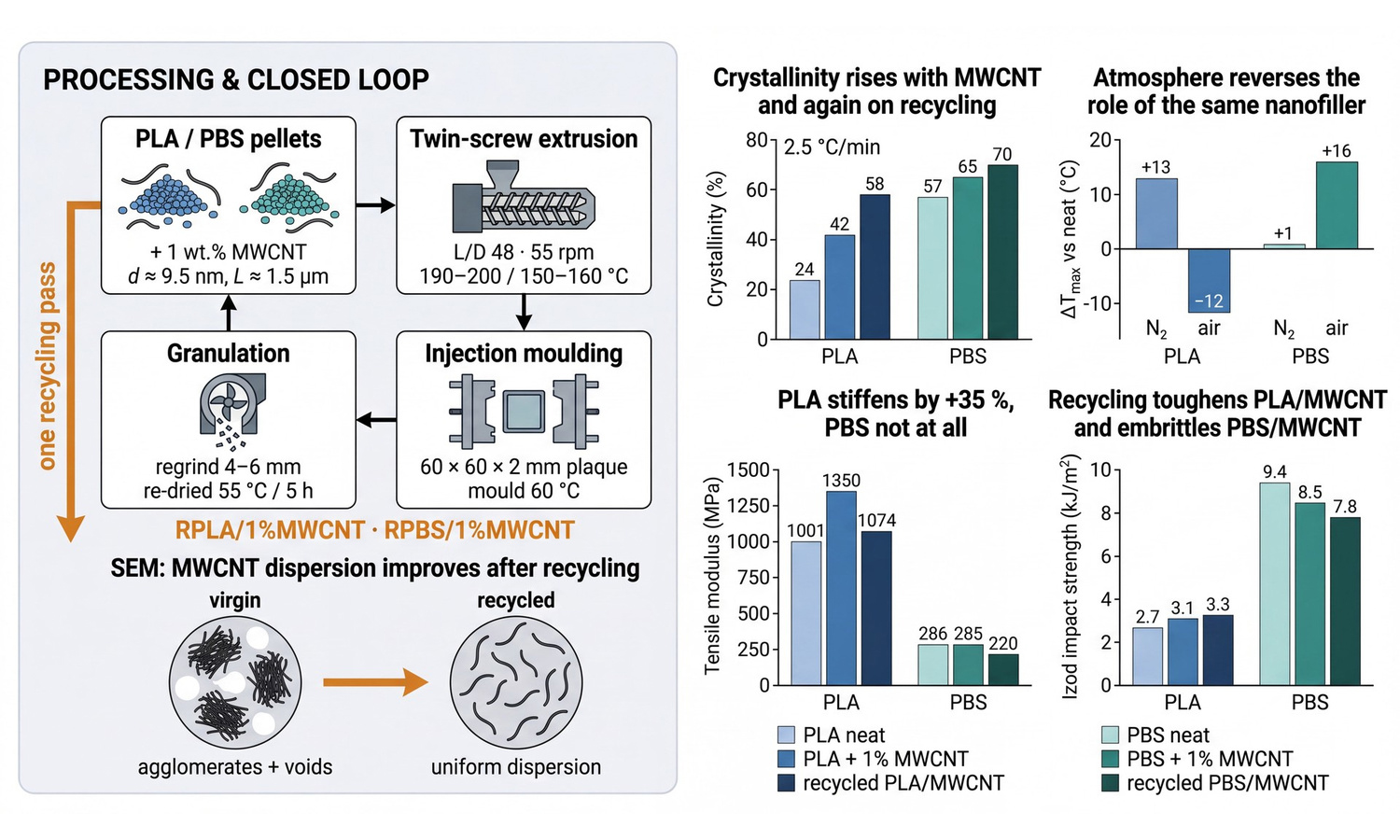
In this study, we compare the effects of 1 wt% multi-walled carbon nanotubes (MWCNTs) and one mechanical recycling pass on the crystallization, thermal stability, melt rheology and mechanical properties of poly(lactic acid) (PLA) and poly(butylene succinate) (PBS). At a cooling rate of 2.5 °C/min, MWCNT increased crystallinity from 24 to 44% in PLA and from 57 to 65% in PBS; recycling increased it further to 58 and 70%, respectively. In nitrogen, MWCNT increased PLA T50 from 344.4 to 356.0 °C, but in air, it reduced T50 from 364.3 to 347.0 °C. In contrast, PBS gained 13–18 °C in oxidative stability. Recycling reduced the apparent zero-shear viscosity from 2880 to 1360 Pa・s for PLA/MWCNT and from 1580 to 1020 Pa・s for PBS/MWCNT, while melt flow rate increased from 31.8 to 43.8 and from 10.8 to 16.2 g/10 min, respectively. MWCNT increased the tensile and flexural moduli of PLA by 35 and 14%, but did not stiffen PBS. Recycling reduced these moduli by 16–20% in PLA/MWCNT and 19–23% in PBS/MWCNT. The elongation at break of PBS increased from 43.4 to 67.2% after the addition of MWCNTs and remained 57.8% after recycling, whereas recycled PLA/MWCNT reached an elongation at break of 8.9%. Scanning electron microscopy (SEM) indicated more homogeneous nanotube dispersion after recycling. These results reveal contrasting matrix-dependent responses to the incorporation of MWCNTs and reprocessing.