Improving the heat deflection temperature of poly(lactic acid): Current trends and future perspectives
Tamás Tábi
Vol. 20., No.11., Pages 1104-1106, 2026
DOI: 10.3144/expresspolymlett.2026.80
DOI: 10.3144/expresspolymlett.2026.80
Corresponding author: Tamás Tábi 
GRAPHICAL ABSTRACT
RELATED ARTICLES
Elena Pikurova, Anatoly Boyandin, Anna Sukhanova, Eugenia Raldugina, Semyon Fesik, Alexandra Mechenis
Vol. 20., No.10., Pages 1053-1071, 2026
DOI: 10.3144/expresspolymlett.2026.77
Vol. 20., No.10., Pages 1053-1071, 2026
DOI: 10.3144/expresspolymlett.2026.77
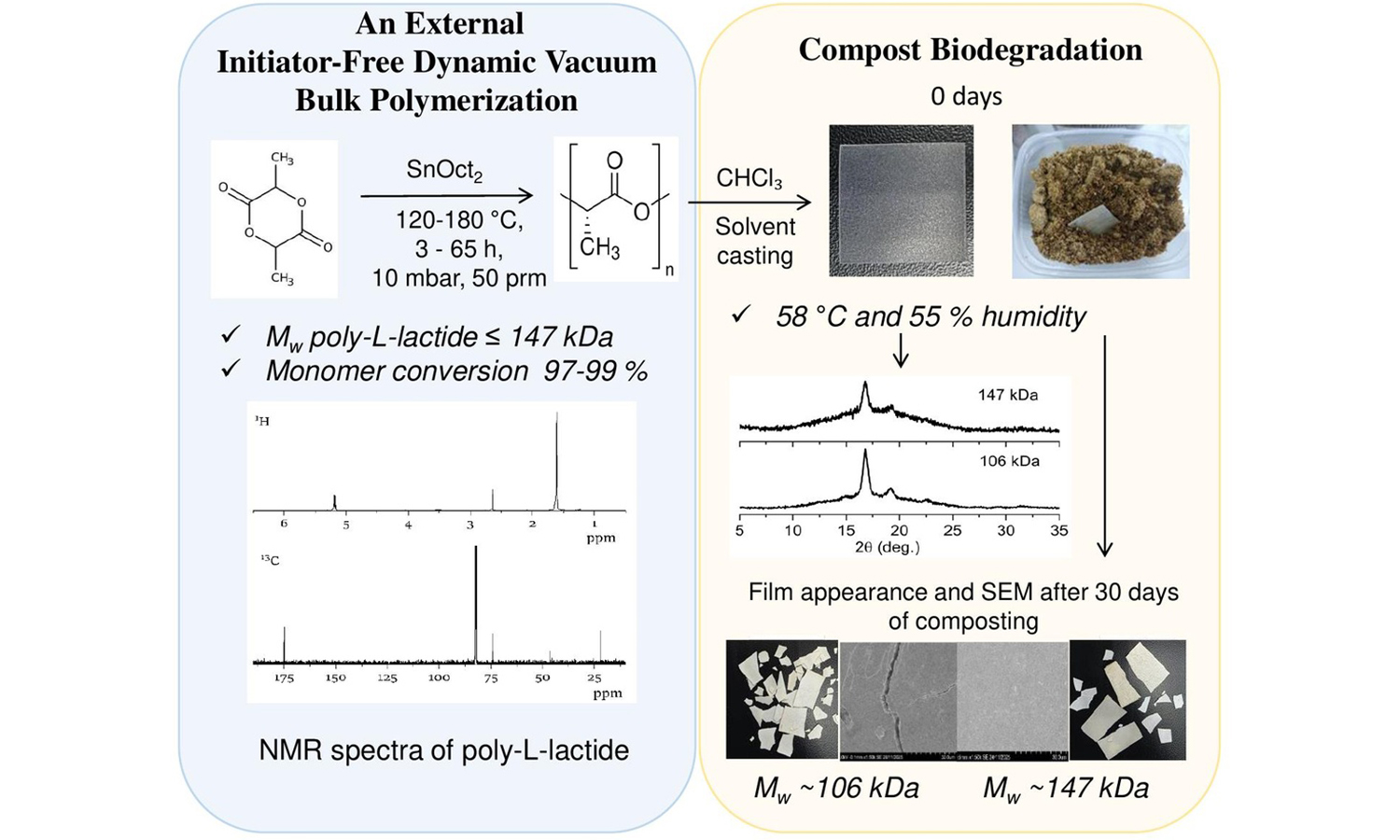
We successfully synthesized poly-L-lactide was via an advanced external initiator-free dynamic vacuum bulk polymerization technique, and achieved precise control of macromolecular weight up to 147 kDa with near-quantitative monomer conversion by varying reaction temperature and duration. Nuclear magnetic resonance spectroscopy confirmed that the stereoregular structure is predominantly preserved during the high-temperature synthesis, while any potential racemization pathways remain beneath the resolution limit of the analytical methods. Thermal analysis verified excellent polymer stability above 300 °C. To evaluate practical applicability, we fabricated solvent-cast films from the synthesized matrices. The tensile test results of the solvent-cast films showed that while the amorphous 147 kDa matrix reached a tensile strength of 28.0 MPa, the structurally optimized 106 kDa film had higher crystallinity (20.6%) and a maximum Young’s modulus of 3047 MPa. Finally, compost biodegradation experiments (58 °C, 55% moisture content) demonstrated that decreasing molecular weight from 147 to 66 kDa accelerates the disintegration rate of films from k = 0.0041 to 0.0083 day–1 due to autocatalytic carboxyl end-groups and defective interspherulitic boundaries.
Anthony Allen Parker, Joseph John Marcinko
Vol. 20., No.9., Pages 885-904, 2026
DOI: 10.3144/expresspolymlett.2026.66
Vol. 20., No.9., Pages 885-904, 2026
DOI: 10.3144/expresspolymlett.2026.66
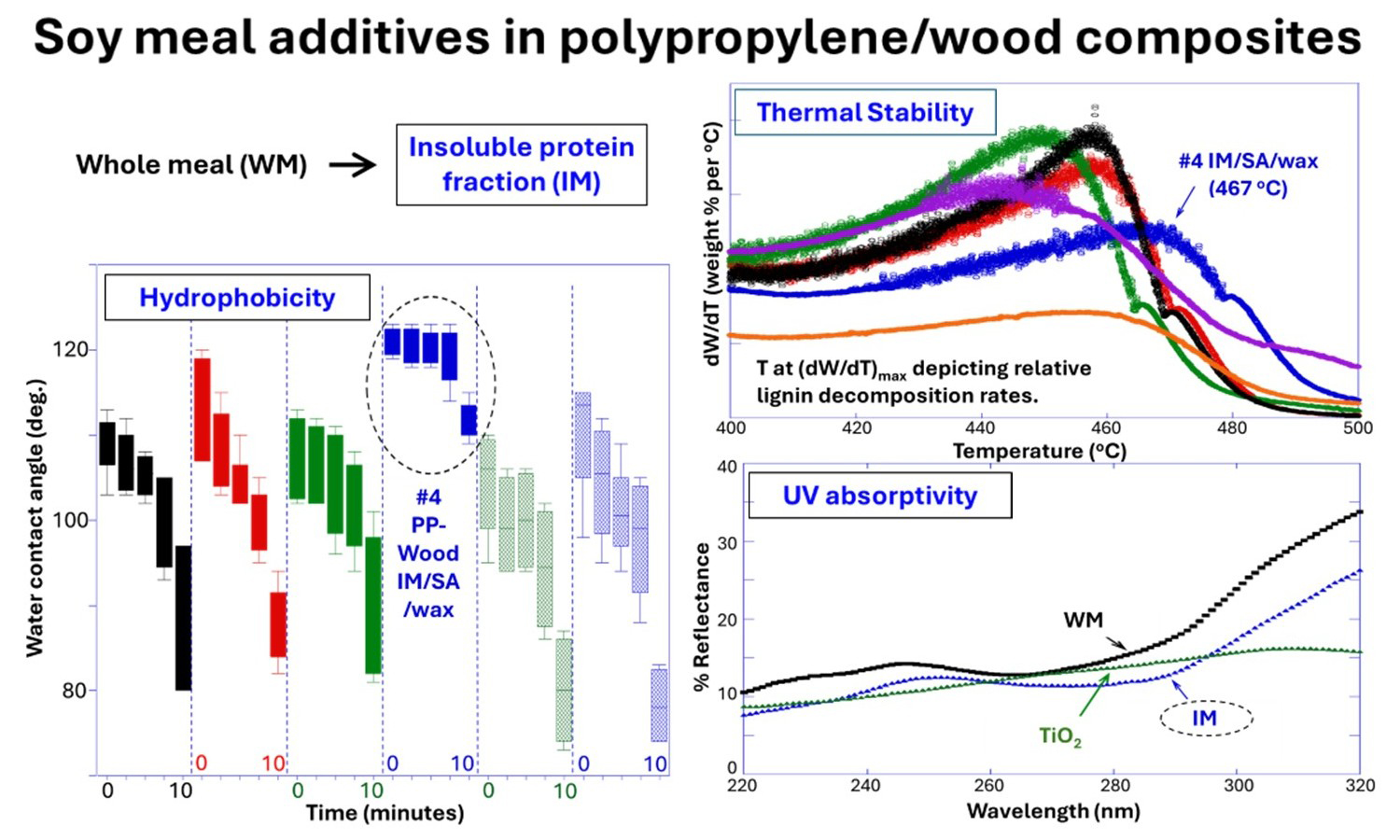
We have discovered that water-insoluble proteins (IM) isolated from whole soy meal (WM) have the capacity to improve the thermal stability of polypropylene (PP) wood composites without negatively impacting mechanical properties. We compared an undiluted composite to composites diluted with 5% by weight of a 3/1 w/w mixture of stearic acid and paraffin wax (SA/wax), 5% by weight IM, 5% by weight WM, 5% by weight of a 50/50 w/w mixture of IM in combination with SA/wax, and 5% by weight WM in combination with SA/wax. Water contact angle (CA) measurements and Fourier transform infrared spectroscopy (FTIR) revealed a synergy between IM and SA/wax, resulting in enhanced surface hydro - phobicity. Thermogravimetric analysis (TGA) showed lower weight loss in composites made with IM up to the onset of the degradation of PP, and reduced rates of lignin degradation, independently of the presence of SA/wax. Dynamic mechanical analysis (DMA) revealed higher modulus and lower viscoelastic loss resulting from the removal of water-soluble soy components from WM. Total reflectance ultraviolet spectroscopy (UV) showed that IM absorbs UV radiation strongly in the UV-B and UV-C regions. Collectively, these findings suggest that IM has the potential to become a multi-purpose additive for use in PP wood composites.
Malgorzata Latos-Brozio, Aleksandra Drzazga, Anna Masek, Zdzisława Mrozińska, Marcin H. Kudzin
Vol. 20., No.7., Pages 742-760, 2026
DOI: 10.3144/expresspolymlett.2026.56
Vol. 20., No.7., Pages 742-760, 2026
DOI: 10.3144/expresspolymlett.2026.56
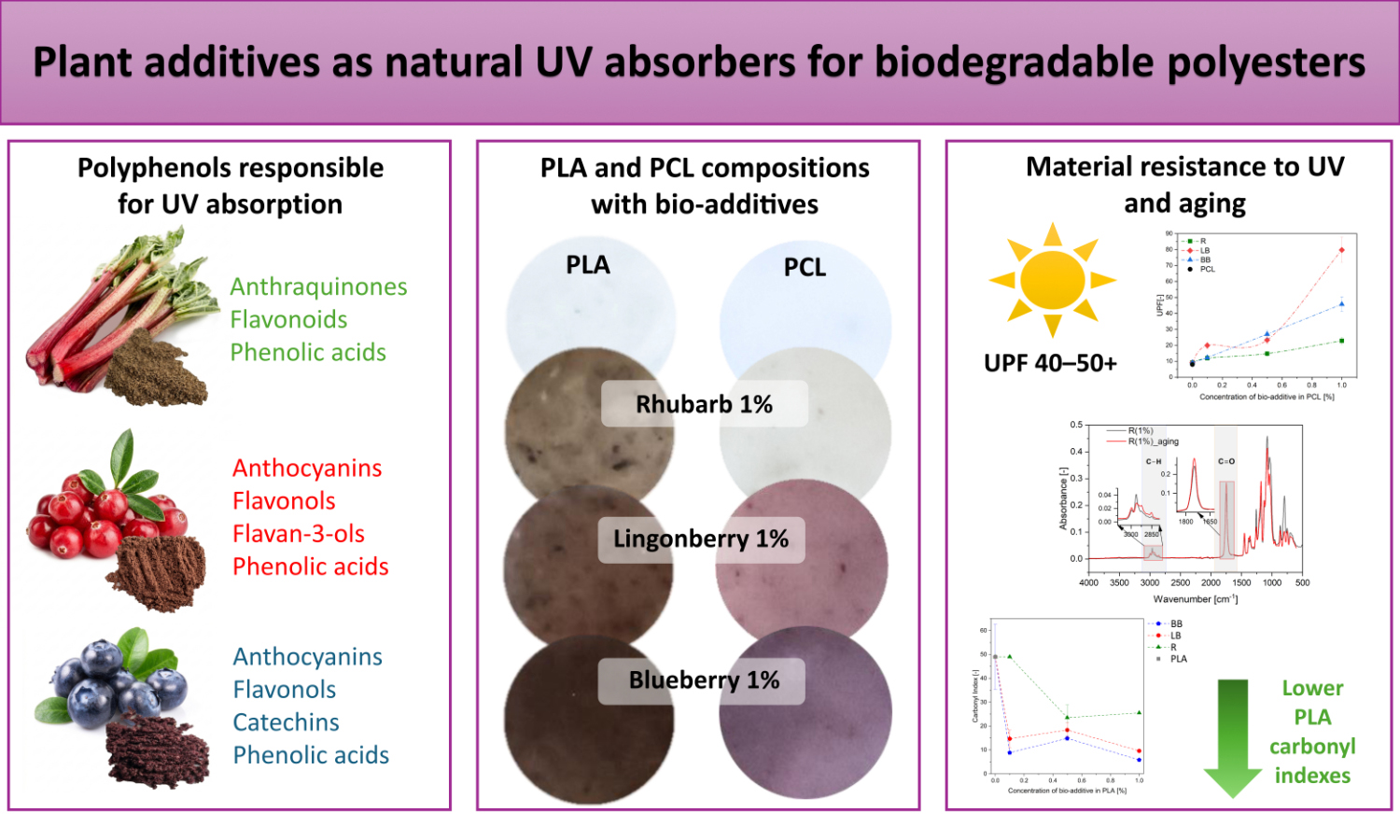
We investigated the effectiveness of plant-based bio-additives – rhubarb, lingonberry, and blueberry (0.1–1%) – as natural UV absorbers in biodegradable polymers polylactide (PLA) and polycaprolactone (PCL). A novelty of this work is the direct use of plant-based raw materials as UV absorbers in polymers. We performed Fourier transformed infrared spectroscopy (FT-IR) and UV-Vis analysis of the bio-additives, determined the ultraviolet protection factor (UPF) for the polymer samples, and evaluated their physicochemical properties (structural changes, colour, hardness, surface energy) after weathering (PLA) and thermo-oxidative (PCL) aging. Spectroscopic tests confirmed the presence of UV-A/UV-B-absorbing chromophores in the additives. Samples with 1% berries had excellent UV protection (UPF 40–50+), while PLA and PCL containing 1% rhubarb had lower UPF values (around 22), indicating good UV blocking properties. After aging, PLA-containing berries showed a significantly lower carbonyl index (CI), indicating reduced photodegradation. For PCL with lingonberry, this additive gave the greatest reduction in thermo-oxidative degradation (lowest CI). All plant additives increased material hardness by acting as nucleating agents; they increased the crystallinity of polyester, and aging further strengthened this effect. Bio-additives, especially berries, can increase the hardness and UV resistance of polymers and limit material aging. These polymer compositions are suitable for packaging materials.
Cláudia Andréa Batista dos Santos, Bartłomiej Kryszak, Rafał Malinowski, Aleksandra Ujćič, Konrad Szustakiewicz
Vol. 20., No.3., Pages 264-278, 2026
DOI: 10.3144/expresspolymlett.2026.21
Vol. 20., No.3., Pages 264-278, 2026
DOI: 10.3144/expresspolymlett.2026.21
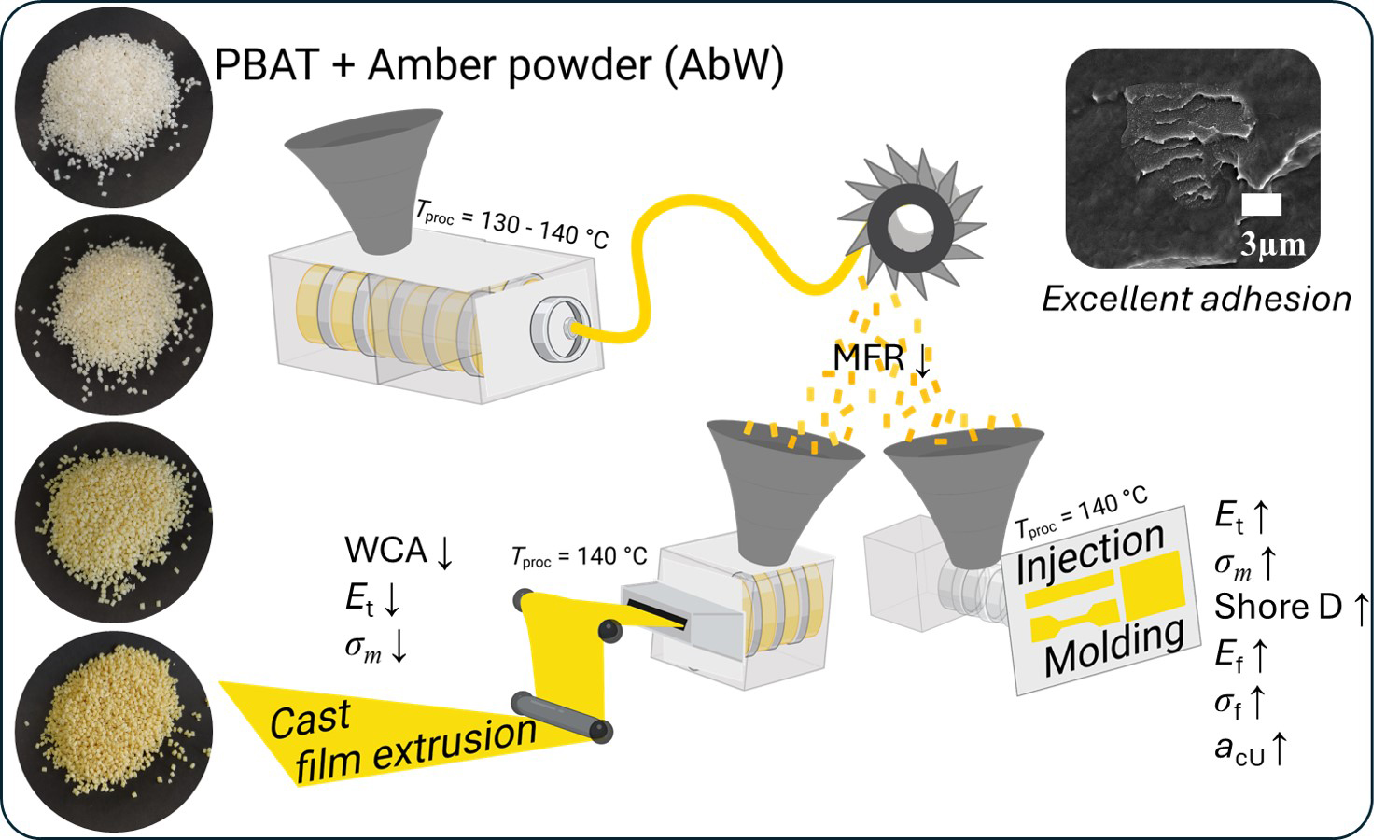
This study investigates the interaction between poly(butylene adipate-co-terephthalate) (PBAT) and amber powdered waste (AbW) from jewelry at different filler concentrations (0, 1, 2.5, and 5 wt%) obtained via melt mixing in a corotating twin screw extruder. The resulting materials were pelletized and processed using two techniques: 1) cast film extrusion and 2) injection molding. The shaped specimens exhibited excellent interfacial adhesion. Thermal behavior, as assessed by Vicat softening temperature (VST), differential scanning calorimetry (DSC), and thermogravimetric analysis (TGA), showed minimal variation among the composites. Despite similar melt flow rate (MFR) values among the samples, the incorporation of AbW affected the behavior of the polymer during cast film extrusion. Consequently, the composite films exhibited lower tensile mechanical parameters (tensile strength, Young’s modulus, stress and strain at break) compared to the neat PBAT film. In turn, the injection molded composites showed improved tensile, flexural, and impact parameters compared to their neat counterpart. Additionally, a slight decrease in water contact angle (WCA) suggested increased surface hydrophilicity of the extruded films. These findings demonstrate the potential of AbW as an additive for biopolymer composites with enhanced mechanical performance. The increased surface hydrophilicity is particularly relevant for applications targeting biocompatibility and biodegradability.
Evangelia Balla, Panagiotis Klonos, Apostolos Kyritsis, Dimitrios Bikiaris
Vol. 20., No.2., Pages 154-167, 2026
DOI: 10.3144/expresspolymlett.2026.13
Vol. 20., No.2., Pages 154-167, 2026
DOI: 10.3144/expresspolymlett.2026.13
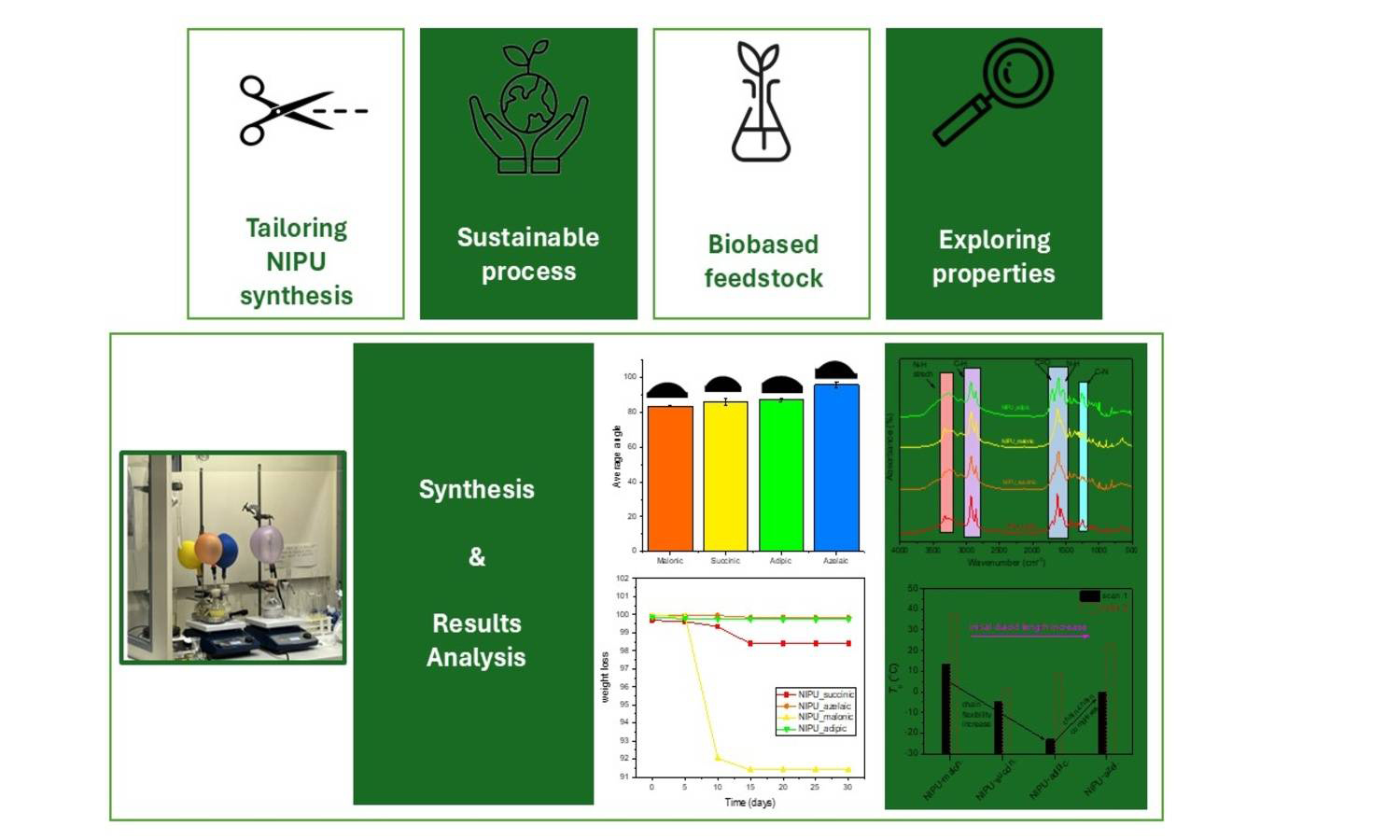
In recent decades, numerous efforts have been dedicated to the investigation of eco-friendly non-isocyanate polyurethanes (NIPUs) as alternatives to conventional polyurethanes (PUs). Since isocyanates are classified by the EU as hazardous and toxic compounds, NIPUs offer a promising route to mitigate isocyanate-related health risks as well as other environmental concerns associated with traditional PU synthesis. In the present study, we report the synthesis as well as the detailed structural and thermal characterization of a new series of fully biobased non-isocyanate polyurethanes (NIPUs) based on aliphatic dicarboxylic acids of different chain lengths. The NIPUs were prepared via a two-step polyaddition reaction involving glycerol carbonate and diamine. Their synthesis enables a sustainable pathway to tailor NIPUs’ physicochemical properties via diacid structure control. Studies of their structure, thermal behavior and trends, morphological, and hydrolytic findings confirmed strong diacid chain length dependence on glass transition temperature (Tg ~13, 0, ‒5 and –23 °C), molecular weight, surface wettability, and enzymatic degradability. Short-chain diacids yielded NIPUs with rapid hydrolytic degradation, while their longer-chain analogs were hydrophobic and thermally stable. Contact angle measurements (~75–85°) also confirm these trends. The tunable properties position these materials among strong candidates for biomedical applications.