Latest issue
All issues / Volume 20 (2026) / Issue 9 (September)
Bence Szederkényi, Norbert K. Kovács, Tibor Czigány
Vol. 20., No.9., Pages 868-869, 2026
DOI: 10.3144/expresspolymlett.2026.64
Vol. 20., No.9., Pages 868-869, 2026
DOI: 10.3144/expresspolymlett.2026.64
This is an editorial article. It has no abstract.
Javaria Kanwal, Sara Musaddiq, Duncan H. Gregory, Alishba Naz, Sajjad Ahmad, Sadia Iqbal, Saikh Mohammad Wabaidur, Ayman A. Ghfar
Vol. 20., No.9., Pages 870-884, 2026
DOI: 10.3144/expresspolymlett.2026.65
Vol. 20., No.9., Pages 870-884, 2026
DOI: 10.3144/expresspolymlett.2026.65
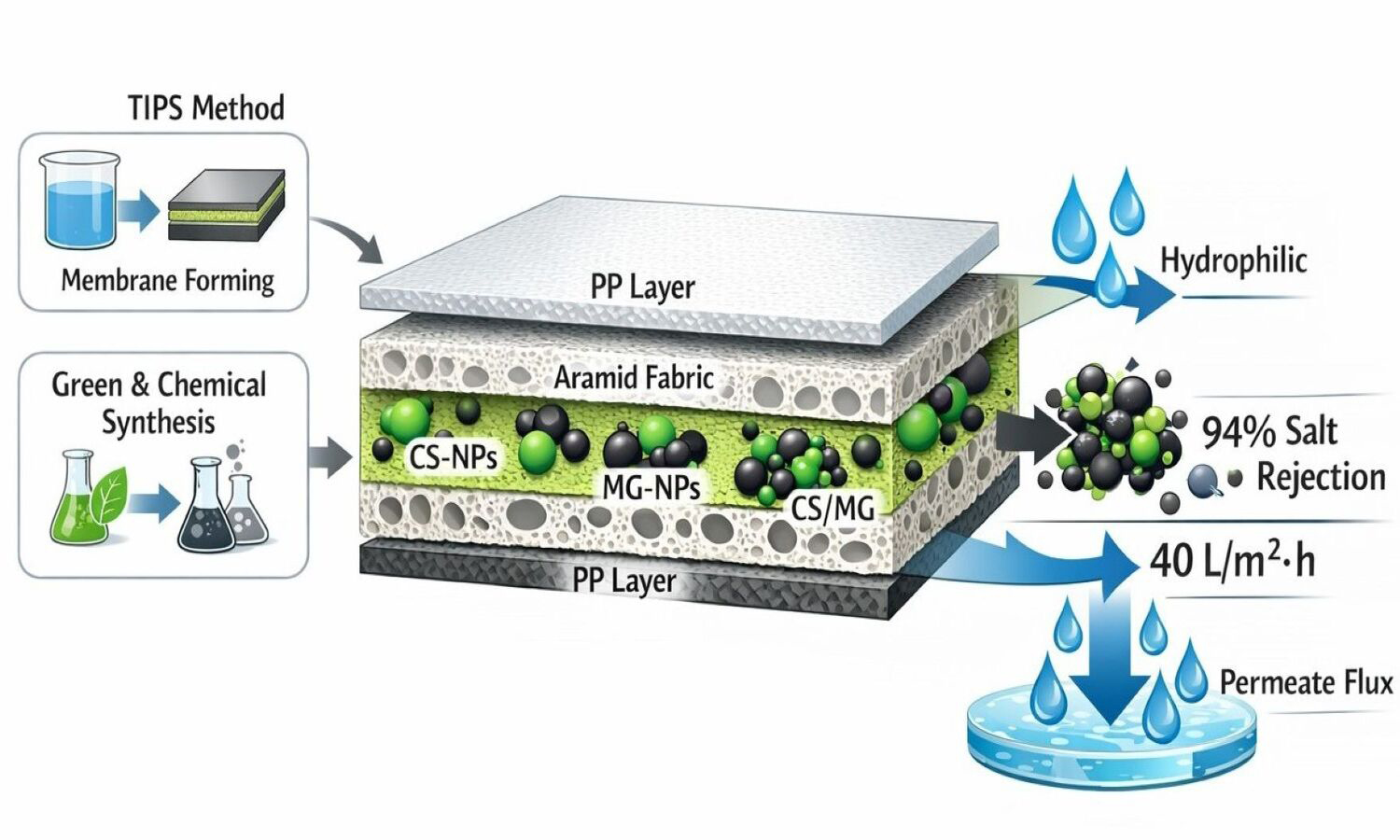
We developed nanomaterial-functionalized composite membranes (APM-1 to APM-3) using aramid fabric enclosed between two isotactic polypropylene (PP) layers. Membranes were created and porosity was produced within the structure by thermally induced phase separation (TIPS). The embedded nanomaterials, chitosan nanoparticles (CS-NPs) and magnetite nanoparticles (MG-NPs), were prepared via green routes, while chitosan/magnetite (CS/MG) nanocomposites were synthesized chemically. The formation of CS-NPs, MG-NPs, and CS/MG nanocomposites was confirmed through UV/visible spectroscopy. Moreover, the crystallite size of the nanomaterials was estimated with the use of X-ray diffraction (XRD) analysis. We also used Fourier transform infrared microscopy (FTIR) to ensure the successful integration of nanomaterials into the membrane matrix. The surface morphologies were observed and the presence of micropores was confirmed in the membranes by scanning electron microscopy (SEM). Mechanical analysis showed that the fabricated membranes have excellent structural integrity and durability under operational conditions. Contact angle measurements confirmed the enhanced hydrophilicity of the modified membranes, which plays a crucial role in improving water transport and desalination performance. The salt rejection and flux characteristics of the membranes were tested in a custom-made filtration cell. Our results revealed that APM-3, functionalized with CS/MG nanocomposites, exhibited a 94% desalination efficiency against NaCl with a high permeate flux rate of 40.00 L/(m2·h). The outstanding stability and hydrophilicity of our novel composite membranes, coupled with their remarkable efficiency, make them an ideal choice for desalination.
Anthony Allen Parker, Joseph John Marcinko
Vol. 20., No.9., Pages 885-904, 2026
DOI: 10.3144/expresspolymlett.2026.66
Vol. 20., No.9., Pages 885-904, 2026
DOI: 10.3144/expresspolymlett.2026.66
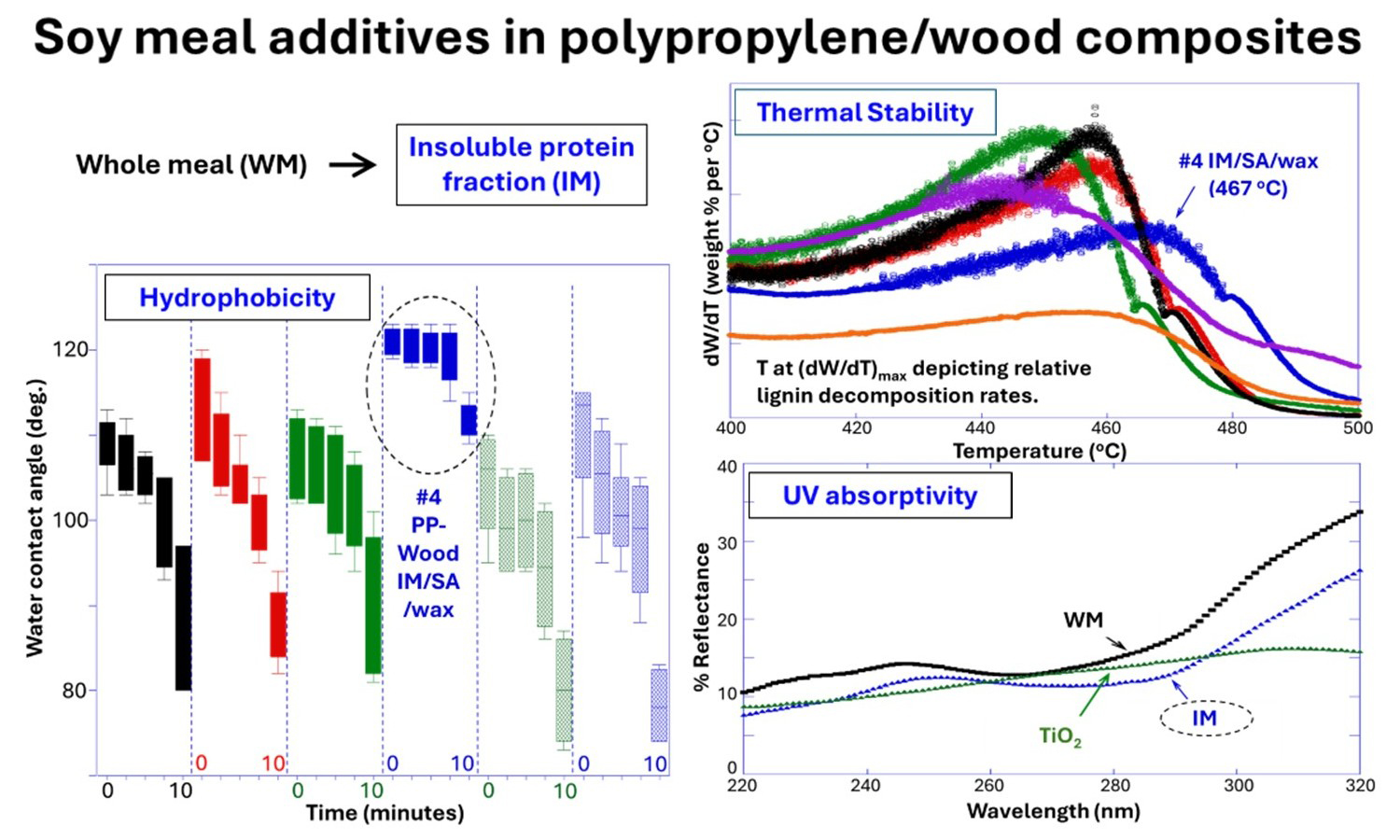
We have discovered that water-insoluble proteins (IM) isolated from whole soy meal (WM) have the capacity to improve the thermal stability of polypropylene (PP) wood composites without negatively impacting mechanical properties. We compared an undiluted composite to composites diluted with 5% by weight of a 3/1 w/w mixture of stearic acid and paraffin wax (SA/wax), 5% by weight IM, 5% by weight WM, 5% by weight of a 50/50 w/w mixture of IM in combination with SA/wax, and 5% by weight WM in combination with SA/wax. Water contact angle (CA) measurements and Fourier transform infrared spectroscopy (FTIR) revealed a synergy between IM and SA/wax, resulting in enhanced surface hydro - phobicity. Thermogravimetric analysis (TGA) showed lower weight loss in composites made with IM up to the onset of the degradation of PP, and reduced rates of lignin degradation, independently of the presence of SA/wax. Dynamic mechanical analysis (DMA) revealed higher modulus and lower viscoelastic loss resulting from the removal of water-soluble soy components from WM. Total reflectance ultraviolet spectroscopy (UV) showed that IM absorbs UV radiation strongly in the UV-B and UV-C regions. Collectively, these findings suggest that IM has the potential to become a multi-purpose additive for use in PP wood composites.
Bokome Shaku, Reagan L. Mohlala, Kabelo B. Dilebo, Tshwafo E. Motaung
Vol. 20., No.9., Pages 905-922, 2026
DOI: 10.3144/expresspolymlett.2026.67
Vol. 20., No.9., Pages 905-922, 2026
DOI: 10.3144/expresspolymlett.2026.67
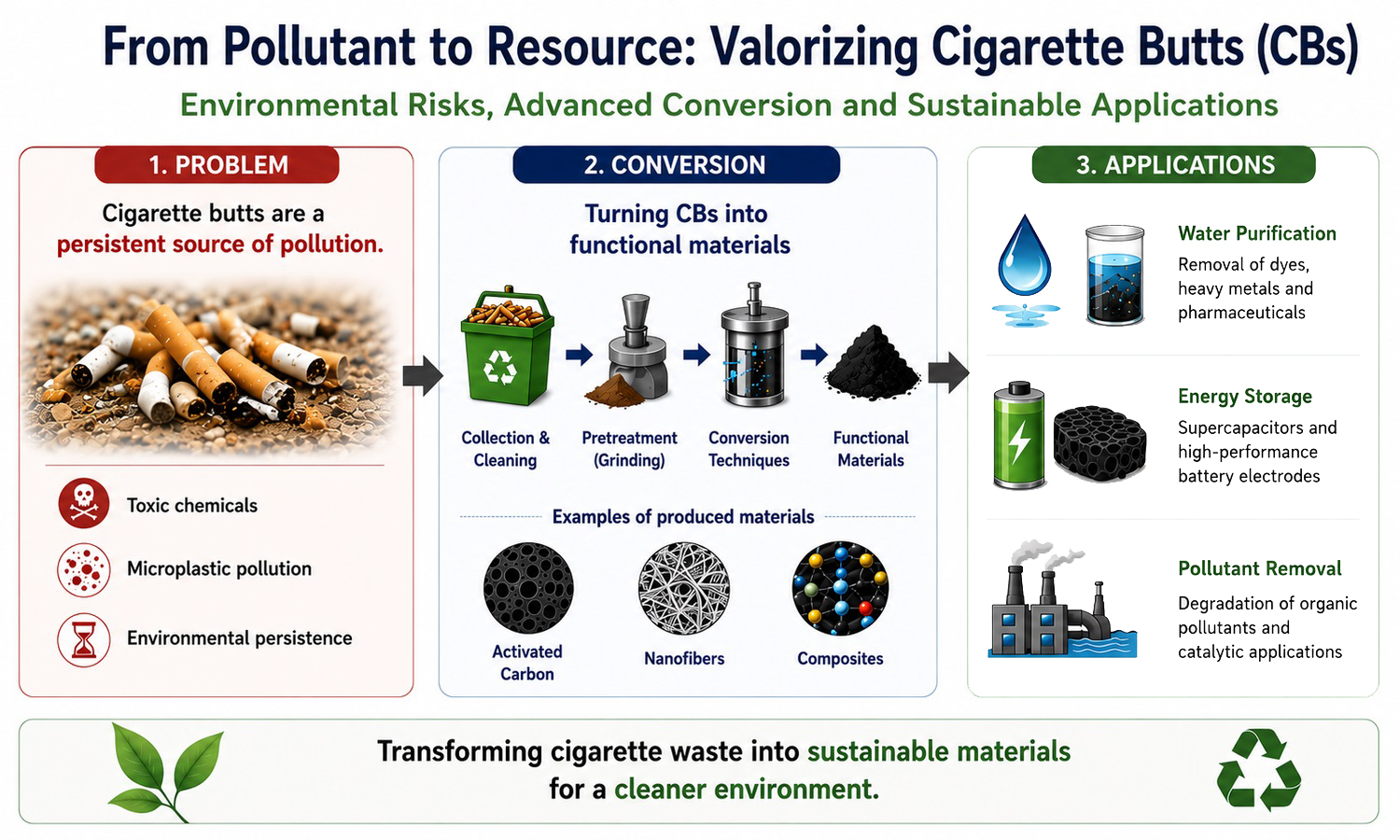
Cigarette butts (CBs) are among the most abundant forms of anthropogenic litter worldwide and constitute a persistent source of environmental contamination due to their slow degradation and the release of toxic substances into terrestrial and aquatic ecosystems. This review critically evaluates recent advances in the valorisation of CB waste into value-added functional materials. Particular attention is given to conversion strategies including chemical activation, electrospinning, hydrothermal processing, and nanocomposite fabrication. These approaches enable the production of activated carbons, cellulose-derived nanomaterials, and metal-doped composites with promising applications in water purification, energy storage, vector control, and pollutant remediation. The underlying mechanisms, performance, scalability, and sustainability of these technologies are discussed. Finally, current challenges, research gaps, and future opportunities of large-scale implementation are highlighted. Collectively, the findings demonstrate that CBs can be re-envisioned not only as a persistent environmental pollutant but also as valuable secondary resources that support circular economy and sustainable material development strategies.
Andrea Kohári, Tamás Bárány
Vol. 20., No.9., Pages 923-938, 2026
DOI: 10.3144/expresspolymlett.2026.68
Vol. 20., No.9., Pages 923-938, 2026
DOI: 10.3144/expresspolymlett.2026.68

The virgin polymer content of thermoplastic polyurethane (TPU) can be reduced with the use of recycled tire rubber, but blend properties strongly depend on the structure of the rubber phase. In this study, we compared TPU-based compounds containing ground tire rubber (GTR), devulcanized GTR (dGTR) and dynamically revulcanized dGTR in terms of mechanical and rheological behavior. GTR-filled blends showed higher tensile strength at the same rubber content, whereas dGTR-containing blends exhibited higher elongation at break up to 40 wt% rubber. Among the thermoplastic dynamic vulcanizates, peroxide-cured blends provided higher tensile strength, higher elongation at break and lower compression set than sulfur-cured blends. The rubber phase also strongly affected melt rheology: dGTR-containing blends showed higher storage modulus (G′) and complex viscosity (η*) than the corresponding GTR-filled blends over the entire frequency range. In contrast, there were only minor rheological differences between sulfur- and peroxide-cured systems, indicating that rubber content had a stronger effect on melt behavior than the curing system. The novelty of this study is the direct comparison of GTR, dGTR and dynamically revulcanized dGTR within the same TPU matrix, showing how the breakdown and partial rebuilding of the recycled rubber network can be used to tune both solid-state properties and melt processability in TPU compounds with high recycled content.
János Molnár, Pavel Shutov, Renate Eckmayr, Jingbo Wang, Vasileios Touloupidis, Markus Gahleitner
Vol. 20., No.9., Pages 939-954, 2026
DOI: 10.3144/expresspolymlett.2026.69
Vol. 20., No.9., Pages 939-954, 2026
DOI: 10.3144/expresspolymlett.2026.69
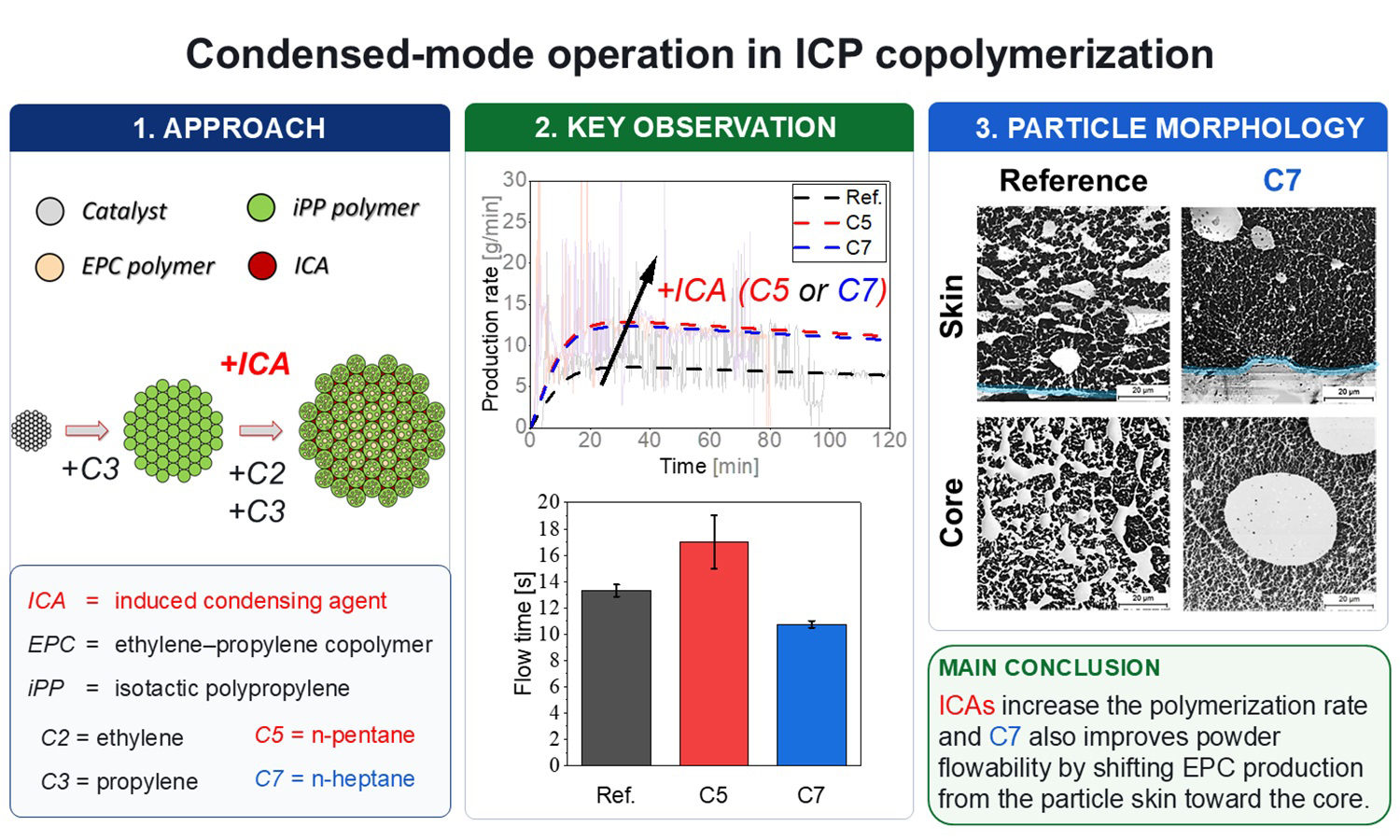
Elastomeric ethylene–propylene copolymer (EPC) content is a decisive factor in the impact performance of multiphase polypropylene (PP) impact copolymers (ICPs). However, producing PP ICPs with high EPC content remains challenging because increasing EPC content raises powder stickiness, potentially leading to production problems such as fouling or sheeting. Condensed mode operation with an induced condensing agent (ICA) has recently been proposed to reduce stickiness and improve flowability. In this study, we performed bench-scale PP ICP polymerizations with n-pentane (C5) or n-heptane (C7) as ICAs to assess this approach. Both ICAs enhanced monomer solubility and the polymerization rate through co-solubility. At high EPC content, C7 improved powder flowability, whereas C5 gave stickiness comparable to or greater than that of the reference. Atomic force microscopy revealed that C7 shifted the dispersed EPC phase toward the particle core, explaining the improved flowability. In contrast to literature reports, ethylene response and EPC comonomer distribution remained unchanged. Consequently, mechanical and thermal properties were unaffected. Condensed-mode operation may therefore offer benefits only when specific ICAs, such as C7, are used in substantial amounts, limiting practical applicability because of additional purification costs.
Daria Bożejewicz
Vol. 20., No.9., Pages 955-970, 2026
DOI: 10.3144/expresspolymlett.2026.70
Vol. 20., No.9., Pages 955-970, 2026
DOI: 10.3144/expresspolymlett.2026.70
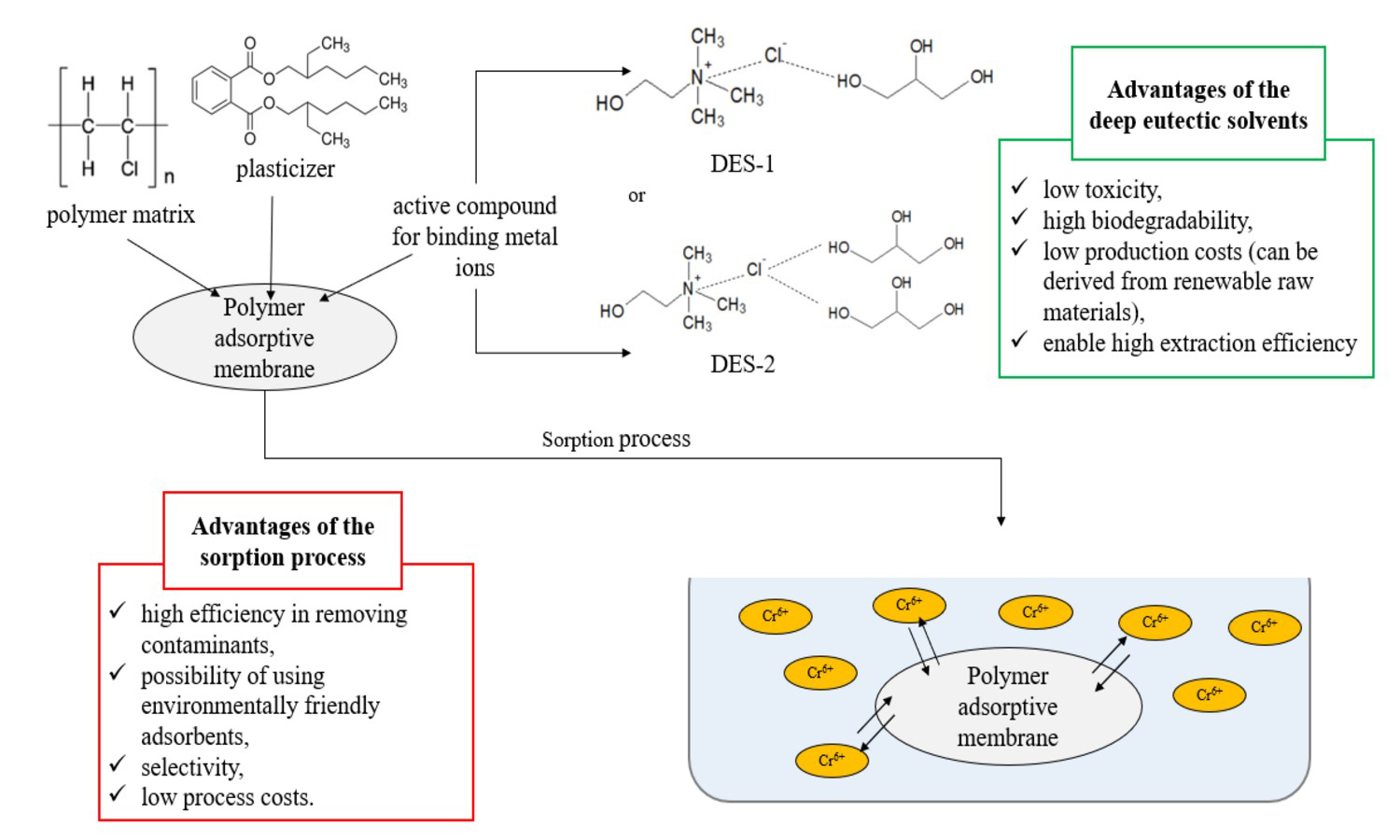
A new application of polymer membranes has been developed for the effective removal of toxic chromium(VI) ions from aqueous solutions by modifying poly(vinyl chloride) films. The process involved preparing deep eutectic solvents (DESs) composed of choline chloride and glycerol at molar ratios of 1:1 and 1:2, which were used as active compounds to bind metal ions in a polymer membrane. Adsorption experiments were performed to evaluate the ability of the obtained membranes to adsorb Cr(VI) ions from aqueous solutions. The composition of the obtained deep eutectic solvents and polymer membranes was confirmed with the use of nuclear magnetic resonance spectroscopy (NMR) and Fourier transform infrared spectroscopy-attenuated total reflectance (FTIR-ATR), respectively. Contact angle analysis of the membranes indicated their potential to remove metal ions. The use of a polymer membrane with deep eutectic solvents for the separation of toxic metal ions from an aqueous solution allows the development of an optimized membrane formulation.