
Biopolymer-based oleogels: Gelling agents, preparation strategies, and food applications
Tiantian Han, Jingen Li , Chang Li
, Chang LiVol. 20., No.7., Pages 708-723, 2026
DOI: 10.3144/expresspolymlett.2026.54
DOI: 10.3144/expresspolymlett.2026.54
Corresponding author: Chang Li 
GRAPHICAL ABSTRACT
ABSTRACT
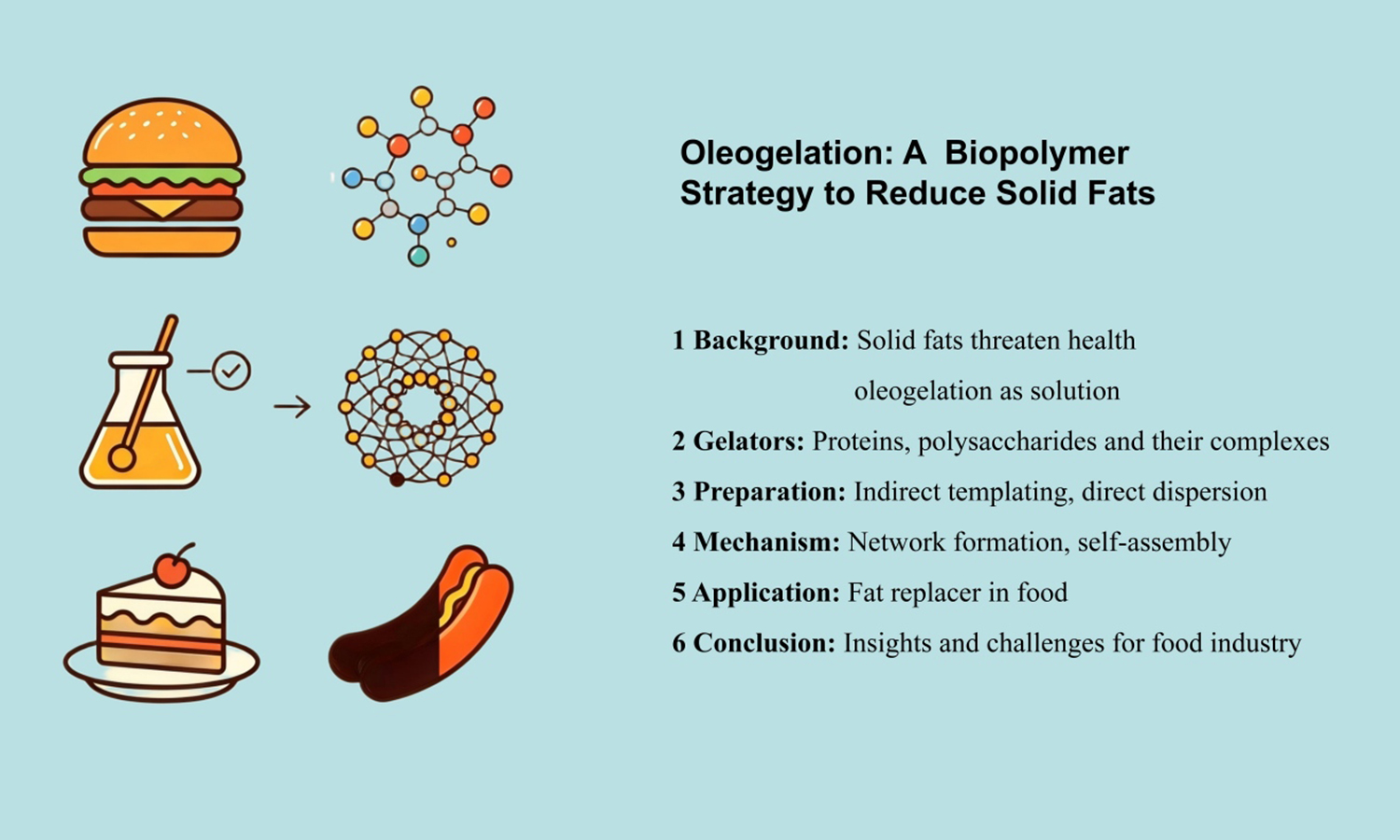
An excessive intake of high-fat foods may pose a threat to human health. Oleogelation provides a promising strategy to reduce trans and saturated fatty acids in solid fats. Compared with small-molecule gelators, macromolecular gelators, particularly proteins, polysaccharides and their complexes are more suitable for this purpose. In this review, we systematically discuss the development potential of biopolymer-based oleogels. First, we elaborate the application of proteins, polysaccharides and their complexes as gelling agents. Second, despite the inherent hydrophilicity of these biopolymers, significant progress has been made in developing various preparation approaches, ranging from indirect templating strategies to direct dispersion methods. Third, we briefly discuss the underlying structuring mechanisms of these oleogels. Subsequently, we review their applications as fat replacers in specific food products. Finally, we present the conclusions and remaining challenges in this field. We aim to provide valuable insights into the utilization of biopolymer-based oleogels in the food industry.
RELATED ARTICLES
Anthony Allen Parker, Joseph John Marcinko
Vol. 20., No.6., Pages 594-616, 2026
DOI: 10.3144/expresspolymlett.2026.45
Vol. 20., No.6., Pages 594-616, 2026
DOI: 10.3144/expresspolymlett.2026.45
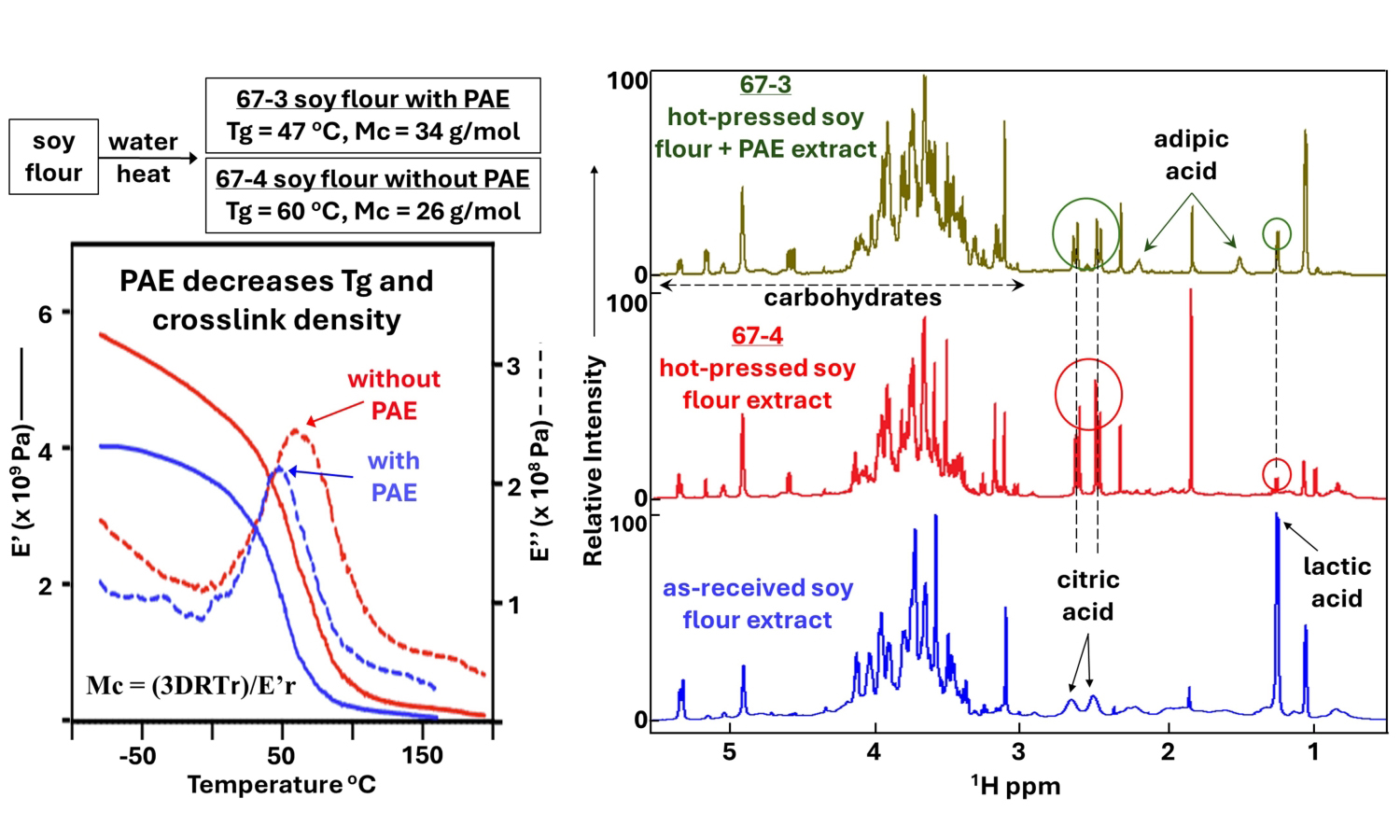
We used dynamic mechanical analysis (DMA) to evaluate soy flour adhesives made with and without a conventional crosslinking agent, polyamideamine-epichlorohydrin (PAE). Fixed-frequency and constant strain rate studies revealed that PAE contributes to a decrease in glass transition temperature (Tg), an increase in toughness, and a decrease in both the rubbery plateau modulus and onset temperature, consistent with plasticization. Fourier transform infrared spectroscopy (FTIR) and nuclear magnetic resonance (NMR) studies of water-soluble extracts from pre-cured soy flour revealed the presence of polypeptides with exchangeable protons, carbohydrates, citric acid and lactic acid. Deuterium exchange studies showed that the protonated peptides were no longer water-soluble after cure. Instead, post-cure extracts contained heat-modified carbohydrates and carboxylic acids, together with adipic acid when PAE was employed. These results are consistent with a mechanism whereby PAE not only undergoes hydrolysis and chain scission, but also competitively co-reacts with peptides and carboxylic acids to yield a plasticized chain-extended network with decreased crosslink density, counter to its anticipated function. The implications of these findings as they pertain to moisture resistance and wood adhesion will be discussed.
Evangelia Balla, Panagiotis Klonos, Apostolos Kyritsis, Dimitrios Bikiaris
Vol. 20., No.2., Pages 154-167, 2026
DOI: 10.3144/expresspolymlett.2026.13
Vol. 20., No.2., Pages 154-167, 2026
DOI: 10.3144/expresspolymlett.2026.13
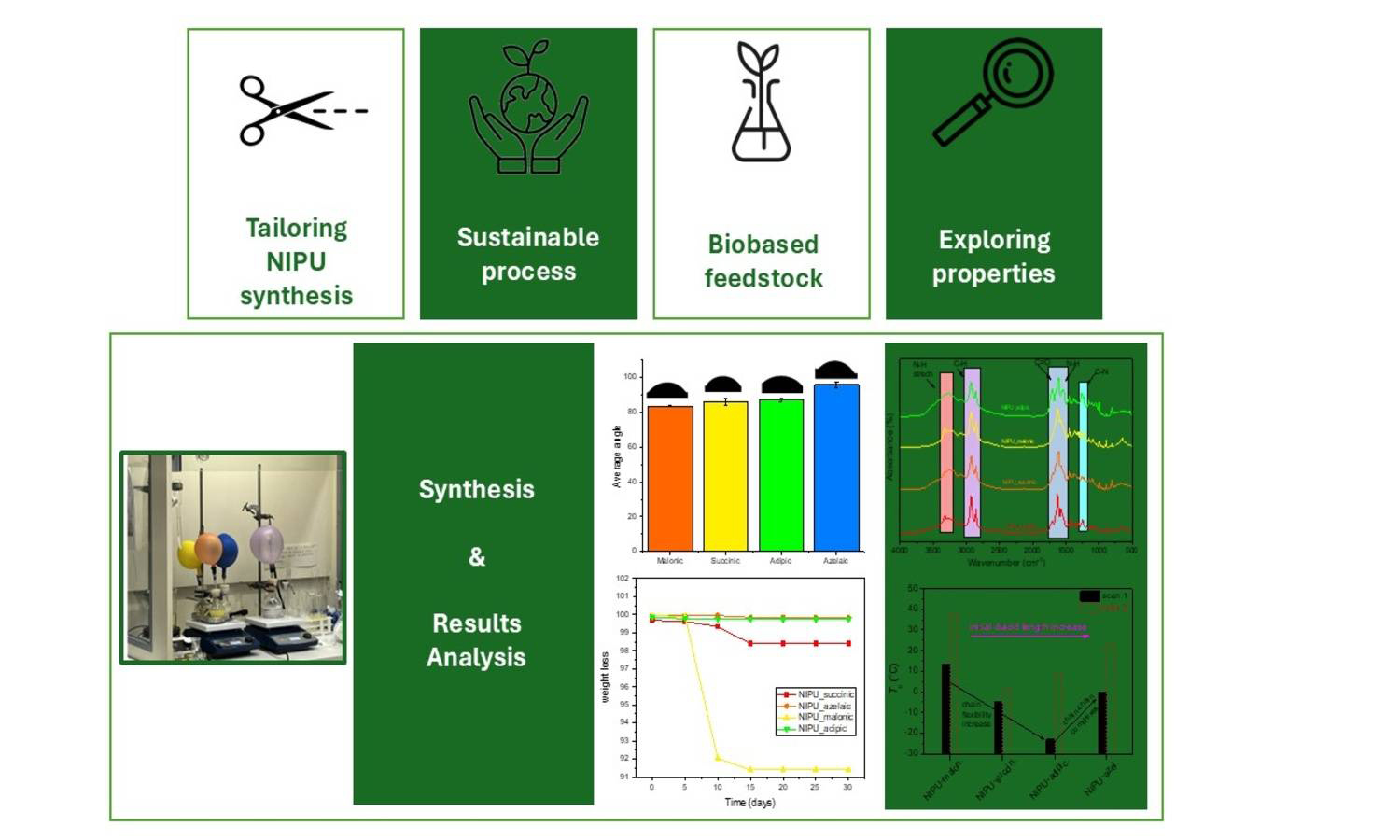
In recent decades, numerous efforts have been dedicated to the investigation of eco-friendly non-isocyanate polyurethanes (NIPUs) as alternatives to conventional polyurethanes (PUs). Since isocyanates are classified by the EU as hazardous and toxic compounds, NIPUs offer a promising route to mitigate isocyanate-related health risks as well as other environmental concerns associated with traditional PU synthesis. In the present study, we report the synthesis as well as the detailed structural and thermal characterization of a new series of fully biobased non-isocyanate polyurethanes (NIPUs) based on aliphatic dicarboxylic acids of different chain lengths. The NIPUs were prepared via a two-step polyaddition reaction involving glycerol carbonate and diamine. Their synthesis enables a sustainable pathway to tailor NIPUs’ physicochemical properties via diacid structure control. Studies of their structure, thermal behavior and trends, morphological, and hydrolytic findings confirmed strong diacid chain length dependence on glass transition temperature (Tg ~13, 0, ‒5 and –23 °C), molecular weight, surface wettability, and enzymatic degradability. Short-chain diacids yielded NIPUs with rapid hydrolytic degradation, while their longer-chain analogs were hydrophobic and thermally stable. Contact angle measurements (~75–85°) also confirm these trends. The tunable properties position these materials among strong candidates for biomedical applications.
Marcelina Bochenek, Barbara Mendrek, Wojciech Wałach, Agnieszka Kowalczuk, Alicja Utrata-Wesołek, Agnieszka Fus-Kujawa, Natalia Oleszko-Torbus
Vol. 19., No.12., Pages 1226-1237, 2025
DOI: 10.3144/expresspolymlett.2025.91
Vol. 19., No.12., Pages 1226-1237, 2025
DOI: 10.3144/expresspolymlett.2025.91

In this study, a series of novel homopolymers based on N-Boc-protected 2-(aminopentyl)-2-oxazoline (P(PentNHBocOx)) were synthesized via microwave-assisted cationic ring-opening polymerization (CROP), achieving high monomer conversions (up to 100%) and low dispersity values (Ð = 1.08–1.30). The resulting polymers were quantitatively deprotected using TFA/DCM, followed by ion exchange to yield amino-functionalized poly(2-oxazoline)s (P(PentNH2Ox)). Comprehensive characterization of the polymers confirmed successful deprotection without polymer degradation, preservation of low dispersity, and the formation of nanoscale aggregates in aqueous solutions falling within the size range of 140–152 nm, suitable, for biomedical applications. Cytotoxicity assays demonstrated that the polymers are non-toxic to human dermal fibroblasts, maintaining cell viability above 70% even at higher concentrations and extended incubation times. These findings highlight the potential of P(PentNH2Ox) as promising, biocompatible candidates for biomedical and nano-therapeutic applications.
Alice da Conceição Alves de Lima, Andréa Monteiro Santana Silva Brito, Viviane Fonseca Caetano, Glória Maria Vinhas
Vol. 19., No.6., Pages 610-627, 2025
DOI: 10.3144/expresspolymlett.2025.46
Vol. 19., No.6., Pages 610-627, 2025
DOI: 10.3144/expresspolymlett.2025.46
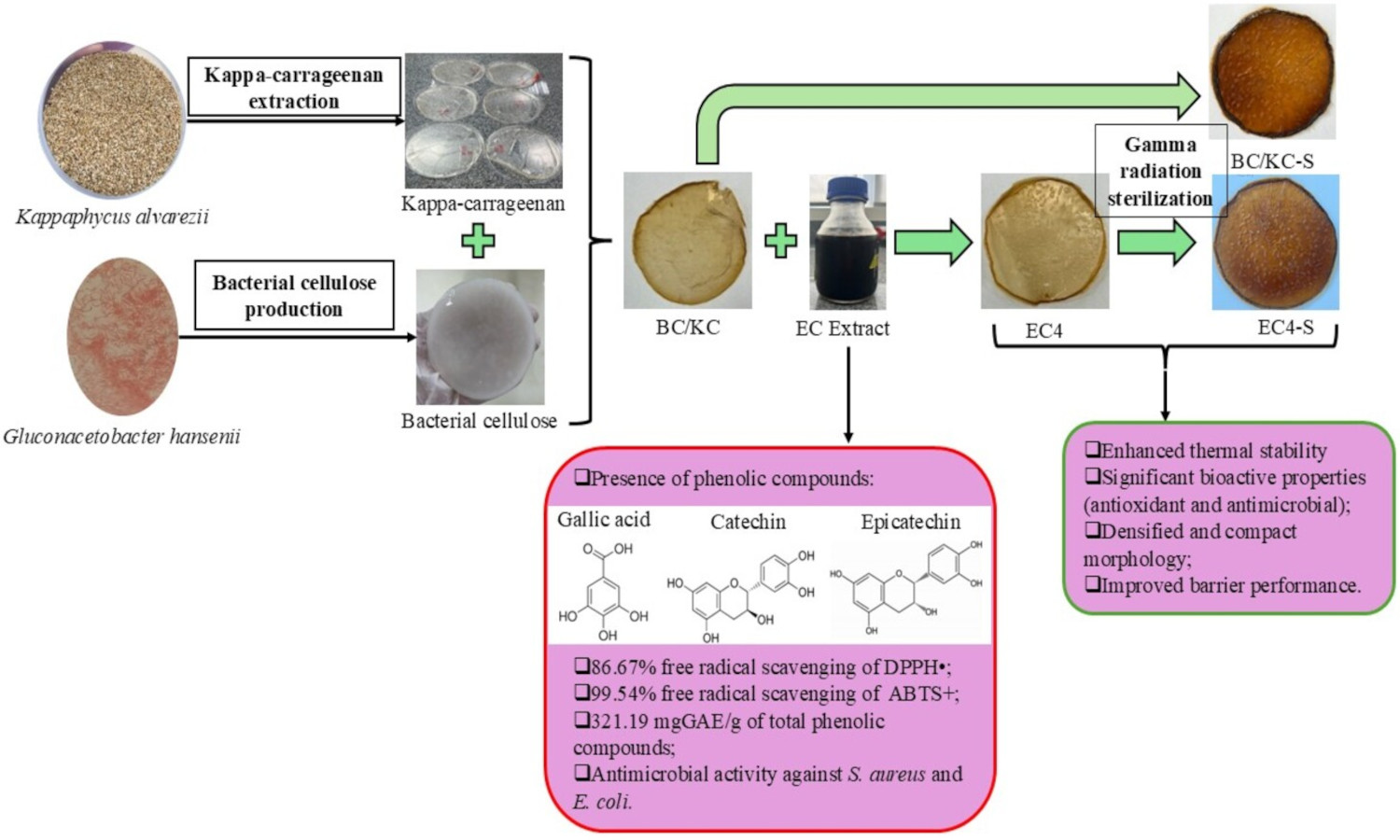
Biopolymer-based packaging, such as bacterial cellulose (BC) and kappa-carrageenan (KC), offers a sustainable solution to environmental challenges. The incorporation of bioactive extracts enhances antioxidant and antimicrobial properties, while gamma radiation sterilization ensures microbiological safety, improving functionality for food preservation and promoting sustainability in the packaging industry. The objective of this work was to develop a BC film incorporated with KC solution (1%, v/v) and cashew bark extract (EC) at concentrations of 1, 2, and 4% (v/v) for use as active food packaging. EC exhibited a total phenolic content of 321.19 mgGAE/g and showed 86.67 and 99.54% radical scavenging activity for 2,2-diphenyl-1-picrylhydrazyl (DPPH) and 2,2″-azino-bis(3-ethylbenzothiazoline-6-sulfonic acid) (ABTS), respectively. EC also displayed antimicrobial activity against S. aureus and E. coli, confirming its antimicrobial potential. BC/KC films incorporated with EC and irradiated with gamma radiation exhibited a thermal degradation in the range of 275–287 °C, maintaining good thermal stability. The water vapor permeability decreased by 55.12%, indicating improved barrier properties and the film’s morphology became more compact after EC incorporation and irradiation. BC/KC films show promises for extending the food shelf life as active packaging.
Karol Tutek, Anna Masek
Vol. 19., No.1., Pages 107-121, 2025
DOI: 10.3144/expresspolymlett.2025.8
Vol. 19., No.1., Pages 107-121, 2025
DOI: 10.3144/expresspolymlett.2025.8
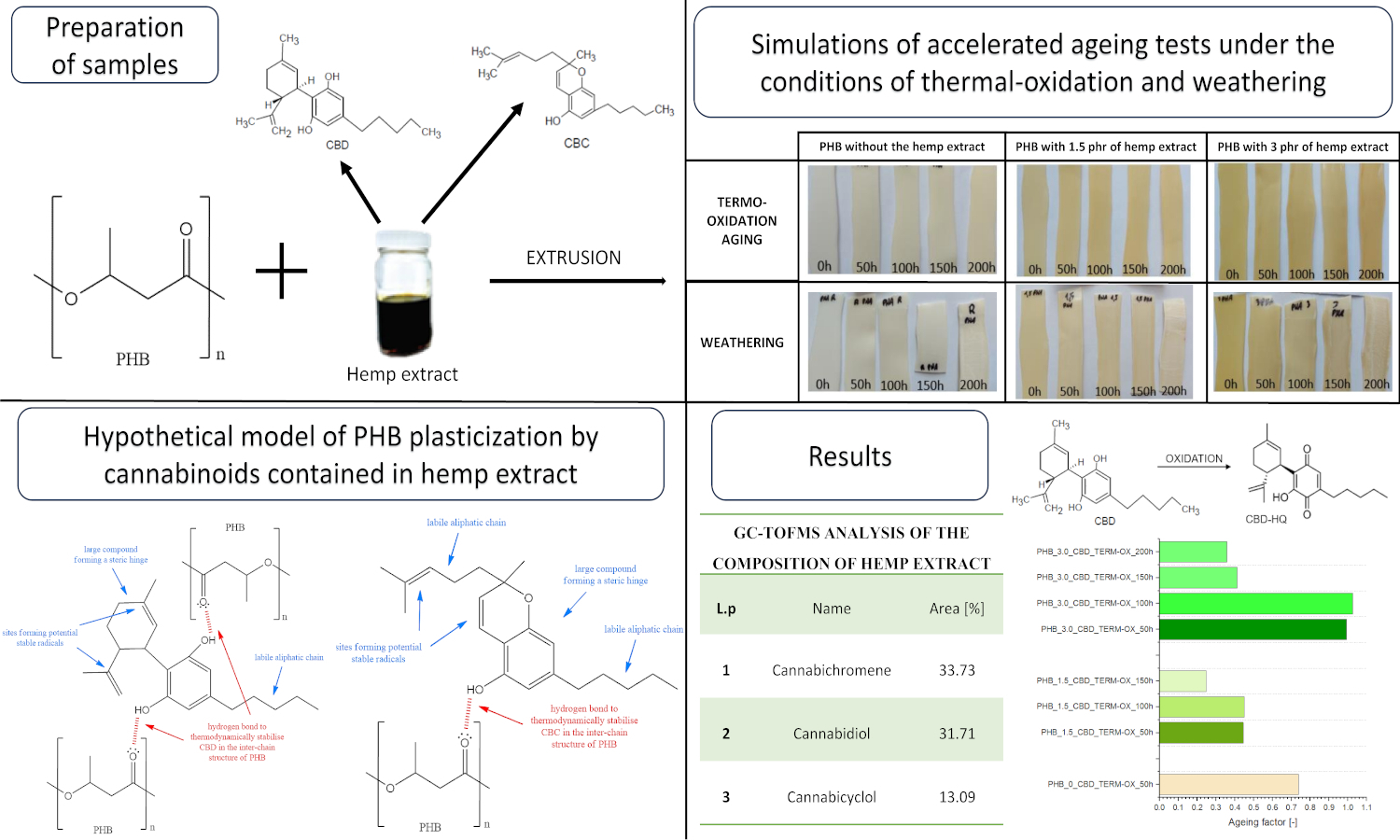
Biodegradable biopolymers like polyhydroxybutyrate (PHB) hold promise for sustainable packaging, but their inherent degradability reduces material stability. Synthetic stabilizers, though effective, raise environmental and potential toxicity concerns. This study explores a multifunctional natural anti-aging agent: a hemp extract rich in cannabidiol (CBD) and cannabichromene (CBC). PHB composites with varying hemp extract concentrations were prepared and subjected to thermooxidative and weathering aging. Characterization employed FTIR-ATR, carbonyl index, and spectrophotometry. Static mechanical properties, DSC, and surface free energy (SFE) were also assessed. Notably, the hemp extract exhibited stability under ambient conditions but showed migration with time and aging. The results suggest a plasticizing effect on PHB and highlight the contrasting roles of the extract: inhibiting thermooxidative aging while potentially accelerating aging under atmospheric conditions. This opens avenues for tailoring material durability, further evaluated by life cycle analysis (LCA). This work represents one of the first investigations into hemp extract as an anti-aging agent for eco-friendly polymers, expanding the knowledge base of natural multifunctional additives.