
Hemp extract as a multifunctional stabilizer for polyhydroxybutyrate (PHB) materials: Investigations into anti-aging properties and lifetime control
Karol Tutek, Anna Masek
Vol. 19., No.1., Pages 107-121, 2025
DOI: 10.3144/expresspolymlett.2025.8
DOI: 10.3144/expresspolymlett.2025.8
Corresponding author: Anna Masek 
GRAPHICAL ABSTRACT
ABSTRACT
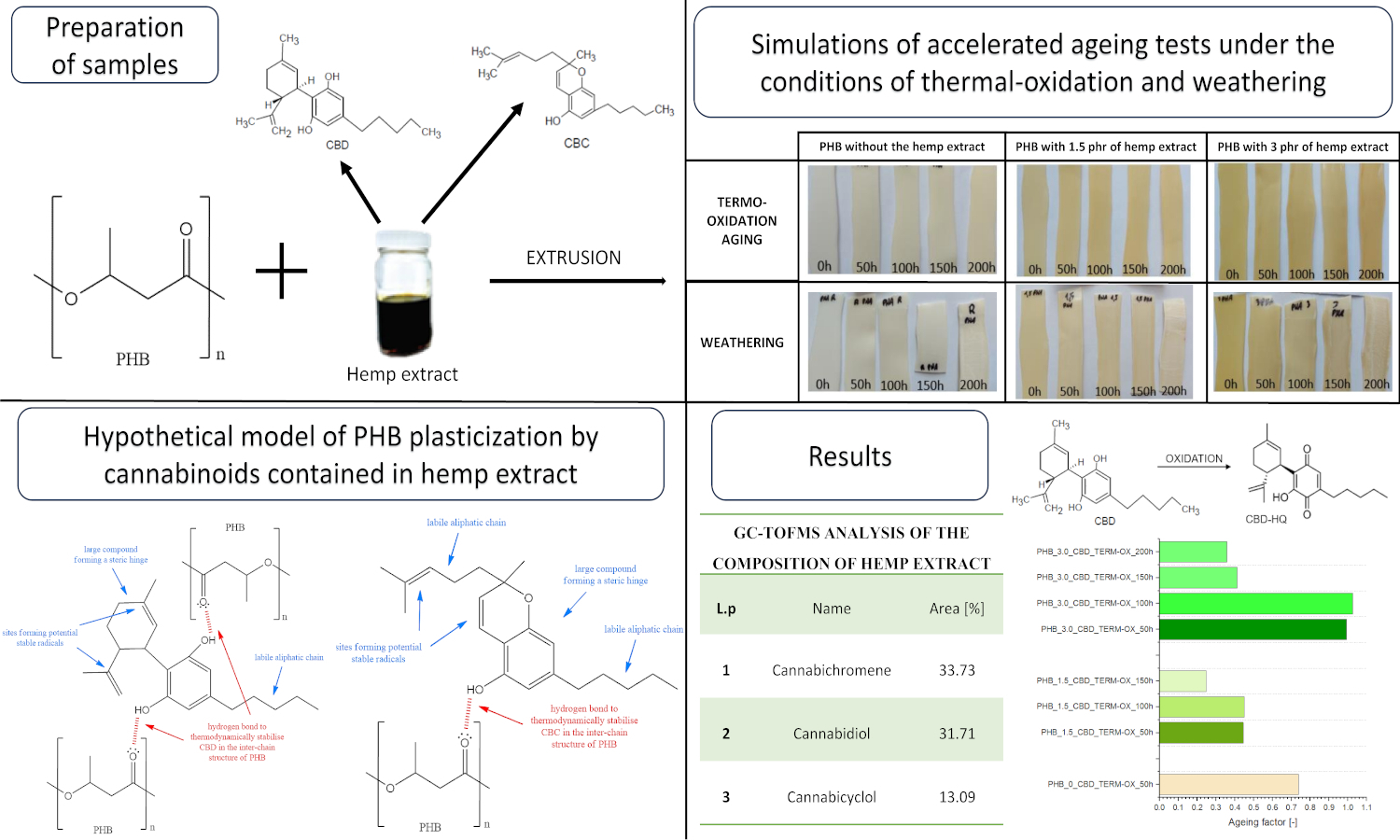
Biodegradable biopolymers like polyhydroxybutyrate (PHB) hold promise for sustainable packaging, but their inherent degradability reduces material stability. Synthetic stabilizers, though effective, raise environmental and potential toxicity concerns. This study explores a multifunctional natural anti-aging agent: a hemp extract rich in cannabidiol (CBD) and cannabichromene (CBC). PHB composites with varying hemp extract concentrations were prepared and subjected to thermooxidative and weathering aging. Characterization employed FTIR-ATR, carbonyl index, and spectrophotometry. Static mechanical properties, DSC, and surface free energy (SFE) were also assessed. Notably, the hemp extract exhibited stability under ambient conditions but showed migration with time and aging. The results suggest a plasticizing effect on PHB and highlight the contrasting roles of the extract: inhibiting thermooxidative aging while potentially accelerating aging under atmospheric conditions. This opens avenues for tailoring material durability, further evaluated by life cycle analysis (LCA). This work represents one of the first investigations into hemp extract as an anti-aging agent for eco-friendly polymers, expanding the knowledge base of natural multifunctional additives.
RELATED ARTICLES
Anthony Allen Parker, Joseph John Marcinko
Vol. 20., No.9., Pages 885-904, 2026
DOI: 10.3144/expresspolymlett.2026.66
Vol. 20., No.9., Pages 885-904, 2026
DOI: 10.3144/expresspolymlett.2026.66
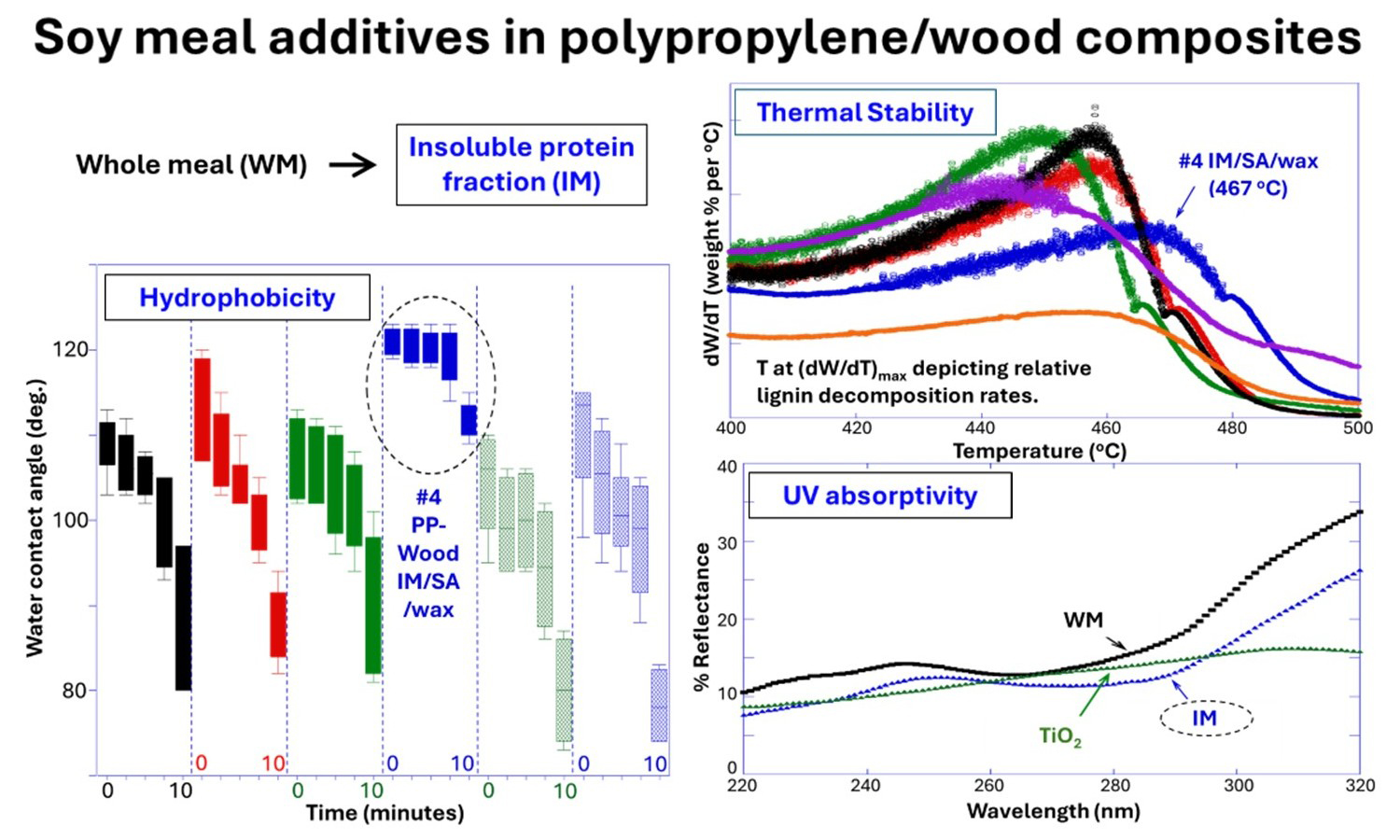
We have discovered that water-insoluble proteins (IM) isolated from whole soy meal (WM) have the capacity to improve the thermal stability of polypropylene (PP) wood composites without negatively impacting mechanical properties. We compared an undiluted composite to composites diluted with 5% by weight of a 3/1 w/w mixture of stearic acid and paraffin wax (SA/wax), 5% by weight IM, 5% by weight WM, 5% by weight of a 50/50 w/w mixture of IM in combination with SA/wax, and 5% by weight WM in combination with SA/wax. Water contact angle (CA) measurements and Fourier transform infrared spectroscopy (FTIR) revealed a synergy between IM and SA/wax, resulting in enhanced surface hydro - phobicity. Thermogravimetric analysis (TGA) showed lower weight loss in composites made with IM up to the onset of the degradation of PP, and reduced rates of lignin degradation, independently of the presence of SA/wax. Dynamic mechanical analysis (DMA) revealed higher modulus and lower viscoelastic loss resulting from the removal of water-soluble soy components from WM. Total reflectance ultraviolet spectroscopy (UV) showed that IM absorbs UV radiation strongly in the UV-B and UV-C regions. Collectively, these findings suggest that IM has the potential to become a multi-purpose additive for use in PP wood composites.
Tiantian Han, Jingen Li, Chang Li
Vol. 20., No.7., Pages 708-723, 2026
DOI: 10.3144/expresspolymlett.2026.54
Vol. 20., No.7., Pages 708-723, 2026
DOI: 10.3144/expresspolymlett.2026.54
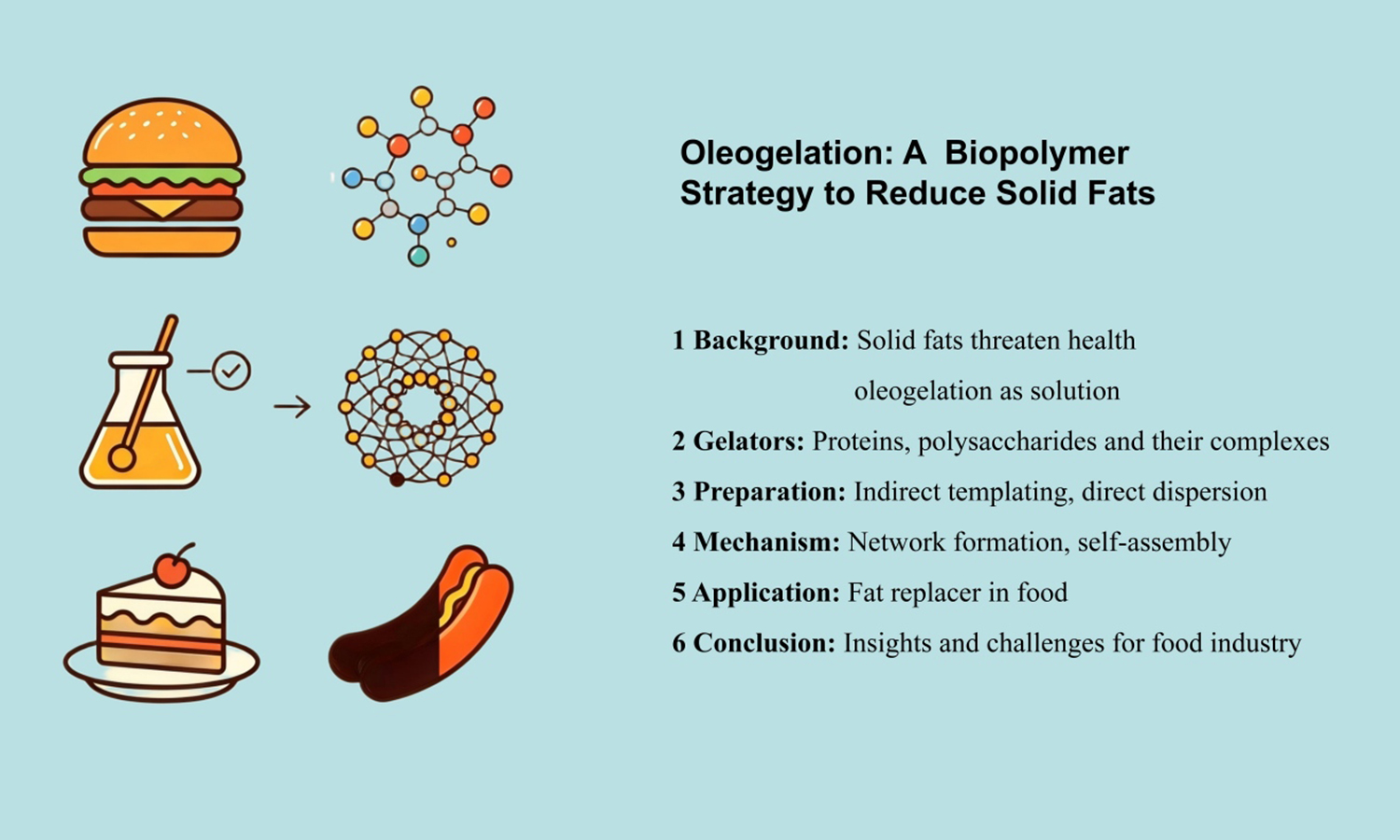
An excessive intake of high-fat foods may pose a threat to human health. Oleogelation provides a promising strategy to reduce trans and saturated fatty acids in solid fats. Compared with small-molecule gelators, macromolecular gelators, particularly proteins, polysaccharides and their complexes are more suitable for this purpose. In this review, we systematically discuss the development potential of biopolymer-based oleogels. First, we elaborate the application of proteins, polysaccharides and their complexes as gelling agents. Second, despite the inherent hydrophilicity of these biopolymers, significant progress has been made in developing various preparation approaches, ranging from indirect templating strategies to direct dispersion methods. Third, we briefly discuss the underlying structuring mechanisms of these oleogels. Subsequently, we review their applications as fat replacers in specific food products. Finally, we present the conclusions and remaining challenges in this field. We aim to provide valuable insights into the utilization of biopolymer-based oleogels in the food industry.
Anthony Allen Parker, Joseph John Marcinko
Vol. 20., No.6., Pages 594-616, 2026
DOI: 10.3144/expresspolymlett.2026.45
Vol. 20., No.6., Pages 594-616, 2026
DOI: 10.3144/expresspolymlett.2026.45
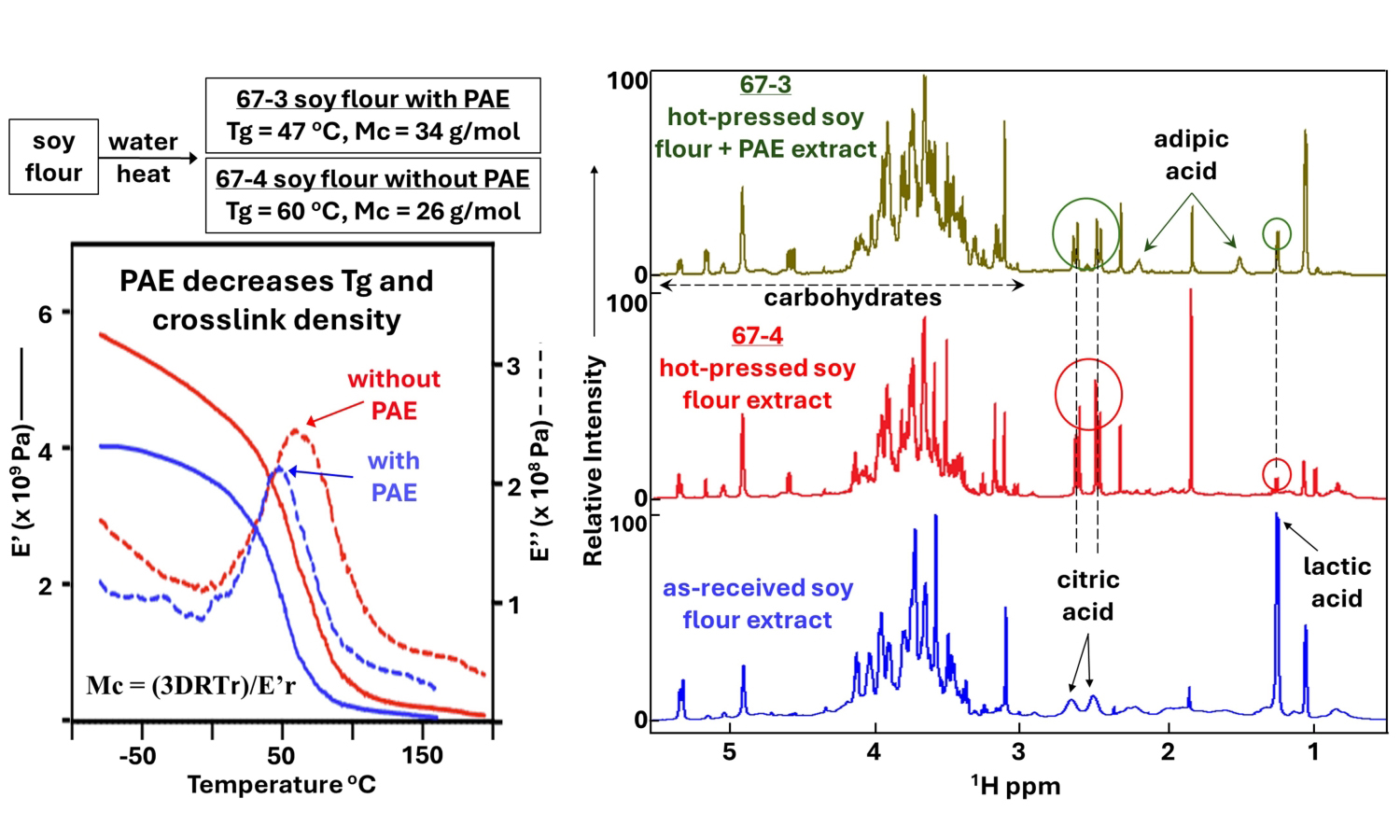
We used dynamic mechanical analysis (DMA) to evaluate soy flour adhesives made with and without a conventional crosslinking agent, polyamideamine-epichlorohydrin (PAE). Fixed-frequency and constant strain rate studies revealed that PAE contributes to a decrease in glass transition temperature (Tg), an increase in toughness, and a decrease in both the rubbery plateau modulus and onset temperature, consistent with plasticization. Fourier transform infrared spectroscopy (FTIR) and nuclear magnetic resonance (NMR) studies of water-soluble extracts from pre-cured soy flour revealed the presence of polypeptides with exchangeable protons, carbohydrates, citric acid and lactic acid. Deuterium exchange studies showed that the protonated peptides were no longer water-soluble after cure. Instead, post-cure extracts contained heat-modified carbohydrates and carboxylic acids, together with adipic acid when PAE was employed. These results are consistent with a mechanism whereby PAE not only undergoes hydrolysis and chain scission, but also competitively co-reacts with peptides and carboxylic acids to yield a plasticized chain-extended network with decreased crosslink density, counter to its anticipated function. The implications of these findings as they pertain to moisture resistance and wood adhesion will be discussed.
Cláudia Andréa Batista dos Santos, Bartłomiej Kryszak, Rafał Malinowski, Aleksandra Ujćič, Konrad Szustakiewicz
Vol. 20., No.3., Pages 264-278, 2026
DOI: 10.3144/expresspolymlett.2026.21
Vol. 20., No.3., Pages 264-278, 2026
DOI: 10.3144/expresspolymlett.2026.21
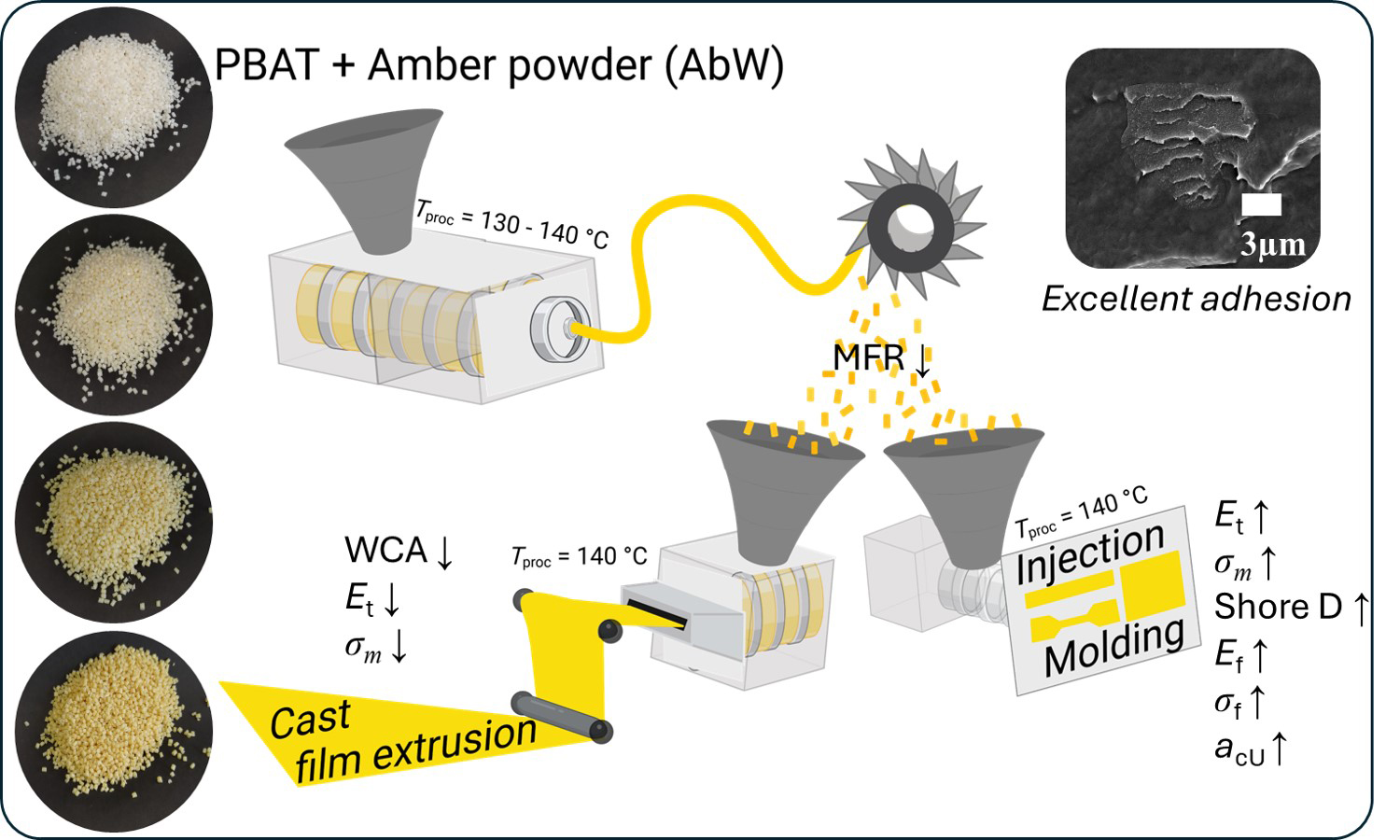
This study investigates the interaction between poly(butylene adipate-co-terephthalate) (PBAT) and amber powdered waste (AbW) from jewelry at different filler concentrations (0, 1, 2.5, and 5 wt%) obtained via melt mixing in a corotating twin screw extruder. The resulting materials were pelletized and processed using two techniques: 1) cast film extrusion and 2) injection molding. The shaped specimens exhibited excellent interfacial adhesion. Thermal behavior, as assessed by Vicat softening temperature (VST), differential scanning calorimetry (DSC), and thermogravimetric analysis (TGA), showed minimal variation among the composites. Despite similar melt flow rate (MFR) values among the samples, the incorporation of AbW affected the behavior of the polymer during cast film extrusion. Consequently, the composite films exhibited lower tensile mechanical parameters (tensile strength, Young’s modulus, stress and strain at break) compared to the neat PBAT film. In turn, the injection molded composites showed improved tensile, flexural, and impact parameters compared to their neat counterpart. Additionally, a slight decrease in water contact angle (WCA) suggested increased surface hydrophilicity of the extruded films. These findings demonstrate the potential of AbW as an additive for biopolymer composites with enhanced mechanical performance. The increased surface hydrophilicity is particularly relevant for applications targeting biocompatibility and biodegradability.
Effect of natural cinnamon extract on the stabilizing properties of biodegradable packaging polymers
Anna Kosmalska-Olańska, Anna Masek
Vol. 20., No.1., Pages 52-71, 2026
DOI: 10.3144/expresspolymlett.2026.5
Vol. 20., No.1., Pages 52-71, 2026
DOI: 10.3144/expresspolymlett.2026.5
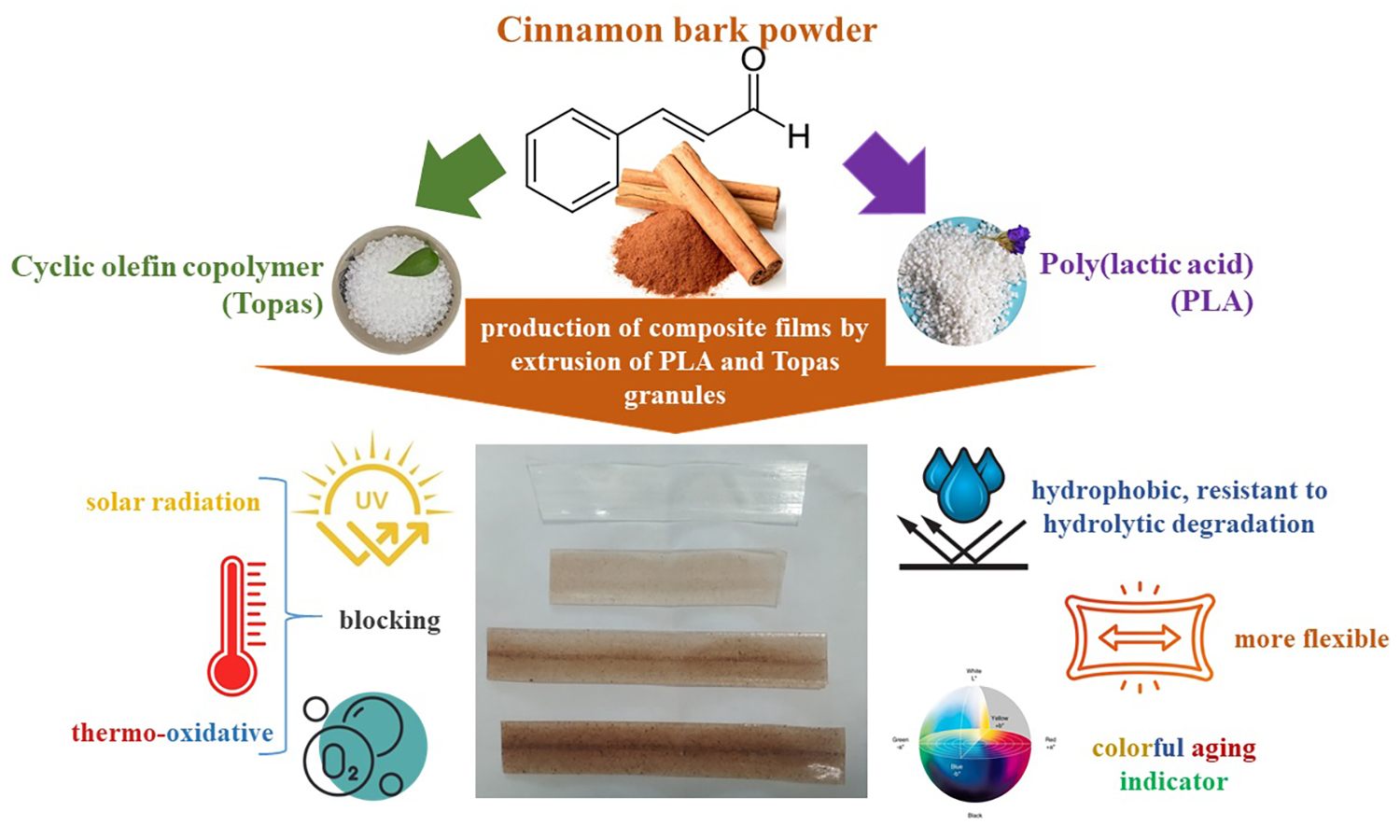
The growing focus on sustainability, eco-friendly technologies, decarbonization, and reducing carbon footprints shapes current industry challenges. This article reviews the potential of cinnamon as a bio-additive for polymer stabilization in packaging. Samples were prepared from ethylene-norbornene copolymer (Topas), a cyclic olefin copolymer known for purity, transparency, and low gas permeability, and poly(lactic acid) (PLA), a bio-based alternative to petroleum plastics. Cinnamon powder was added in 0.5, 1.0, and 1.5 wt%. After solar and thermo-oxidative aging, hydrophobicity, chemical composition, mechanical, and color properties were analyzed. Results showed higher hydrophobicity and resistance to hydrolytic degradation due to reduced water penetration. PLA, normally brittle, became more flexible, with 0.5 wt% cinnamon showing optimal performance after 100 h of solar aging, similar to Topas composites. Overall, PLA and cyclic olefin copolymer (COC) films with cinnamon improved durability, extended food shelf life, and acted as natural color indicators of material aging.