
Advancing space propulsion through polymer engineering
Alessandro Pegoretti
Vol. 20., No.7., Pages 662-663, 2026
DOI: 10.3144/expresspolymlett.2026.49
DOI: 10.3144/expresspolymlett.2026.49
Corresponding author: Alessandro Pegoretti 
GRAPHICAL ABSTRACT
RELATED ARTICLES
Zhen Chen, Liang Xu, Yu Bai, Wei Wang , Junfeng Qian, Xiaoliang Yin, Jizhou Du, Jing Zhang
Vol. 20., No.7., Pages 724-741, 2026
DOI: 10.3144/expresspolymlett.2026.55
Vol. 20., No.7., Pages 724-741, 2026
DOI: 10.3144/expresspolymlett.2026.55
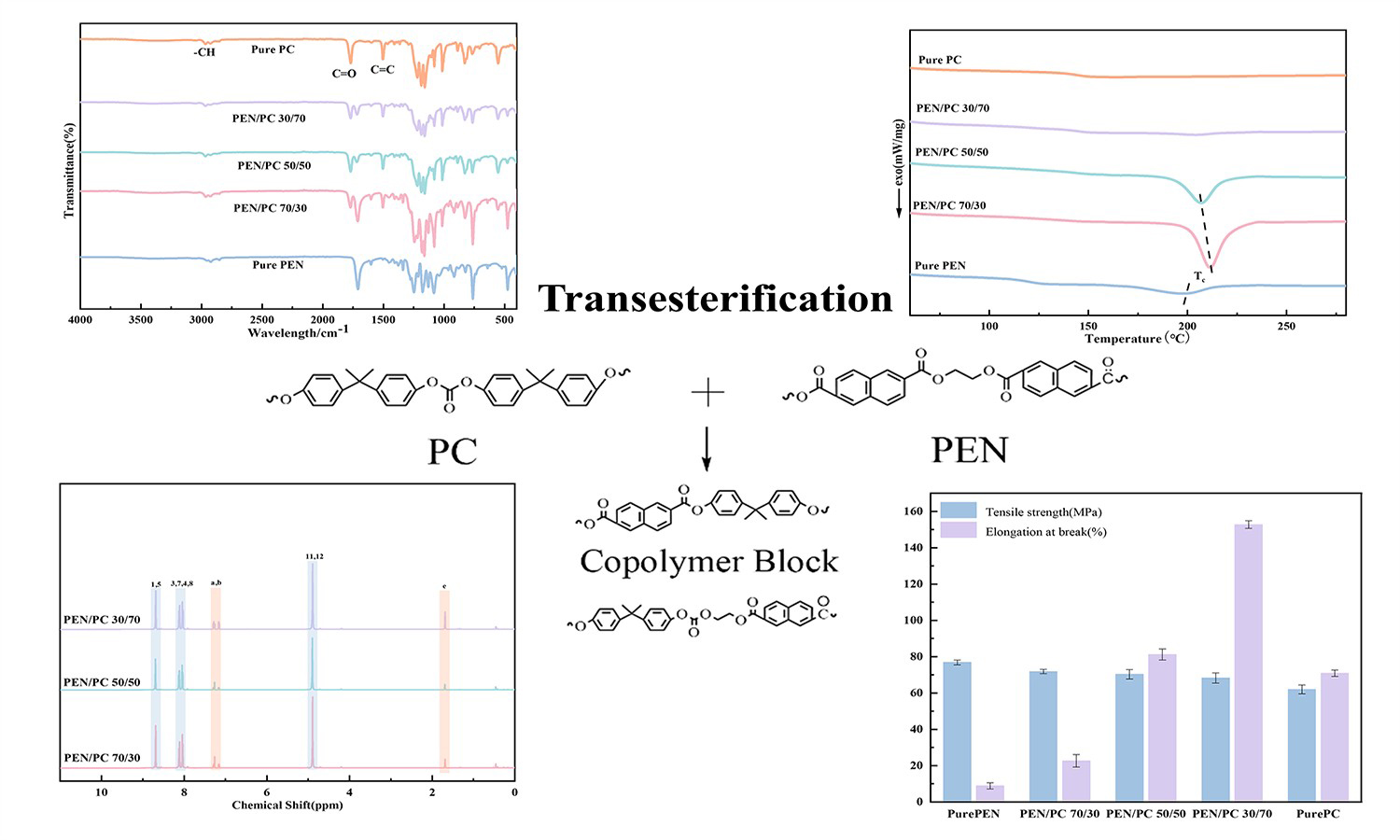
Conventional poly(ethylene terephthalate) (PET) and polycarbonate (PC) blends exhibit insufficient heat resistance, restricting their use in demanding applications such as new energy vehicles and portable consumer electronics. Poly(ethylene 2,6-naphthalate) (PEN) offers superior thermal stability, strength and chemical resistance, making PEN/PC blends promising alternatives. In this study, we investigated the relationships between the composition, structure and properties of PEN/PC blends through non-catalyzed melt blending. Fourier transform infrared spectroscopy (FTIR) and proton nuclear magnetic resonance spectra (1H NMR) confirm transesterification between PEN and PC, with the extent of exchange (X) increasing with PC content. Non-isothermal differential scanning calorimetry (DSC) and X-ray diffraction (XRD) show that moderate PC content promotes crystallization, while high PC content suppresses it. Thermogravimetric analysis (TGA) shows enhanced thermal stability in PEN-rich blends. Compared to PET/PC, PEN/PC blends maintain similar tensile strength but exhibit 53% higher elongation and 1–2.5% lower density. This study demonstrates the potential of PEN/PC blends for high-performance, thin-walled applications in the new energy vehicle and electronics industries.
Kai Du, Qiang Ben, Xiaoqiang Wang
Vol. 19., No.8., Pages 796-808, 2025
DOI: 10.3144/expresspolymlett.2025.61
Vol. 19., No.8., Pages 796-808, 2025
DOI: 10.3144/expresspolymlett.2025.61
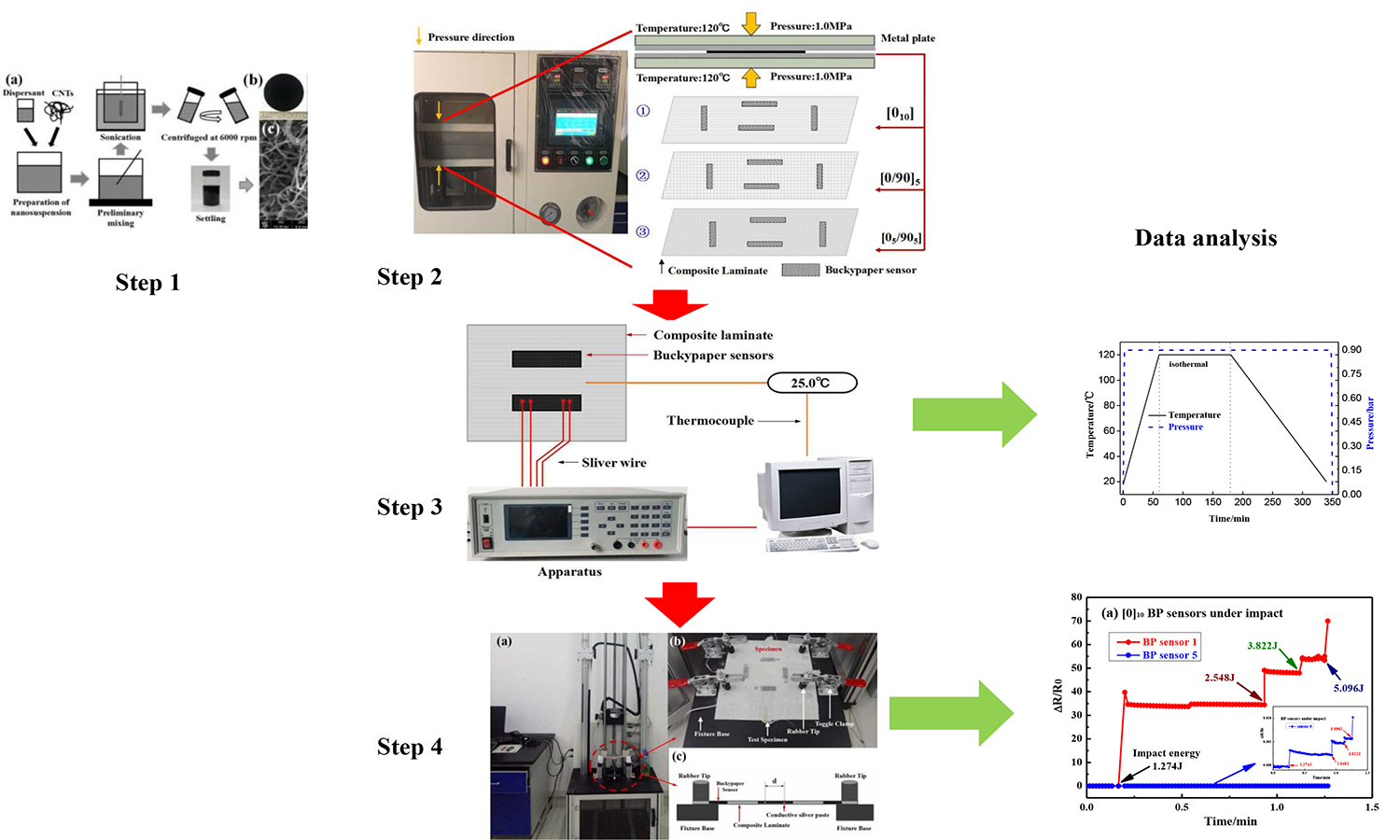
The main purpose of structural health monitoring (SHM) is to detect damage at its earliest possible stage to prevent severe deterioration and reduce subsequent repair costs. Carbon nanotubes (CNTs) buckypaper (BP) was embedded into different cross-ply glass fibre composites to monitor the curing process and impact damage as an in situ sensor in this research. BP sensor can capture the four stages of the curing process, the gel point of the resin and residual stresses of the composite structure can be achieved by analysing the change of the resistance curve. Numerical and experimental analyses were performed to predict the damage in composite structures subjected to low-velocity impact. BP sensors’ electrical resistance increases with repeated impact loading; composite structure elastic deformation and damage evolution can be identified from resistance change. Experiment results show that structure monitoring based on the BP sensors cannot only detect small, barely visible impact damage flaws and the damage evaluation of composite structures subjected to impact, but also provide a new method to monitor the curing process through the analysis of results. This work makes some constructive contributions to monitoring the manufacturing process of composites and long-term SHM to evaluate impact resistance and damage prediction of composite structures.
Nurul Ain Arjuna, Noor Maizura Ismail, S. M. Anisuzzaman, Rachel Fran Mansa, Murni Sundang, Akhtar Razul Razali
Vol. 19., No.4., Pages 441-454, 2025
DOI: 10.3144/expresspolymlett.2025.32
Vol. 19., No.4., Pages 441-454, 2025
DOI: 10.3144/expresspolymlett.2025.32
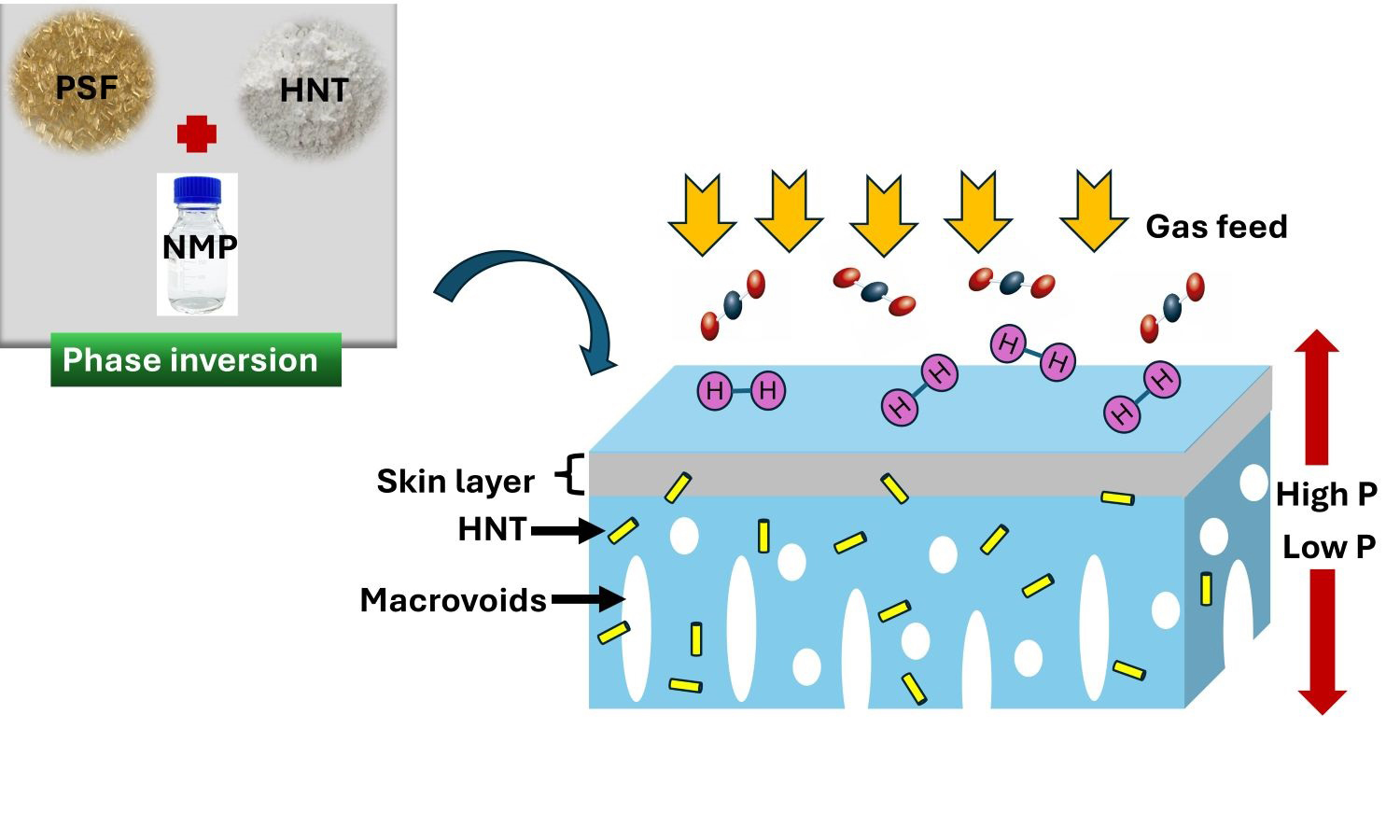
Membrane-based gas separation offers practical advantages for hydrogen (H2) and carbon dioxide (CO2) separation for steam methane reforming units. Modification of membrane materials can optimize membrane performance. In this study, the central focus is on investigating the effect of different loadings of halloysite nanotubes (HNTs) (0, 0.5, 1.0, 1.5, and 2.0 wt%) incorporated into a blend of cellulose acetate (CA) and polysulfone (PSF) polymers with the aim of improving the membrane properties. The Fourier transform infrared spectroscopy-attenuated total reflectance (FTIR-ATR) results confirmed that the primary functional groups of PSF and CA remained intact upon HNTs incorporation, with no distinct HNT peaks altering the main chemical functionalities. Field emission scanning electron microscopy- energy dispersive X-ray spectroscopy (FESEM-EDX) analyses showed that low concentrations of HNTs (0.5 wt%) improved surface smoothness and reduced macrovoids, beneficial for gas separation. Cross-sectional images of FESEM micrographs showed no evidence of obvious agglomeration, suggesting a good dispersion of HNTs. From the X-ray diffraction (XRD) analysis, all the membrane samples retained an amorphous structure, indicating that the incorporation of HNT has less effect on the polymer chain properties of the membranes.
Mathew Olurotimi Adeoti, Tamba Jamiru, Taoreed Adesola Adegbola, Ibrahim Suleiman, Mohammed Abdullahi, Basiru Philip Aramide
Vol. 19., No.2., Pages 208-229, 2025
DOI: 10.3144/expresspolymlett.2025.16
Vol. 19., No.2., Pages 208-229, 2025
DOI: 10.3144/expresspolymlett.2025.16

Polymer nanocomposites are drawing considerable interest in electrical energy storage research owing to their distinctive characteristics and promising roles in various devices, such as batteries, supercapacitors, and fuel cells. This review examines the selection criteria of polymer nanocomposites for electrical energy storage applications and the current advancements in developing and producing polymer nanocomposites specifically tailored for electrical energy storage applications. Key topics covered include the selection of polymer matrices, choice of nanofillers, fabrication techniques, characterization methods, and performance evaluation of the resulting nanocomposites. The impact of nanofiller dispersion, interface engineering, and morphology control on electrical storage properties is emphasized. Proper dispersion enhances uniformity and interfacial interactions, improving electrical, mechanical, and thermal properties. Interface engineering boosts polymer-nanofiller compatibility, while morphology control optimizes nanofiller structure and arrangement for better storage efficiency. Emerging trends, challenges, and future research directions are also discussed, providing insights for developing advanced polymer nanocomposites with improved electrical energy storage capabilities.
Aleksandra Sierakowska-Byczek, Julia Radwan-Pragłowska, Łukasz Janus, Tomasz Galek, Karol Łysiak, Mirosław Tupaj, Dariusz Bogdał
Vol. 18., No.8., Pages 819-834, 2024
DOI: 10.3144/expresspolymlett.2024.61
Vol. 18., No.8., Pages 819-834, 2024
DOI: 10.3144/expresspolymlett.2024.61
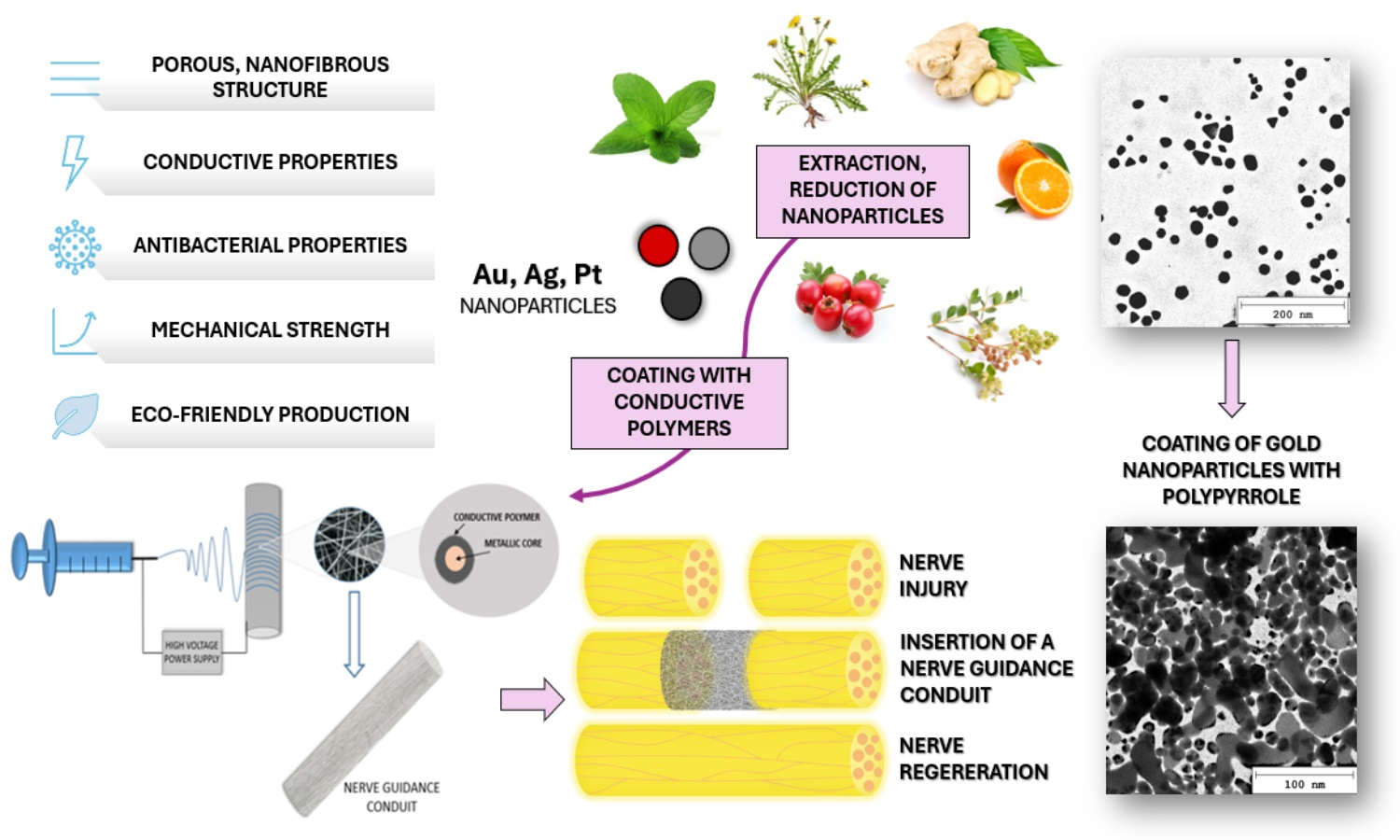
Appropriate protection and guiding are crucial during peripheral nerves repair. New generation nerve guidance conduits (NGCs) should not only provide mechanical support for the damaged nerve but also support healing processes. One of the most promising tissue regeneration applications is fibrous biomaterials since they are characterized by high porosity, flexibility, and strength. Additionally, they enable cell adhesion and proliferation. In this study, novel fibrous nanocomposites were obtained by applying the electrospinning technique, using polylactic acid (PLA) as a polymeric matrix which was further modified with metallic nanoparticles coated with conductive polymers. Such an approach resulted in the obtainment of biomaterials with a potential ability to conduct nerve impulses. The chemical structure of the obtained composites, as well as the morphology of ready products and separate nanocomponents, were investigated using Fourier-transform infrared spectroscopy (FTIR), transmission electron microscope (TEM) and scanning electron microscope (SEM) techniques. Furthermore, conductive and swelling properties in various media were determined. Finally, biomaterials were confirmed to be non-cytotoxic to L929 mouse fibroblasts and 1321N1 human glial cells. Based on the presented results, it can be concluded that nanofibrous nerve guidance conduits have all the key properties in the process of peripheral nerve regeneration and may constitute an important step in novel NGCs development.