
Mechanical strength of PMMA denture base resin reinforced with ZrO2, TiO2 nanoparticles and glass fibers: A systematic review of selected in vitro studies
Simran Bansal , Neha Jain, Divya Nagri Bhan, Pankaj Dhawan
, Neha Jain, Divya Nagri Bhan, Pankaj DhawanVol. 20., No.7., Pages 698-707, 2026
DOI: 10.3144/expresspolymlett.2026.53
DOI: 10.3144/expresspolymlett.2026.53
Corresponding author: Simran Bansal 
GRAPHICAL ABSTRACT
ABSTRACT
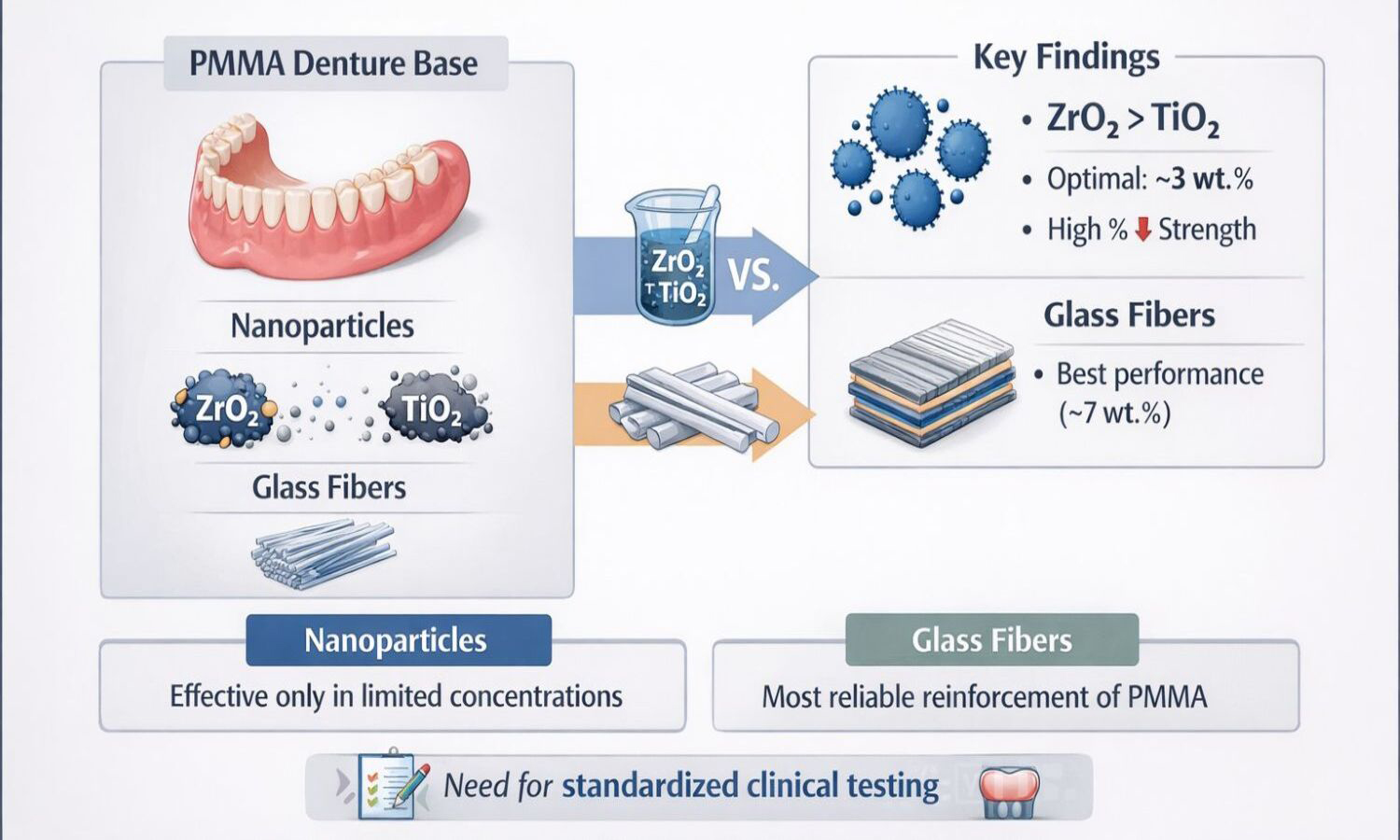
Polymethyl methacrylate (PMMA) remains the material of choice for denture base fabrication; however, its relatively low flexural and impact strength predisposes dentures to fracture during function and accidental loading. Various reinforcement strategies, particularly metal oxide nanoparticles and glass fibres, have been investigated in vitro, although comparative evidence remains limited and methodologically heterogeneous. This systematic review critically compared the effects of zirconium oxide (ZrO2) and titanium oxide (TiO2) nanoparticles versus glass fiber reinforcement on the flexural and impact strength of PMMA denture base resins. The review was conducted in accordance with PRISMA 2020 guidelines and a systematic search of PubMed, Scopus, EBSCOhost, and Google Scholar identified eligible in vitro studies published between 2014 and 2024. Five studies met the inclusion criteria. Glass fiber reinforcement consistently demonstrated the greatest improvement in flexural and impact strength, with progressive enhancements reported up to approximately 7 wt%fiber content. Among nanoparticle reinforcements, ZrO2 showed superior mechanical performance compared with TiO2, with optimal reinforcement observed at concentrations around 3 wt%, while higher concentrations were associated with reduced strength due to particle agglomeration and poor dispersion. Considerable heterogeneity was observed across studies in terms of PMMA type, reinforcement concentration, specimen preparation and mechanical testing protocols, precluding meta-analysis. Overall, the available in vitro evidence indicates that glass fiber reinforcement provides the most reliable mechanical enhancement of PMMA denture base resins, whereas nanoparticle-based reinforcement offers benefits only within narrow concentration ranges, underscoring the need for standardized methodologies and clinically relevant testing in future research.
RELATED ARTICLES
Marcelina Bochenek, Barbara Mendrek, Wojciech Wałach, Agnieszka Kowalczuk, Alicja Utrata-Wesołek, Agnieszka Fus-Kujawa, Natalia Oleszko-Torbus
Vol. 19., No.12., Pages 1226-1237, 2025
DOI: 10.3144/expresspolymlett.2025.91
Vol. 19., No.12., Pages 1226-1237, 2025
DOI: 10.3144/expresspolymlett.2025.91

In this study, a series of novel homopolymers based on N-Boc-protected 2-(aminopentyl)-2-oxazoline (P(PentNHBocOx)) were synthesized via microwave-assisted cationic ring-opening polymerization (CROP), achieving high monomer conversions (up to 100%) and low dispersity values (Ð = 1.08–1.30). The resulting polymers were quantitatively deprotected using TFA/DCM, followed by ion exchange to yield amino-functionalized poly(2-oxazoline)s (P(PentNH2Ox)). Comprehensive characterization of the polymers confirmed successful deprotection without polymer degradation, preservation of low dispersity, and the formation of nanoscale aggregates in aqueous solutions falling within the size range of 140–152 nm, suitable, for biomedical applications. Cytotoxicity assays demonstrated that the polymers are non-toxic to human dermal fibroblasts, maintaining cell viability above 70% even at higher concentrations and extended incubation times. These findings highlight the potential of P(PentNH2Ox) as promising, biocompatible candidates for biomedical and nano-therapeutic applications.
Stanislav Miščík, Jozef Dobránsky, Miroslav Gombár, Robert Čep
Vol. 18., No.10., Pages 1051-1062, 2024
DOI: 10.3144/expresspolymlett.2024.80
Vol. 18., No.10., Pages 1051-1062, 2024
DOI: 10.3144/expresspolymlett.2024.80

The paper deals with the influence of the brittleness of glass fibers on the selected performance properties of the fibrous polymer composite. Understanding the fatigue behavior of fiber-reinforced plastics is desirable for exploiting their features in safe, durable, and reliable industrial components. Based on the proposed methodology, it is possible to assess the impact of material reuse on selected mechanical and rheological properties. To verify the methodology by experimental analysis, homopolymer PP reinforced with chemically grafted glass fiber (30 wt%) was selected. The proposed methodology was subsequently verified by experimental analysis and evaluated statistically. The morphology of the fracture surfaces was evaluated, and the fiber-polymer matrix adhesion was monitored at the interface of the fracture surfaces. Based on the measured and evaluated values and fracture surfaces, we can say that the brittleness of the fibers significantly affects the performance properties of the tested polymer composite.
Aleksandra Sierakowska-Byczek, Julia Radwan-Pragłowska, Łukasz Janus, Tomasz Galek, Karol Łysiak, Mirosław Tupaj, Dariusz Bogdał
Vol. 18., No.8., Pages 819-834, 2024
DOI: 10.3144/expresspolymlett.2024.61
Vol. 18., No.8., Pages 819-834, 2024
DOI: 10.3144/expresspolymlett.2024.61
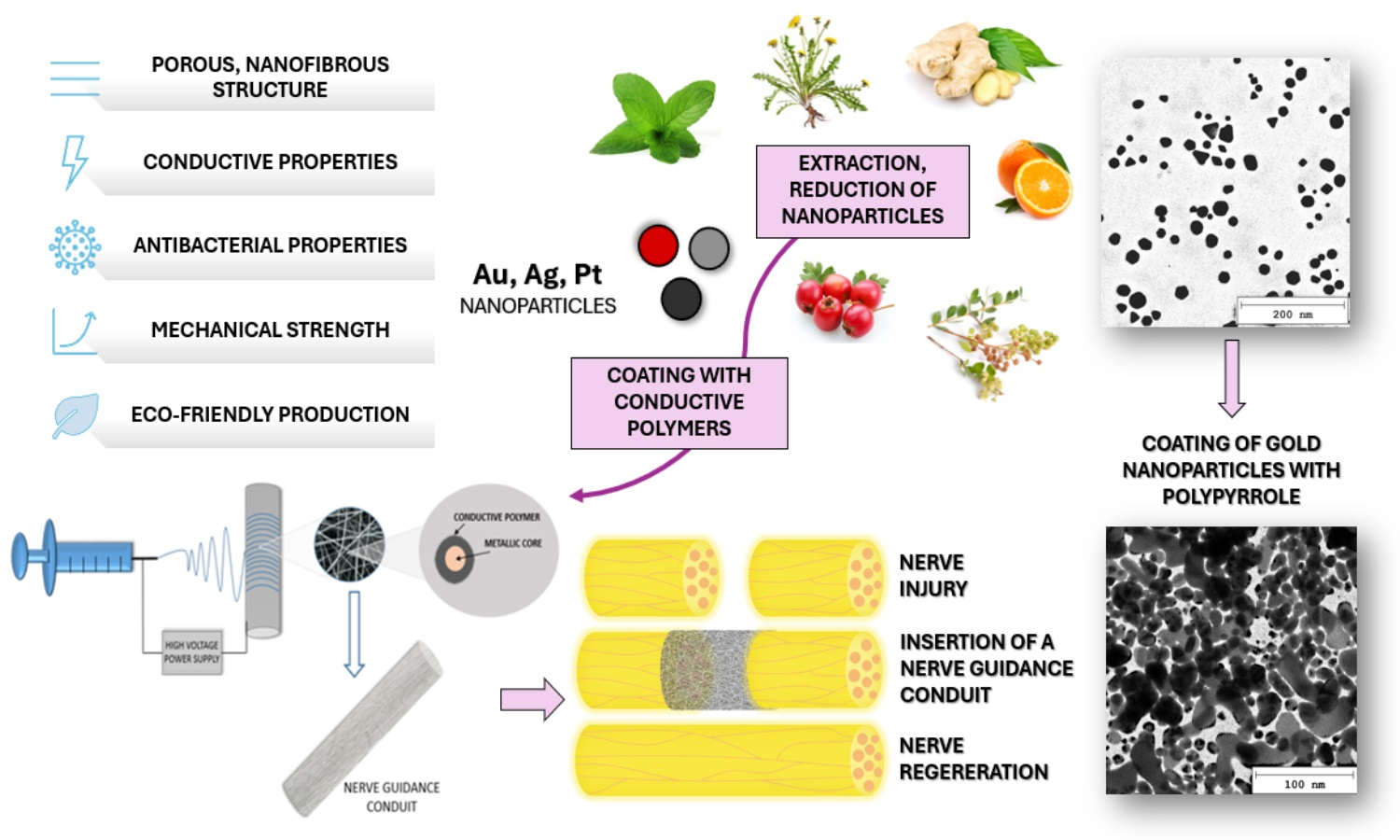
Appropriate protection and guiding are crucial during peripheral nerves repair. New generation nerve guidance conduits (NGCs) should not only provide mechanical support for the damaged nerve but also support healing processes. One of the most promising tissue regeneration applications is fibrous biomaterials since they are characterized by high porosity, flexibility, and strength. Additionally, they enable cell adhesion and proliferation. In this study, novel fibrous nanocomposites were obtained by applying the electrospinning technique, using polylactic acid (PLA) as a polymeric matrix which was further modified with metallic nanoparticles coated with conductive polymers. Such an approach resulted in the obtainment of biomaterials with a potential ability to conduct nerve impulses. The chemical structure of the obtained composites, as well as the morphology of ready products and separate nanocomponents, were investigated using Fourier-transform infrared spectroscopy (FTIR), transmission electron microscope (TEM) and scanning electron microscope (SEM) techniques. Furthermore, conductive and swelling properties in various media were determined. Finally, biomaterials were confirmed to be non-cytotoxic to L929 mouse fibroblasts and 1321N1 human glial cells. Based on the presented results, it can be concluded that nanofibrous nerve guidance conduits have all the key properties in the process of peripheral nerve regeneration and may constitute an important step in novel NGCs development.
Xianli Sun, Jiahao Xu, Xiaoke Zhi, Jingpeng Zhang, Kangwei Hou, Yuhan Bian, Xiaolin Li, Li Wang, Guangchuan Liang
Vol. 18., No.6., Pages 575-591, 2024
DOI: 10.3144/expresspolymlett.2024.43
Vol. 18., No.6., Pages 575-591, 2024
DOI: 10.3144/expresspolymlett.2024.43
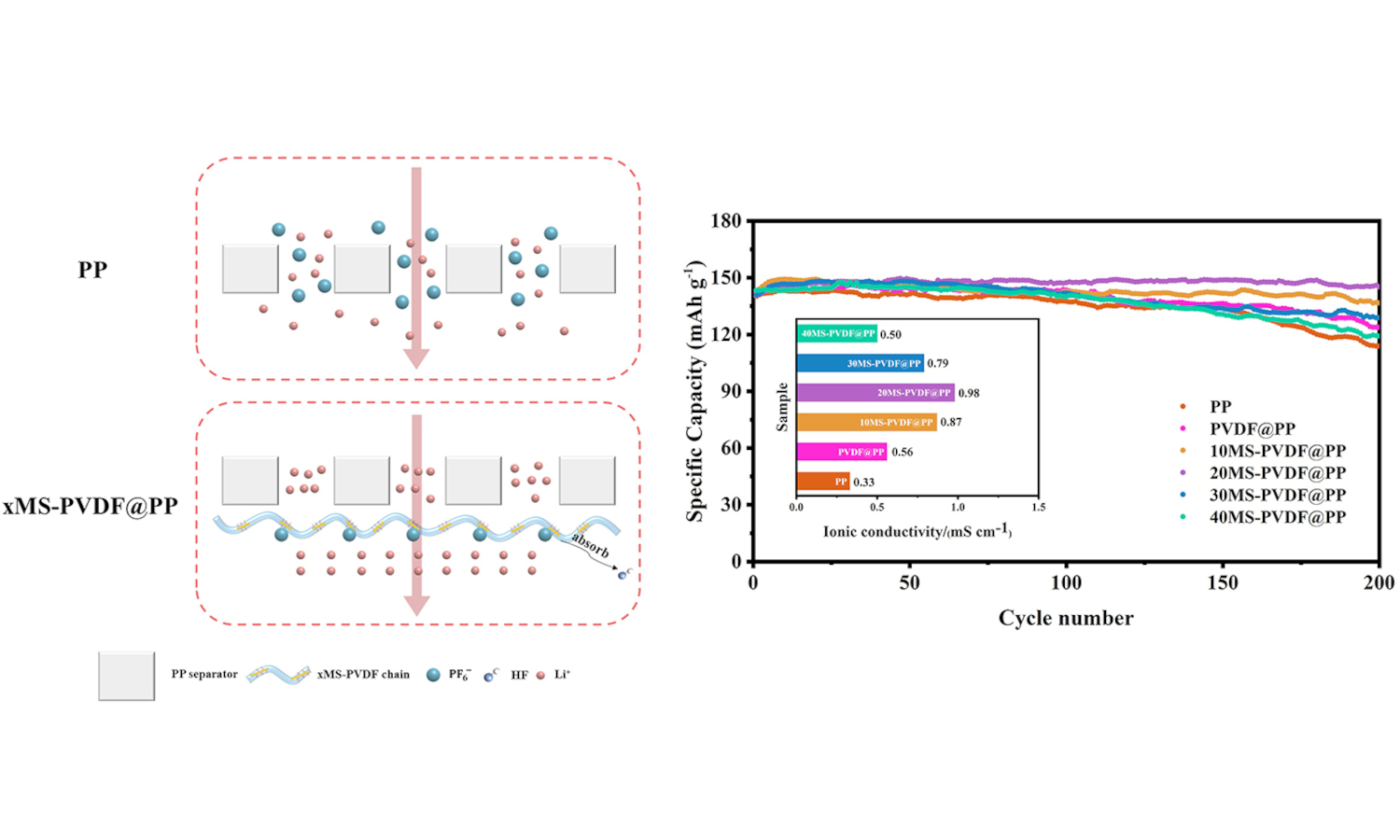
As a key component of lithium-ion batteries, a separator with excellent electrolyte wettability and good thermal stability has an important impact on the overall performance of lithium-ion batteries. Herein, a PVDF/sepiolite electrospun layer was coated on one side of the PP separator via electrospinning technology to prepare the composite separator (xMS-PVDF@PP) with sepiolite nanofibers modified with vinyltriethoxysilane (VTES) to ameliorate their dispersibility and compatibility with PVDF polymer matrix. The effect of modified sepiolite addition amounts on the physical and electrochemical properties of composite separator was intensively studied. It is found that the as-prepared xMS-PVDF@PP composite separator displays enhanced porosity, electrolyte uptake, thermal stability and Li+ ion transport kinetics than pristine PP separator. Specifically, Li|LiFePO4 battery with 20MS-PVDF@PP as separator shows the best rate and cycling performance, with a specific discharge capacity of 115.3 mAh·g–1 at 10C rate and a capacity retention rate of 97.06% after 200 cycles at 1C rate. The sepiolite in the electrospun layer can immobilize PF6– anion to facilitate the uniform distribution of Li+ ions and then inhibit the lithium dendrite growth, as well as absorb HF to alleviate Fe2+ dissolution from LiFePO4 cathode, thereby further improving the electrochemical performance of LiFePO4 battery.
Saikrishnan Ganesh, Jayakumari Lakshmanan Saraswathy, Vijay Raghunathan, Vinod Ayyappan, Sundarrajan Dharmakrishnan, Sanjay Mavinkere Rangappa, Suchart Sienghcin
Vol. 18., No.2., Pages 144-159, 2024
DOI: 10.3144/expresspolymlett.2024.12
Vol. 18., No.2., Pages 144-159, 2024
DOI: 10.3144/expresspolymlett.2024.12
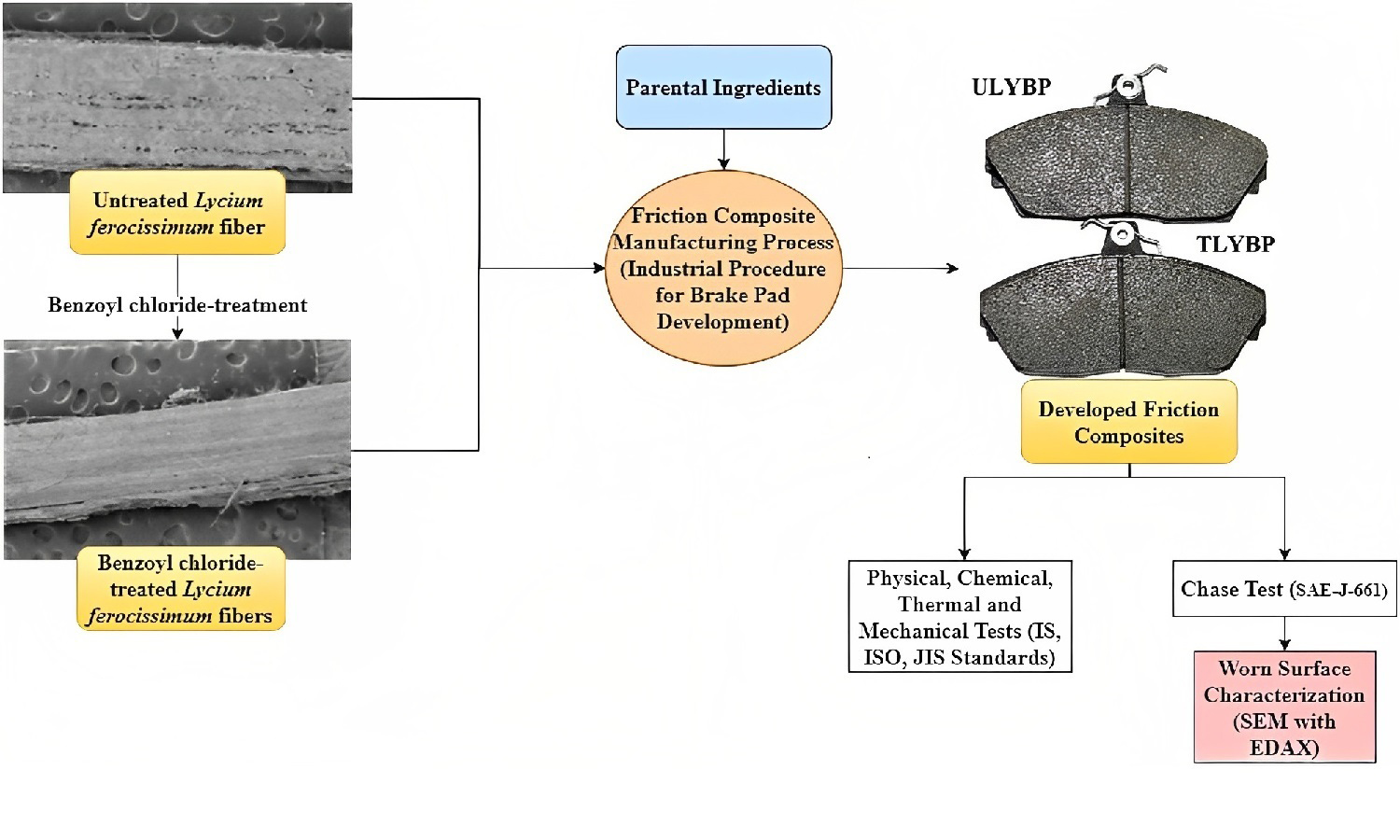
The increase in environmental consciousness and waste-to-wealth concepts in the automobile sector has led to the use of natural fibers in desirable quantities. The current study deals with the extraction, treatment, and utilization of Lycium ferocissimum stem fibers for friction composite in braking applications. The fibers of Lycium ferocissimum were extracted through manual retting and subsequently treated with benzoyl chloride. Both the benzoyl chloride treated and untreated fibers of Lycium ferocissimum were employed as reinforcements in the formulation of a friction composite, following the standard practices of the industry, and the comparison was made using commercially available friction composite. The developed friction composites were tested for original equipment manufacturer quality requirements following industrial Standards. The friction composite’s tribological behavior was analyzed using the Chase test following the Society of Automotive Engineers standards. The worn surface characteristics were analyzed using scanning electron microscope. The test results elucidated that benzoyl chloride-treated Lycium ferocissimum fibers-based friction composites showed good frictional properties with better wear resistance compared to others, having a weight loss of 5.4%.