
Friction composite formulation from Lycium ferocissimum fibers as natural reinforcement for braking applications
Saikrishnan Ganesh, Jayakumari Lakshmanan Saraswathy, Vijay Raghunathan, Vinod Ayyappan, Sundarrajan Dharmakrishnan, Sanjay Mavinkere Rangappa, Suchart Sienghcin
Vol. 18., No.2., Pages 144-159, 2024
DOI: 10.3144/expresspolymlett.2024.12
DOI: 10.3144/expresspolymlett.2024.12
Corresponding author: Sanjay Mavinkere Rangappa 
GRAPHICAL ABSTRACT
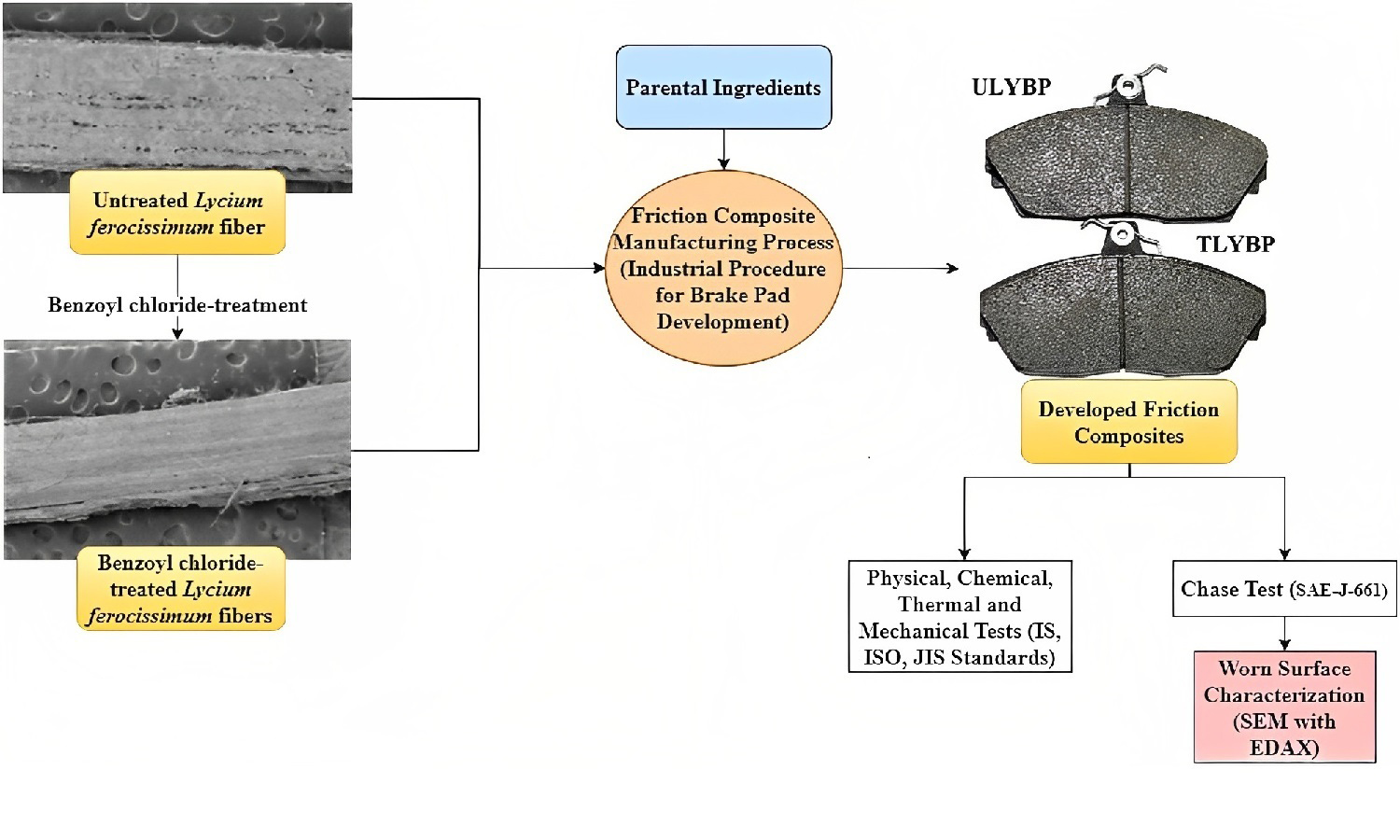
ABSTRACT
The increase in environmental consciousness and waste-to-wealth concepts in the automobile sector has led to the use of natural fibers in desirable quantities. The current study deals with the extraction, treatment, and utilization of Lycium ferocissimum stem fibers for friction composite in braking applications. The fibers of Lycium ferocissimum were extracted through manual retting and subsequently treated with benzoyl chloride. Both the benzoyl chloride treated and untreated fibers of Lycium ferocissimum were employed as reinforcements in the formulation of a friction composite, following the standard practices of the industry, and the comparison was made using commercially available friction composite. The developed friction composites were tested for original equipment manufacturer quality requirements following industrial Standards. The friction composite’s tribological behavior was analyzed using the Chase test following the Society of Automotive Engineers standards. The worn surface characteristics were analyzed using scanning electron microscope. The test results elucidated that benzoyl chloride-treated Lycium ferocissimum fibers-based friction composites showed good frictional properties with better wear resistance compared to others, having a weight loss of 5.4%.
RELATED ARTICLES
Simran Bansal, Neha Jain, Divya Nagri Bhan, Pankaj Dhawan
Vol. 20., No.7., Pages 698-707, 2026
DOI: 10.3144/expresspolymlett.2026.53
Vol. 20., No.7., Pages 698-707, 2026
DOI: 10.3144/expresspolymlett.2026.53
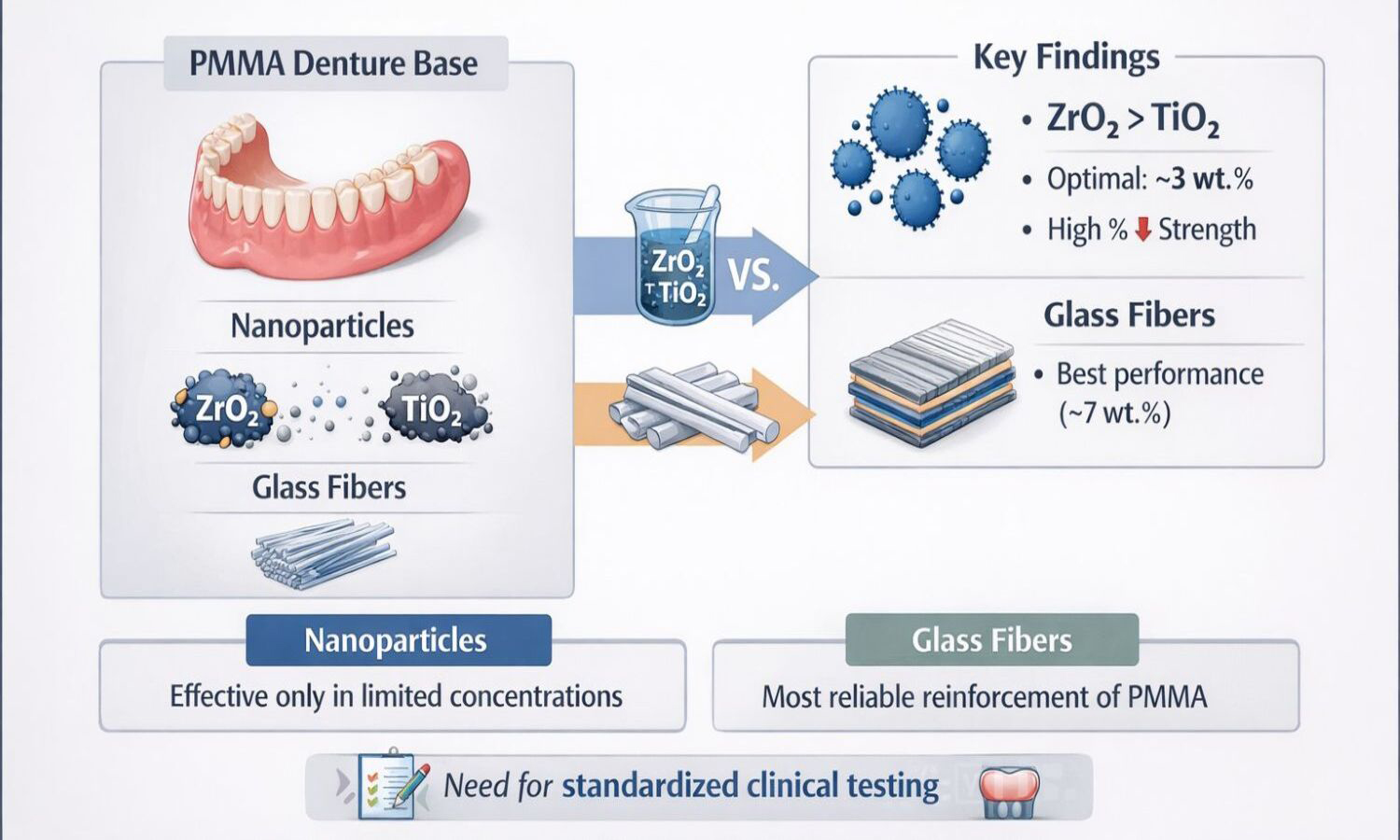
Polymethyl methacrylate (PMMA) remains the material of choice for denture base fabrication; however, its relatively low flexural and impact strength predisposes dentures to fracture during function and accidental loading. Various reinforcement strategies, particularly metal oxide nanoparticles and glass fibres, have been investigated in vitro, although comparative evidence remains limited and methodologically heterogeneous. This systematic review critically compared the effects of zirconium oxide (ZrO2) and titanium oxide (TiO2) nanoparticles versus glass fiber reinforcement on the flexural and impact strength of PMMA denture base resins. The review was conducted in accordance with PRISMA 2020 guidelines and a systematic search of PubMed, Scopus, EBSCOhost, and Google Scholar identified eligible in vitro studies published between 2014 and 2024. Five studies met the inclusion criteria. Glass fiber reinforcement consistently demonstrated the greatest improvement in flexural and impact strength, with progressive enhancements reported up to approximately 7 wt%fiber content. Among nanoparticle reinforcements, ZrO2 showed superior mechanical performance compared with TiO2, with optimal reinforcement observed at concentrations around 3 wt%, while higher concentrations were associated with reduced strength due to particle agglomeration and poor dispersion. Considerable heterogeneity was observed across studies in terms of PMMA type, reinforcement concentration, specimen preparation and mechanical testing protocols, precluding meta-analysis. Overall, the available in vitro evidence indicates that glass fiber reinforcement provides the most reliable mechanical enhancement of PMMA denture base resins, whereas nanoparticle-based reinforcement offers benefits only within narrow concentration ranges, underscoring the need for standardized methodologies and clinically relevant testing in future research.
Shuang Gao, Yuan Lyu, Jieting Geng, Lin Xia
Vol. 20., No.3., Pages 279-291, 2026
DOI: 10.3144/expresspolymlett.2026.22
Vol. 20., No.3., Pages 279-291, 2026
DOI: 10.3144/expresspolymlett.2026.22
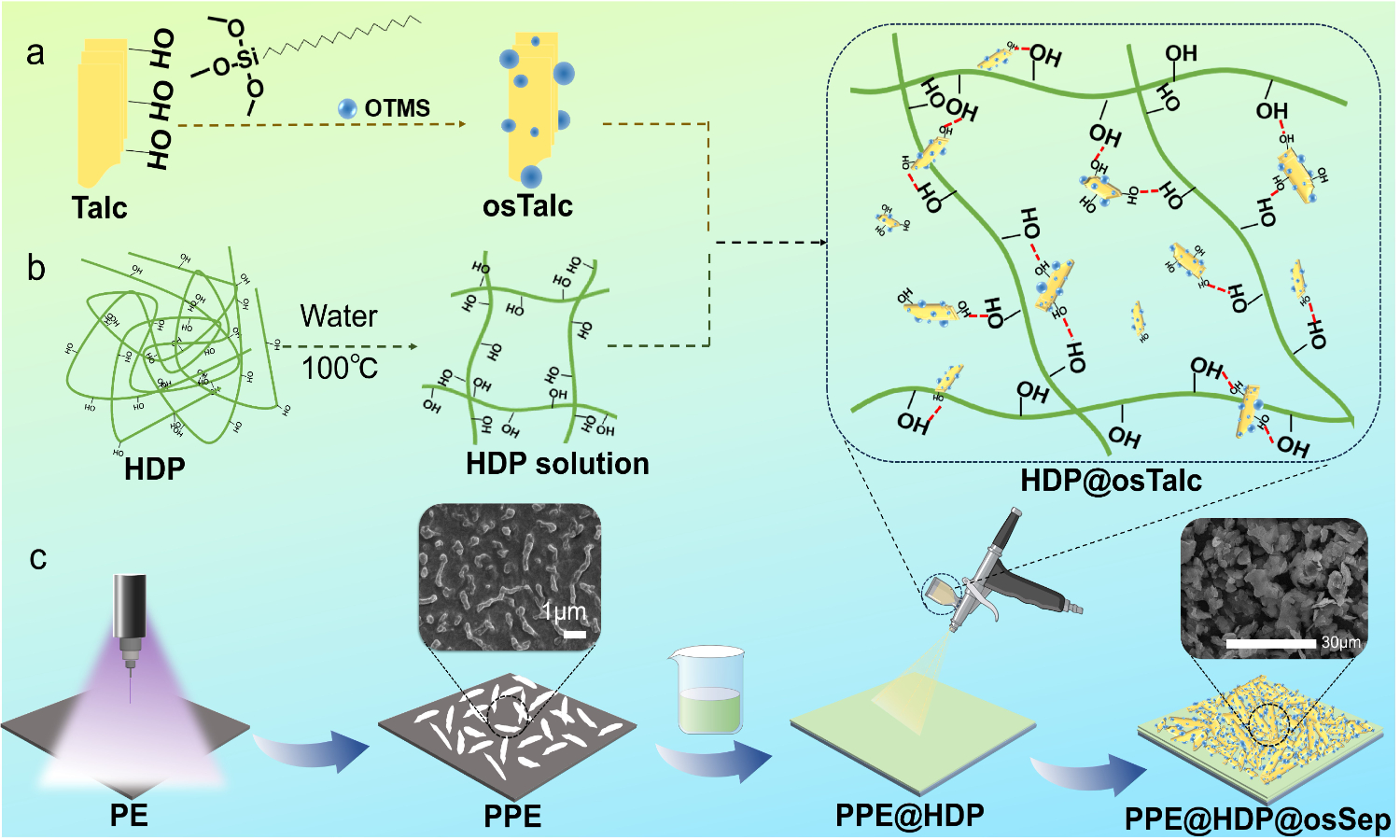
Inspired by natural structures, this study successfully developed innovative composites through the strategic integration of biomimetic concepts and advanced material engineering techniques. Using plasma-treated polyethylene (PPE) film as the substrate, hydroxypropyl distarch phosphate (HDP) as the bioinspired adhesive layer, and modified talc (osTalc) as the functional modifier, a series of PPE@HDP@osTalc composites were fabricated via an optimized spray-coating process. The as-prepared composite demonstrates exceptional superhydrophobicity and mechanical flexibility. Chemical stability assessment of the PPE@HDP@osTalc composites demonstrated strong interfacial bonding between the PPE, HDP, and osTalc components. The development of this bioinspired smart composite not only provides new insights for designing functional materials but also demonstrates significant potential for applications in emerging fields such as flexible electronics, marine engineering, and biomedical devices.
Yiqing Xu, Haiyan Liu, Shuni Ying, Qunfang Lin, Huihuang Ma, Xiaodong Zhou
Vol. 18., No.11., Pages 1164-1175, 2024
DOI: 10.3144/expresspolymlett.2024.88
Vol. 18., No.11., Pages 1164-1175, 2024
DOI: 10.3144/expresspolymlett.2024.88

This study examines the interface of biodegradable polylactic acid (PLA) fiber-reinforced thermoplastic starch composites to address market demand for their mechanical properties. We first used a combination of solution treatment (acid/alkali) and plasma modification to modify fibers. This method improves surface roughness and increases oxygen-containing groups of the fibers, which enhances the mechanical interlocking at the interface and promotes stronger hydrogen bonds between fibers and starch, respectively. Their synergy effect significantly strengthens interfacial adhesion and interfacial shear strength (IFSS). In contrast, cold plasma modification alone results in a smaller increase in IFSS because of its lower roughness and fewer oxygen-containing groups. Alkaline treatment and increased cold plasma power level are more conducive to higher IFSS through stronger synergistic effects. Although IFSS improved from 2.41 to 4.40 MPa after alkali and plasma treatments of 200 W, the tensile strength decreased from 811.46 to 351.55 MPa. To optimize the mechanical properties of composite materials, it is crucial to choose a kind of modification method that balances IFSS enhancement and tensile strength reduction.