
From cured rubber to plasticized thermoplastic: Composition-driven mechanical transition of two-roll-milled chloroprene rubber/plasticized-PVC blends
Chathura Gunarathna Bandara , Suranga Mahesh Rajapaksha, Gayan Adikari Appuhamillage, Gayan Adikari Abeygunawardane, Renuka Nilmini Liyanage
Vol. 20., No.11., Pages 1107-1123, 2026
DOI: 10.3144/expresspolymlett.2026.81
DOI: 10.3144/expresspolymlett.2026.81
Corresponding author: Suranga Mahesh Rajapaksha 
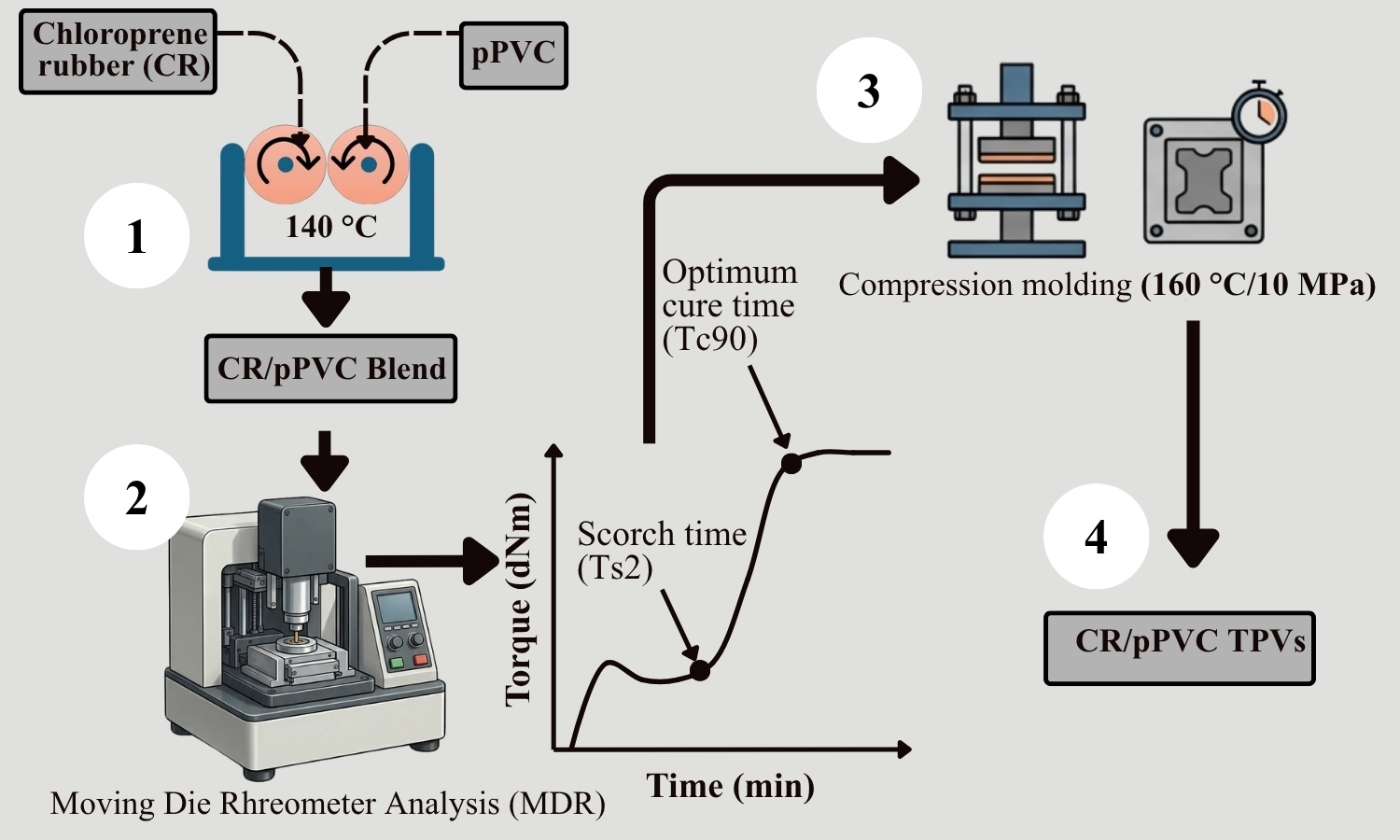
GRAPHICAL ABSTRACT
ABSTRACT
The relationship between composition and mechanical performance in the chloroprene rubber (CR)/dioctyl terephthalate–plasticized poly(vinyl chloride) (pPVC) (CR/pPVC) system remains unexplored. We prepared eleven CR/pPVC compositions by two-roll-mill melt mixing and statically cured the CR phase by compression molding for a compositionspecific time (Tc90), determined by moving die rheometry. Dynamic mechanical analysis of seven compositions confirmed two distinct, phase-separated tanδ relaxations across most of the series; the pPVC-associated relaxation shifted monotonically from 74.5 to 95.4 °C with increasing CR content, while the CR-associated relaxation weakened and became unresolvable at the lowest CR loading. Tensile, flexural, and impact testing showed a progressive transition from rubber- to thermoplasticdominated deformation with increasing pPVC content. Flexural modulus, strength, and energy to peak increased with increasing pPVC, accompanied by reduced strain capacity, pointing to a strength- rather than toughness-dominated energy response. The most pronounced compositional changes occurred across the CR(50):pPVC(50) to CR(20):pPVC(80) range, consistent across tensile, hardness, and dynamic mechanical measurements, marking a shift in the mechanically dominant phase. We show that composition governs mechanical response in this phase-separated CR/pPVC system.
RELATED ARTICLES
Junxiu Xue, Kaituo Fang, Zhenchun Xu, Huiguang Bian, Yu Wang, Yongming Zhang
Vol. 20., No.5., Pages 489-500, 2026
DOI: 10.3144/expresspolymlett.2026.37
Vol. 20., No.5., Pages 489-500, 2026
DOI: 10.3144/expresspolymlett.2026.37
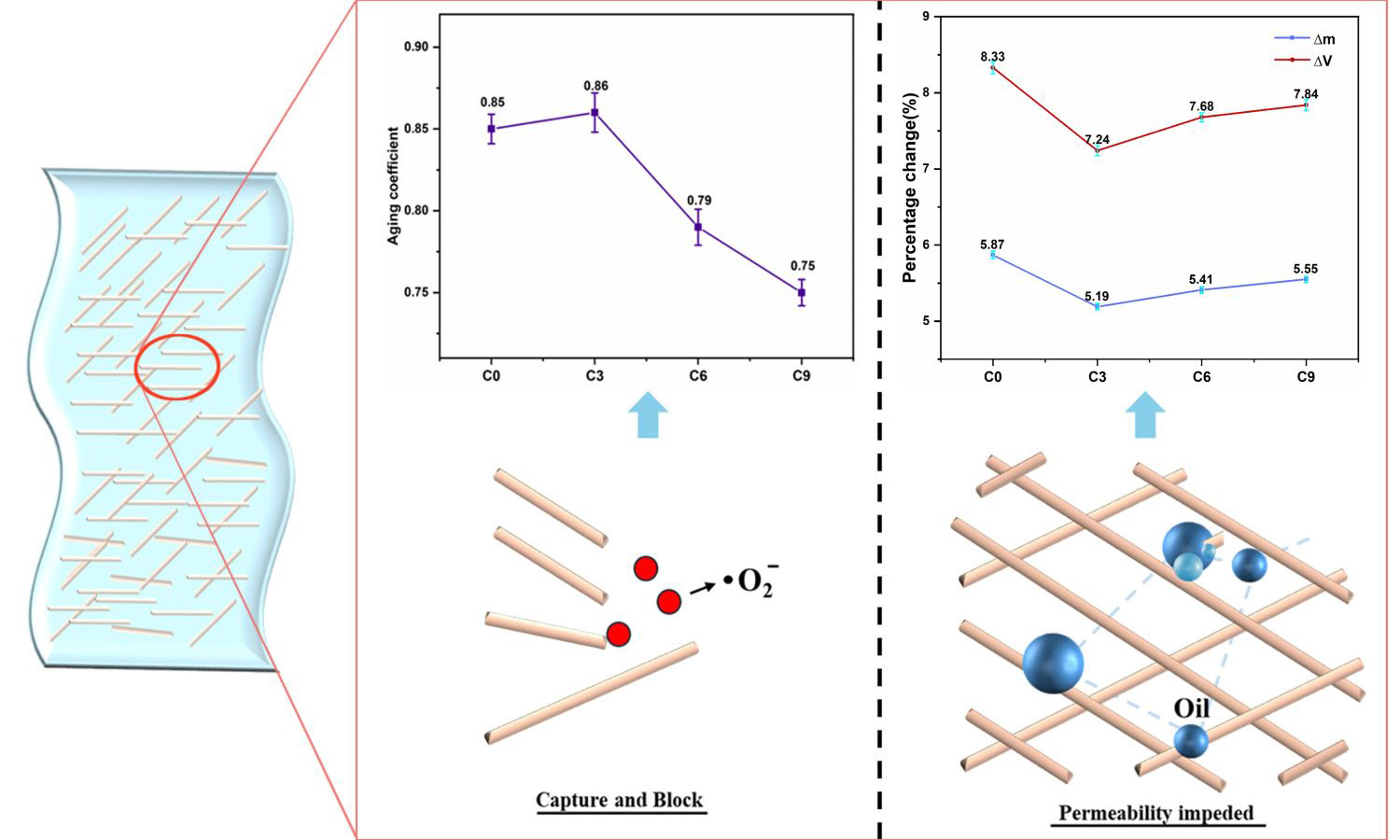
This study investigates the effects of renewable chopped cellulose fiber (CCleF) on the physical and mechanical properties, oil resistance, and thermal-oxidative aging behavior of acrylonitrile-butadiene rubber (NBR), aiming to determine the optimal filler content. CCleF/NBR composites with varying CCleF loadings were prepared and systematically characterized through analyses of vulcanization behavior, three-dimensional morphology, mechanical properties, thermal-oxidative aging, and oil resistance. The results indicate that the composite with 3 phr CCleF exhibits uniform fiber dispersion and optimal overall performance, showing enhanced processability, a reduced vulcanization time, and improved physical and mechanical properties. After thermal-oxygen aging, the composite demonstrated superior stability: the percentage change in tensile modulus, rebound resilience, and DIN abrasion decreased significantly by 13.73, 49.82, and 74.9%, respectively, while the aging coefficient reached 0.86. Notably, this composite also exhibited excellent oil resistance, with a volume expansion rate of 7.24%, which is 13.1% lower than that of unfilled NBR. Correspondingly, the tensile product’s retention rate decreased by 37.72%, while rebound resilience and abrasion resistance improved. This study demonstrates that incorporating 3 phr CCleF is a practical approach to achieving high-performance NBR, providing a material basis for its use in demanding environments such as the petrochemical industry.
Amanda Legnani, André Luis Marcomini, Philipe Augusto Pocidonio Silva, Ricardo Geraldo de Sousa, Anderson Júnior dos Santos, João Paulo Ferreira Santos
Vol. 20., No.4., Pages 326-341, 2026
DOI: 10.3144/expresspolymlett.2026.26
Vol. 20., No.4., Pages 326-341, 2026
DOI: 10.3144/expresspolymlett.2026.26
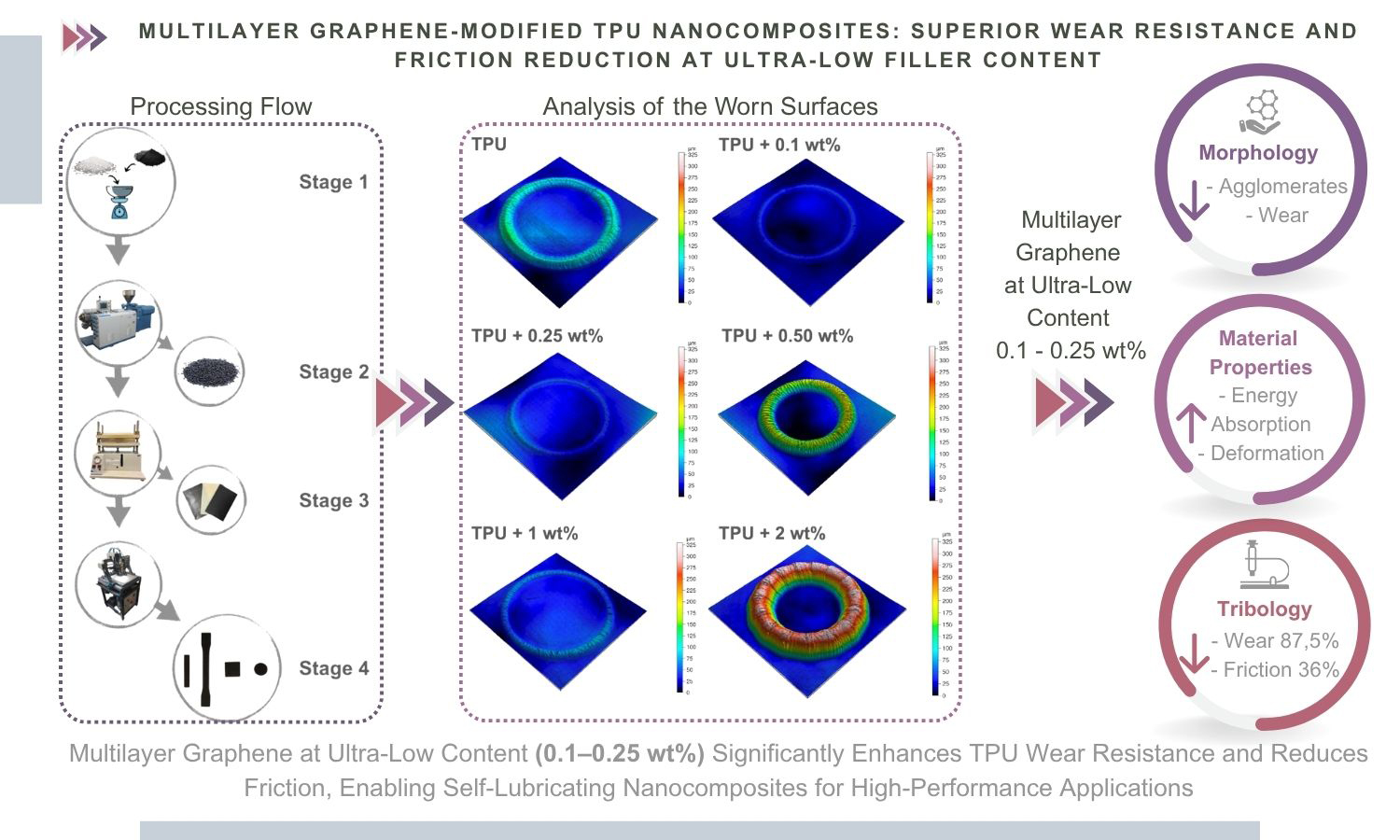
This work presents the development of high-performance thermoplastic polyurethane (TPU) nanocomposites reinforced with low contents of multilayer graphene (mG), aiming to improve their tribological behavior. Using twin-screw extrusion followed by hot pressing, nanocomposites containing 0.1, 0.25, 0.5, 1, and 2% mG weight were fabricated and systematically evaluated. Nanocomposites with only 0.1–0.25 wt% mG achieved a 36% reduction in friction coefficient and 87.5% reduction in wear volume compared to neat TPU. Results are rarely reported at such low filler loadings. Scanning electron microscopy (SEM) analysis revealed uniform dispersion at these optimal concentrations, while higher mG contents led to agglomeration and performance loss. Rheological studies indicated improved flow behavior, and dynamic-mechanical analysis confirmed increased energy dissipation and thermal response. These results suggest that the concentrations of 0.1% and 0.25% of multilayer graphene used in the study are promising for improving the performance of TPU nanocomposites in applications requiring high wear resistance for advanced applications in automotive, biomedical, and high-load engineering components, where durability and low friction are essential.
Abdulaziz Al-Shehri, John Sweeney, Paul Spencer, Phil Coates, Fin Caton-Rose, Ajay Taraiya
Vol. 19., No.12., Pages 1238-1255, 2025
DOI: 10.3144/expresspolymlett.2025.92
Vol. 19., No.12., Pages 1238-1255, 2025
DOI: 10.3144/expresspolymlett.2025.92
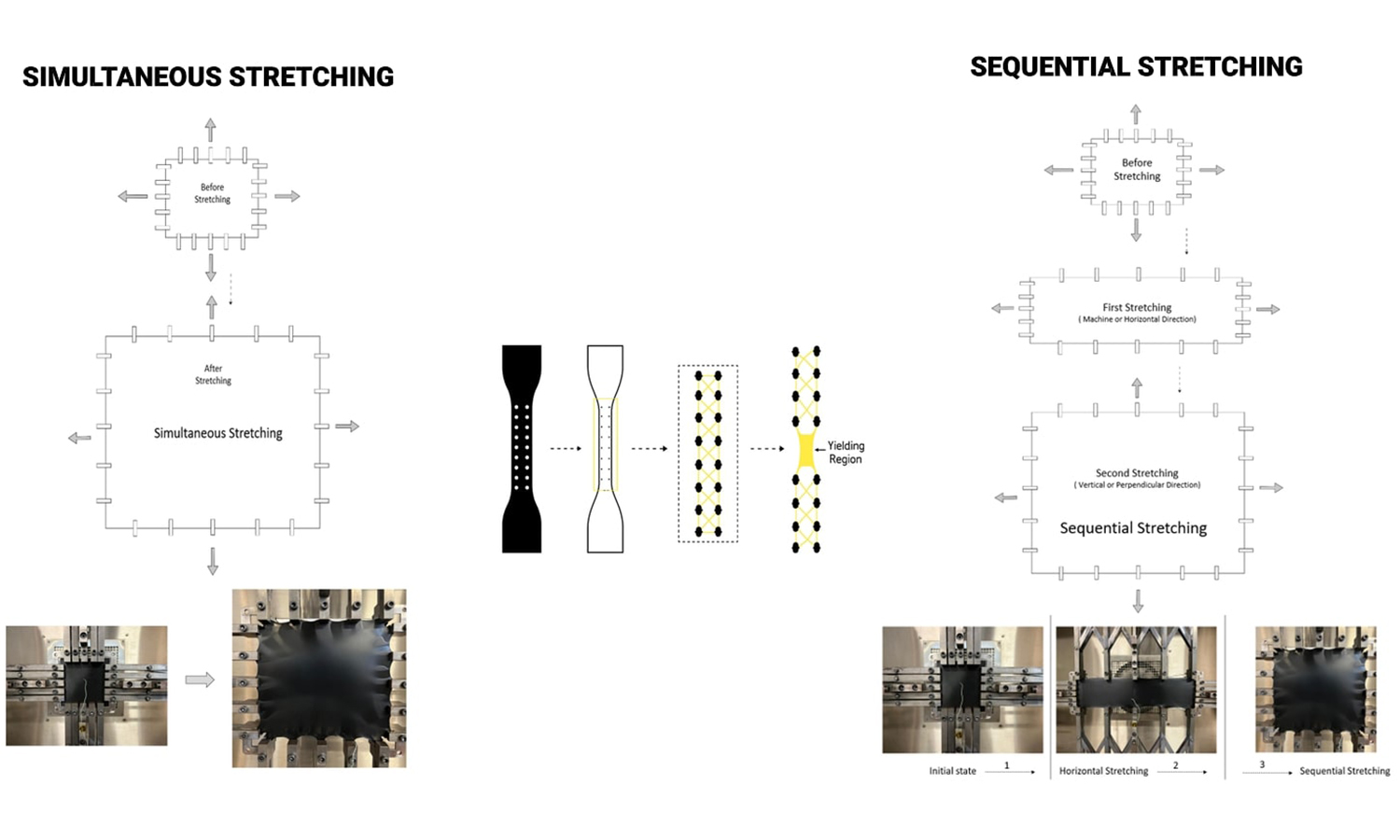
This study examines the combined effects of molecular modalities (unimodal, bimodal, trimodal) and biaxial stretching modes (sequential and simultaneous) on the yielding, stiffness, and necking behaviour of stretched high-density polyethylene (HDPE). Yield strength and stiffness were examined in relation to oriented material produced by drawing at linear strain rates 5.4·10–3, 2.2·10–2, and 8.6·10–2 s–1 under both stretching modes. Simultaneous stretching outperformed sequential stretching, with yield strength increasing with draw rate. Unimodal HDPE showed higher yield strength and stiffness than bimodal and trimodal grades, while trimodal HDPE had the lowest necking tendency from greater flexibility and uniformity. The highest necking tendency was observed in unimodal HDPE in strain localization analysis using the maximum strain/average strain ratio, while trimodal HDPE deformed more uniformly due to improved molecular weight distribution and strain hardening. Increasing the draw rate reduced strain localization, improving mechanical performance. Insights for optimising polyethylene materials in industry are provided by gel permeation chromatography (GPC), nuclear magnetic resonance (NMR) spectroscopy, and mechanical analyses, establishing the correlation between HDPE structure, processing, and properties.
Rebeka Lorber, Janez Slapnik, Borut Černe, Andreas Hausberger, Jan Sumfleth
Vol. 19., No.10., Pages 1073-1089, 2025
DOI: 10.3144/expresspolymlett.2025.80
Vol. 19., No.10., Pages 1073-1089, 2025
DOI: 10.3144/expresspolymlett.2025.80
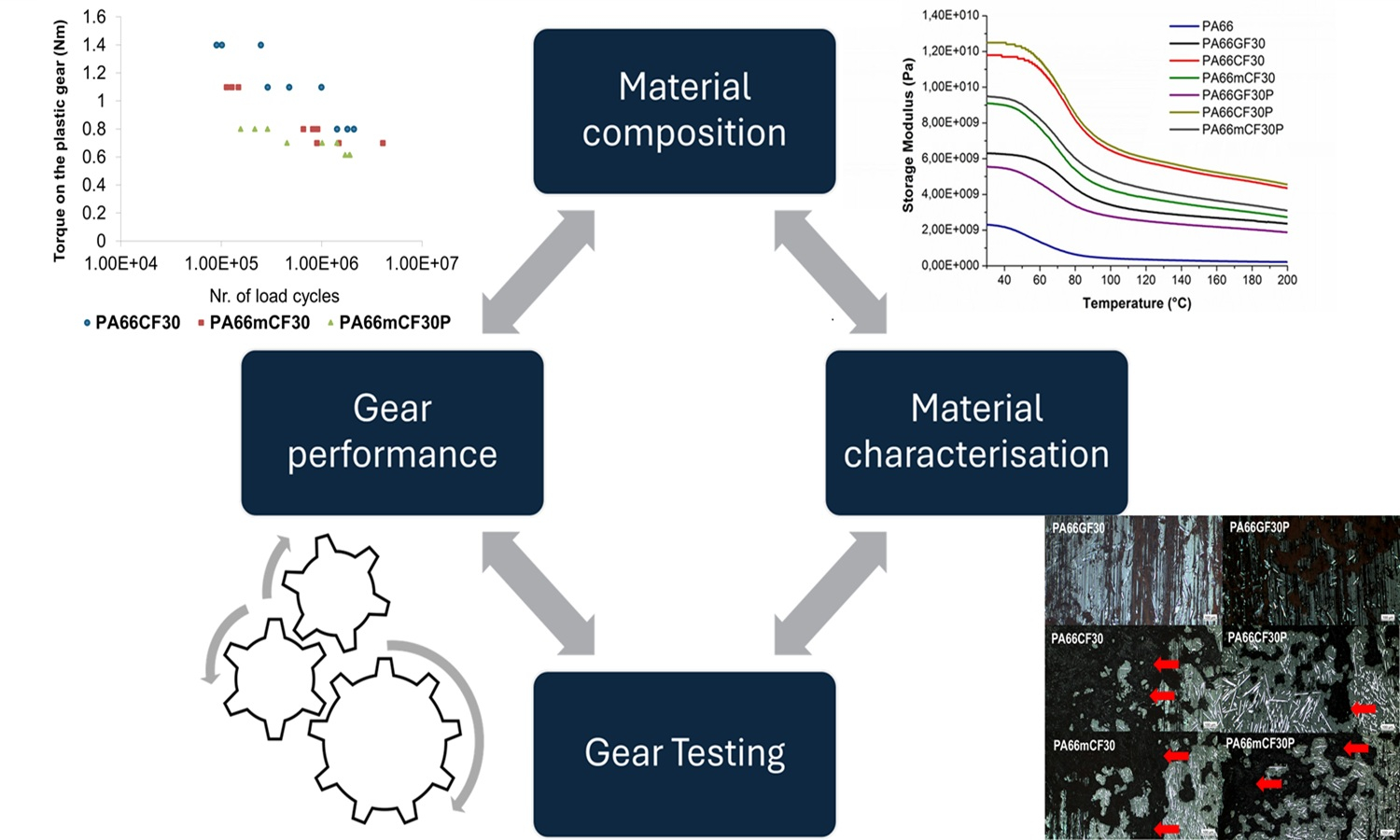
The study investigates the use of repurposed milled carbon fibre (mCF) as reinforcement for polyamide 66 (PA66) in gear applications, addressing environmental and cost concerns of virgin carbon fibres. Neat PA66 and PA66 composites reinforced with mCF, glass fibres (GF), and carbon fibres (CF), with and without polytetrafluoroethylene (PTFE), were injection moulded and evaluated for microstructure (fibre length), thermal, mechanical, surface, and tribological properties, as well as gear performance under VDI 2736 guidelines. CF reinforced composites showed the highest modulus and tensile strength, followed by mCF and GF. PTFE reduced modulus and strength in binary composites. All reinforced composites significantly lowered the coefficient of friction (COF) and wear rate compared to neat PA66, with mCF showing the most notable improvements. PTFE slightly improved tribological performance only for GF (wear) and CF (COF) composites. In gear testing, binary composites outperformed neat PA66, with CF performing best, followed by mCF and GF. Ternary composites had slightly lower performance than their binary equivalents. Correlation analysis showed that gear performance is closely linked to structural integrity. Failure analysis revealed higher crack susceptibility in mCF reinforced gears due to shorter fibre length. The findings highlight mCF reinforced PA66 as a sustainable, cost-effective material for durable polymer gears.
Xue Xu, Rujie Li, Li Gao, Beibei Sun, Hongming Liu, Shiai Xu
Vol. 19., No.9., Pages 959-976, 2025
DOI: 10.3144/expresspolymlett.2025.72
Vol. 19., No.9., Pages 959-976, 2025
DOI: 10.3144/expresspolymlett.2025.72
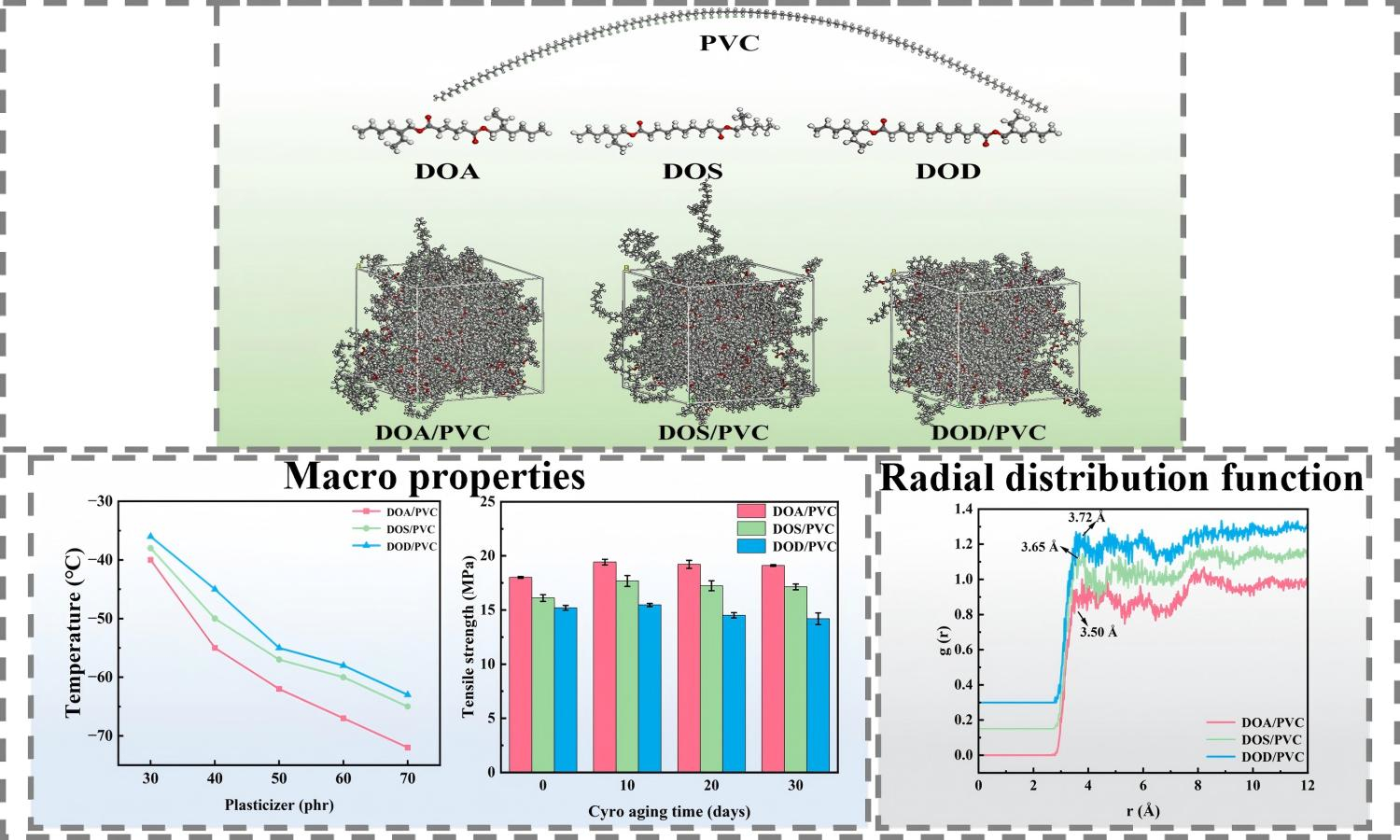
As polyvinyl chloride (PVC) films are hard and brittle in a low-temperature environment, aliphatic dibasic acid ester plasticizers with different acid chain lengths were fabricated, i.e. di(2-ethylhexyl) adipate (DOA), di(2-ethylhexyl) sebacate (DOS) and dioctyl dodecanedioate (DOD), and their effects on the cold-resistant properties of PVC were investigated using experiments and molecular dynamics (MD) simulations. The brittleness temperature and tensile properties of plasticizers/PVC are negatively related to the acid chain length of the aliphatic dibasic acid esters. The brittleness temperatures of the three systems are all below –50 °C. In-situ low-temperature tensile tests and aging tests indicate that DOA/PVC exhibits the best cold resistance and stability. MD simulations further reveal that the best compatibility between DOA and PVC is attributed to its strong binding energy and weak hydrogen bonding interactions, while van der Waals forces are dominant in DOS/PVC and DOD/PVC. This study elucidates the structure-property relationship between aliphatic dibasic acid ester plasticizers and PVC from the perspective of molecular interactions, and provides insights into the design of cold-resistant PVC plasticizers.