Synergistic effects of molecular modalities and biaxial stretching modes on the mechanical and necking behaviour of stretched high-density polyethylene
Abdulaziz Al-Shehri , John Sweeney, Paul Spencer, Phil Coates, Fin Caton-Rose, Ajay Taraiya
, John Sweeney, Paul Spencer, Phil Coates, Fin Caton-Rose, Ajay TaraiyaVol. 19., No.12., Pages 1238-1255, 2025
DOI: 10.3144/expresspolymlett.2025.92
DOI: 10.3144/expresspolymlett.2025.92
Corresponding author: Abdulaziz Al-Shehri 
GRAPHICAL ABSTRACT
ABSTRACT
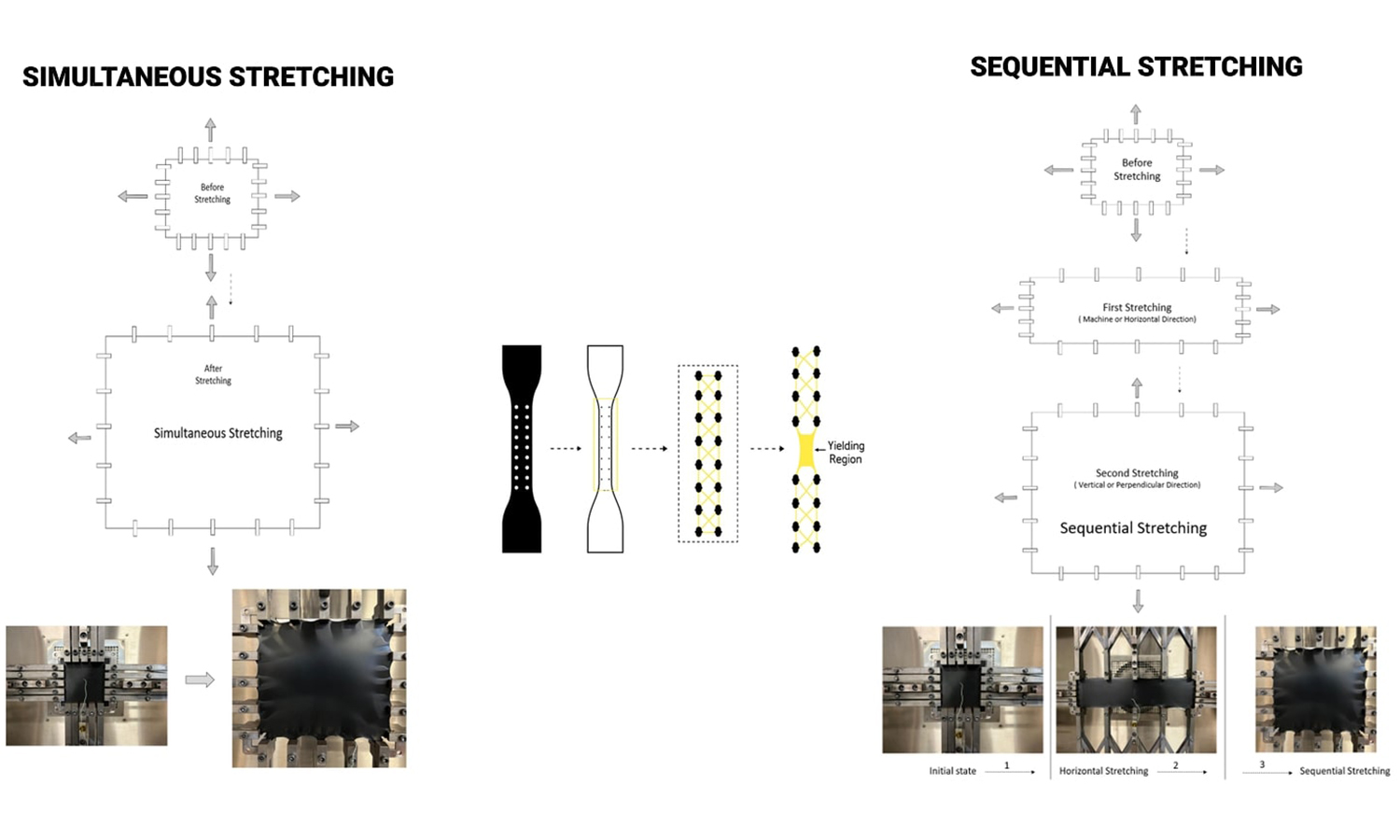
This study examines the combined effects of molecular modalities (unimodal, bimodal, trimodal) and biaxial stretching modes (sequential and simultaneous) on the yielding, stiffness, and necking behaviour of stretched high-density polyethylene (HDPE). Yield strength and stiffness were examined in relation to oriented material produced by drawing at linear strain rates 5.4·10–3, 2.2·10–2, and 8.6·10–2 s–1 under both stretching modes. Simultaneous stretching outperformed sequential stretching, with yield strength increasing with draw rate. Unimodal HDPE showed higher yield strength and stiffness than bimodal and trimodal grades, while trimodal HDPE had the lowest necking tendency from greater flexibility and uniformity. The highest necking tendency was observed in unimodal HDPE in strain localization analysis using the maximum strain/average strain ratio, while trimodal HDPE deformed more uniformly due to improved molecular weight distribution and strain hardening. Increasing the draw rate reduced strain localization, improving mechanical performance. Insights for optimising polyethylene materials in industry are provided by gel permeation chromatography (GPC), nuclear magnetic resonance (NMR) spectroscopy, and mechanical analyses, establishing the correlation between HDPE structure, processing, and properties.
RELATED ARTICLES
János Molnár, Pavel Shutov, Renate Eckmayr, Jingbo Wang, Vasileios Touloupidis, Markus Gahleitner
Vol. 20., No.9., Pages 939-954, 2026
DOI: 10.3144/expresspolymlett.2026.69
Vol. 20., No.9., Pages 939-954, 2026
DOI: 10.3144/expresspolymlett.2026.69
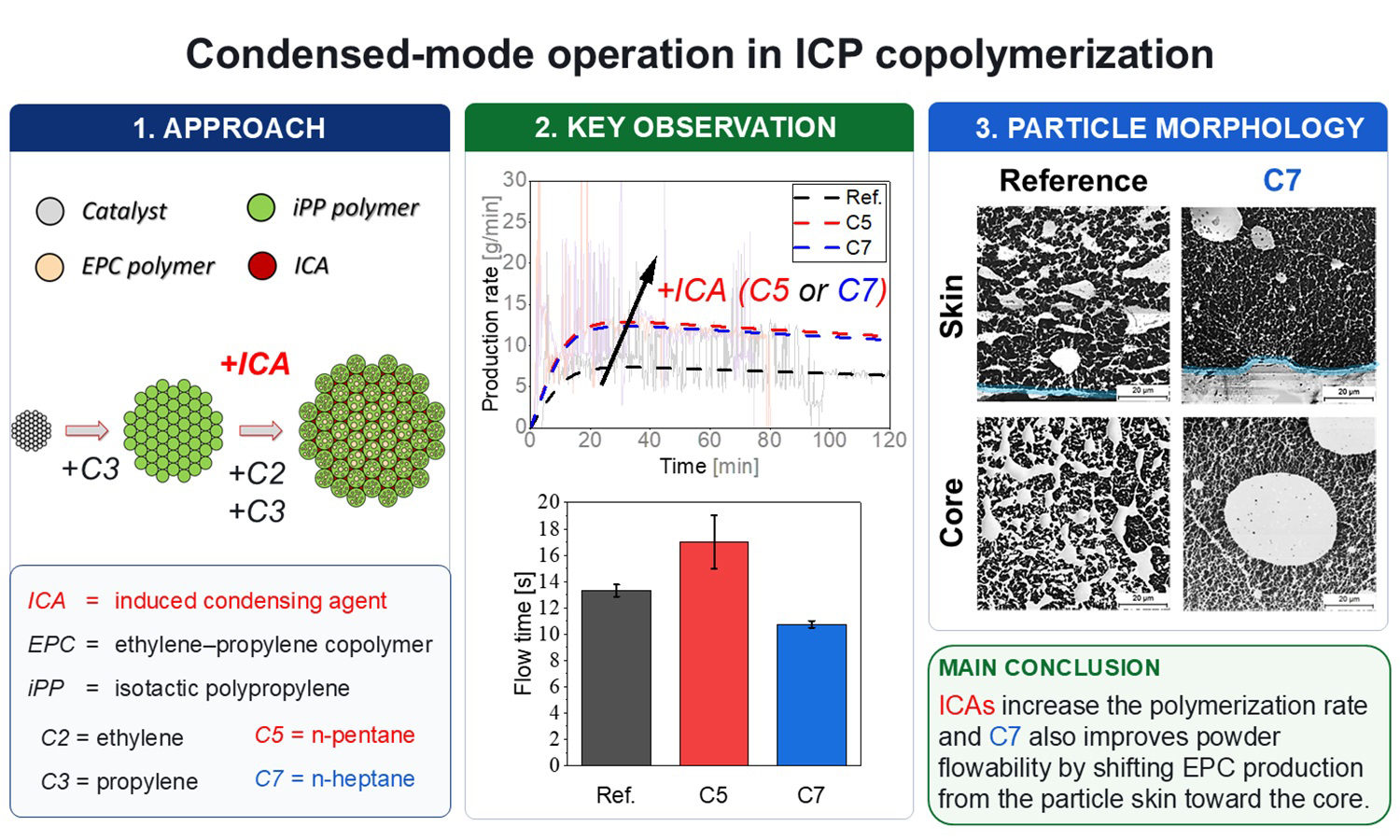
Elastomeric ethylene–propylene copolymer (EPC) content is a decisive factor in the impact performance of multiphase polypropylene (PP) impact copolymers (ICPs). However, producing PP ICPs with high EPC content remains challenging because increasing EPC content raises powder stickiness, potentially leading to production problems such as fouling or sheeting. Condensed mode operation with an induced condensing agent (ICA) has recently been proposed to reduce stickiness and improve flowability. In this study, we performed bench-scale PP ICP polymerizations with n-pentane (C5) or n-heptane (C7) as ICAs to assess this approach. Both ICAs enhanced monomer solubility and the polymerization rate through co-solubility. At high EPC content, C7 improved powder flowability, whereas C5 gave stickiness comparable to or greater than that of the reference. Atomic force microscopy revealed that C7 shifted the dispersed EPC phase toward the particle core, explaining the improved flowability. In contrast to literature reports, ethylene response and EPC comonomer distribution remained unchanged. Consequently, mechanical and thermal properties were unaffected. Condensed-mode operation may therefore offer benefits only when specific ICAs, such as C7, are used in substantial amounts, limiting practical applicability because of additional purification costs.
Joanna Szymańska, Wojciech Hubert Bednarek, Beata Strzemiecka, Dominik Paukszta
Vol. 20., No.5., Pages 501-513, 2026
DOI: 10.3144/expresspolymlett.2026.38
Vol. 20., No.5., Pages 501-513, 2026
DOI: 10.3144/expresspolymlett.2026.38
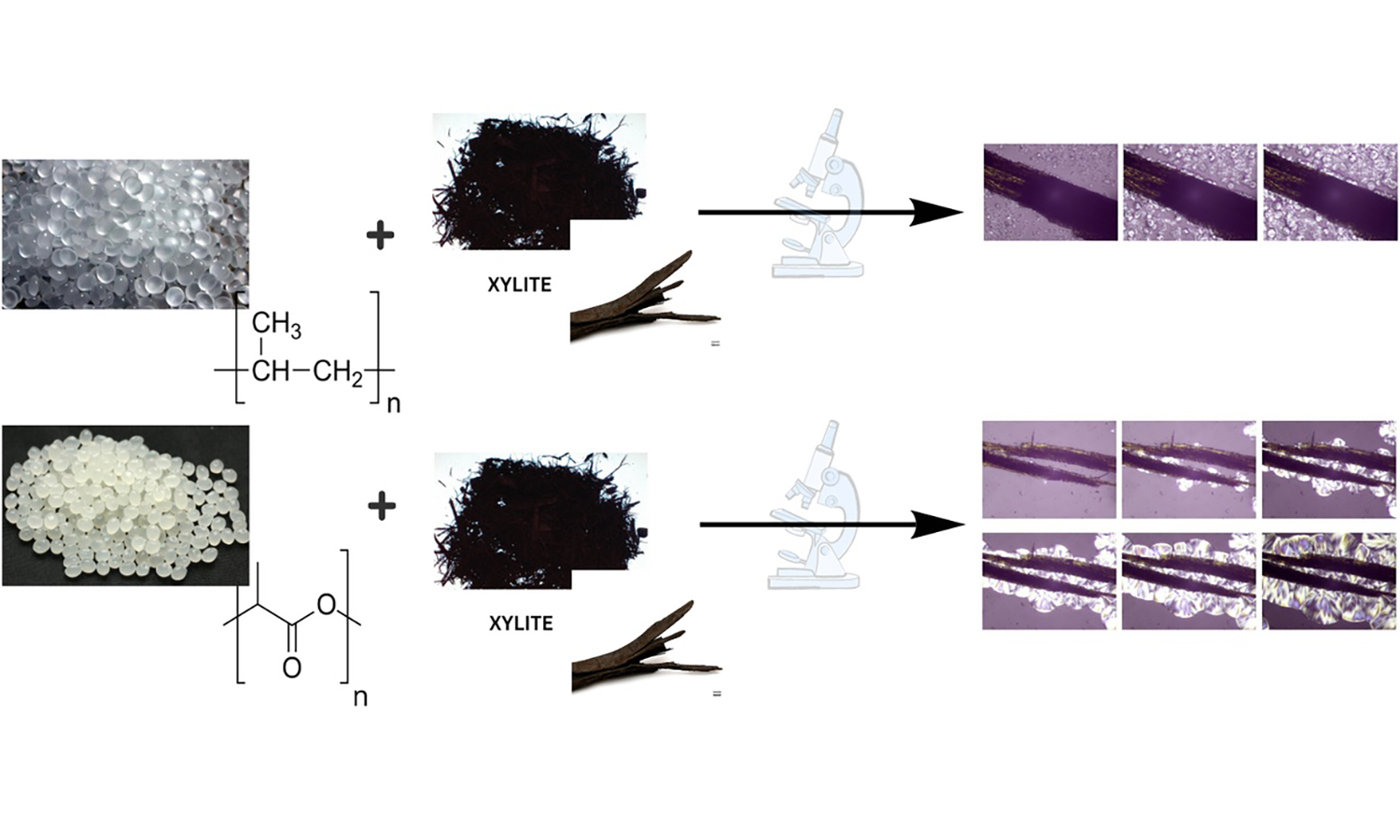
Crystallinity describes the degree of structural order in solids, and in polymers it strongly influences rheological, mechanical, thermal, and optical properties as well as degradation. In this study, we investigate how adding a xylitic brown coal fraction affects the crystallization of polylactide (PLA) and polypropylene (PP) under static and shear conditions. We characterized composites by wide-angle X-ray scattering (WAXS), Fourier transform infrared spectroscopy (FTIR), polarization light microscopy (PLM), scanning electron microscopy (SEM) and scanning electron microscopy with energy-dispersive X-ray spectroscopy (SEM-EDS) to examine both crystallization and filler structure. Results show that the lignocellulosic filler markedly alters crystallization kinetics and supramolecular morphology. In PLA-based composites, a transcrystalline layer (TCL) developed at the interface, modifying crystallization and reducing spherulite formation. In PP, only a weak TCL developed due to limited interfacial compatibility. Under shear, PP displayed the expected acceleration of spherulite growth, while PLA showed competing mechanisms between spherulitic nucleation and TCL formation. These findings highlight the role of natural, hybrid organic–mineral fillers in tailoring polymer crystallization processes and improving composite design.
Markus Gahleitner
Vol. 20., No.5., Pages 435-436, 2026
DOI: 10.3144/expresspolymlett.2026.33
Vol. 20., No.5., Pages 435-436, 2026
DOI: 10.3144/expresspolymlett.2026.33
This is an editorial article. It has no abstract.
Shuang Gao, Yuan Lyu, Jieting Geng, Lin Xia
Vol. 20., No.3., Pages 279-291, 2026
DOI: 10.3144/expresspolymlett.2026.22
Vol. 20., No.3., Pages 279-291, 2026
DOI: 10.3144/expresspolymlett.2026.22
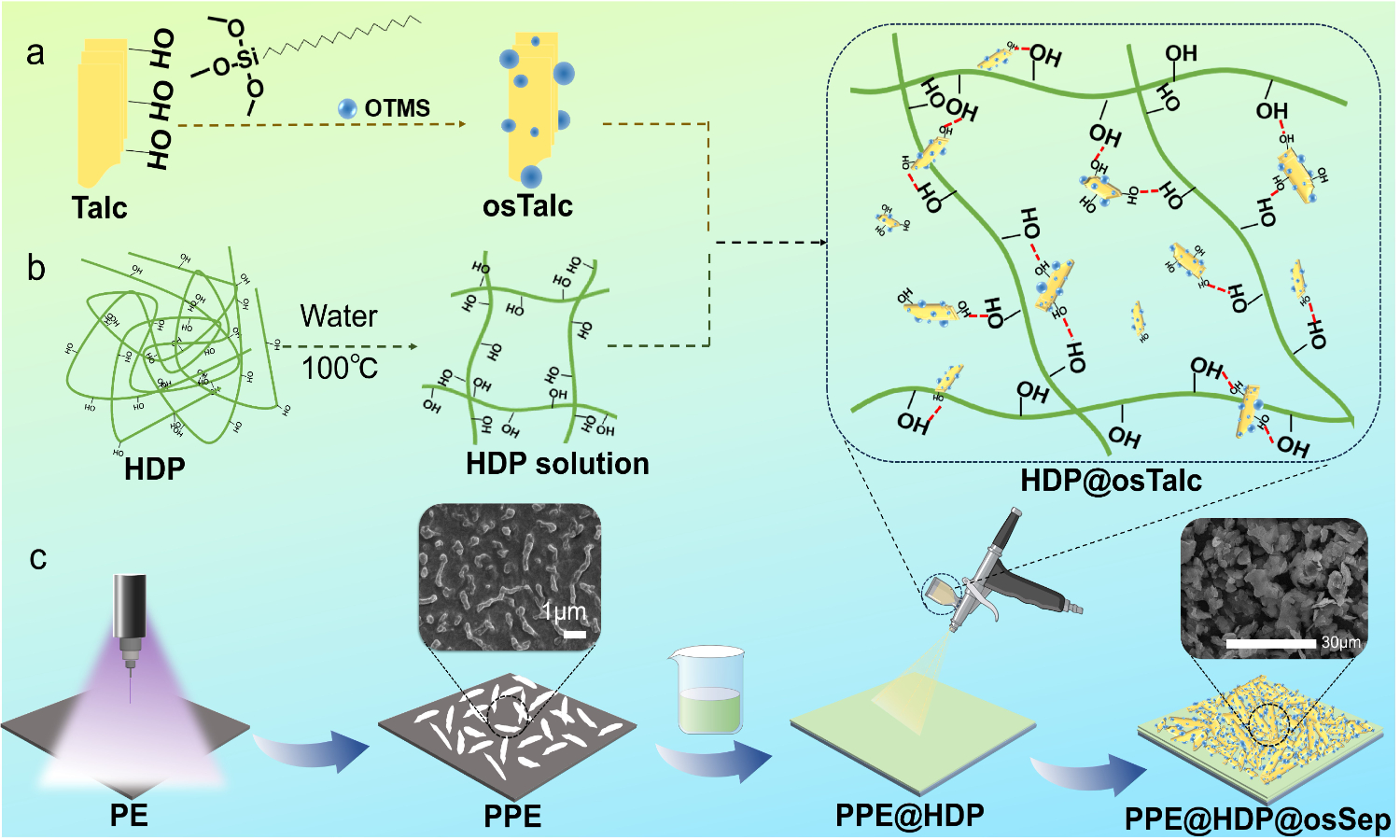
Inspired by natural structures, this study successfully developed innovative composites through the strategic integration of biomimetic concepts and advanced material engineering techniques. Using plasma-treated polyethylene (PPE) film as the substrate, hydroxypropyl distarch phosphate (HDP) as the bioinspired adhesive layer, and modified talc (osTalc) as the functional modifier, a series of PPE@HDP@osTalc composites were fabricated via an optimized spray-coating process. The as-prepared composite demonstrates exceptional superhydrophobicity and mechanical flexibility. Chemical stability assessment of the PPE@HDP@osTalc composites demonstrated strong interfacial bonding between the PPE, HDP, and osTalc components. The development of this bioinspired smart composite not only provides new insights for designing functional materials but also demonstrates significant potential for applications in emerging fields such as flexible electronics, marine engineering, and biomedical devices.
Jana Navratilova
Vol. 20., No.2., Pages 112-113, 2026
DOI: 10.3144/expresspolymlett.2026.9
Vol. 20., No.2., Pages 112-113, 2026
DOI: 10.3144/expresspolymlett.2026.9
This is an editorial article. It has no abstract.