Fiber alignment in solution blow spinning: A critical review of mechanisms, quantification, and functional evidence
Octavio Maldonado Saavedra , Juan Carlos Núñez Dorantes, Claudia Ivette Rivera Vera, Jonathan Josué Cid Galiot, Roberto Alvarado Juárez, José Roberto Grande-Ramírez, José Ernesto Domínguez Herrera
Vol. 20., No.11., Pages 1124-1144, 2026
DOI: 10.3144/expresspolymlett.2026.82
DOI: 10.3144/expresspolymlett.2026.82
Corresponding author: José Ernesto Domínguez Herrera 
GRAPHICAL ABSTRACT
ABSTRACT
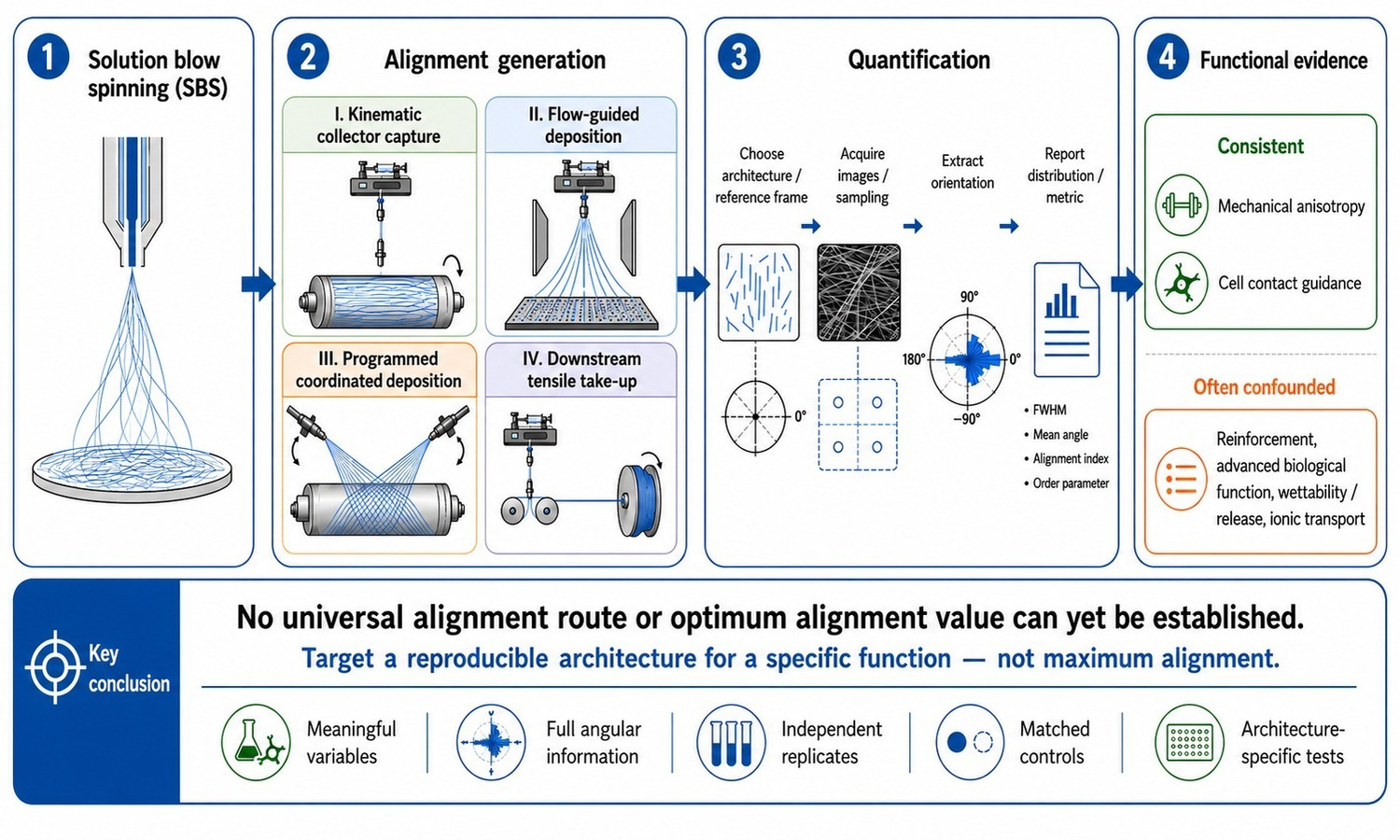
In this systematic scoping review, we critically evaluate the mechanisms, quantification and functional implications of fiber–network alignment in solution blow spinning (SBS). Four mechanisms were identified: kinematic collector capture, flow-guided deposition, programmed coordinated deposition, and downstream tensile take-up after coagulation. These mechanisms generated unidirectional, crossing, helical, radial, multilayer and continuous-bundle architectures. Of the 20 included publications, 12 quantified network orientation using non-equivalent angular conventions and metrics. Mechanical anisotropy and cellular contact guidance currently exhibit the strongest and most consistent functional evidence in SBS. Evidence for absolute reinforcement, advanced biological function, wettability, dissolution, release and ionic transport remains constrained by concurrent variations in fiber diameter, porosity, topology, composition, crystallinity or processing history. The available evidence therefore does not establish a universal alignment mechanism, operating threshold or optimum alignment value. Predictive design requires physically meaningful process variables, complete angular distributions, independent fabrication replicates, matched fibrous controls and architecture-specific functional testing. Fiber alignment should consequently be interpreted as a direction-selective architectural variable whose functional significance depends on the intended application.
RELATED ARTICLES
Eva Kuželová Košťáková
Vol. 20., No.1., Pages 1-2, 2026
DOI: 10.3144/expresspolymlett.2026.1
Vol. 20., No.1., Pages 1-2, 2026
DOI: 10.3144/expresspolymlett.2026.1
This is an editorial article. It has no abstract.
Widtawad Reantong, Siriluk Chiarakorn, Muthita Vanaporn, Natee Srisawat
Vol. 19., No.12., Pages 1256-1273, 2025
DOI: 10.3144/expresspolymlett.2025.93
Vol. 19., No.12., Pages 1256-1273, 2025
DOI: 10.3144/expresspolymlett.2025.93
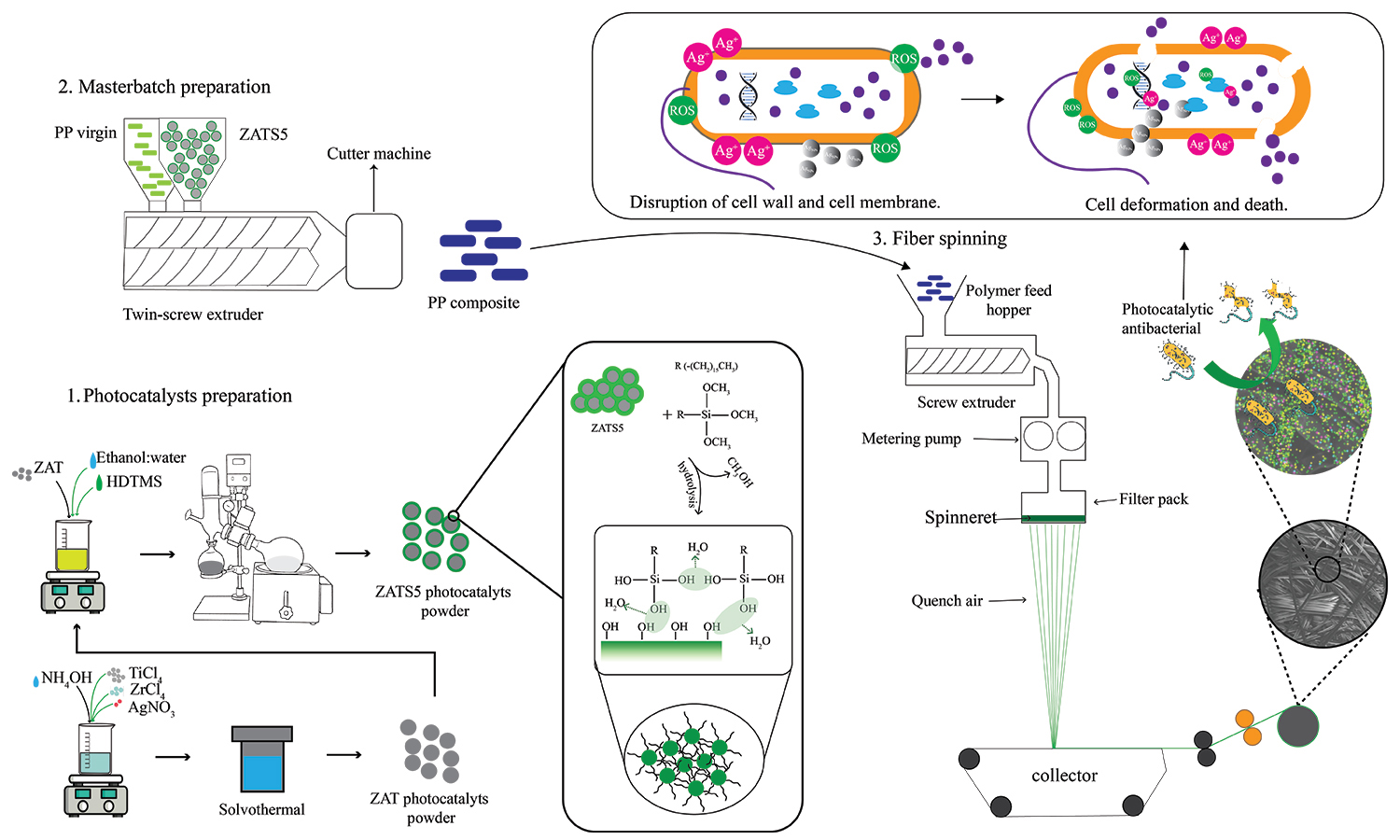
The development of functional antibacterial spunbond fabrics is critical for improving indoor environmental treatment. This study presents the fabrication of polypropylene (PP) fibers embedded with silane-modified Zr/Ag co-doped TiO2 nanoparticles. The Zr (5 mol%) and Ag (3 mol%) co-doped TiO2 nanoparticles were synthesized via a solvothermal method and subsequently modified with 5 wt% hexadecyltrimethoxysilane (HDTMS), referred to as ZATS5. The solvothermal method enables the controlled synthesis of phase-pure, well-dispersed nanostructures and facilitates dopant incorporation in the photocatalysts completely. Additionally, HDTMS surface modification improved compatibility with the polypropylene matrix, enhancing dispersion and interfacial bonding and improving overall composite performance. ZATS5 was incorporated into the PP matrix through melt spinning to produce composite fibers. The minimum of ZATS5 at 1 wt% embedded in spunbond nonwoven composite (PP/ZATS5-1) demonstrated the fiber’s structural integrity and remarkable antibacterial activity. The PP/ZATS5-1 nonwoven fabric achieved 99.98% inactivation of Legionella pneumophila under dark conditions and complete inhibition under visible light. This research offers a scalable and effective strategy for developing antibacterial spunbond nonwoven fabrics with potential applications in medical textiles, as well as air and water purification systems operating under ambient indoor lighting.
Mark Shneider, Xiaomeng Sui, Iddo Pinkas, Ulyana Shimanovich, Israel Greenfeld, Daniel Wagner
Vol. 19., No.10., Pages 1012-1026, 2025
DOI: 10.3144/expresspolymlett.2025.76
Vol. 19., No.10., Pages 1012-1026, 2025
DOI: 10.3144/expresspolymlett.2025.76
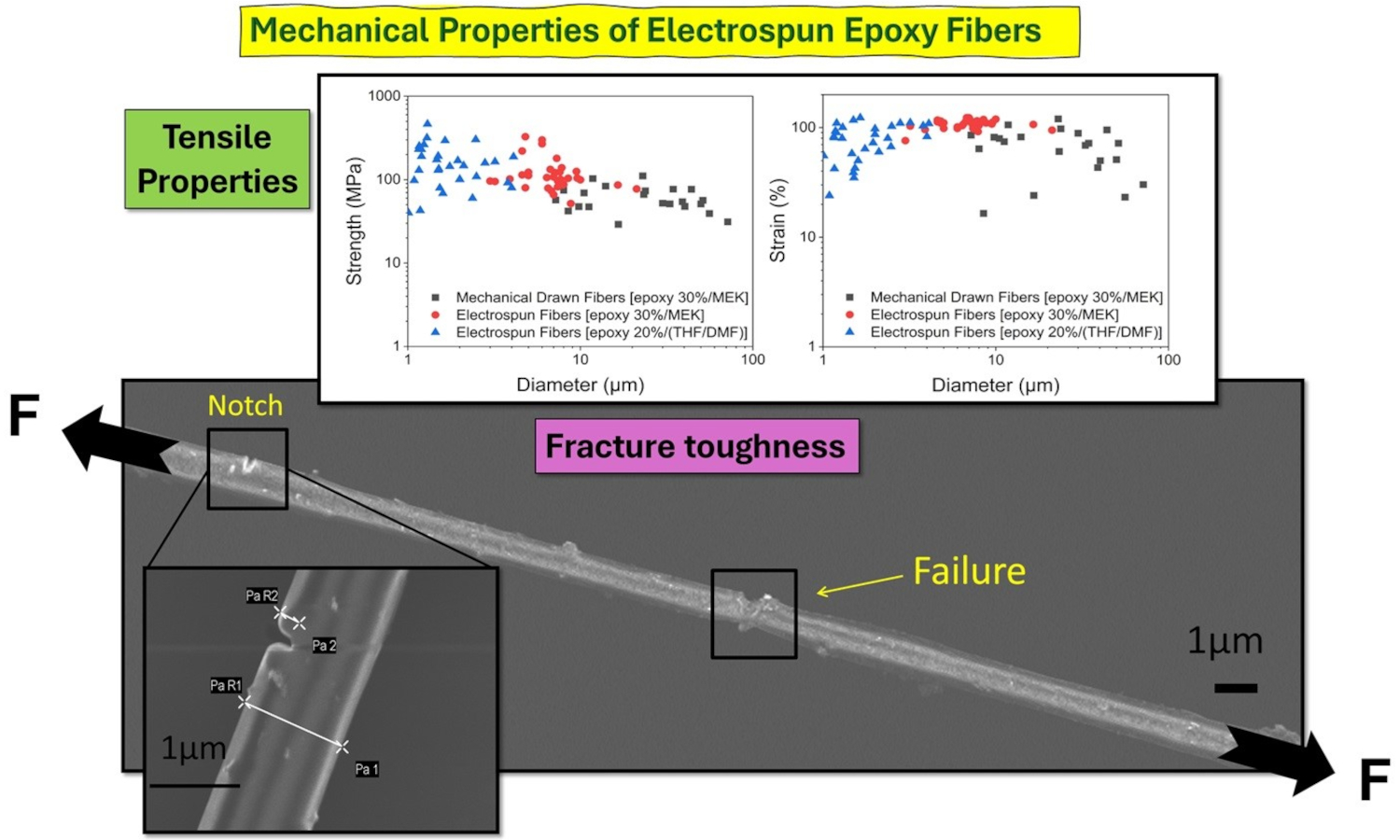
Electrospinning is a widely used technique for manufacturing nanofibers from polymers. The formation of continuous fibers during the drawing of a viscous solution typically depends on entanglements between polymer chains, making thermoplastics the preferred choice. In this study, we have shown that thermosetting polymers such as epoxy, which have crosslinked covalent bonds, can also be electrospun. The resulting fibers have diameters ranging from 150 nm to 6 μm. Tensile mechanical properties of fibers with diameters varying between 410 nm and 4 μm are compared with those of molded epoxy bulk. The electrospun fibers exhibit approximately 555% higher strength, 300% greater stiffness, and a strain of about 109% compared to the equivalent properties of bulk epoxy. When compared with brittle molded bulk, these fibers showed ductile properties. We also observed a correlation between the fiber diameter and the mechanical properties. The molecular morphology of the fibers was monitored and analyzed using polarized micro-Raman spectroscopy to detect molecular orientation. A comparison with epoxy fibers of different diameters from previous studies was conducted to better understand the size effect. This study shows, explains and models the evolution of epoxy molecular morphology from the solution (soft matter) to fiber (solid-state), explaining the transition from brittle to ductile in epoxy fibers, and clarifying the molecular mechanisms that lead to improved mechanical properties.
Quentin Watel, Aurélie Cayla, Fabien Salaün, François Boussu
Vol. 19., No.5., Pages 494-503, 2025
DOI: 10.3144/expresspolymlett.2025.36
Vol. 19., No.5., Pages 494-503, 2025
DOI: 10.3144/expresspolymlett.2025.36
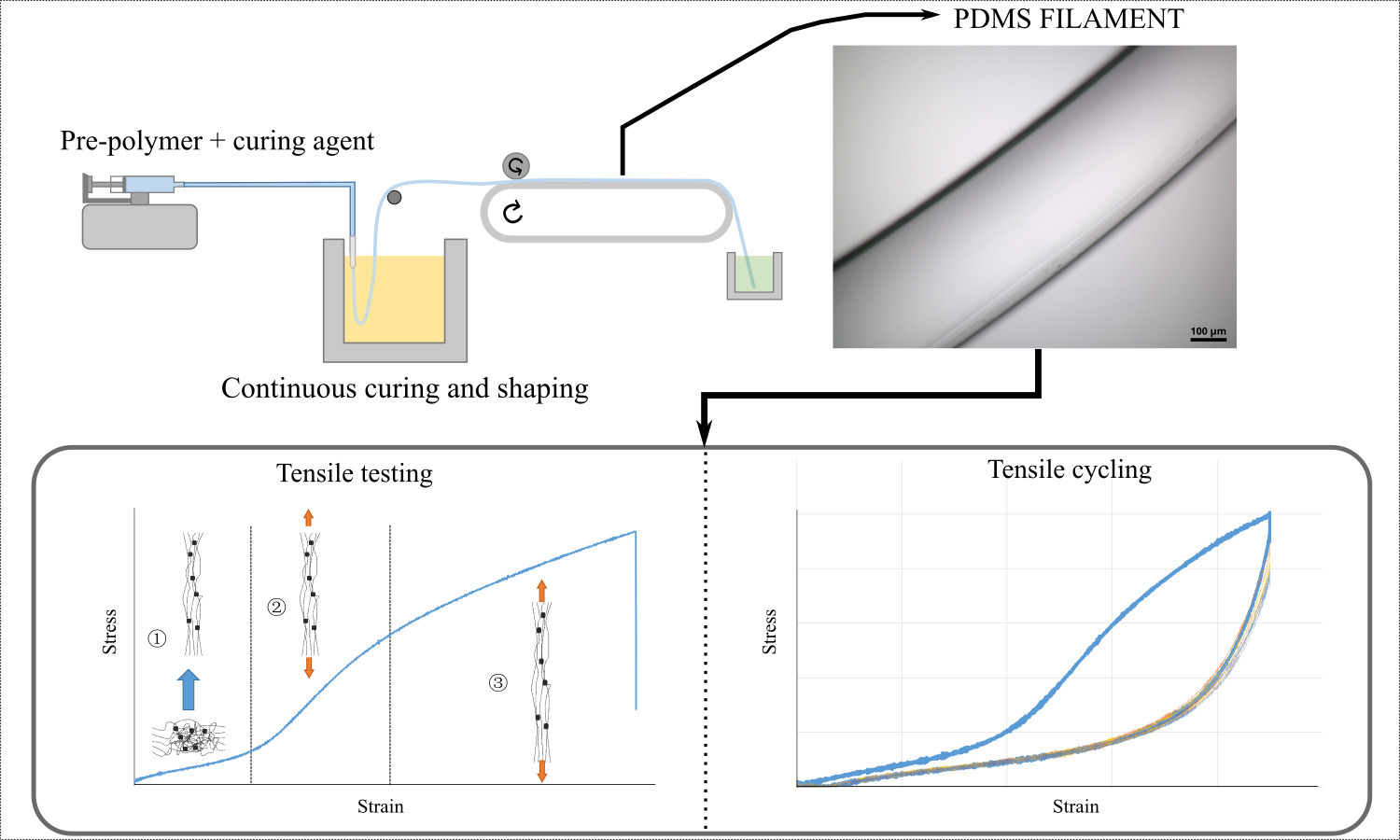
In this work, a PDMS spinning technique is developed and enables the continuous production of a filament with a circular cross-section (~500 μm diameter). The production of continuous silicone polymer filaments can be useful in the textile field to provide new properties in applications such as weaving, knitting or composite reinforcement. The method involves injecting the pre-polymer and curing agent mixture into a heated oil bath (202–215 °C) to simultaneously shape and cure the PDMS. The morphological and mechanical properties of the filament are studied regarding the production parameters (formulation, needle diameter, bath temperature, conveyor belt speed). The most homogeneous filament is produced at the highest temperature (215°C) and conveyor belt speed (13.6 m∙min–1). When subjected to cyclic mechanical stress, the PDMS filament produced exhibits stable mechanical behavior, making it suitable for a wide range of applications.
Jian Zhao, Xun Meng, Hongwei Piao, Hao Zhang, Zhibo Ren, Qi Han, Qinglin Huang, Hanli Wang
Vol. 19., No.5., Pages 531-543, 2025
DOI: 10.3144/expresspolymlett.2025.39
Vol. 19., No.5., Pages 531-543, 2025
DOI: 10.3144/expresspolymlett.2025.39
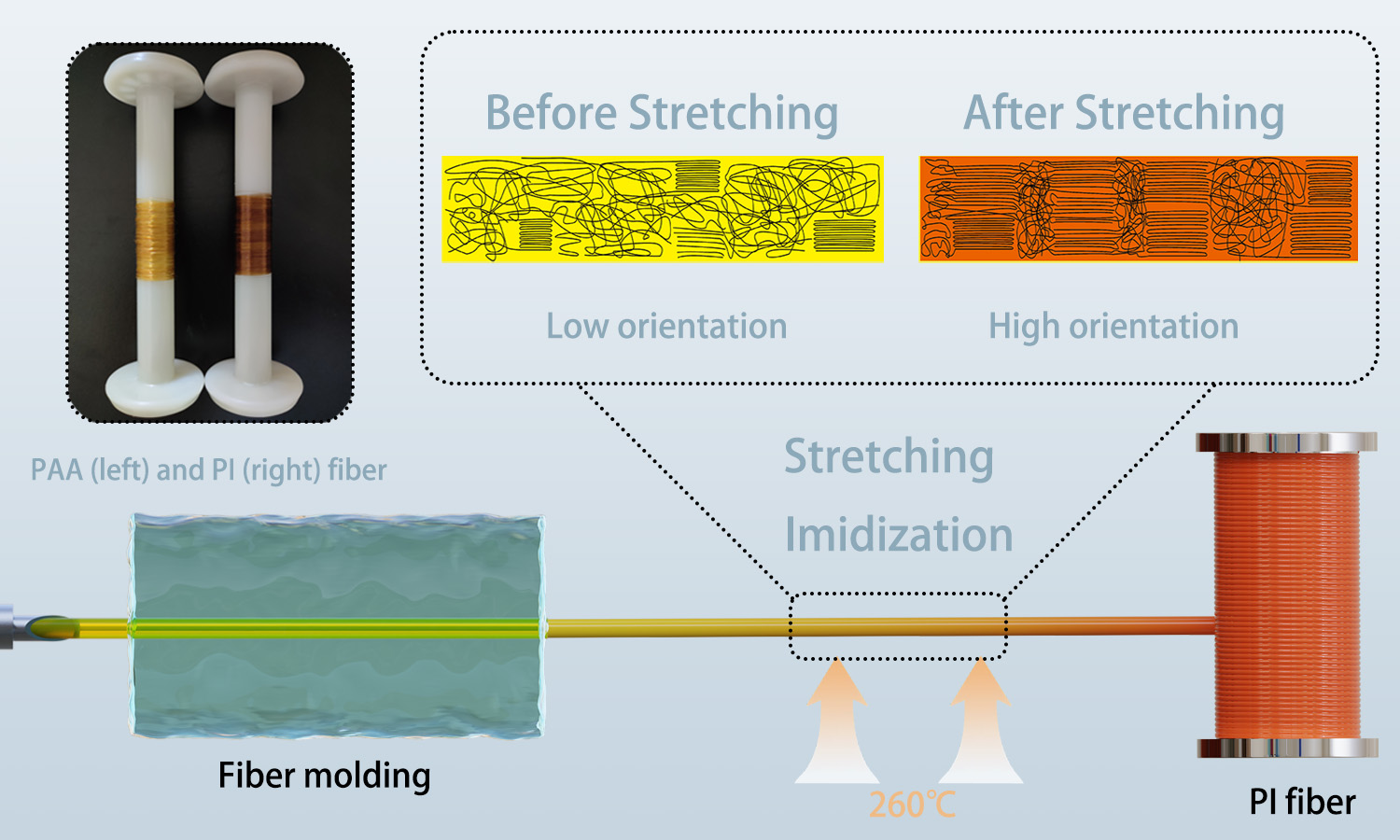
Polyimide (PI) fiber is a promising and high-performance polymer fiber with high temperature resistance and low density; however, much energy is needed during the thermal imidization process. Here, PI fiber with excellent mechanical properties and high-temperature resistance was fabricated via the dry-jet wet spinning method for polyamic acid (PAA) precursor fiber, followed by stretching and thermal imidization reaction at a lower temperature. With the increase of the stretching ratio, the mechanical properties of the PI fiber increase significantly. When the stretching was twice as long, the tensile strength and initial modulus of the fiber were as high as 6.23 and 114.13 cN·dtex–1, respectively. Fourier transform infrared results revealed that all samples were completely imidized at 260 °C. The resulting PI fibers exhibit only 5% weight loss at 539.53 °C, and its limiting oxygen index (LOI) can reach up to 32.6%, showing excellent high temperature resistance and flame-retardant properties as well as commendable mechanical performance, which compare favorably with those of other imidization methods.