Tuning the composition of recycled goose feather/human hair keratin and chitosan aerogels for enhanced triboelectric nanogenerators
Nebiyu Chali Yadeta, Chang-Mou Wu, Mohit Sood, Kebena Gebeyehu Motora, Tsung-Chi-Shen, Jia-Yan Yang
Vol. 20., No.11., Pages 1167-1181, 2026
DOI: 10.3144/expresspolymlett.2026.84
DOI: 10.3144/expresspolymlett.2026.84
Corresponding author: Chang-Mou Wu 
GRAPHICAL ABSTRACT
ABSTRACT
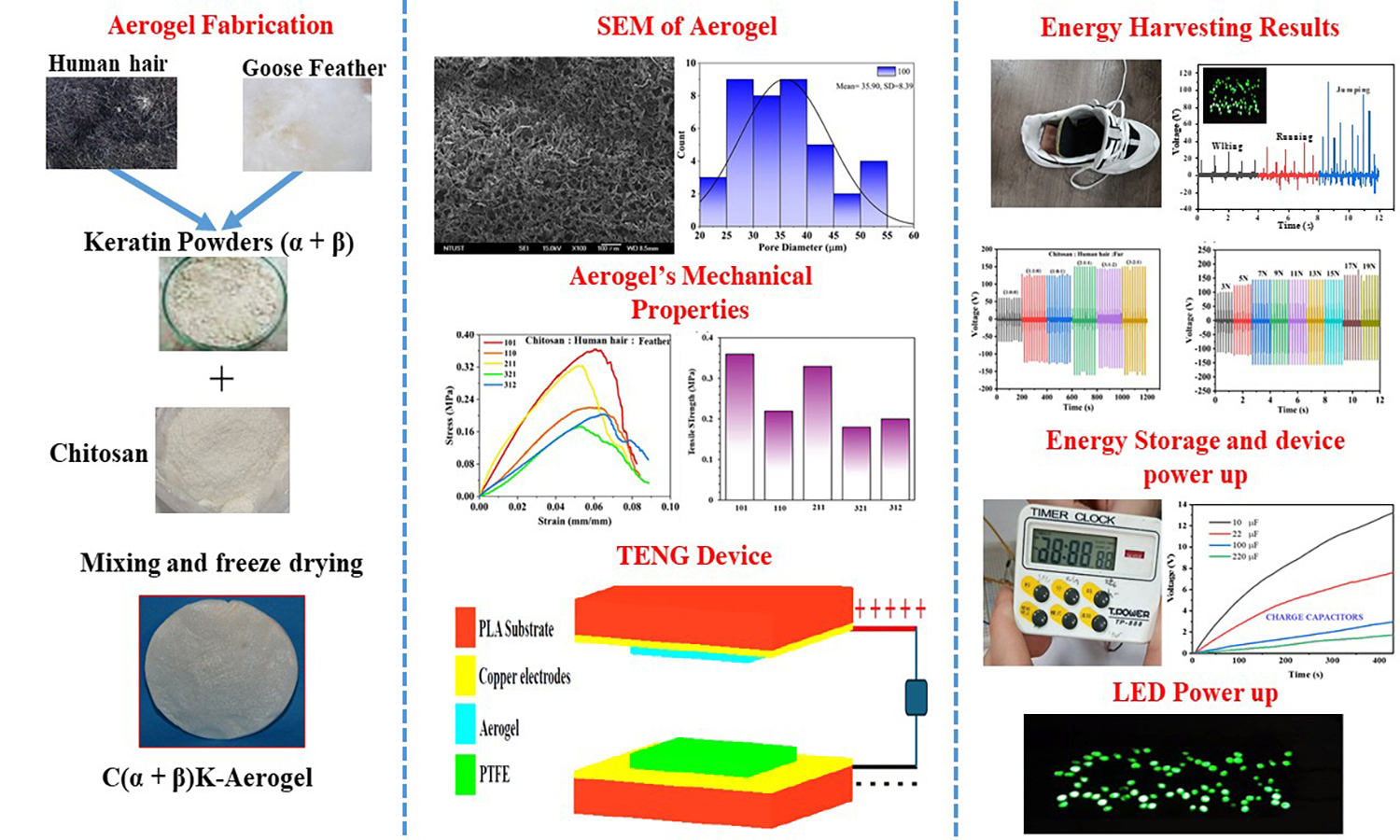
We incorporated hair-derived α-keratin (α-K) and goose feather–derived β-keratin (β-K) into chitosan (CS) to fabricate porous chitosan/α-keratin/β-keratin (CK) aerogels by freeze-drying, and investigated the effects of the α-K/β-K ratio on aerogel structure, mechanical properties and triboelectric performance. At a fixed total keratin content of 50 wt%, the 2:1:1 CS:α-K:β-K weight ratio produced the most favorable combination of a lightweight cellular structure and mechanical robustness. The corresponding triboelectric nanogenerators (TENGs) generated an output voltage of approximately 150 V at 7 N and 5 Hz and had a maximum power density of 5.79 W/m2 at a load resistance of 1·105 Ω. The device also maintained stable output over 12 500 contact–separation cycles and successfully demonstrated mechanical energy harvesting by illuminating 100 LEDs, charging a capacitor, and harvesting energy from human motion. The enhanced performance is attributed to the synergistic contributions of triboelectric-active chemical functionality, lightweight porous architecture, and mechanical robustness.
RELATED ARTICLES
Anthony Allen Parker, Joseph John Marcinko
Vol. 20., No.9., Pages 885-904, 2026
DOI: 10.3144/expresspolymlett.2026.66
Vol. 20., No.9., Pages 885-904, 2026
DOI: 10.3144/expresspolymlett.2026.66
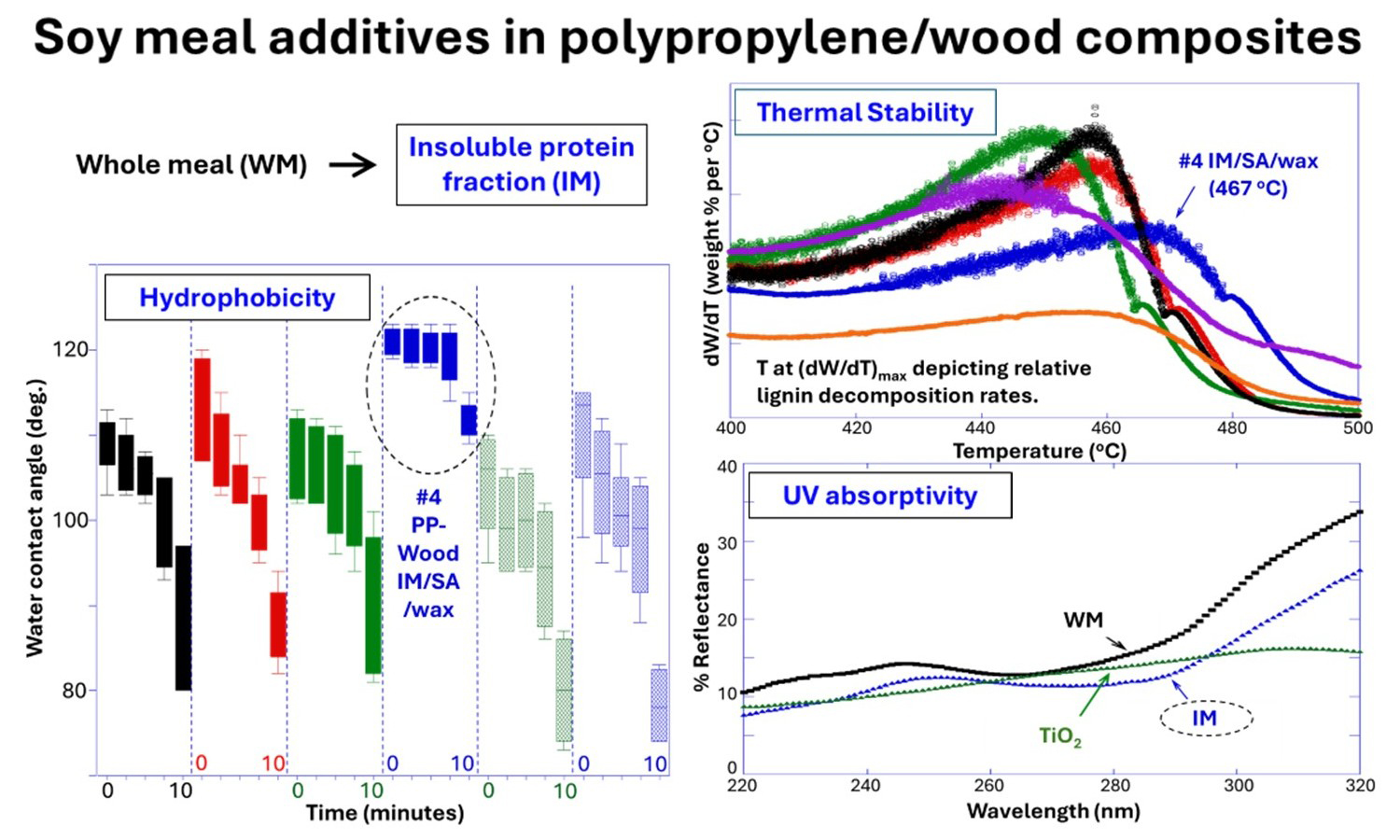
We have discovered that water-insoluble proteins (IM) isolated from whole soy meal (WM) have the capacity to improve the thermal stability of polypropylene (PP) wood composites without negatively impacting mechanical properties. We compared an undiluted composite to composites diluted with 5% by weight of a 3/1 w/w mixture of stearic acid and paraffin wax (SA/wax), 5% by weight IM, 5% by weight WM, 5% by weight of a 50/50 w/w mixture of IM in combination with SA/wax, and 5% by weight WM in combination with SA/wax. Water contact angle (CA) measurements and Fourier transform infrared spectroscopy (FTIR) revealed a synergy between IM and SA/wax, resulting in enhanced surface hydro - phobicity. Thermogravimetric analysis (TGA) showed lower weight loss in composites made with IM up to the onset of the degradation of PP, and reduced rates of lignin degradation, independently of the presence of SA/wax. Dynamic mechanical analysis (DMA) revealed higher modulus and lower viscoelastic loss resulting from the removal of water-soluble soy components from WM. Total reflectance ultraviolet spectroscopy (UV) showed that IM absorbs UV radiation strongly in the UV-B and UV-C regions. Collectively, these findings suggest that IM has the potential to become a multi-purpose additive for use in PP wood composites.
Nguyen Chi Thanh, Huynh Hoang Trung, Bui Phuong Dong, Nguyen Thanh Huy, Nguyen Bui Anh Duy, Pham Nguyen Hong Nhu, Dang To Hoai Vy
Vol. 20., No.5., Pages 437-453, 2026
DOI: 10.3144/expresspolymlett.2026.34
Vol. 20., No.5., Pages 437-453, 2026
DOI: 10.3144/expresspolymlett.2026.34
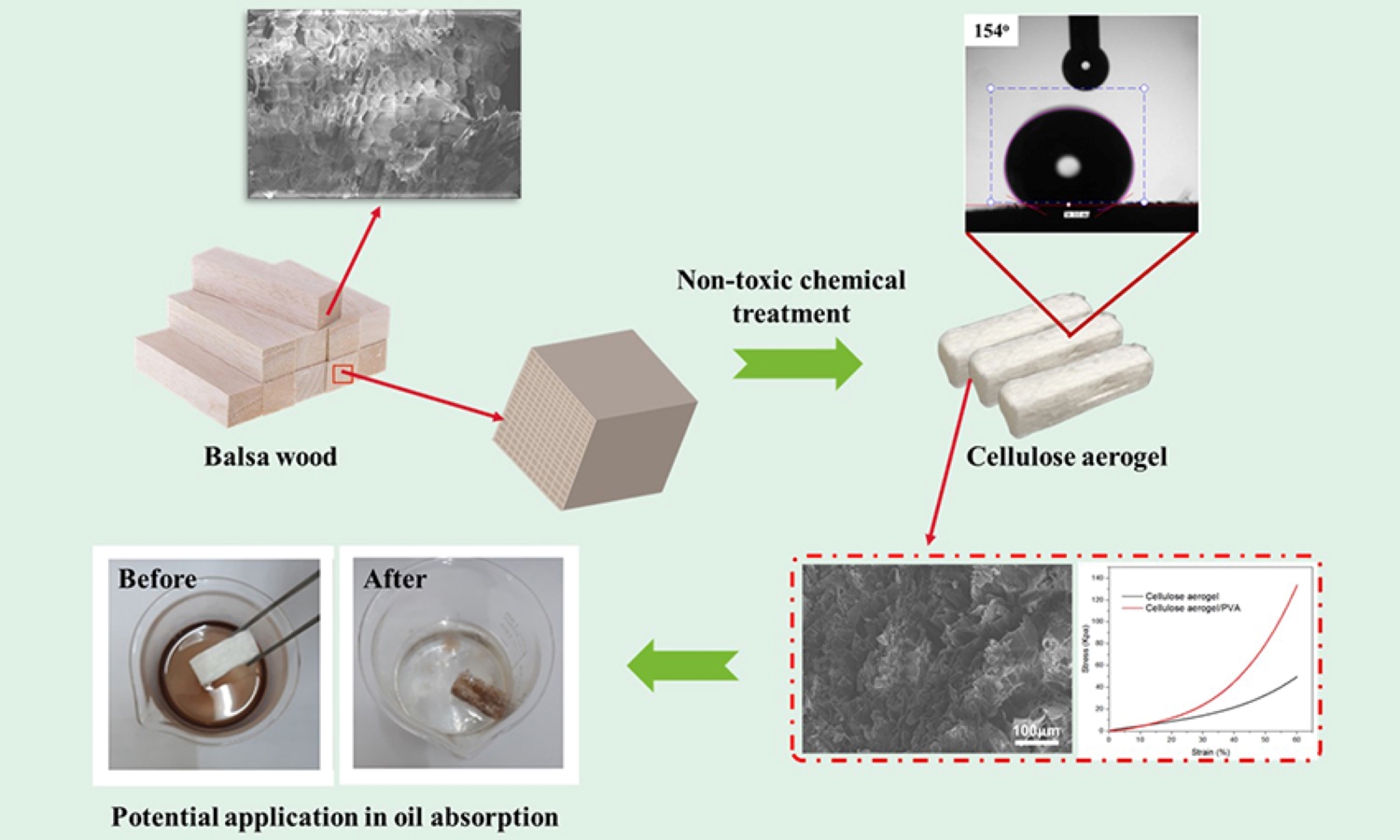
In this work, oil-absorbing cellulose aerogel was fabricated from balsa wood waste, aiming to enhance the valueadded utilization of biomass waste. Cellulose was extracted using a simple treatment and subsequently formed into aerogel through a freeze-drying process. The material was reinforced with polyvinyl alcohol (PVA) and modified using a polydimethylsiloxane/n-hexane system to improve mechanical strength and hydrophobicity. Fourier transform infrared (FTIR) spectroscopy and X-ray diffraction (XRD) results confirmed effective removal of hemicellulose and lignin, resulting in a crystallinity index of 82.18%. The obtained materials exhibited a porous structure with a specific surface area of 15.28 m2/g and a pore volume of 0.034 cm3/g, as determined by Brunauer–Emmett–Teller (BET) analysis. Mechanical testing demonstrated that PVA reinforcement significantly enhanced the compressive strength compared to non-reinforced materials. Contact angle result revealed pronounced hydrophobicity of modified aerogel, with water contact angles ranging from 150° to 154° after modification. Oil absorption tests showed that the aerogel achieved a high oil uptake capacity of 1.67±0.26 g/g. Owing to its reasonable oil absorption performance, enhanced mechanical properties, and inherent biodegradability, this aerogel exhibits strong potential as an environmentally friendly sorbent for oil spill remediation and sustainable utilization of balsa wood waste.
Khmais Zdiri, Aurélie Cayla, Christine Campagne
Vol. 20., No.4., Pages 383-394, 2026
DOI: 10.3144/expresspolymlett.2026.30
Vol. 20., No.4., Pages 383-394, 2026
DOI: 10.3144/expresspolymlett.2026.30

Growing interest in natural and eco-friendly materials has driven the search for sustainable alternatives to synthetic antimicrobial agents. This study aims to develop antibacterial fibers based on poly(vinyl alcohol) (PVA) reinforced with chitosan (CTS) using an environmentally friendly wet-spinning process. Morphological analysis revealed surface irregularities that increased with CTS content, confirming its effect on fiber microstructure. Thermal analyses by differential scanning calorimetry (DSC) and thermogravimetric analysis (TGA) showed that CTS incorporation decreased the melting temperature while improving thermal stability. Mechanical testing demonstrated enhanced tensile strength (σs) and Young’s modulus (E) due to strong intermolecular interactions between CTS and the PVA matrix. The highest σs (1045 MPa) was obtained at 3 wt% CTS, while E reached 7.1 GPa at 5 wt%. Antibacterial tests against Staphylococcus aureus and Escherichia coli confirmed strong activity attributed to –NH2 groups of CTS disrupting bacterial membranes. These results highlight the potential of PVA/CTS fibers for biomedical applications such as wound dressing and antibacterial materials.
Dam Xuan Thang, Tong Khanh Linh
Vol. 20., No.3., Pages 246-263, 2026
DOI: 10.3144/expresspolymlett.2026.20
Vol. 20., No.3., Pages 246-263, 2026
DOI: 10.3144/expresspolymlett.2026.20
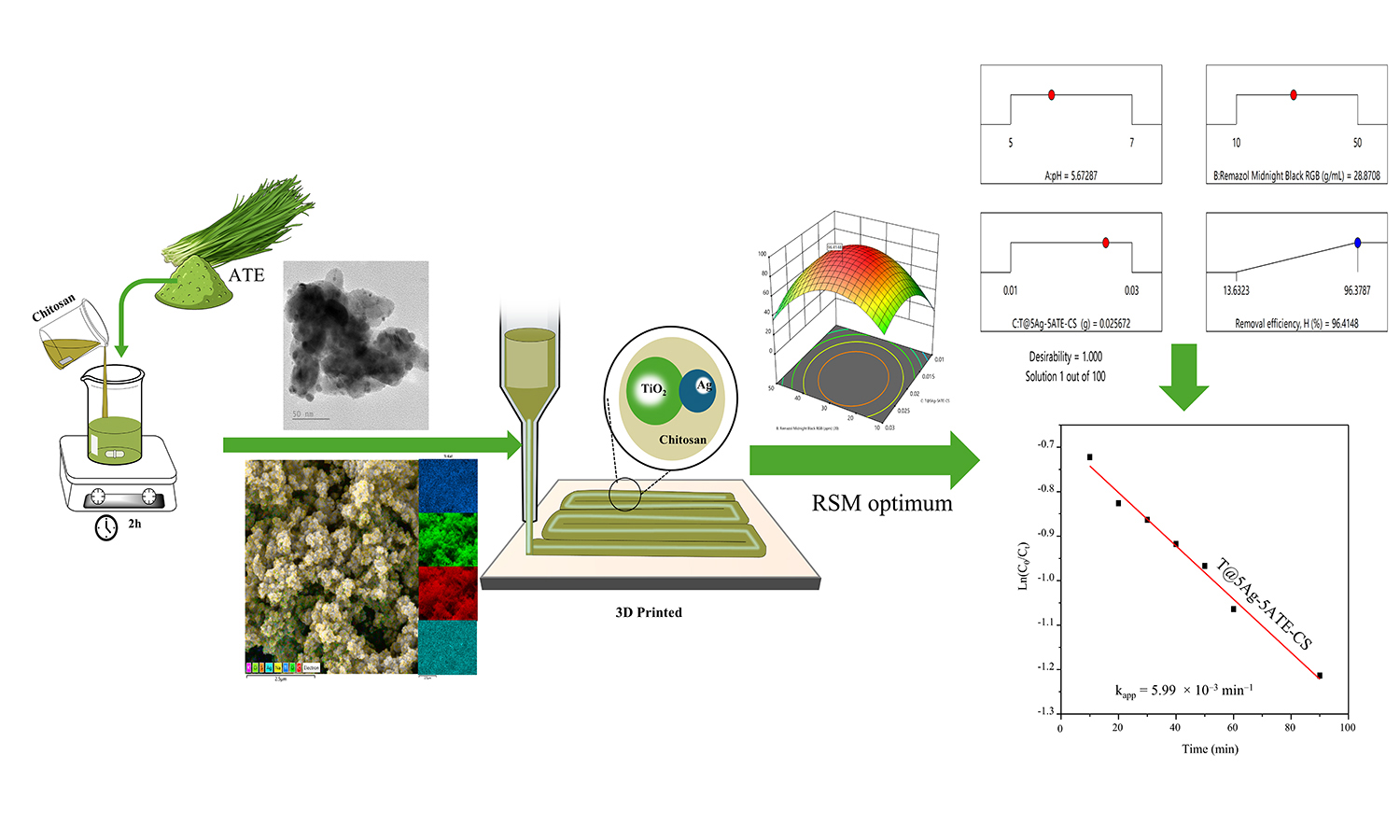
We report a green route to Ag–TiO2 nanocomposites using an Allium tuberosum extract, rich in organosulfur and polyphenolic constituents, as a dual-function biogenic reducer and stabilizer, enabling efficient Ag+→Ag0 conversion and capping of Ag–TiO2 without the use of harsh reagents. The nanocomposites are formulated into chitosan-based inks for direct ink writing (DIW) of porous, mechanically robust, reusable membranes (optimal formulation T@5Ag–5ATE–CS) with a homogeneous Ag dispersion. Multiscale characterization (SEM/TEM, XRD, FTIR, UV–vis DRS, EDS mapping) confirms metallic Ag0 uniformly decorating TiO2 and an extended visible-light response attributable to strong localized surface plasmon resonance. Under near-UV/visible irradiation, the membranes decolorize Remazol Midnight Black RGB dye with pseudo-first-order kinetics, yielding kapp up to 5.99·10–3 min–1 with R2 ≈ 0.99 and outperforming pristine TiO2. Response surface methodology identifies an optimum at pH 5.67, 28.87 mg·L–1 dye, and 0.0257 g catalyst, delivering a predicted 96.41% versus experimental 95.07% removal (validation error 1.39%) with excellent model statistics (R2 ≈ 0.995). The combined effects of Allium-tuberosum-assisted Ag plasmonics, TiO2 photocatalysis, and chitosan-enhanced adsorption underpin the high photocatalytic activity and reusability, highlighting a scalable, eco-friendly pathway to printable photocatalytic/antimicrobial membranes for wastewater treatment.
Soni Thakur, Amal M. Sindi, Rahul Dev Bairwan, Rasha A. Mahmoud, Eman Alfayez, Nurul Fazita Mohammad Rawi, Kanchan Jha, H.P.S. Abdul Khalil
Vol. 20., No.2., Pages 197-214, 2026
DOI: 10.3144/expresspolymlett.2026.16
Vol. 20., No.2., Pages 197-214, 2026
DOI: 10.3144/expresspolymlett.2026.16
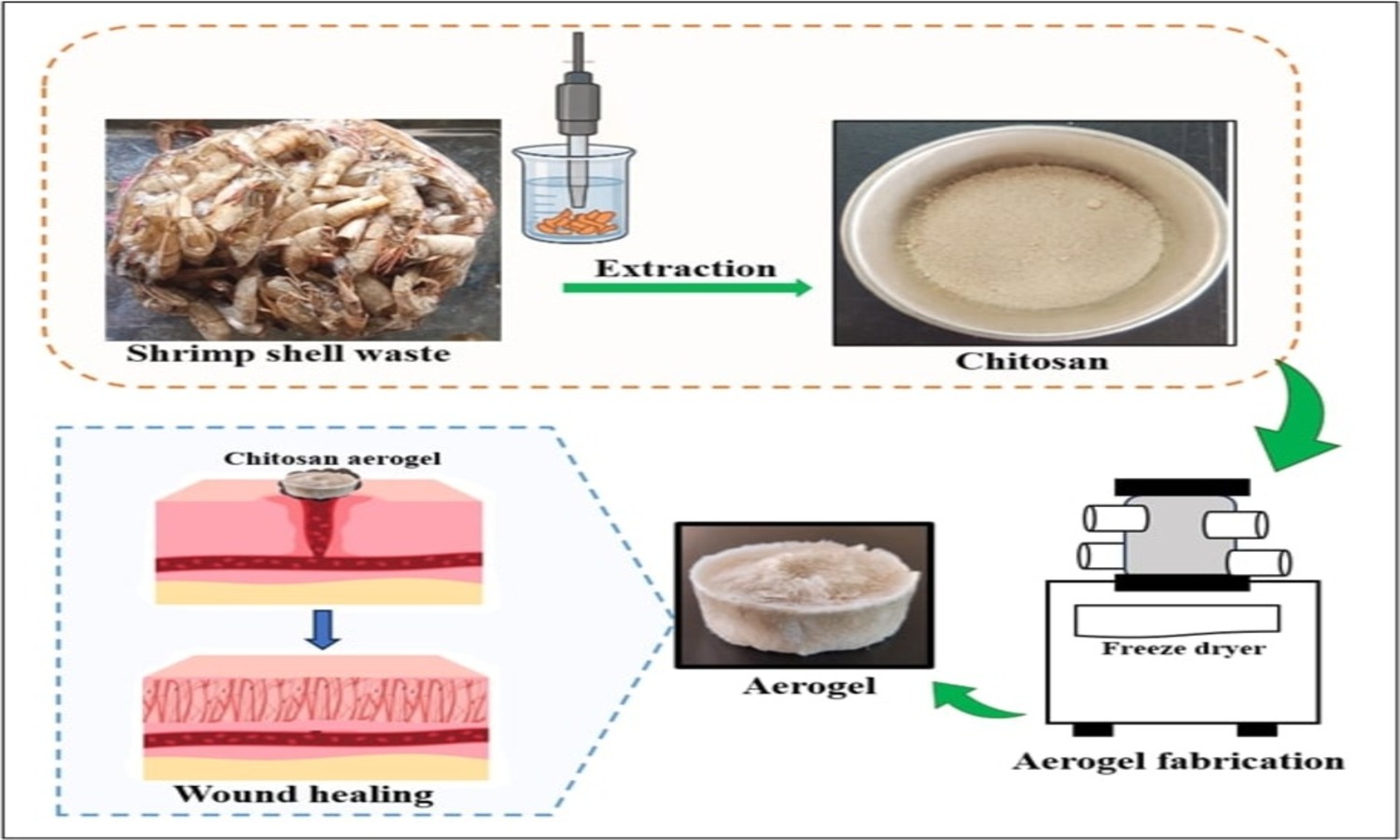
This research presents an eco-friendly approach for extracting chitosan from shrimp shell waste through ultrasound-assisted extraction (UAE) to prepare biocompatible aerogel scaffolds for biomedical applications. The study investigates the influence of various ultrasonic treatment times (10, 20, 30, 40 min) on the yield and structural and physicochemical properties of the extracted chitosan via characterization using Fourier-transform infrared spectroscopy (FTIR), scanning electron microscopy (SEM), and thermogravimetric analysis (TGA). Among the tested conditions, the 30 min UAE-treated chitosan aerogels showed optimal porosity and structural integrity. Biocompatibility of the aerogels was evaluated, and the results confirmed their non-cytotoxic nature. The bioactivity of the chitosan aerogels was evaluated in terms of their in vitro wound closure ability and antibacterial properties. The aerogels demonstrated a wound closure rate of around 51% after 72 h, significantly higher than the untreated control (37%). In addition, they exhibited clear antibacterial activity against Escherichia coli and Staphylococcus aureus. This sustainable extraction and fabrication method not only adds value to marine waste but also produces functional biomaterials with potential applications in wound healing, tissue engineering, and regenerative medicine, supporting global efforts toward sustainability and circular bioeconomy.