
Fabrication of cellulose aerogel for oil spill remediation from balsa wood waste
Nguyen Chi Thanh , Huynh Hoang Trung, Bui Phuong Dong, Nguyen Thanh Huy, Nguyen Bui Anh Duy, Pham Nguyen Hong Nhu, Dang To Hoai Vy
, Huynh Hoang Trung, Bui Phuong Dong, Nguyen Thanh Huy, Nguyen Bui Anh Duy, Pham Nguyen Hong Nhu, Dang To Hoai VyVol. 20., No.5., Pages 437-453, 2026
DOI: 10.3144/expresspolymlett.2026.34
DOI: 10.3144/expresspolymlett.2026.34
Corresponding author: Nguyen Chi Thanh 
GRAPHICAL ABSTRACT
ABSTRACT
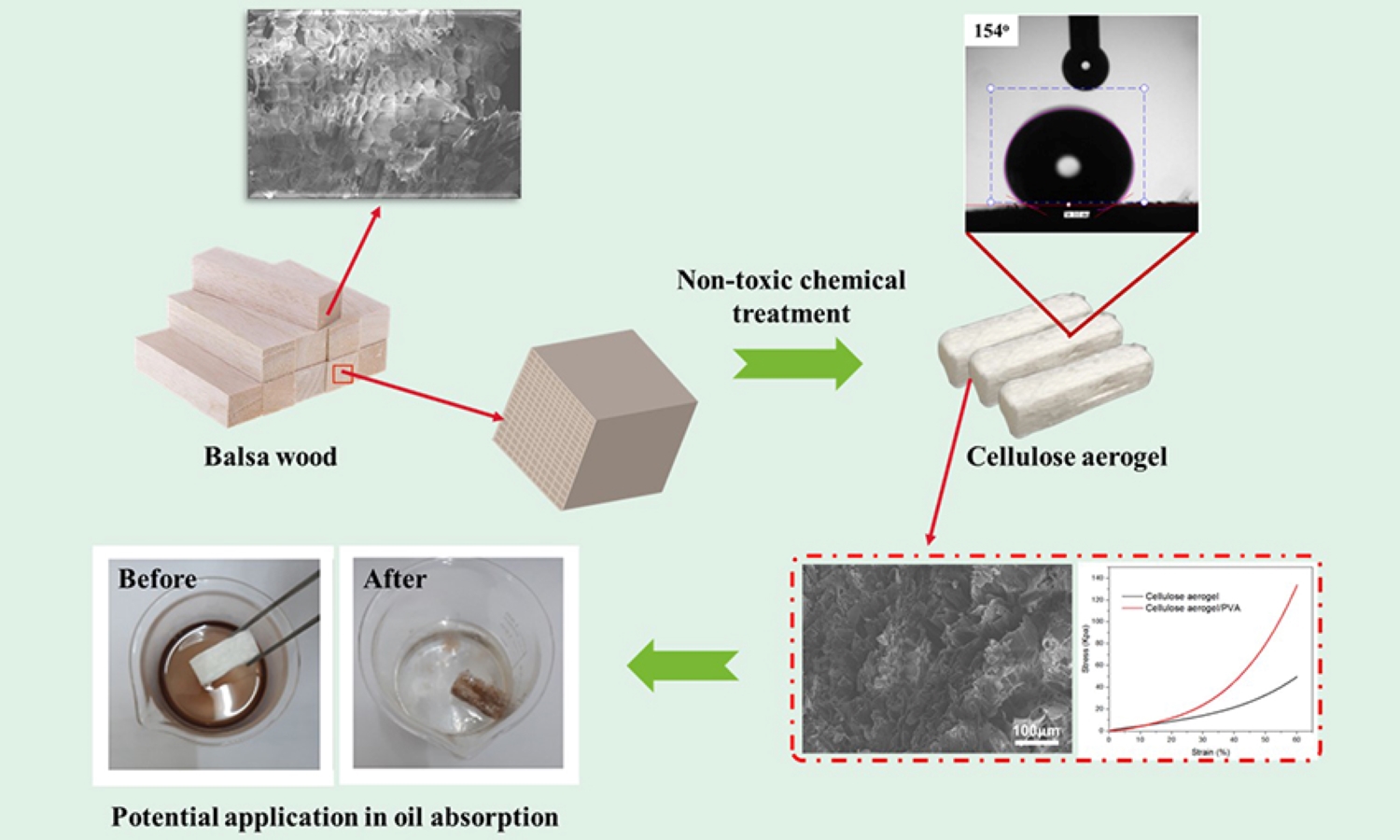
In this work, oil-absorbing cellulose aerogel was fabricated from balsa wood waste, aiming to enhance the valueadded utilization of biomass waste. Cellulose was extracted using a simple treatment and subsequently formed into aerogel through a freeze-drying process. The material was reinforced with polyvinyl alcohol (PVA) and modified using a polydimethylsiloxane/n-hexane system to improve mechanical strength and hydrophobicity. Fourier transform infrared (FTIR) spectroscopy and X-ray diffraction (XRD) results confirmed effective removal of hemicellulose and lignin, resulting in a crystallinity index of 82.18%. The obtained materials exhibited a porous structure with a specific surface area of 15.28 m2/g and a pore volume of 0.034 cm3/g, as determined by Brunauer–Emmett–Teller (BET) analysis. Mechanical testing demonstrated that PVA reinforcement significantly enhanced the compressive strength compared to non-reinforced materials. Contact angle result revealed pronounced hydrophobicity of modified aerogel, with water contact angles ranging from 150° to 154° after modification. Oil absorption tests showed that the aerogel achieved a high oil uptake capacity of 1.67±0.26 g/g. Owing to its reasonable oil absorption performance, enhanced mechanical properties, and inherent biodegradability, this aerogel exhibits strong potential as an environmentally friendly sorbent for oil spill remediation and sustainable utilization of balsa wood waste.
RELATED ARTICLES
Isabel Milagros Gavilan-Figari
Vol. 20., No.1., Pages 72-81, 2026
DOI: 10.3144/expresspolymlett.2026.6
Vol. 20., No.1., Pages 72-81, 2026
DOI: 10.3144/expresspolymlett.2026.6
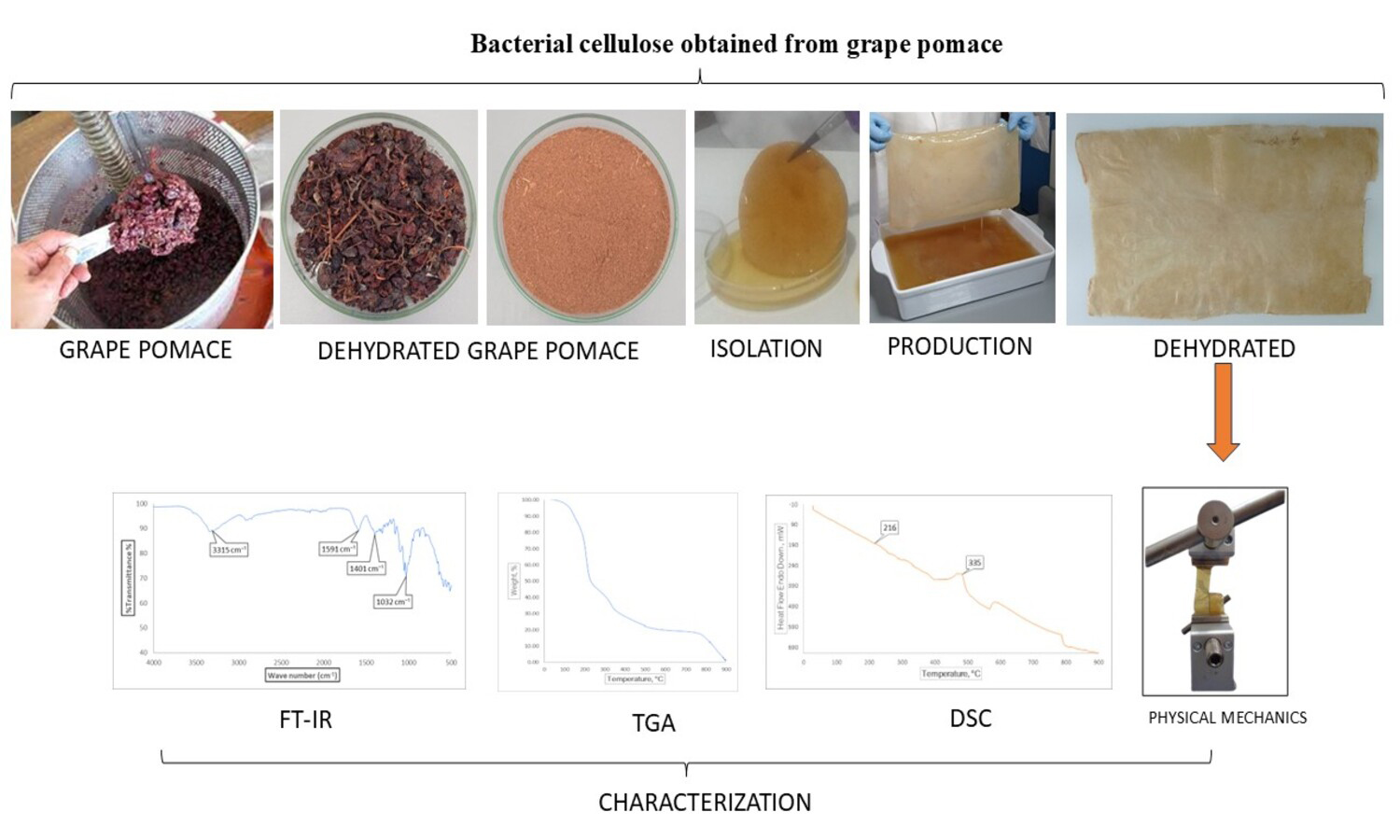
Bacterial cellulose (BC) is an eco-friendly biopolymer with outstanding structural and functional properties, offering promising applications in sustainable packaging and bio-based materials. In this study, we demonstrate the feasibility of producing BC via spontaneous fermentation, using grape pomace supplemented with sucrose as the sole carbon source, nutrient substrate, and microbial inoculum, without the addition of commercial strains or nitrogen supplements. Fermentation was conducted under static conditions, yielding biofilms with stable structural characteristics and BC production of up to 14.1 g/L, thereby confirming the efficiency of this low-cost, residue-based process. The films obtained exhibited well-organized polymeric networks, with thermal stability in the range of Tg ≈ 159–266 °C and mechanical resistance comparable to or higher than conventional biopolymers. Characterization confirmed reproducible chemical profiles, thermal stability, and measurable variation in mechanical performance, with a tensile strength ranging from 0.0001 to 105 MPa and an elongation at break of 15±5%. The process highlights a resource-efficient and sustainable pathway, adaptable to rural contexts and aligned with circular economic principles. While minor variations among replicates reflected the intrinsic variability of biological systems, mean values and standard deviations demonstrated reproducible physicochemical and mechanical properties. These findings demonstrate that BC derived from agro-industrial residues can be produced under simple, low-input conditions, opening opportunities for scalable valorization in functional and sustainable materials.
Elumalai Vengadesan, Swaminathan Muralidharan, Dhanjit Das, Thirugnanasambandam Arunkumar
Vol. 19., No.8., Pages 822-842, 2025
DOI: 10.3144/expresspolymlett.2025.63
Vol. 19., No.8., Pages 822-842, 2025
DOI: 10.3144/expresspolymlett.2025.63
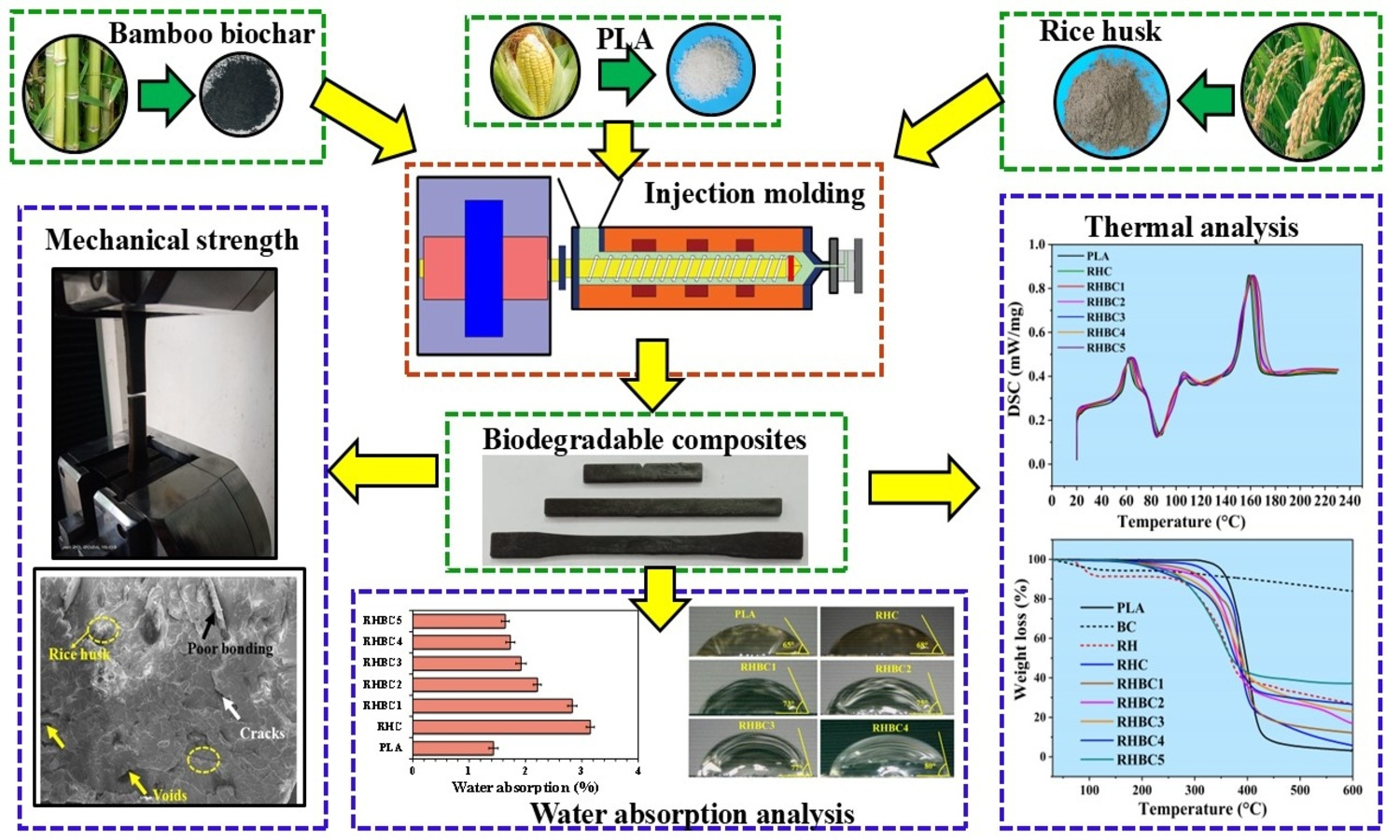
The growing need for sustainable materials has stimulated research into eco-friendly composites, with biochar emerging as an important reinforcement in polymer matrices. Biochar is a carbon-rich material produced by pyrolyzing organic biomass, offering various benefits over traditional fillers, including sustainability, waste reduction, and carbon sequestration. This study explores the effects of bamboo biochar as a hybrid reinforcement on the properties of polylactic acid (PLA)-rice husk composites. The present hybrid composites are prepared by varying the bamboo biochar from 5–25% and have better mechanical properties than PLA and its composite reinforced with a rice husk filler. The tensile, flexural, and compressive strengths of 51.5, 166.0, and 77.5 MPa are measured for the biochar percentage of 10%, representing increases of 73.1, 150.0, and 58.2% compared to PLA, and 158.2, 98.6, and 31% compared to the PLA composite with rice husk. Higher tensile and flexural moduli of 1.46 and 7.34 GPa are observed for 10 and 15%, respectively. However, the impact strength decreases with higher biochar content due to increased rigidity. The material’s hardness increases at higher biochar content due to enhanced stiffness. Thermal transition and degradation points rise due to increased crystallinity from the biochar reinforcement’s nucleation effect. Additionally, the hydrophobic biochar reinforcement reduces water absorption of PLA composite from 3.2 to 1.6%.
Ju Li, Lize Yang, Shuo Chen, Guotao Sun
Vol. 19., No.1., Pages 47-59, 2025
DOI: 10.3144/expresspolymlett.2025.4
Vol. 19., No.1., Pages 47-59, 2025
DOI: 10.3144/expresspolymlett.2025.4
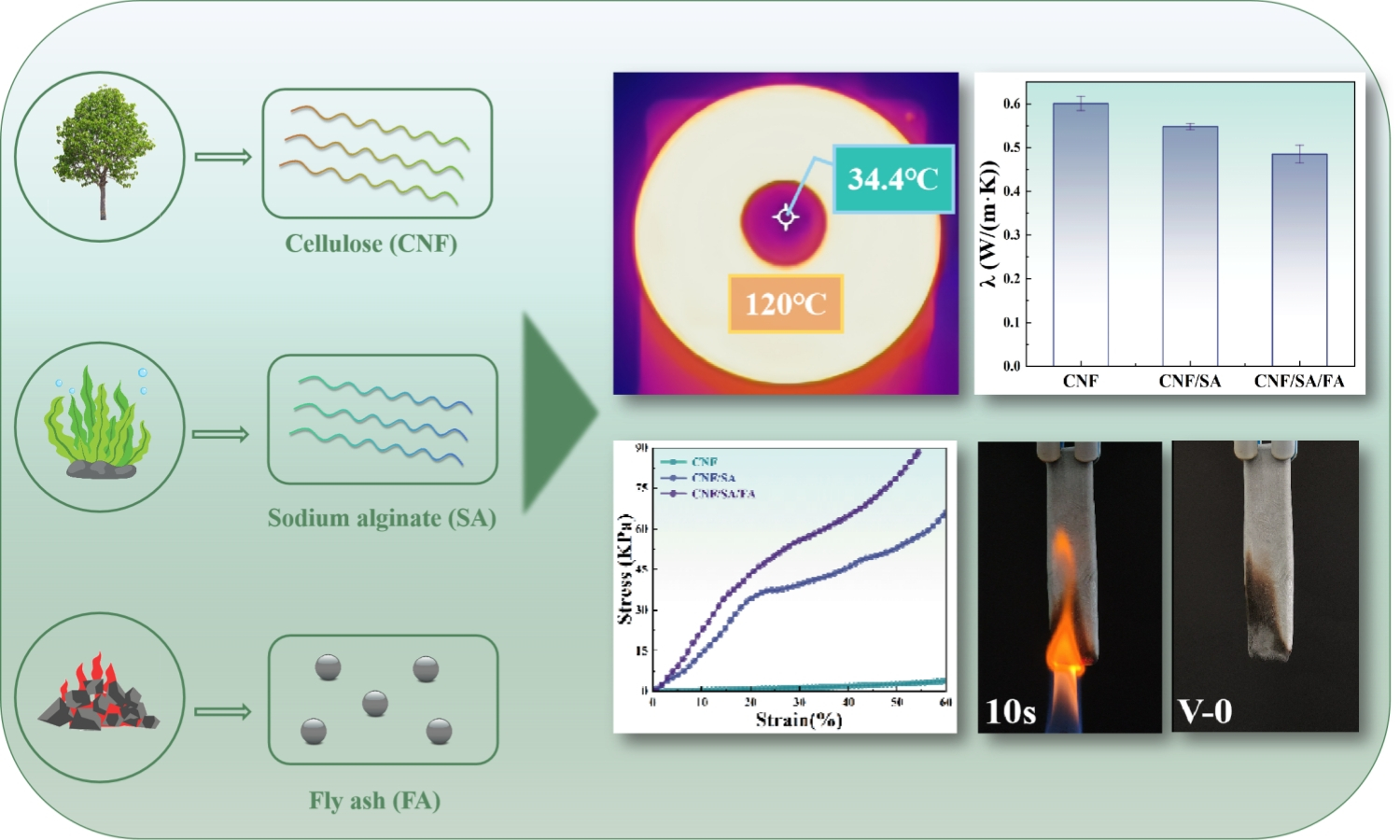
The widespread use of cellulose nanofiber (CNF)-based aerogels is hindered by their limited flame retardancy and mechanical properties. This study addresses these challenges by developing cellulose nanofiber/sodium alginate/fly ash (CNF/SA/FA) aerogel through a one-pot method, utilizing industrial waste fly ash (FA) as a reinforcing material. Various characterization and analytical techniques were employed to evaluate the properties of the CNF/SA/FA aerogel. The findings have revealed that resulting aerogel exhibited excellent thermal insulation performance, with a thermal conductivity of 0.485 W/(m·K), along with an impressive compressive strength of 88.4 kPa and favorable shape processability. Vertical combustion tests demonstrated a V-0 rating, indicating superior flame retardancy, and the aerogel achieved a remarkable 79.16% residual carbon, confirming their effective heat shielding capabilities. Notably, the incorporation of FA significantly enhanced both the thermal and mechanical properties of the composite aerogel, presenting a sustainable and effective solution to optimizing the properties of aerogel for thermal insulation.
Milanta Tom, Sabu Thomas, Bastien Seantier, Yves Grohens, Mohamed Pulikaparambil Kochaidrew, Ramakrishnan Subramanian, Tapas Ranjan Mohanty, Henri Vahabi, Hanna Joseph Maria, Jibin Keloth Paduvilan, Martin George Thomas
Vol. 18., No.6., Pages 638-655, 2024
DOI: 10.3144/expresspolymlett.2024.47
Vol. 18., No.6., Pages 638-655, 2024
DOI: 10.3144/expresspolymlett.2024.47
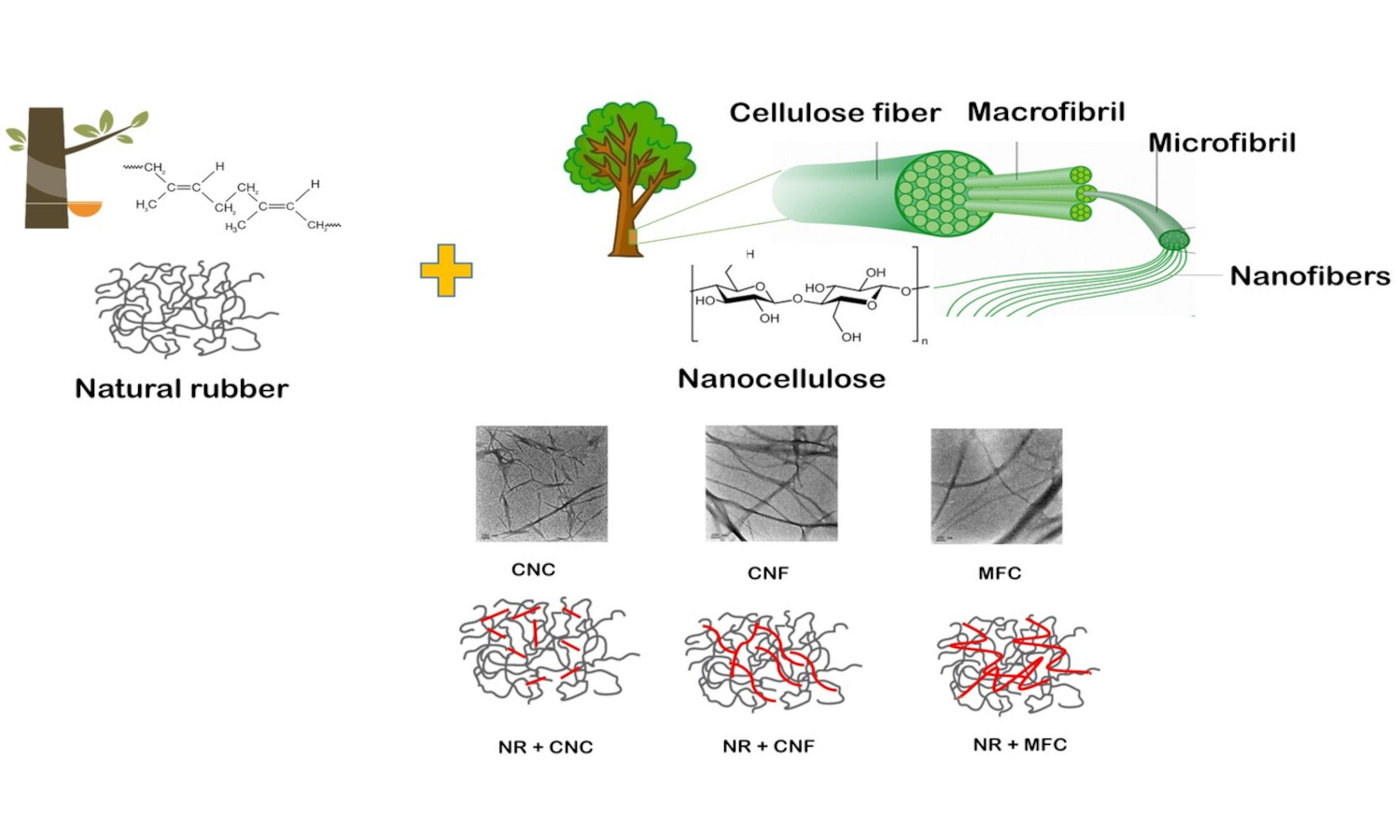
The augmented demand for
sustainable nanocomposites has paved the way to explore naturally derived
materials. Nanocellulose, with its bountiful sources and inherent properties,
ranks top in the list of biofillers with a perspective of reducing the carbon
footprint. A systematic study is required to understand the reinforcing effect
of various types of nanocellulose. In the present work, we selected three types
of nanocellulose, i.e.,
cellulose nanocrystal (CNC), cellulose nanofiber (CNF) and microfibrillated
cellulose (MFC), to investigate the effect of geometrical structure on the
properties of unvulcanized natural rubber (NR). Incorporating these fillers
improved the tensile strength and modulus of natural rubber films significantly
through reinforcement via filler network structure. The reinforcing effect of
CNF was found to be higher compared to CNC and MFC, where an increase of 3.85
MPa in tensile strength from the neat sample was obtained. More uniform
dispersion was evident through transmission electron microscopy, atomic force
microscopy and Raman imaging for CNF in the rubber matrix. The structural
properties were determined using Raman spectra and X-ray diffraction. The rheological
studies revealed a good interaction between filler and NR. The work presented
comprehensively compares different types of nanocellulose as reinforcing filler
in NR matrix, which will help the researchers select an ideal type for their
specific application and, thus, the proper usage of renewable resources,
leading to sustainability and a circular economy.