Tiny but toxic: A comprehensive review of cigarette butt pollution, its environmental effects, and potential applications
Bokome Shaku , Reagan L. Mohlala, Kabelo B. Dilebo, Tshwafo E. Motaung
, Reagan L. Mohlala, Kabelo B. Dilebo, Tshwafo E. MotaungVol. 20., No.9., Pages 905-922, 2026
DOI: 10.3144/expresspolymlett.2026.67
DOI: 10.3144/expresspolymlett.2026.67
Corresponding author: Bokome Shaku 
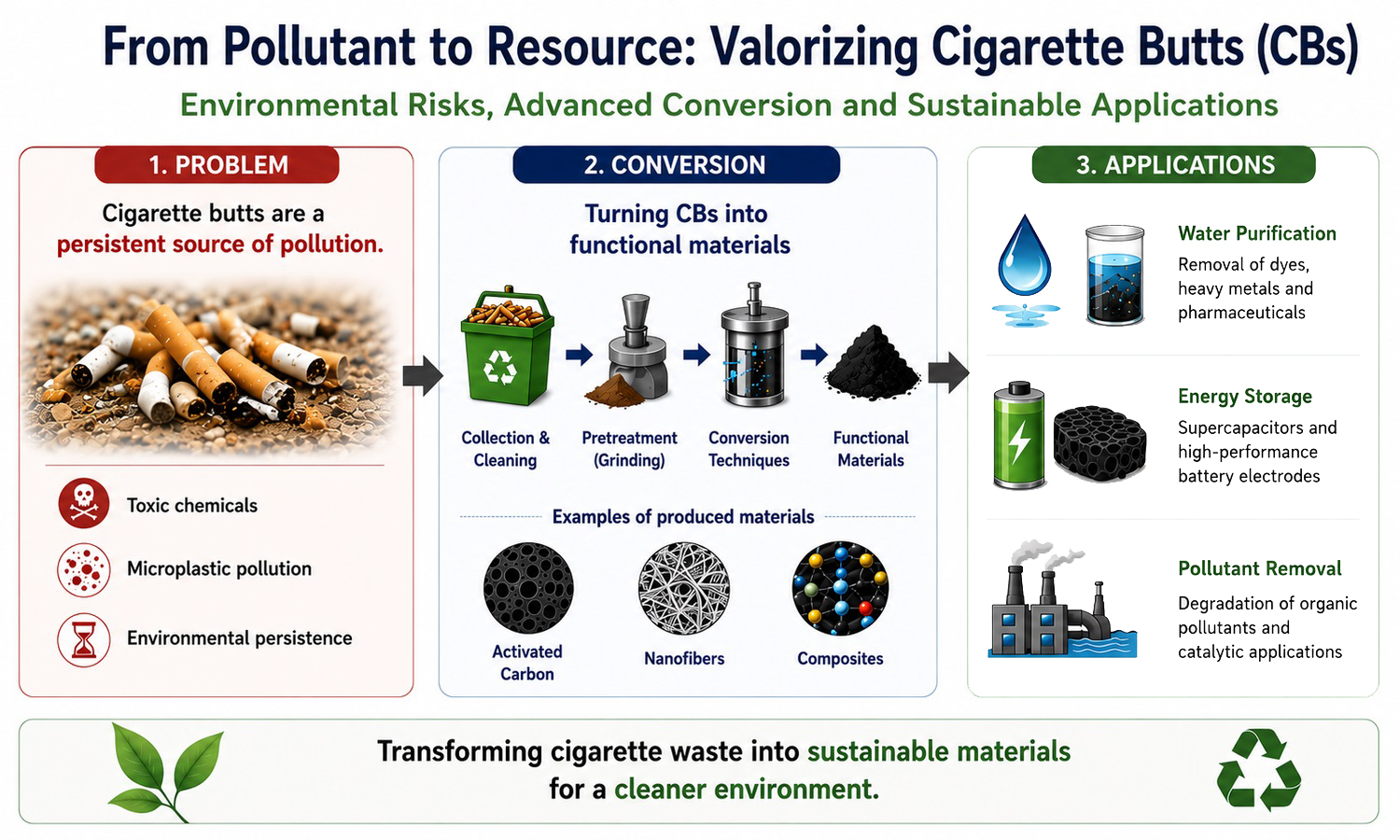
GRAPHICAL ABSTRACT
ABSTRACT
Cigarette butts (CBs) are among the most abundant forms of anthropogenic litter worldwide and constitute a persistent source of environmental contamination due to their slow degradation and the release of toxic substances into terrestrial and aquatic ecosystems. This review critically evaluates recent advances in the valorisation of CB waste into value-added functional materials. Particular attention is given to conversion strategies including chemical activation, electrospinning, hydrothermal processing, and nanocomposite fabrication. These approaches enable the production of activated carbons, cellulose-derived nanomaterials, and metal-doped composites with promising applications in water purification, energy storage, vector control, and pollutant remediation. The underlying mechanisms, performance, scalability, and sustainability of these technologies are discussed. Finally, current challenges, research gaps, and future opportunities of large-scale implementation are highlighted. Collectively, the findings demonstrate that CBs can be re-envisioned not only as a persistent environmental pollutant but also as valuable secondary resources that support circular economy and sustainable material development strategies.
RELATED ARTICLES
Daria Bożejewicz
Vol. 20., No.9., Pages 955-970, 2026
DOI: 10.3144/expresspolymlett.2026.70
Vol. 20., No.9., Pages 955-970, 2026
DOI: 10.3144/expresspolymlett.2026.70
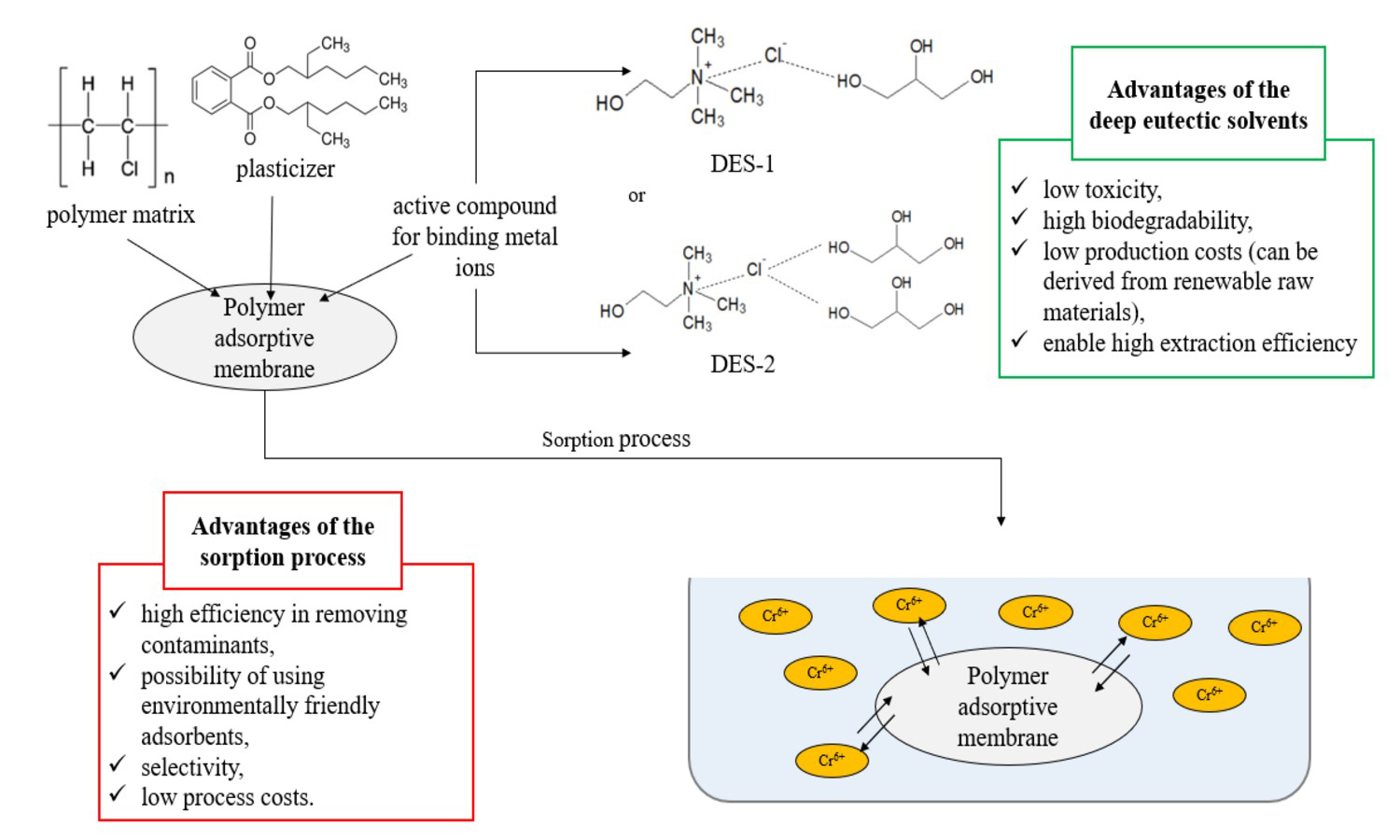
A new application of polymer membranes has been developed for the effective removal of toxic chromium(VI) ions from aqueous solutions by modifying poly(vinyl chloride) films. The process involved preparing deep eutectic solvents (DESs) composed of choline chloride and glycerol at molar ratios of 1:1 and 1:2, which were used as active compounds to bind metal ions in a polymer membrane. Adsorption experiments were performed to evaluate the ability of the obtained membranes to adsorb Cr(VI) ions from aqueous solutions. The composition of the obtained deep eutectic solvents and polymer membranes was confirmed with the use of nuclear magnetic resonance spectroscopy (NMR) and Fourier transform infrared spectroscopy-attenuated total reflectance (FTIR-ATR), respectively. Contact angle analysis of the membranes indicated their potential to remove metal ions. The use of a polymer membrane with deep eutectic solvents for the separation of toxic metal ions from an aqueous solution allows the development of an optimized membrane formulation.
Barlah Rumhayati, Agung Abadi Kiswandono, Anisa Rahmawati, Dian Nopita Sari, Annur Valita Sindiani, Ulfa Andayani, Arifina Febriasari, Supratikno, Rinawati, Herlian Eriska Putra
Vol. 20., No.8., Pages 854-867, 2026
DOI: 10.3144/expresspolymlett.2026.63
Vol. 20., No.8., Pages 854-867, 2026
DOI: 10.3144/expresspolymlett.2026.63
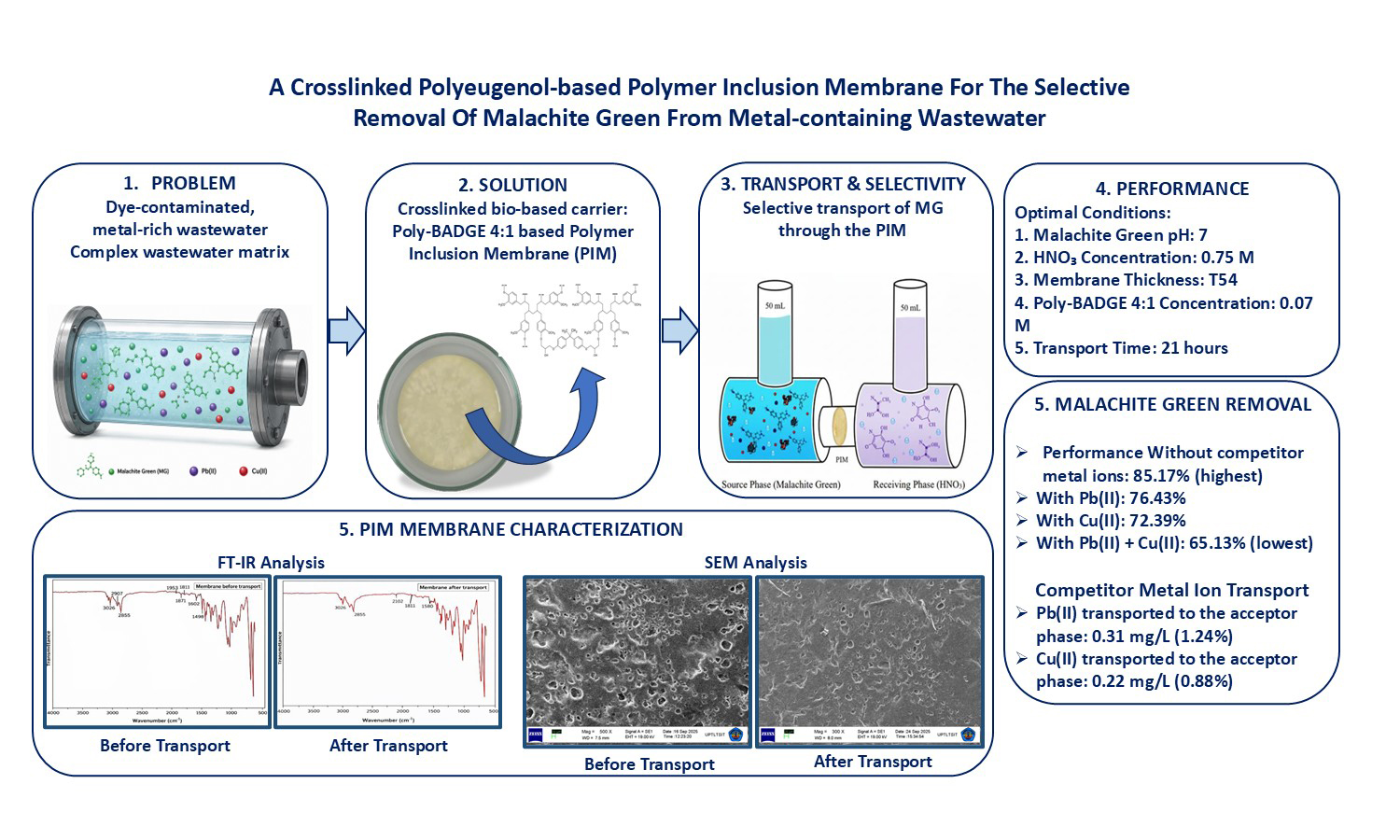
Malachite green (MG) requires selective separation from complex wastewater matrices containing coexisting metal ions. In this study, we developed a process-engineered polymer inclusion membrane (PIM) incorporating a crosslinked bio-based carrier, polyeugenol–bisphenol A diglycidyl ether (Poly-BADGE 4:1), and evaluated its applicability for MG removal from aqueous solutions. We systematically investigated the effects of source-phase pH, receiving phase HNO3 concentration, membrane thickness, carrier concentration and transport time. With optimal conditions (pH 7.0, 0.75 M HNO3, 0.33 mm membrane thickness, 0.07 M Poly-BADGE 4:1 carrier concentration, and 21 h), the PIM exhibited an MG removal efficiency of 82.24%. In simulated mixed wastewater containing Pb(II) and Cu(II), MG removal decreased to 65.13% due to competitive interactions, while preferential removal of MG over metal ions was maintained. The membrane maintained its chemical and morphological integrity during the transport experiments, as evidenced by Fourier transform infrared (FTIR) spectroscopy and scanning electron microscope (SEM) characterization. These results demonstrate the potential of Poly-BADGE–based PIMs as a selective polishing unit for dye-contaminated, metal-rich wastewater in advanced treatment schemes.
Maja Csapó, József Gábor Kovács
Vol. 20., No.4., Pages 414-434, 2026
DOI: 10.3144/expresspolymlett.2026.32
Vol. 20., No.4., Pages 414-434, 2026
DOI: 10.3144/expresspolymlett.2026.32
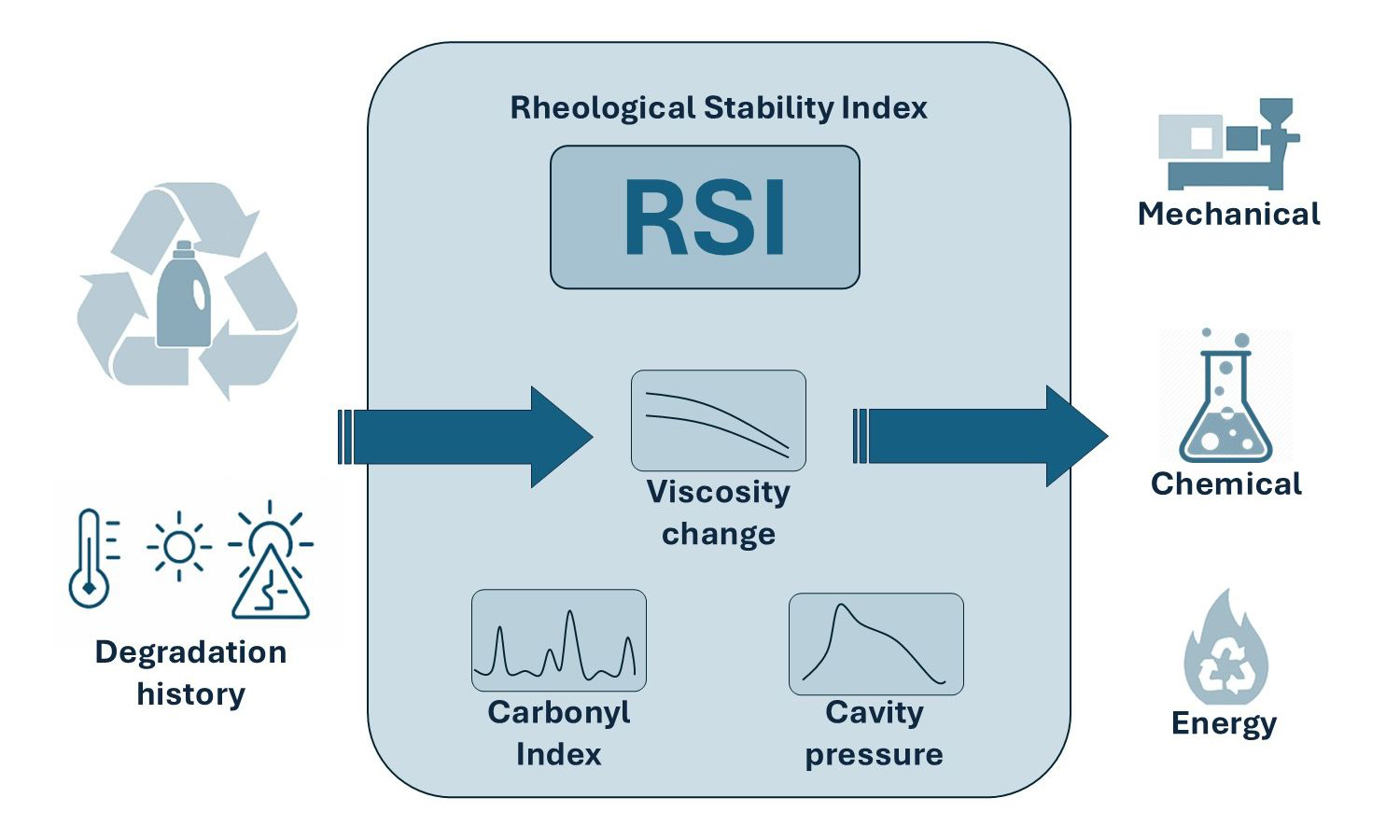
The greatest obstacle to recycling post-consumer high-density polyethylene (PCR-HDPE) is typically the degradation of properties caused by impurities and heterogeneity. However, a critical analysis of the literature reveals that the real bottleneck is not the material composition, but rather rheological stability, which simultaneously determines the degradation history of the waste stream, melt behavior, and processability at the cycle level. This review proposes a new perspective: the decision among mechanical, chemical, and energetic recycling is better made based on a unified rheological stability index (RSI), which integrates carbonyl index, viscosity change after multiple instances of melting, melt flow index (MFI) instability, in-mold pressure fluctuation, and the degree of polymer incompatibility. RSI enables the prediction of the processability of PCR-HDPE and identifies which recycling path a fraction is most suitable for. The study demonstrates how an RSI-based approach can reduce quality risk, improve cycle stability, and support circular decision-making in an industrial environment.
Katalin Bocz, Ferenc Ronkay
Vol. 19., No.9., Pages 860-861, 2025
DOI: 10.3144/expresspolymlett.2025.65
Vol. 19., No.9., Pages 860-861, 2025
DOI: 10.3144/expresspolymlett.2025.65
This is an editorial article. It has no abstract.
Paulina Wiśniewska, Natalia A. Wójcik, Józef Haponiuk, Jacek Ryl, Henri Vahabi, Krzysztof Formela, Mohammad Reza Saeb
Vol. 19., No.9., Pages 878-892, 2025
DOI: 10.3144/expresspolymlett.2025.67
Vol. 19., No.9., Pages 878-892, 2025
DOI: 10.3144/expresspolymlett.2025.67
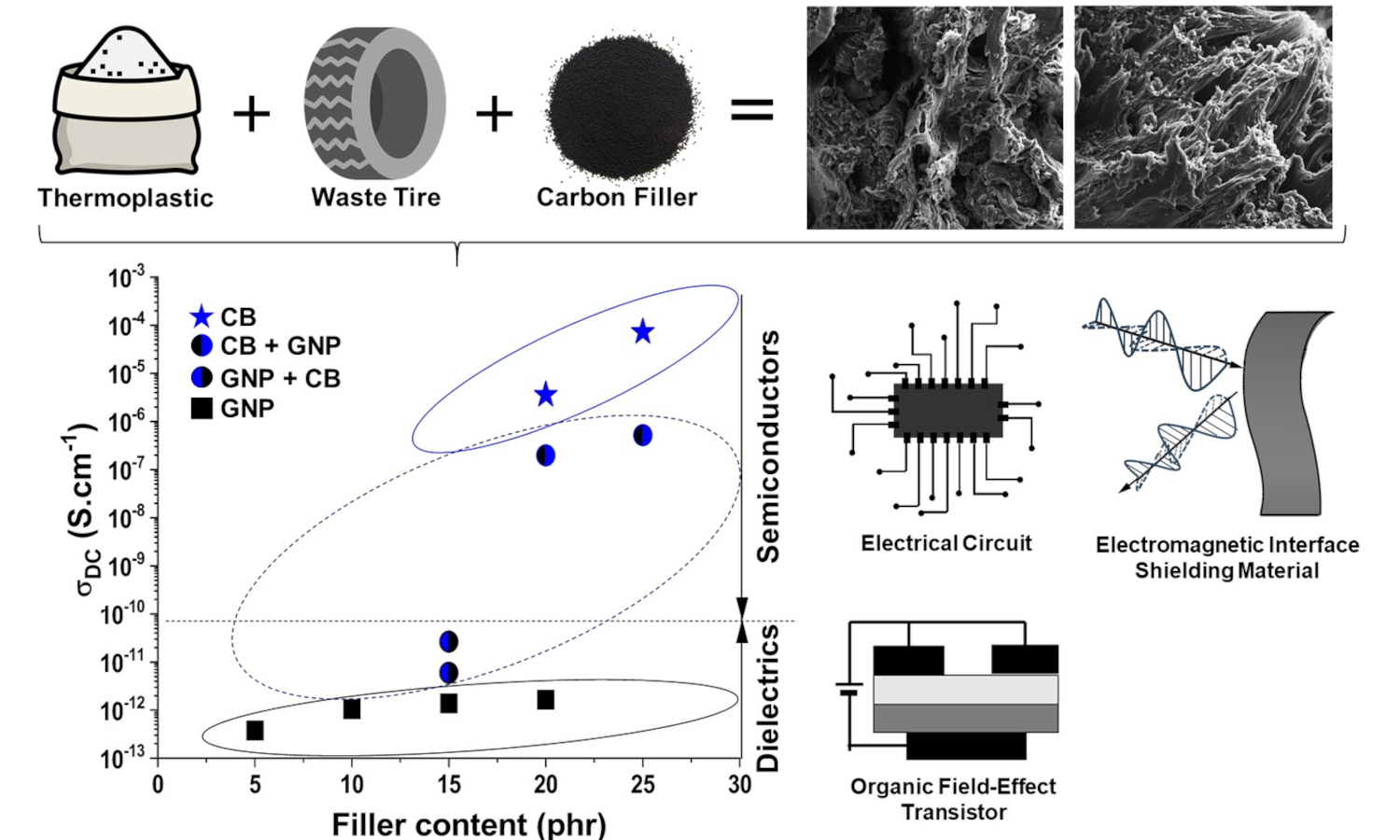
Waste rubber management through developing blends of thermoplastics with ground tire rubber (GTR) has gained significant attention for creating sustainable, high-performance materials with enhanced properties. In this work, we developed customized graphene/polymer nanocomposites applying GTR, ethylene-vinyl acetate copolymer (EVA), and graphene nanoplatelets (GNPs), taking carbon black (CB) as the reference additive. A wide range of electrical conductivity from 10–12 S/cm (dielectric) to 10–5 S/cm (semiconductor) was obtained for optimized composites containing GNPs and CB, respectively. Thermal, mechanical, and flame-retardant properties looked promising for additive manufacturing, while electrical conductivity was tailored for soft electronics. In view of processability, mechanical strength, and elasticity, GNPs-incorporated EVA/GTR composites showed an edge over their CB-aided counterparts. For example, tensile strength and elongation at break of EVA/GTR blends reinforced with 20 phr GNPs were 4.8 MPa and 681%, respectively, compared to 4.0 MPa and 651% for the composite comprising an identical amount of CB. Interestingly, combining GNPs and CB enhanced the thermal stability and flame retardancy of EVA/GTR compared to only GNPs or CB. These results were promising from both sustainability and advanced functional materials perspectives.