Development challenge for synthetic polymer fibers and tapes: improving toughness
László József Varga , Tamás Bárány
, Tamás BárányVol. 17., No.10., Pages 991-991, 2023
DOI: 10.3144/expresspolymlett.2023.73
DOI: 10.3144/expresspolymlett.2023.73
Corresponding author: Tamás Bárány 
GRAPHICAL ABSTRACT
RELATED ARTICLES
Praveenkumara Jagadeesh, Gokul Kannan, Mat Jusoh Suriani, Madhu Puttegowda, Sanjay Mavinkere Rangappa, Suchart Siengchin
Vol. 20., No.8., Pages 799-839, 2026
DOI: 10.3144/expresspolymlett.2026.61
Vol. 20., No.8., Pages 799-839, 2026
DOI: 10.3144/expresspolymlett.2026.61
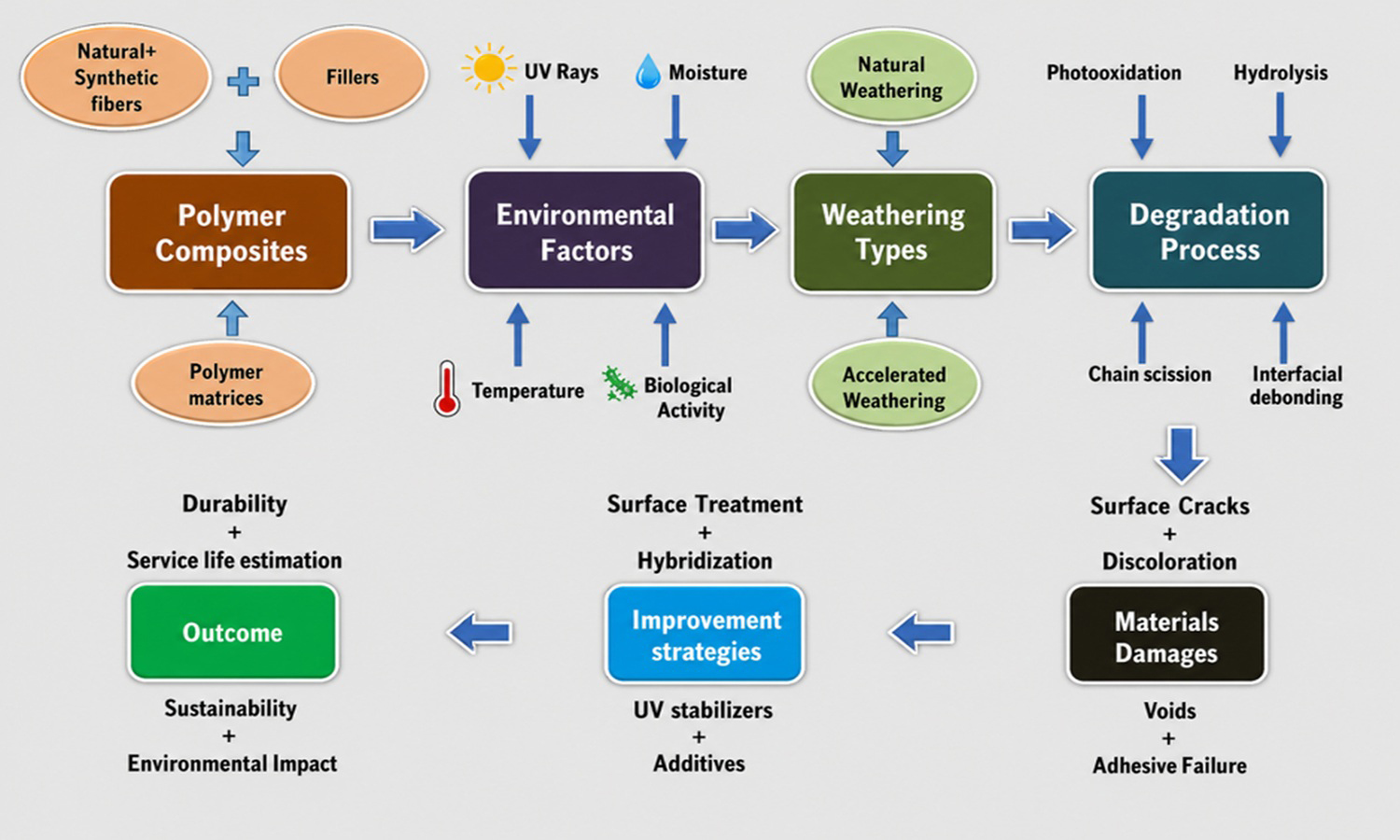
Polymer composites are widely used in indoor and outdoor applications owing to their high strength-to-weight ratio, corrosion resistance, and design flexibility. However, exposure to environmental factors such as ultraviolet (UV) radiation, humidity, temperature fluctuations, and biological agents significantly affect their long-term durability and performance. In this review, we comprehensively examine the degradation mechanisms of polymer composites under both natural and accelerated weathering, with particular emphasis on degradation mechanisms, characterization techniques, and durability assessment. We critically discuss the fundamental degradation mechanisms, including photo-oxidation, hydrolysis, polymer chain scission, crosslinking and interfacial debonding. We also evaluated accelerated weathering techniques, conducted under standardized testing conditions, for their ability to simulate long-term outdoor exposure within significantly shorter timeframes, by controlling key environmental parameters such as UV radiation, humidity, and temperature. We also examine the influence of reinforcements, including natural fibres, synthetic fibres, and nanofillers, on the weathering resistance of polymer composites. Attention is given to natural fibre–reinforced composites because their inherent hydrophilicity promotes moisture absorption, accelerating degradation and weakening the fibre–matrix interface. Furthermore, we critically evaluate the effects of weathering on the mechanical properties, crystalline structure and barrier performance of polymer composite films, and discuss recent advances in enhancing weather resistance through hybridization, surface modification, and the incorporation of stabilizing additives. Finally, the review highlights the key challenges and future research directions for the development of durable, high-performance, and sustainable polymer composite systems for long-term outdoor applications.
Zhen Chen, Liang Xu, Yu Bai, Wei Wang , Junfeng Qian, Xiaoliang Yin, Jizhou Du, Jing Zhang
Vol. 20., No.7., Pages 724-741, 2026
DOI: 10.3144/expresspolymlett.2026.55
Vol. 20., No.7., Pages 724-741, 2026
DOI: 10.3144/expresspolymlett.2026.55
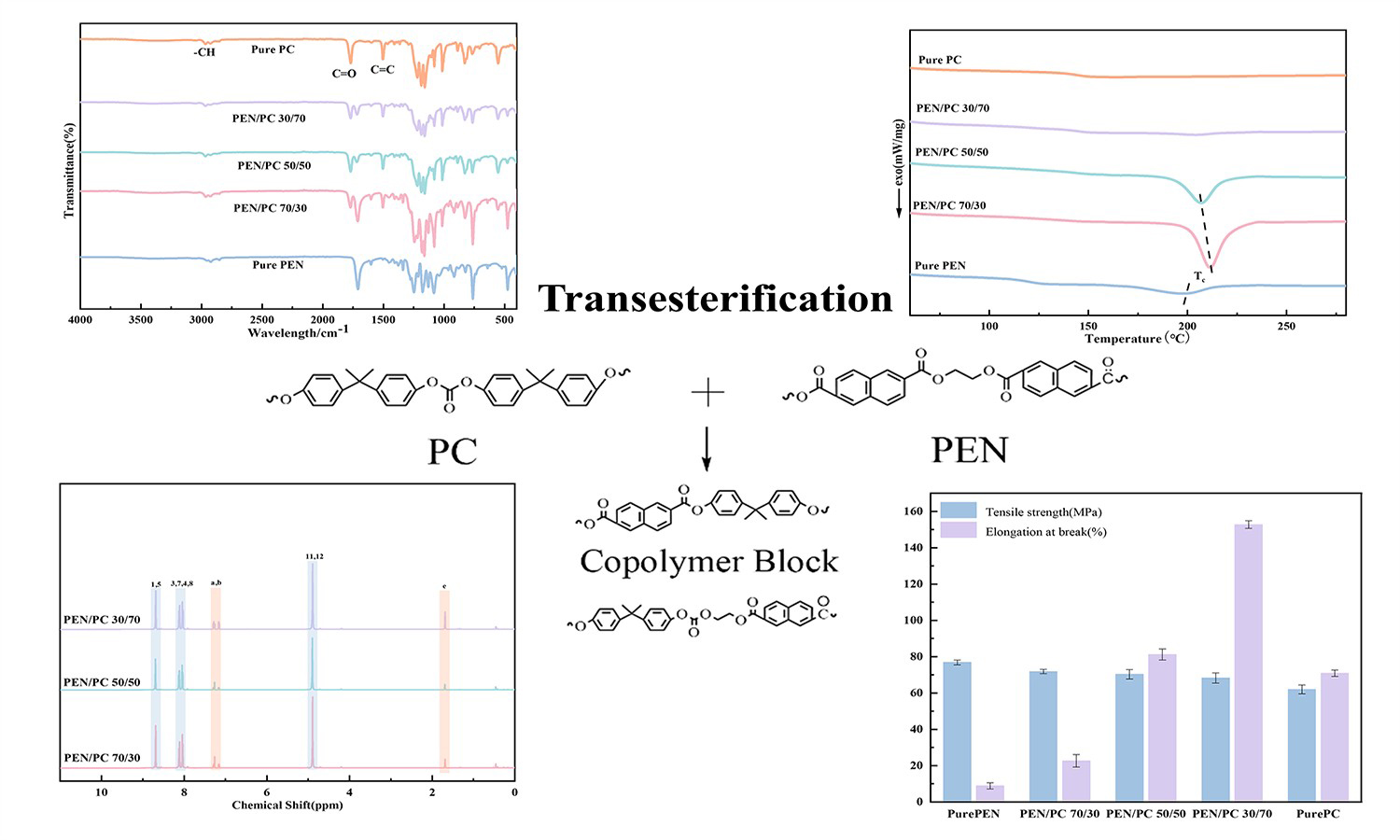
Conventional poly(ethylene terephthalate) (PET) and polycarbonate (PC) blends exhibit insufficient heat resistance, restricting their use in demanding applications such as new energy vehicles and portable consumer electronics. Poly(ethylene 2,6-naphthalate) (PEN) offers superior thermal stability, strength and chemical resistance, making PEN/PC blends promising alternatives. In this study, we investigated the relationships between the composition, structure and properties of PEN/PC blends through non-catalyzed melt blending. Fourier transform infrared spectroscopy (FTIR) and proton nuclear magnetic resonance spectra (1H NMR) confirm transesterification between PEN and PC, with the extent of exchange (X) increasing with PC content. Non-isothermal differential scanning calorimetry (DSC) and X-ray diffraction (XRD) show that moderate PC content promotes crystallization, while high PC content suppresses it. Thermogravimetric analysis (TGA) shows enhanced thermal stability in PEN-rich blends. Compared to PET/PC, PEN/PC blends maintain similar tensile strength but exhibit 53% higher elongation and 1–2.5% lower density. This study demonstrates the potential of PEN/PC blends for high-performance, thin-walled applications in the new energy vehicle and electronics industries.
Amanda Legnani, André Luis Marcomini, Philipe Augusto Pocidonio Silva, Ricardo Geraldo de Sousa, Anderson Júnior dos Santos, João Paulo Ferreira Santos
Vol. 20., No.4., Pages 326-341, 2026
DOI: 10.3144/expresspolymlett.2026.26
Vol. 20., No.4., Pages 326-341, 2026
DOI: 10.3144/expresspolymlett.2026.26
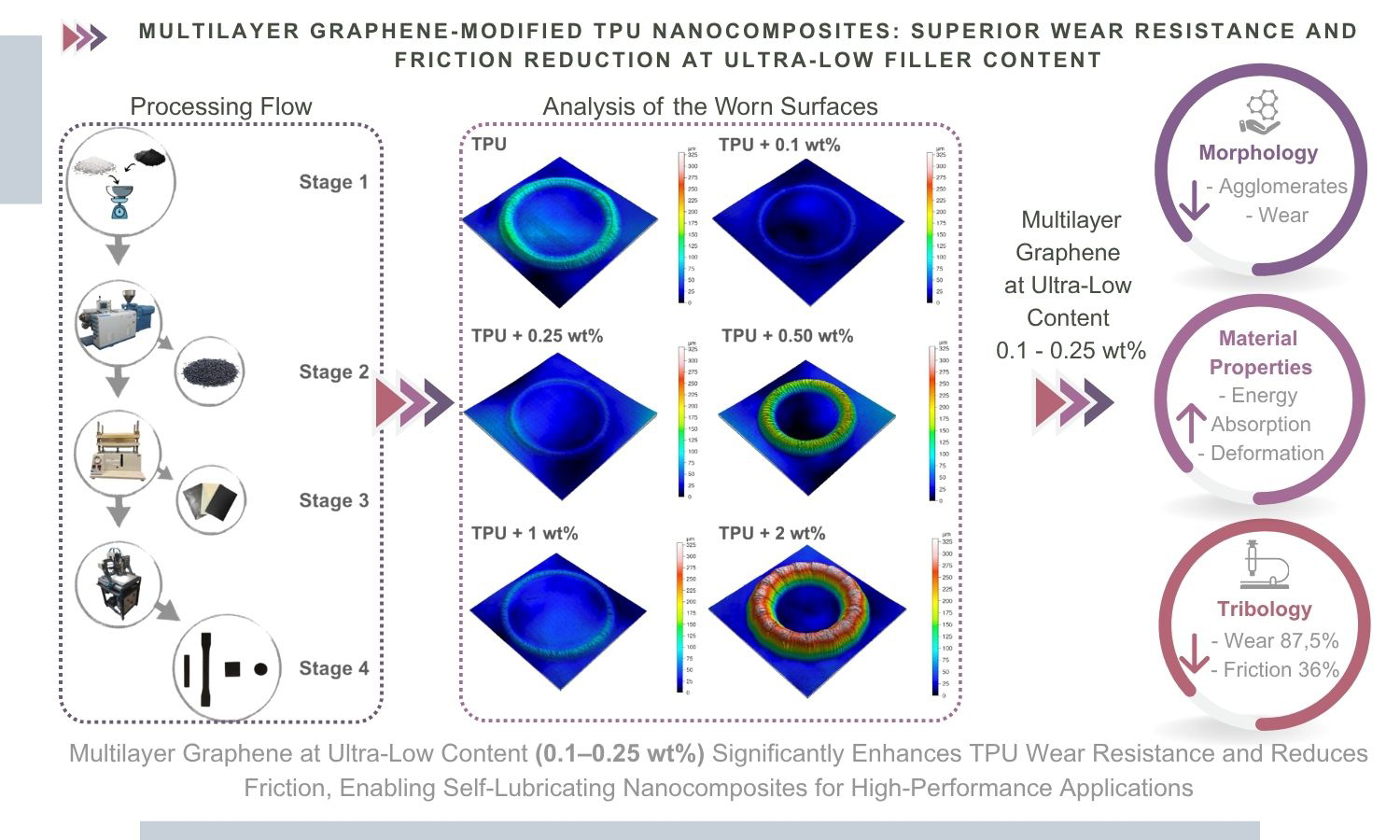
This work presents the development of high-performance thermoplastic polyurethane (TPU) nanocomposites reinforced with low contents of multilayer graphene (mG), aiming to improve their tribological behavior. Using twin-screw extrusion followed by hot pressing, nanocomposites containing 0.1, 0.25, 0.5, 1, and 2% mG weight were fabricated and systematically evaluated. Nanocomposites with only 0.1–0.25 wt% mG achieved a 36% reduction in friction coefficient and 87.5% reduction in wear volume compared to neat TPU. Results are rarely reported at such low filler loadings. Scanning electron microscopy (SEM) analysis revealed uniform dispersion at these optimal concentrations, while higher mG contents led to agglomeration and performance loss. Rheological studies indicated improved flow behavior, and dynamic-mechanical analysis confirmed increased energy dissipation and thermal response. These results suggest that the concentrations of 0.1% and 0.25% of multilayer graphene used in the study are promising for improving the performance of TPU nanocomposites in applications requiring high wear resistance for advanced applications in automotive, biomedical, and high-load engineering components, where durability and low friction are essential.
Sandra Paszkiewicz, Kamila Sałasińska, Zaida Ortega, Mateusz Barczewski, Jacek Andrzejewski, Konrad Walkowiak, Izabela Irska, Magdalena Jurczyk Kowalska, Anna Boczkowska, Marcin Borowicz, Joanna Paciorek-Sadowska, Elżbieta Piesowicz, Katarzyna Pokwicka-Croucher
Vol. 19., No.12., Pages 1286-1309, 2025
DOI: 10.3144/expresspolymlett.2025.95
Vol. 19., No.12., Pages 1286-1309, 2025
DOI: 10.3144/expresspolymlett.2025.95
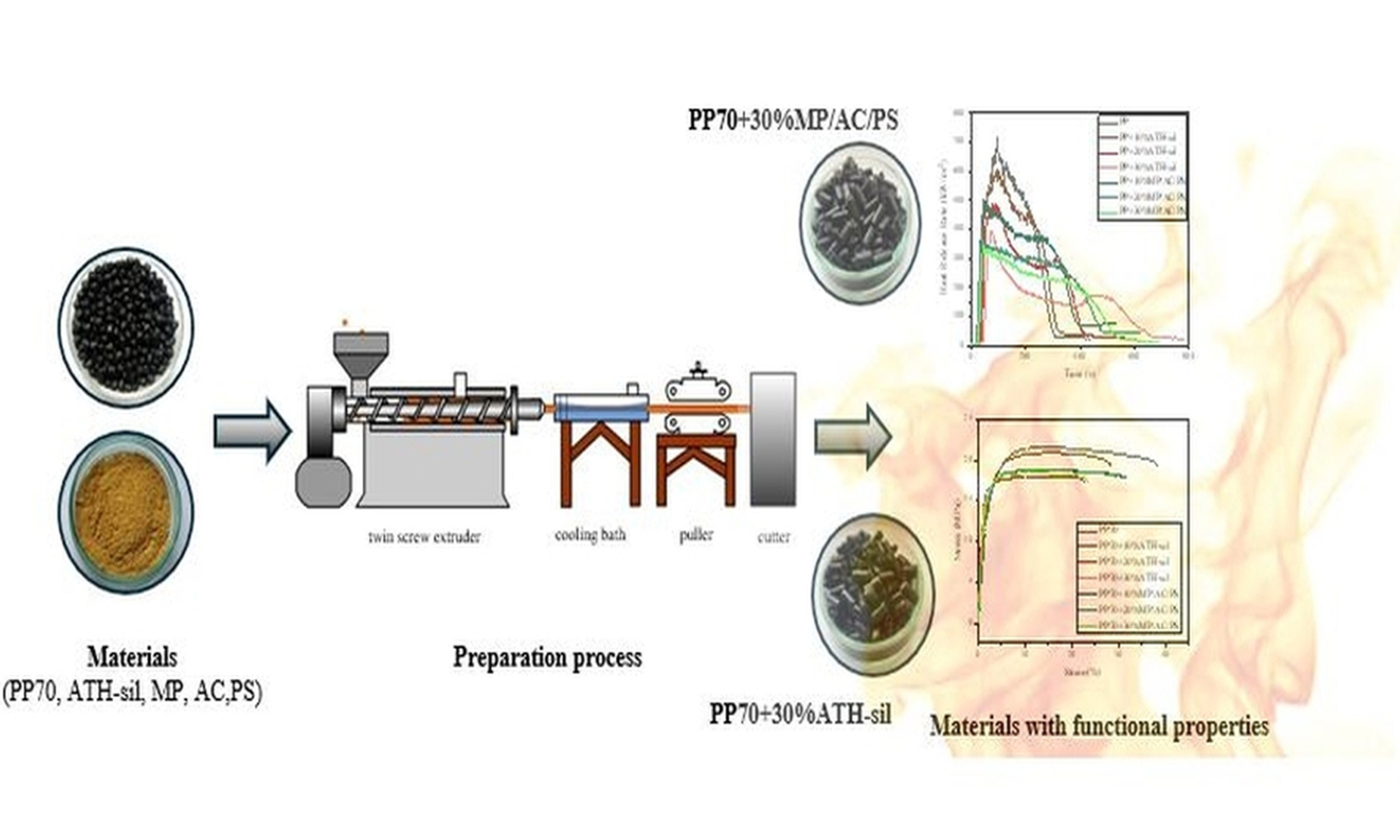
Two series of polymer blends based on post-consumer polypropylene (rPP) and tire rubber crumbs (Trc) under the trademark ECOPLASTOMER® PP70 with a mutual ratio of components 70/30 wt%, containing 10, 20, and 30 wt% of flame retardants, have been prepared using a twin-screw extruder. The influence of commercially available silane-treated alumina trihydrate (ATH-sil) with the eco-friendly system based on melamine phosphate (MP), aluminum hydroxide (AC), and peanut shells (PS), used as flame retardant agents, on the mechanical, thermal, and flammability properties of polymer blends was assessed – the incorporation of ATH-sil results in the appearance of peaks related to OH groups in the Fouriertransform infrared spectroscopy (FTIR) spectra. Similar observations are made for the MP/AC/PS system. differential scanning calorimetry (DSC) analysis revealed that using the selected flame retardants did not impact the melting and crystallization temperatures of the polymer. Tensile strength experienced a minor decrease, particularly in compositions containing more than 20 wt% of the flame retardants, while hardness remained unaffected by their share. Both flame retardants reduced the flammability of the modified polypropylene/rubber powder blends, and the most favorable outcomes were achieved with ATH-sil; however, only when employed at a minimum of 30 wt%. The formulated MP/AC/PS system proved more adept at reducing flammability and smoke emissions at lower flame retardant levels (up to 20 wt%).
Jordi Puiggalí
Vol. 19., No.12., Pages 1214-1215, 2025
DOI: 10.3144/expresspolymlett.2025.89
Vol. 19., No.12., Pages 1214-1215, 2025
DOI: 10.3144/expresspolymlett.2025.89
This is an editorial article. It has no abstract.