Recent advances in the applications of nanocellulose for sustainable development
Mohammad Mehdi Alighanbari, Firoozeh Danafar, Araam Namjoo, Asma Saeed
Vol. 19., No.1., Pages 15-46, 2025
DOI: 10.3144/expresspolymlett.2025.3
DOI: 10.3144/expresspolymlett.2025.3
Corresponding author: Firoozeh Danafar 
GRAPHICAL ABSTRACT
ABSTRACT
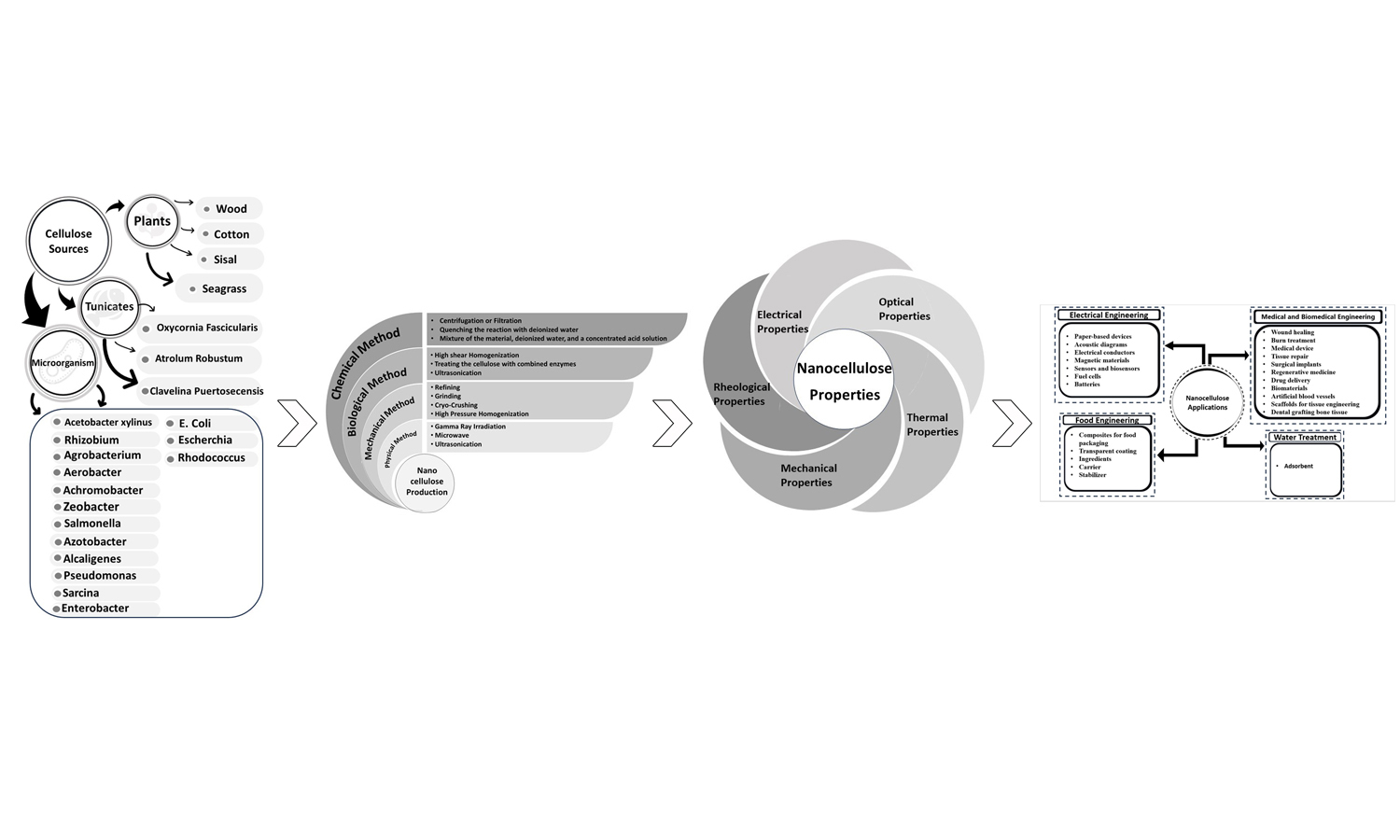
The environmental and ecological concerns drive researchers to synthesize functional materials using components from natural resources. Nanocellulose (NC), derived from plants, marine animals, or microorganisms, is a green material attracting attention due to its abundance, biocompatibility, and biodegradability. NC’s interstice properties enable the synthesis of functional nanocomposites in forms like aerogels, foams, paper, sheets, or hollow filaments. This review briefly describes NC classification and production while comprehensively presenting its mechanical, rheological, optical, and electrical properties, offering foundational knowledge for future research. Additionally, it highlights recent developments in NC-based products across fields such as papermaking, water treatment, civil engineering, electronics, cosmetics, food, and medicine. For the first time, this paper explores recent advances in NC molecular simulation, providing insights into structure, arrangement, and interactions through molecular dynamic simulation. Finally, future prospects for NC-based applications are discussed to encourage studies addressing current challenges.
RELATED ARTICLES
Barlah Rumhayati, Agung Abadi Kiswandono, Anisa Rahmawati, Dian Nopita Sari, Annur Valita Sindiani, Ulfa Andayani, Arifina Febriasari, Supratikno, Rinawati, Herlian Eriska Putra
Vol. 20., No.8., Pages 854-867, 2026
DOI: 10.3144/expresspolymlett.2026.63
Vol. 20., No.8., Pages 854-867, 2026
DOI: 10.3144/expresspolymlett.2026.63
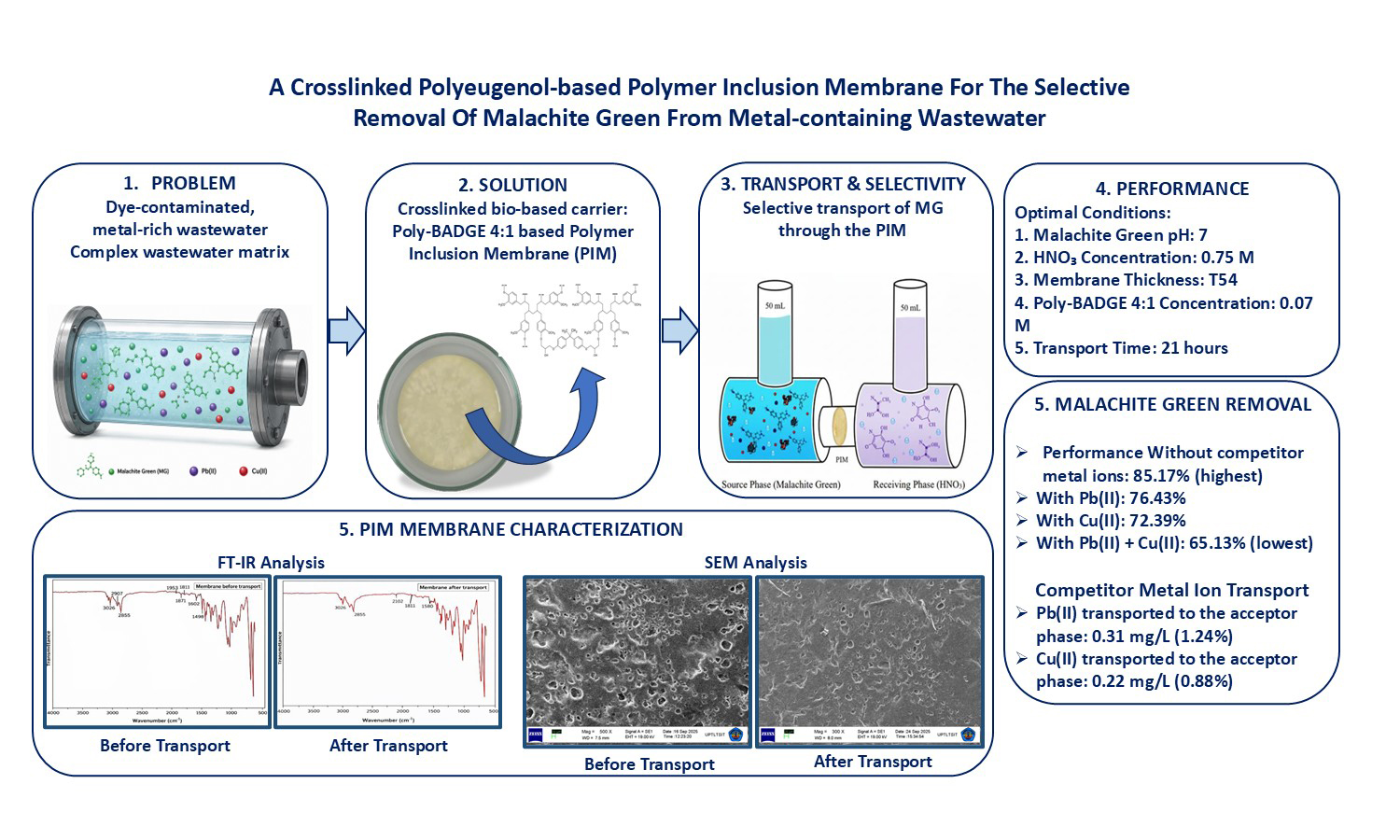
Malachite green (MG) requires selective separation from complex wastewater matrices containing coexisting metal ions. In this study, we developed a process-engineered polymer inclusion membrane (PIM) incorporating a crosslinked bio-based carrier, polyeugenol–bisphenol A diglycidyl ether (Poly-BADGE 4:1), and evaluated its applicability for MG removal from aqueous solutions. We systematically investigated the effects of source-phase pH, receiving phase HNO3 concentration, membrane thickness, carrier concentration and transport time. With optimal conditions (pH 7.0, 0.75 M HNO3, 0.33 mm membrane thickness, 0.07 M Poly-BADGE 4:1 carrier concentration, and 21 h), the PIM exhibited an MG removal efficiency of 82.24%. In simulated mixed wastewater containing Pb(II) and Cu(II), MG removal decreased to 65.13% due to competitive interactions, while preferential removal of MG over metal ions was maintained. The membrane maintained its chemical and morphological integrity during the transport experiments, as evidenced by Fourier transform infrared (FTIR) spectroscopy and scanning electron microscope (SEM) characterization. These results demonstrate the potential of Poly-BADGE–based PIMs as a selective polishing unit for dye-contaminated, metal-rich wastewater in advanced treatment schemes.
Praveenkumara Jagadeesh, Gokul Kannan, Mat Jusoh Suriani, Madhu Puttegowda, Sanjay Mavinkere Rangappa, Suchart Siengchin
Vol. 20., No.8., Pages 799-839, 2026
DOI: 10.3144/expresspolymlett.2026.61
Vol. 20., No.8., Pages 799-839, 2026
DOI: 10.3144/expresspolymlett.2026.61
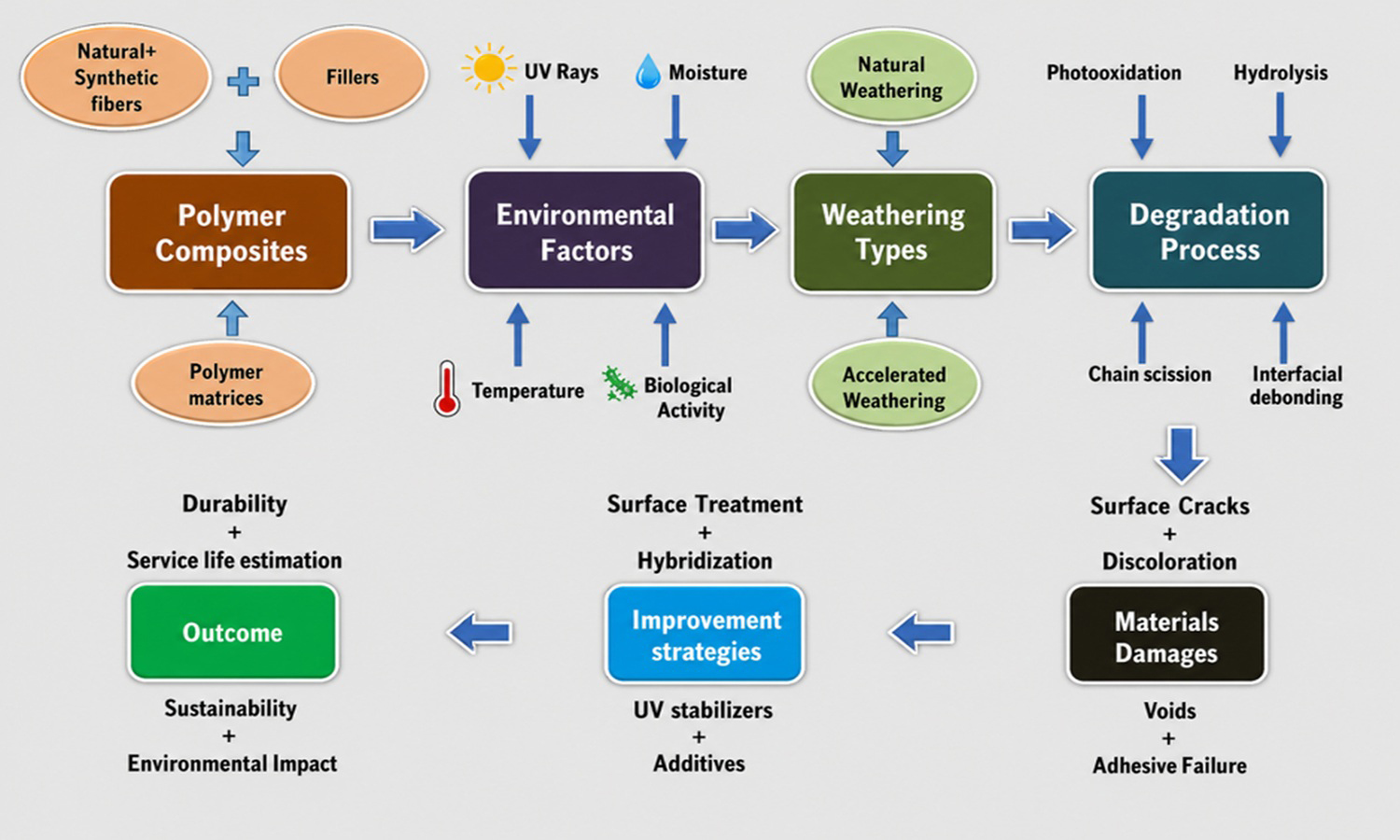
Polymer composites are widely used in indoor and outdoor applications owing to their high strength-to-weight ratio, corrosion resistance, and design flexibility. However, exposure to environmental factors such as ultraviolet (UV) radiation, humidity, temperature fluctuations, and biological agents significantly affect their long-term durability and performance. In this review, we comprehensively examine the degradation mechanisms of polymer composites under both natural and accelerated weathering, with particular emphasis on degradation mechanisms, characterization techniques, and durability assessment. We critically discuss the fundamental degradation mechanisms, including photo-oxidation, hydrolysis, polymer chain scission, crosslinking and interfacial debonding. We also evaluated accelerated weathering techniques, conducted under standardized testing conditions, for their ability to simulate long-term outdoor exposure within significantly shorter timeframes, by controlling key environmental parameters such as UV radiation, humidity, and temperature. We also examine the influence of reinforcements, including natural fibres, synthetic fibres, and nanofillers, on the weathering resistance of polymer composites. Attention is given to natural fibre–reinforced composites because their inherent hydrophilicity promotes moisture absorption, accelerating degradation and weakening the fibre–matrix interface. Furthermore, we critically evaluate the effects of weathering on the mechanical properties, crystalline structure and barrier performance of polymer composite films, and discuss recent advances in enhancing weather resistance through hybridization, surface modification, and the incorporation of stabilizing additives. Finally, the review highlights the key challenges and future research directions for the development of durable, high-performance, and sustainable polymer composite systems for long-term outdoor applications.
Using dual-cure architectures in HNBR: A detailed insight into their structure-property relationship
Sharmistha Dhar, Arshad Rahman Parathodika, Dibyendu Dey, Kinsuk Naskar
Vol. 20., No.5., Pages 514-530, 2026
DOI: 10.3144/expresspolymlett.2026.39
Vol. 20., No.5., Pages 514-530, 2026
DOI: 10.3144/expresspolymlett.2026.39
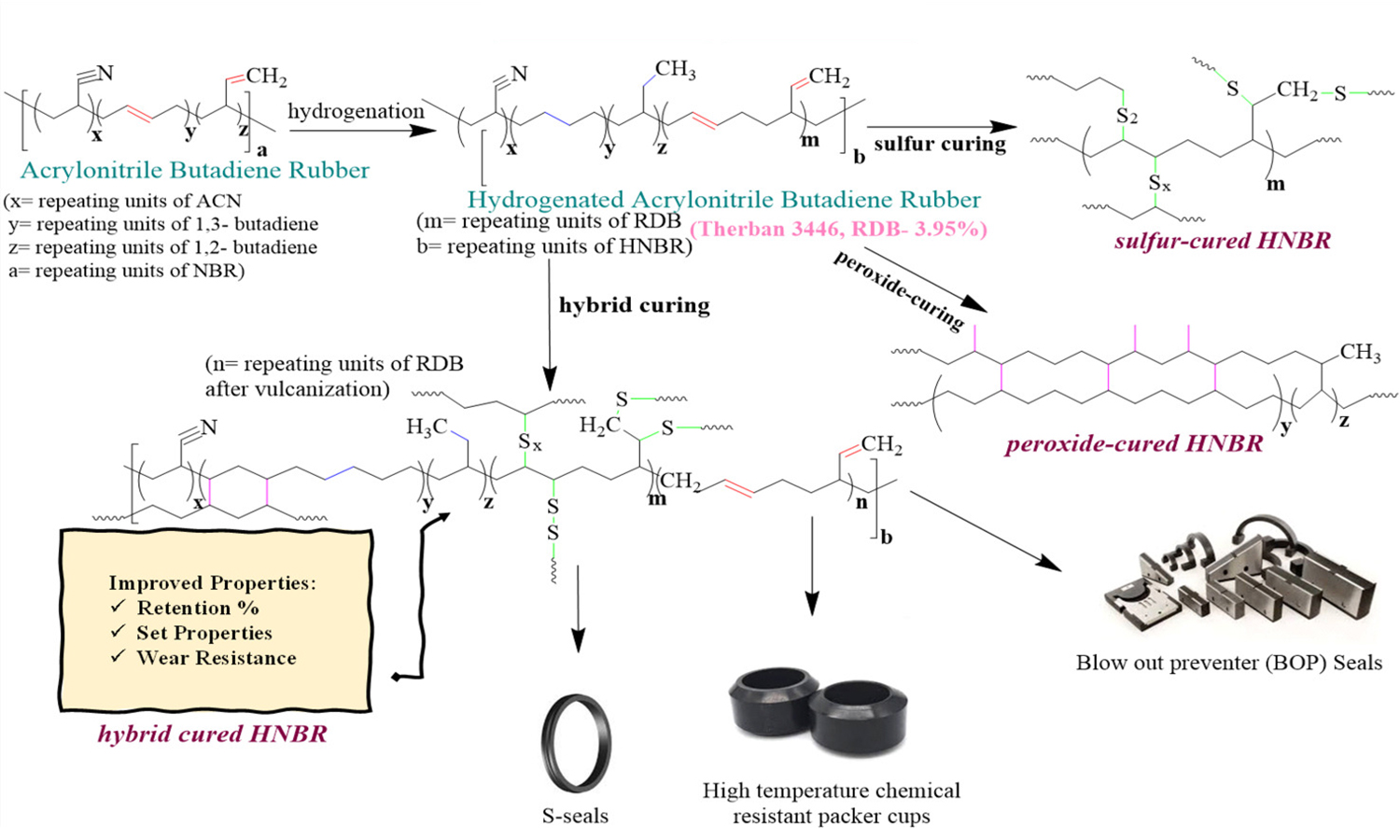
Hydrogenated acrylonitrile–butadiene rubber (HNBR) is widely used in automotive and sealing applications due to its oil resistance and mechanical durability; however, its long-term performance is significantly influenced by the curing chemistry. Sulfur vulcanization offers superior elasticity but restricted thermal stability, while peroxide curing improves heat resistance at the expense of flexibility. In this study, we investigate hybrid sulfur–peroxide curing to integrate these benefits. The hybrid pathway encompasses competitive and sequential processes, such as partial radical quenching and accelerator oxidation, resulting in a dual crosslink network. Dynamic mechanical, thermal, and temperature scanning stress relaxation (TSSR) evaluations demonstrate that hybrid systems provide precise modulation of the operational temperature–frequency range, broaden the glass-transition relaxation, and control stress dissipation. The coexistence of sulfur and C–C crosslinks results in a heterogeneous structure characterized by diverse crosslink densities and bond energies, leading to numerous relaxation modes and an optimal blend of elasticity, strength, and thermal stability. Microscopy confirms the absence of phase separation, indicating that hybrid vulcanization is a viable approach for producing robust, high-performance HNBR elastomers.
Rattanawadee Ninjan, Bencha Thongnuanchan, Phakawat Tongnuanchan, Subhan Salaeh, Jutharat Intapun, Abdulhakim Masa, Natinee Lopattananon
Vol. 20., No.1., Pages 18-35, 2026
DOI: 10.3144/expresspolymlett.2026.3
Vol. 20., No.1., Pages 18-35, 2026
DOI: 10.3144/expresspolymlett.2026.3
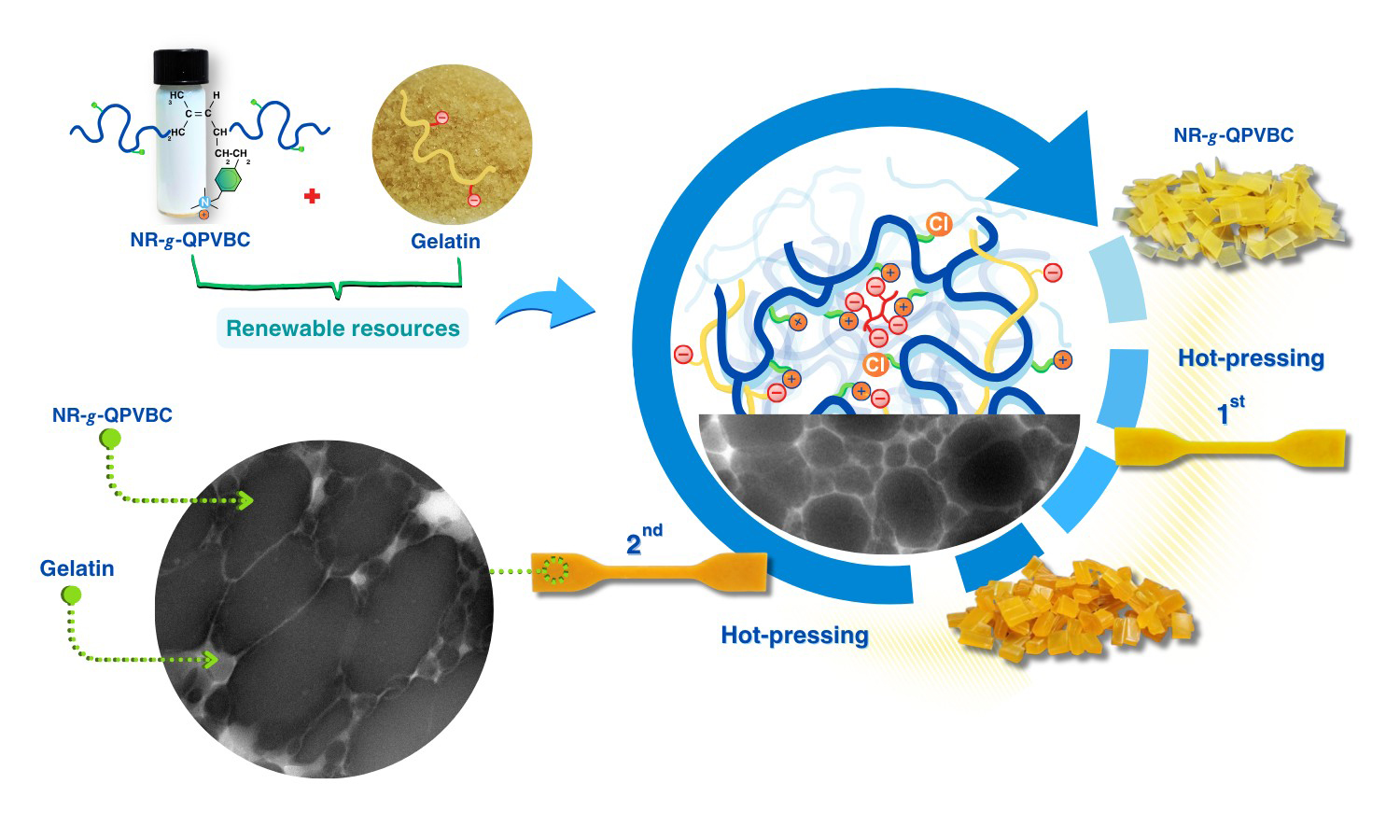
The present study has proposed a straightforward method to improve the reprocessability of modified natural rubber (NR) by blending it with gelatin (GT). The reprocessable characteristics of these blends were evaluated based on their remolding capabilities and mechanical recovery performance. In this method, poly(vinylbenzyl chloride) (PVBC) was first grafted onto NR chains to create graft copolymers known as NR-g-PVBC. The benzyl chloride groups in the graft copolymers were subsequently converted into quaternary ammonium groups, referred to as NR-g-QPVBC. This modification enabled ionic crosslinking when NR-g-QPVBC reacted with ethylenediamine tetraacetic acid. Blends were created by incorporating GT powder into the NR-g-QPVBC latex. The optimal loading level of GT was determined to be 30 wt%, as the resulting film exhibited the highest recovery of tensile properties. Initially, the film's tensile strength was measured at 15 MPa. After being remolded at 160 °C, the tensile strength decreased to 9.3 MPa, resulting in a recovery rate of 60.7% and withstanding a tensile strain of 144%. Although the NR-g-QPVBC/GT films could be remolded, their tensile properties declined with increasing remolding cycles. Therefore, this work demonstrated a practical method for producing NR-based films that could be reshaped through hot-pressing after being formed into products, increasing their reusability.
Narayanapura Mahadevappa Tanuja, Sommenahalli Machegowda Chaithra, Chikkahalkur Shivanandappa Kaliprasad, Mangaravalli Hombalegowda Harshitha, Shivapura Manchaiah Anush, Kalappa Prashantha
Vol. 20., No.1., Pages 36-51, 2026
DOI: 10.3144/expresspolymlett.2026.4
Vol. 20., No.1., Pages 36-51, 2026
DOI: 10.3144/expresspolymlett.2026.4
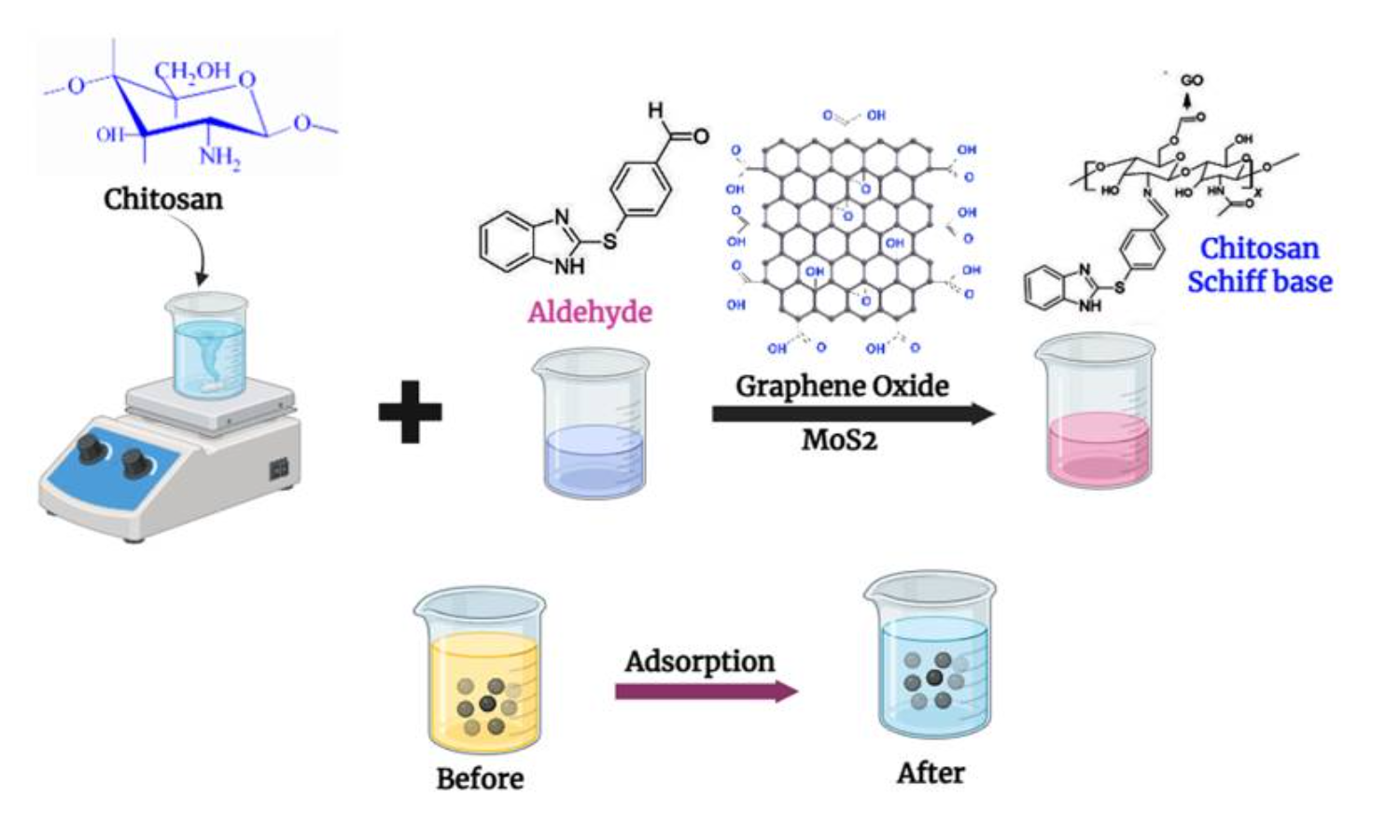
In this work, we have developed a novel absorbent material using chitosan (CS), and further it was structurally modified via reaction with thiocarbaldehyde, forming a Schiff base intermediate. Simultaneously, graphene oxide was functionalized at the C-6 position of CS through an effective esterification process and composited with the incorporation of molybdenum disulfide (MoS2) nanoparticles to synthesize a hybrid adsorbent material. The resulting material was characterized using Fourier transform infrared spectroscopy (FTIR), thermogravimetric analysis (TGA), X-ray diffraction (XRD), and scanning electron microscopy (SEM). The synthesized adsorbent was subjected to the adsorptive removal of Cu(II) and Cr(VI) ions from dilute solutions. The maximum uptake of 66.66 mg/g for Cu(II) and 76.92 mg/g for Cr(VI) were recorded during the adsorption process, further following pseudo-second-order kinetics adsorptive nature and fitted well with the Langmuir isotherm model. Desorption studies indicated the material’s reusability, and the thermodynamic studies indicated a spontaneity with an endothermic adsorptive nature. These studies highlight the material’s potential as an effective adsorbent as a sustainable approach for efficient environmental remediation.