
Study of the phenomenon of metal ion fixation in polymer membranes containing polyvinylpyrrolidone
Sofiane Bensadi, Mourad Amara, Omar Arous , Yassine Berbar, Fairouz Saad Saoud
Vol. 20., No.10., Pages 1017-1033, 2026
DOI: 10.3144/expresspolymlett.2026.75
DOI: 10.3144/expresspolymlett.2026.75
Corresponding author: Omar Arous 
GRAPHICAL ABSTRACT
ABSTRACT
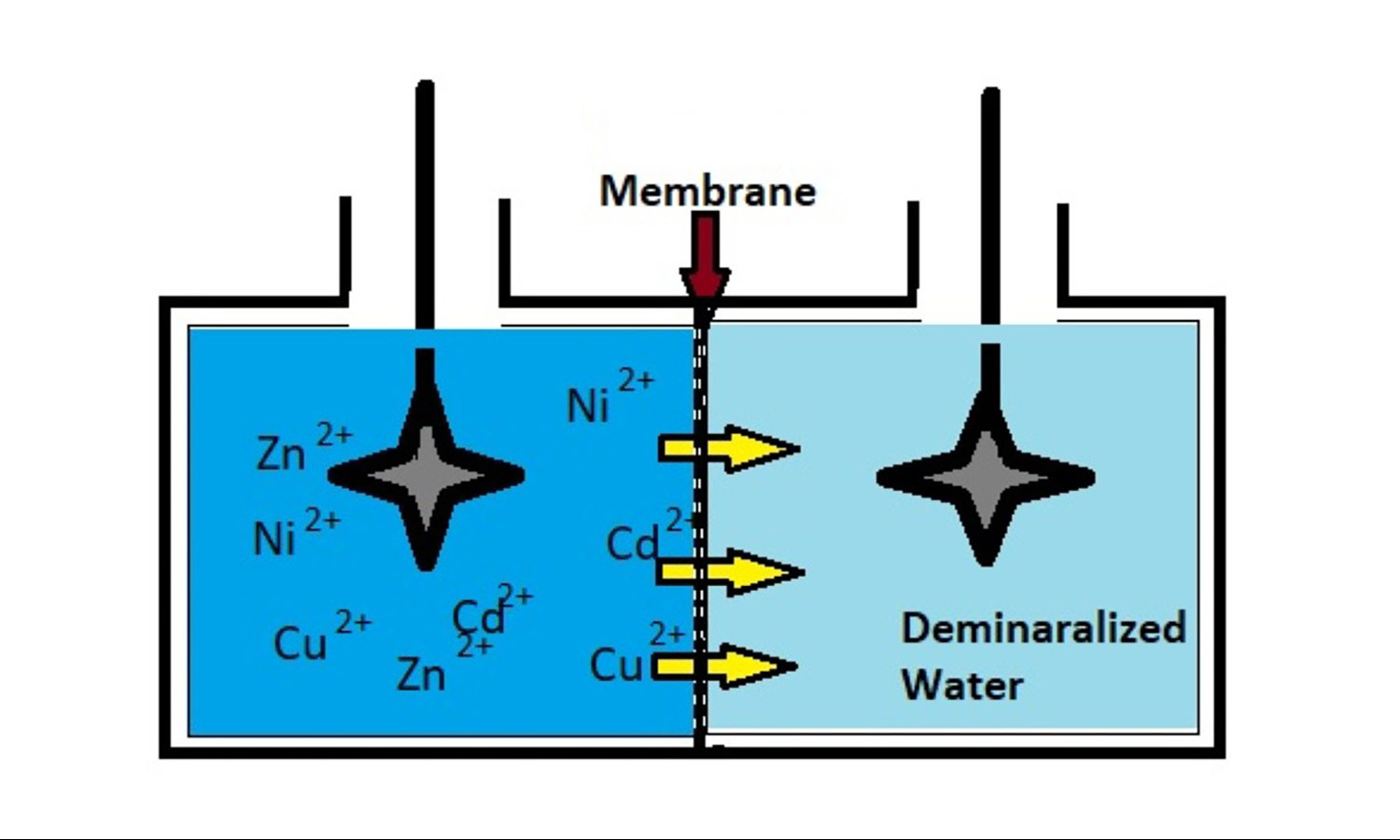
To prepare high-performance dialysis membranes, we investigated the effect of polyvinylpyrrolidone (PVP), polyethylene glycol (PEG), and also the simultaneous effect of both additives in cellulose triacetate (CTA) membranes. In this study, we investigate the transfer and fixation phenomena of Cu2+, Ni2+, Cd2+ and Zn2+ ions into dialysis membranes. We prepared three CTA-based membranes with different concentrations of the [PVP/(PVP+PEG)] ratio, and evaluated the impact of this ratio on membrane performance by dialysis with cationic solutions. All the membranes were characterized by Fouriertransform infrared spectroscopy (FTIR), thermogravimetric analyses (TGA) and scanning electron microscopy (SEM). The membrane with a higher [PVP/(PVP+PEG)] ratio exhibited superior transfer efficiency compared to the other membranes, 56.11 and 47.87% of Cd2+ and Cu2+, respectively. Significant amounts of metal ions were fixed by the membranes. Cu2+ and Zn2+ ions had fixation rates of 27.54 and 26.45%, respectively, obtained with a [PVP/(PVP+PEG)] ratio of 0.8. To explain the phenomenon of metal ion fixation by membranes, we performed a study of the behaviour of PVP in solutions in the presence of metallic ions using potentiometric methods. We found that interactions can form between PVP and metallic ions present in the solution in an order that follows the sequence: Cu2+ > Zn2+ > Ni2+ > Cd2+.
RELATED ARTICLES
Javaria Kanwal, Sara Musaddiq, Duncan H. Gregory, Alishba Naz, Sajjad Ahmad, Sadia Iqbal, Saikh Mohammad Wabaidur, Ayman A. Ghfar
Vol. 20., No.9., Pages 870-884, 2026
DOI: 10.3144/expresspolymlett.2026.65
Vol. 20., No.9., Pages 870-884, 2026
DOI: 10.3144/expresspolymlett.2026.65
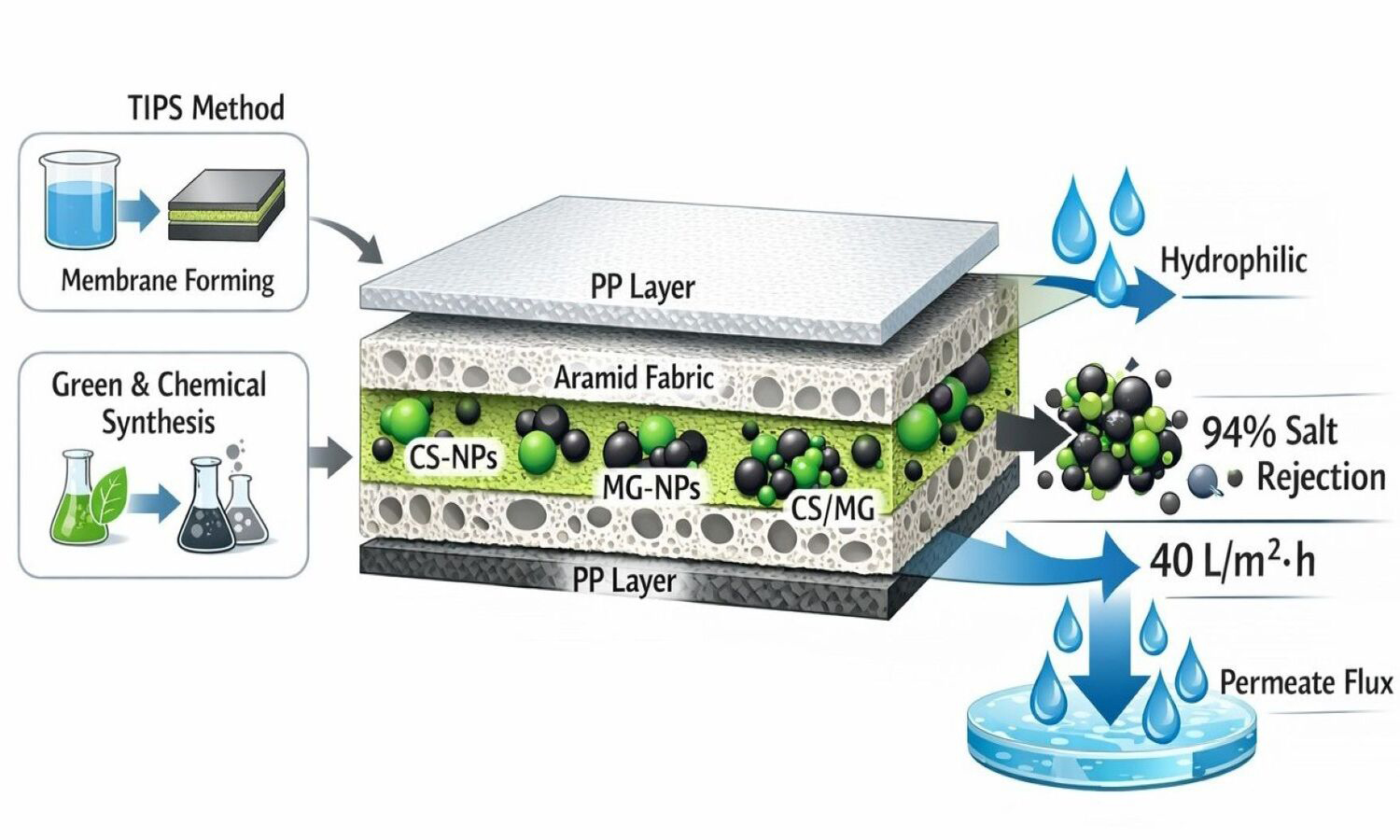
We developed nanomaterial-functionalized composite membranes (APM-1 to APM-3) using aramid fabric enclosed between two isotactic polypropylene (PP) layers. Membranes were created and porosity was produced within the structure by thermally induced phase separation (TIPS). The embedded nanomaterials, chitosan nanoparticles (CS-NPs) and magnetite nanoparticles (MG-NPs), were prepared via green routes, while chitosan/magnetite (CS/MG) nanocomposites were synthesized chemically. The formation of CS-NPs, MG-NPs, and CS/MG nanocomposites was confirmed through UV/visible spectroscopy. Moreover, the crystallite size of the nanomaterials was estimated with the use of X-ray diffraction (XRD) analysis. We also used Fourier transform infrared microscopy (FTIR) to ensure the successful integration of nanomaterials into the membrane matrix. The surface morphologies were observed and the presence of micropores was confirmed in the membranes by scanning electron microscopy (SEM). Mechanical analysis showed that the fabricated membranes have excellent structural integrity and durability under operational conditions. Contact angle measurements confirmed the enhanced hydrophilicity of the modified membranes, which plays a crucial role in improving water transport and desalination performance. The salt rejection and flux characteristics of the membranes were tested in a custom-made filtration cell. Our results revealed that APM-3, functionalized with CS/MG nanocomposites, exhibited a 94% desalination efficiency against NaCl with a high permeate flux rate of 40.00 L/(m2·h). The outstanding stability and hydrophilicity of our novel composite membranes, coupled with their remarkable efficiency, make them an ideal choice for desalination.
Marie Uth, Magnus Hansen-Felby, Jakob Rørbæk Saugbjerg, Andreas Sommerfeldt, Sunirmal Pal, Martin Lahn Henriksen, Steen Uttrup Pedersen, Kim Daasbjerg
Vol. 19., No.12., Pages 1216-1225, 2025
DOI: 10.3144/expresspolymlett.2025.90
Vol. 19., No.12., Pages 1216-1225, 2025
DOI: 10.3144/expresspolymlett.2025.90

Post-polymerization modification of self-immolative polymers expands the application spectrum of such macromolecular materials. This work demonstrates grafting of poly(glycidyl methacrylate) brushes from a self-immolative poly(DL-dithiothreitol) backbone using activators regenerated by electron transfer–atom transfer radical polymerization (ARGET–ATRP). The polymerization kinetics of the brushes is studied in detail by 1H NMR and size exclusion chromatography, indicating a linear increase in number-average molecular weight. Furthermore, it is demonstrated that the self-immolative properties of the backbone are retained in the bottlebrush polymers by examining the degradation process in solution.
Xianli Sun, Jiahao Xu, Xiaoke Zhi, Jingpeng Zhang, Kangwei Hou, Yuhan Bian, Xiaolin Li, Li Wang, Guangchuan Liang
Vol. 18., No.6., Pages 575-591, 2024
DOI: 10.3144/expresspolymlett.2024.43
Vol. 18., No.6., Pages 575-591, 2024
DOI: 10.3144/expresspolymlett.2024.43
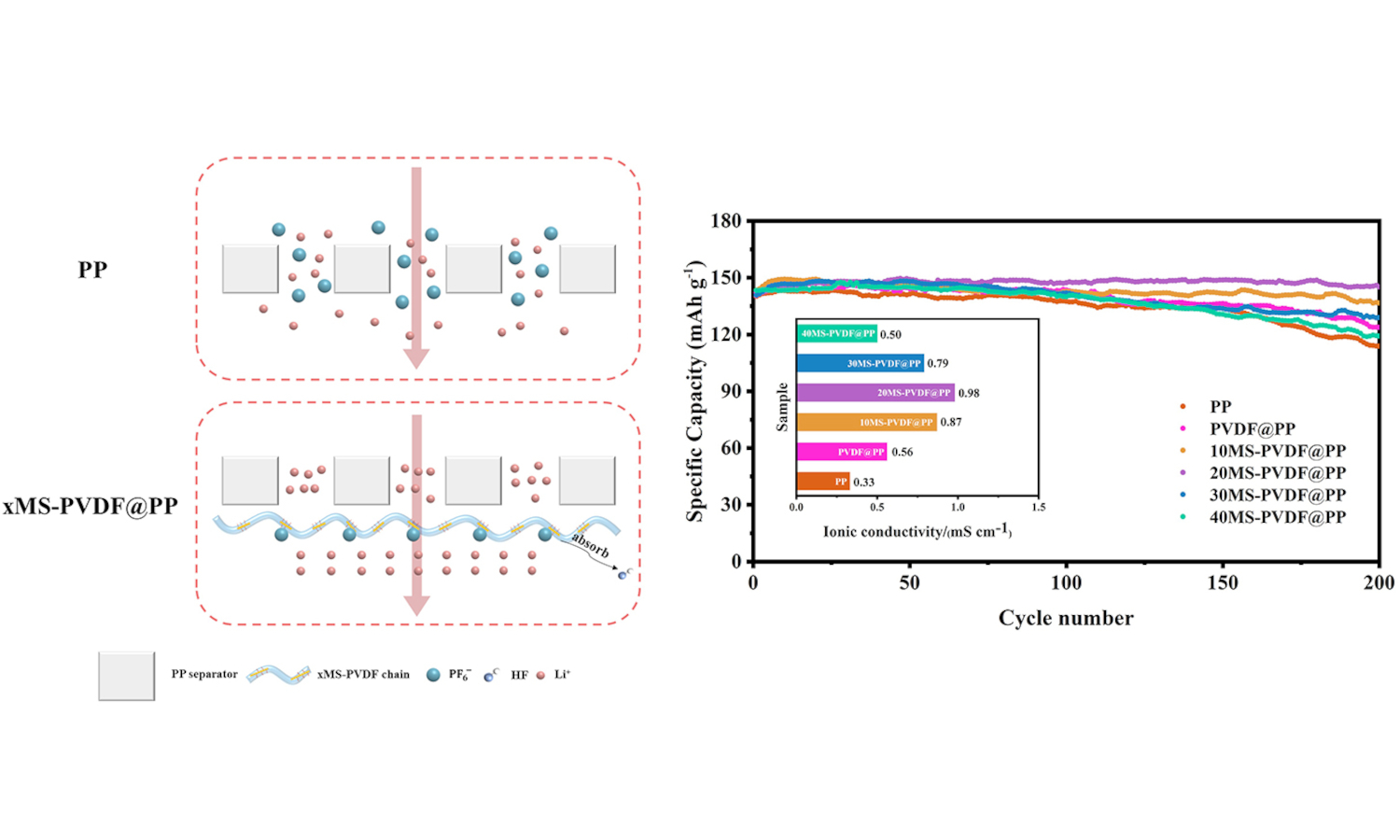
As a key component of lithium-ion batteries, a separator with excellent electrolyte wettability and good thermal stability has an important impact on the overall performance of lithium-ion batteries. Herein, a PVDF/sepiolite electrospun layer was coated on one side of the PP separator via electrospinning technology to prepare the composite separator (xMS-PVDF@PP) with sepiolite nanofibers modified with vinyltriethoxysilane (VTES) to ameliorate their dispersibility and compatibility with PVDF polymer matrix. The effect of modified sepiolite addition amounts on the physical and electrochemical properties of composite separator was intensively studied. It is found that the as-prepared xMS-PVDF@PP composite separator displays enhanced porosity, electrolyte uptake, thermal stability and Li+ ion transport kinetics than pristine PP separator. Specifically, Li|LiFePO4 battery with 20MS-PVDF@PP as separator shows the best rate and cycling performance, with a specific discharge capacity of 115.3 mAh·g–1 at 10C rate and a capacity retention rate of 97.06% after 200 cycles at 1C rate. The sepiolite in the electrospun layer can immobilize PF6– anion to facilitate the uniform distribution of Li+ ions and then inhibit the lithium dendrite growth, as well as absorb HF to alleviate Fe2+ dissolution from LiFePO4 cathode, thereby further improving the electrochemical performance of LiFePO4 battery.
Rayane da Silva Vale, Vanessa Bezerra da Silva, Jonas Contiero, Daniel M. Knauss, Caio Marcio Paranhos
Vol. 18., No.3., Pages 245-259, 2024
DOI: 10.3144/expresspolymlett.2024.18
Vol. 18., No.3., Pages 245-259, 2024
DOI: 10.3144/expresspolymlett.2024.18
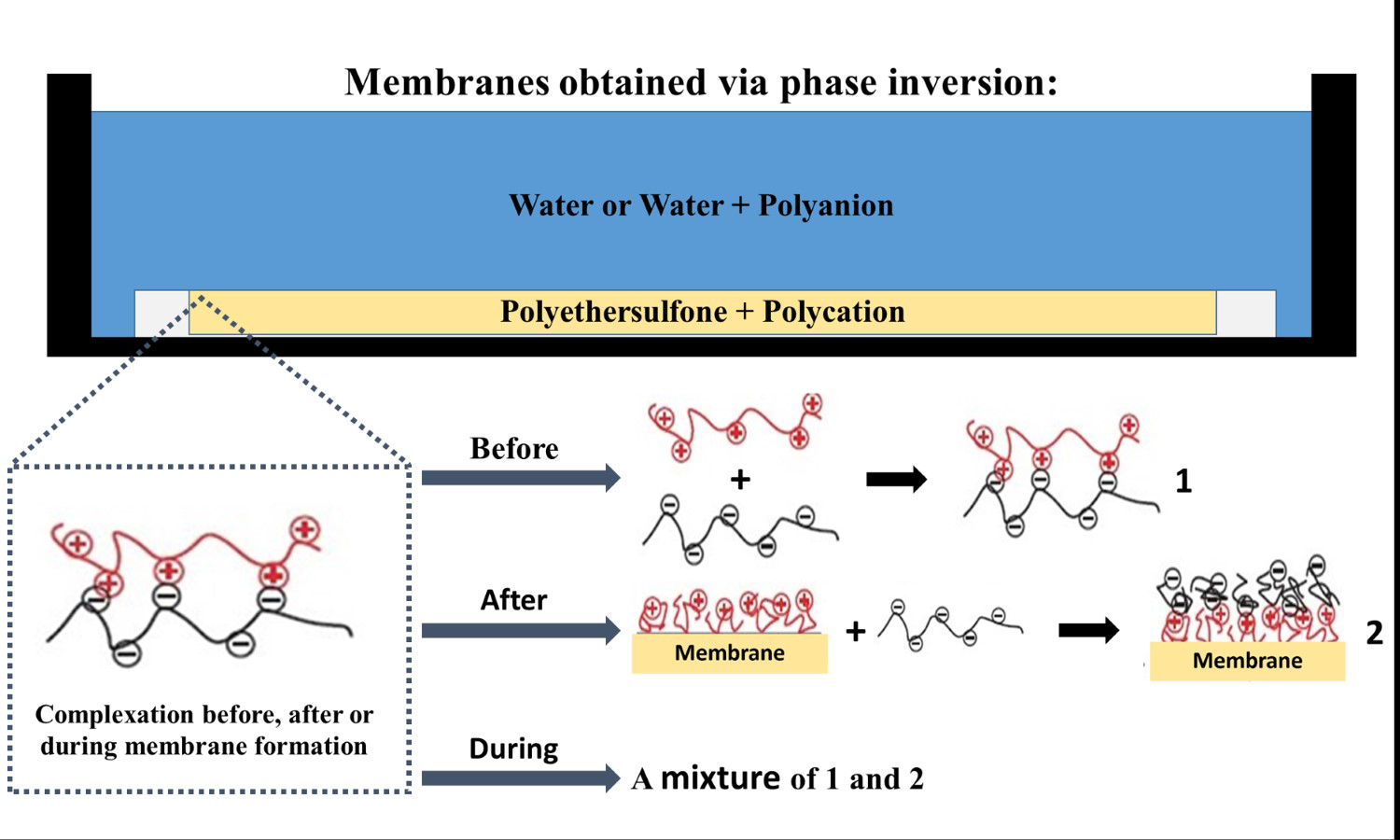
Mixing additives into a polymeric membrane constitutes an easy way to change their properties. Polyelectrolyte complexes (PECs) (polyelectrolytes combined via electrostatic interaction) are good materials for this due to their hydrophilicity, tunable surface charge, and stable structure. In the present study, membranes containing PECs were obtained using three methodologies: complexation before, after, and during membrane formation. The chosen polyelectrolytes were 4-fluorophenyl sulfone-terminated poly(diallylpiperidinium hexafluorophosphate) and sulfonated poly(ethylene terephthalate); the polymeric matrix was polyethersulfone. Fourier transform infrared spectroscopy confirmed the presence of PECs in the membranes. Scanning electron microscopy images of the membranes showed a dense skin and porous sub-layer, with variations in the thickness of the dense layer influenced by the presence of polyelectrolytes. The increase in water vapor permeability indicated that the complexes alter the hydrophilic profile of the membranes. The thermogravimetric curves showed different thermal behaviors depending on the interaction between the polyelectrolytes. All membranes demonstrated enhanced retention of Remazol red dye during filtration, with retention rates exceeding 95%. Notably, the Blend membrane exhibited the highest retention (over 98%) of the dye.