
Influence of carbon fiber reinforcement on the shape memory characteristics and mechanical properties of PETG
Viswanath Aditham, Alfred James, Yanika Schneider, Sohail Zaidi, Vimal K. Viswanathan
Vol. 20., No.10., Pages 974-989, 2026
DOI: 10.3144/expresspolymlett.2026.72
DOI: 10.3144/expresspolymlett.2026.72
Corresponding author: Vimal K. Viswanathan 
GRAPHICAL ABSTRACT
ABSTRACT
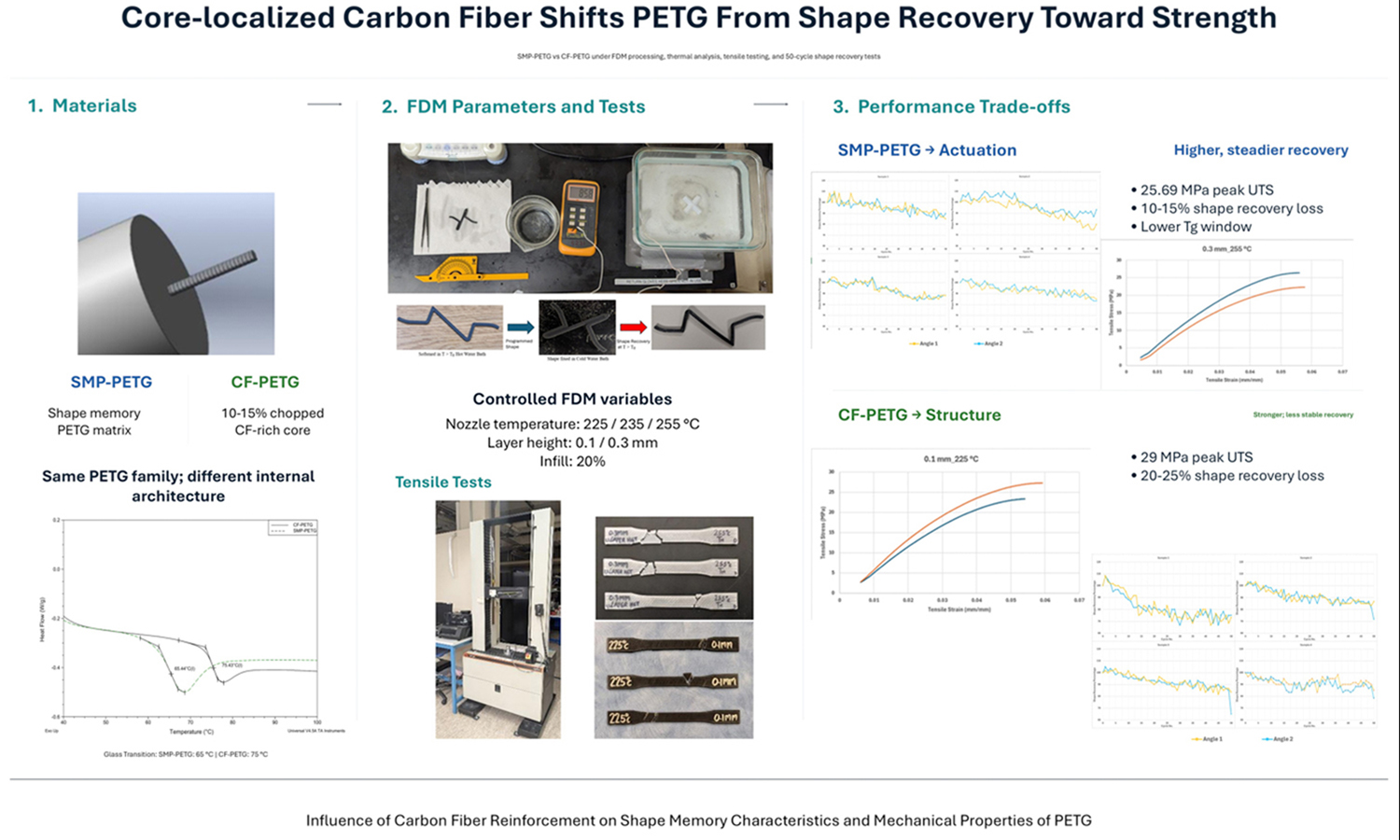
Four-dimensional (4D) printing enables additively manufactured components to undergo programmed shape change, yet applications remain limited by the trade-off between shape-memory behavior and mechanical strength. In the study, we compare shape-memory PETG (SMP-PETG) and carbon fiber–reinforced PETG (CF-PETG), the latter containing a manufacturer- reported 10–15% chopped carbon fiber region localized within the filament core. We fabricated specimens by fused deposition modeling (FDM) using different nozzle temperatures and layer heights, and performed tensile, thermal and cyclic shape recovery tests to establish structure–property–function relationships within the PETG family. DSC showed predominantly amorphous behavior in CF-PETG, whereas SMP-PETG exhibited cold crystallization and melting features consistent with a crystallizable fraction in that commercial formulation. CF-PETG also showed a higher glass transition temperature than SMPPETG, indicating different thermal activation windows for the two materials. SMP-PETG exhibited ductile tensile behavior, with a peak strength of 25.69 MPa at 255°C and a layer height of 0.3 mm, and retained more stable shape recovery, with about 10–15% degradation over 50 cycles. In contrast, CF-PETG showed a steeper tensile response and higher strength, approaching 29 MPa, but less stable recovery, with losses of about 20–25% over the same cycle range. These findings characterize the combined effects of commercial formulation, reinforcement and processing; isolating the specific influence of core-localized reinforcement architecture will require comparisons with compositionally matched neat PETG and uniformly reinforced CF-PETG.
RELATED ARTICLES
Junxiu Xue, Kaituo Fang, Zhenchun Xu, Huiguang Bian, Yu Wang, Yongming Zhang
Vol. 20., No.5., Pages 489-500, 2026
DOI: 10.3144/expresspolymlett.2026.37
Vol. 20., No.5., Pages 489-500, 2026
DOI: 10.3144/expresspolymlett.2026.37
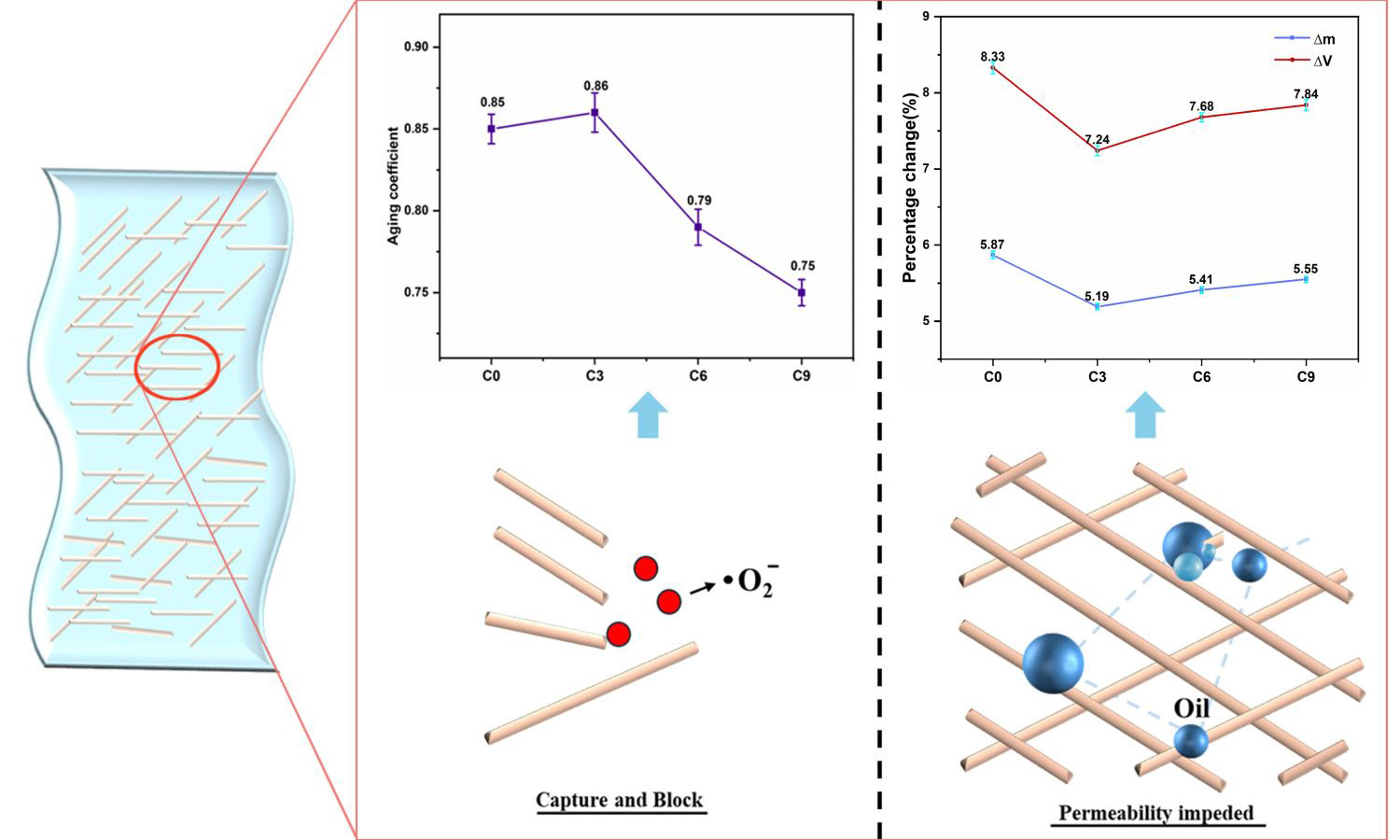
This study investigates the effects of renewable chopped cellulose fiber (CCleF) on the physical and mechanical properties, oil resistance, and thermal-oxidative aging behavior of acrylonitrile-butadiene rubber (NBR), aiming to determine the optimal filler content. CCleF/NBR composites with varying CCleF loadings were prepared and systematically characterized through analyses of vulcanization behavior, three-dimensional morphology, mechanical properties, thermal-oxidative aging, and oil resistance. The results indicate that the composite with 3 phr CCleF exhibits uniform fiber dispersion and optimal overall performance, showing enhanced processability, a reduced vulcanization time, and improved physical and mechanical properties. After thermal-oxygen aging, the composite demonstrated superior stability: the percentage change in tensile modulus, rebound resilience, and DIN abrasion decreased significantly by 13.73, 49.82, and 74.9%, respectively, while the aging coefficient reached 0.86. Notably, this composite also exhibited excellent oil resistance, with a volume expansion rate of 7.24%, which is 13.1% lower than that of unfilled NBR. Correspondingly, the tensile product’s retention rate decreased by 37.72%, while rebound resilience and abrasion resistance improved. This study demonstrates that incorporating 3 phr CCleF is a practical approach to achieving high-performance NBR, providing a material basis for its use in demanding environments such as the petrochemical industry.
Adam Kasprzak
Vol. 19., No.2., Pages 192-200, 2025
DOI: 10.3144/expresspolymlett.2025.14
Vol. 19., No.2., Pages 192-200, 2025
DOI: 10.3144/expresspolymlett.2025.14
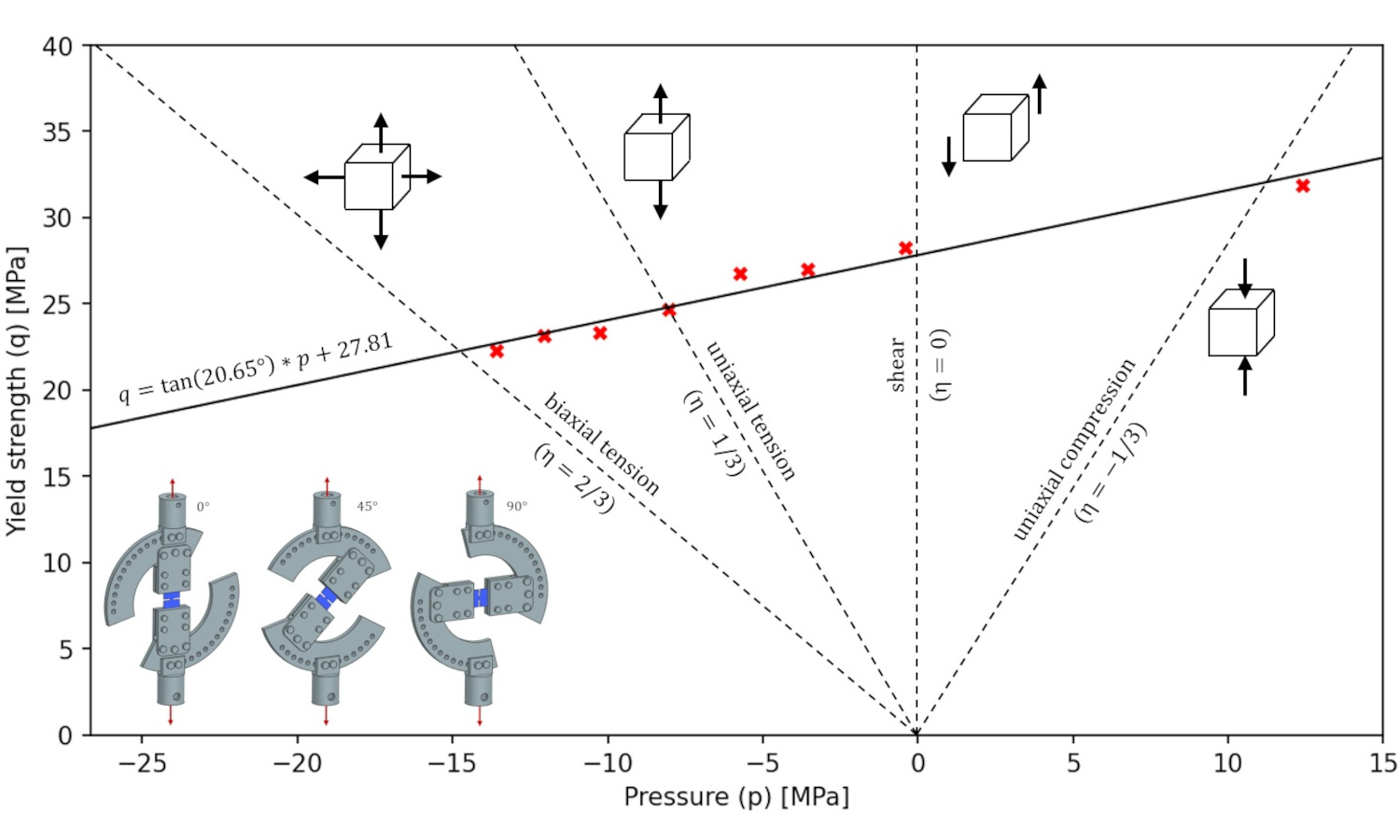
This study focuses on calibrating the linear Drucker-Prager yield criterion for polypropylene under multiaxial loading conditions, using the Arcana fixture to achieve a wide range of triaxiality states. The Drucker-Prager criterion has been adapted for polymers, composites, and metals due to its ability to reflect the influence of hydrostatic pressure on yield stress. This study employs the Arcana fixture, which allows for testing flat plate samples under various angles, thereby simulating different stress states from pure shear to biaxial tension. Additionally, uniaxial compression tests were conducted to extend the range of triaxiality. The material used in this study is Sabic 83MF10, a polypropylene polymer. Samples were prepared by injection moulding and cut to specific dimensions. Tests were performed using a universal testing machine with the Arcana fixture, and the results were analysed to determine the yield strength, pressure, and triaxiality for each sample. The results showed a linear relationship between von Mises stress and hydrostatic pressure, with a friction angle (β) of 20.65° and material cohesion (d) of 27.81. The numerical simulations in Abaqus confirmed the validity of the Drucker- Prager model, accurately reflecting the moment of yielding for the tested samples.