Effect of natural cinnamon extract on the stabilizing properties of biodegradable packaging polymers
Anna Kosmalska-Olańska, Anna Masek
Vol. 20., No.1., Pages 52-71, 2026
DOI: 10.3144/expresspolymlett.2026.5
DOI: 10.3144/expresspolymlett.2026.5
Corresponding author: Anna Masek 
GRAPHICAL ABSTRACT
ABSTRACT
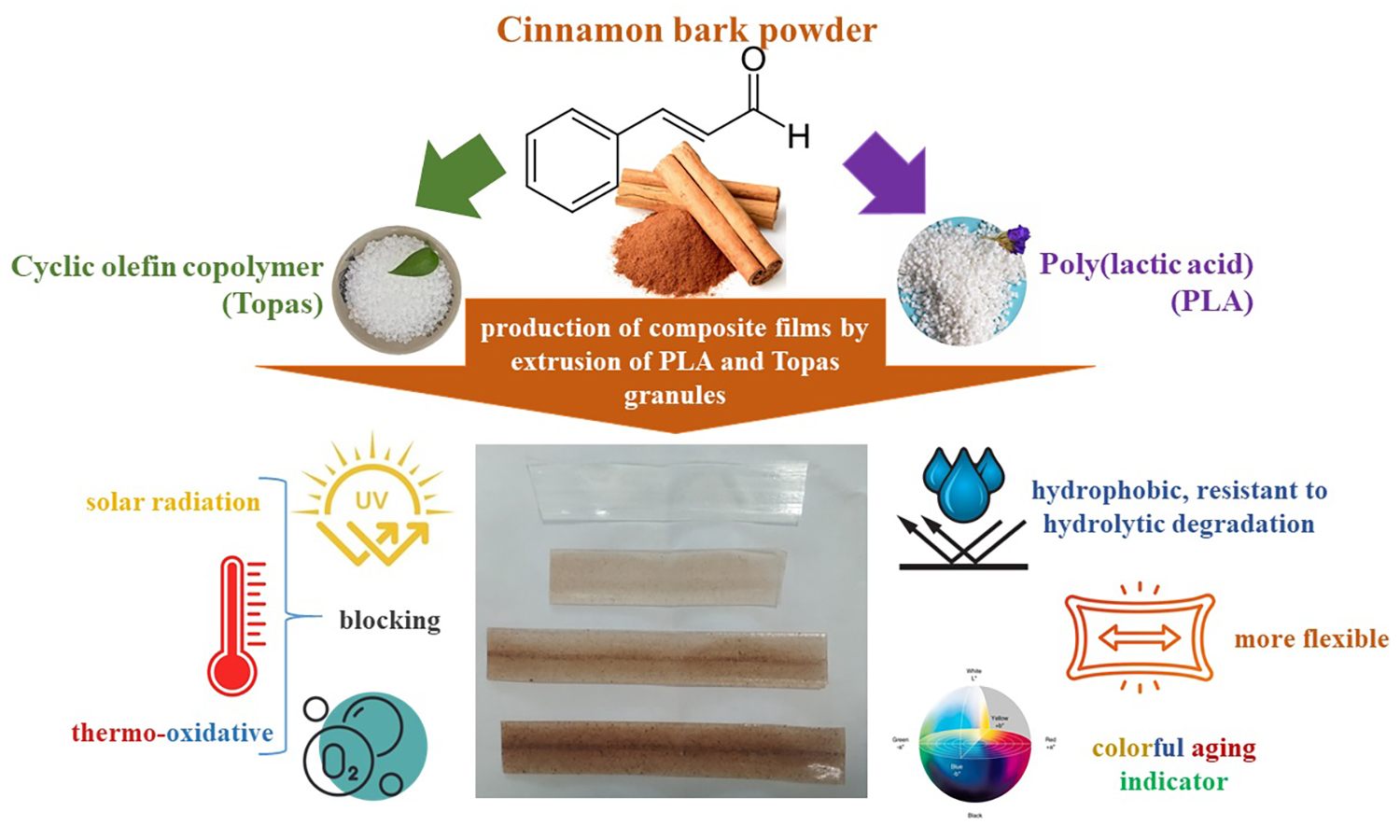
The growing focus on sustainability, eco-friendly technologies, decarbonization, and reducing carbon footprints shapes current industry challenges. This article reviews the potential of cinnamon as a bio-additive for polymer stabilization in packaging. Samples were prepared from ethylene-norbornene copolymer (Topas), a cyclic olefin copolymer known for purity, transparency, and low gas permeability, and poly(lactic acid) (PLA), a bio-based alternative to petroleum plastics. Cinnamon powder was added in 0.5, 1.0, and 1.5 wt%. After solar and thermo-oxidative aging, hydrophobicity, chemical composition, mechanical, and color properties were analyzed. Results showed higher hydrophobicity and resistance to hydrolytic degradation due to reduced water penetration. PLA, normally brittle, became more flexible, with 0.5 wt% cinnamon showing optimal performance after 100 h of solar aging, similar to Topas composites. Overall, PLA and cyclic olefin copolymer (COC) films with cinnamon improved durability, extended food shelf life, and acted as natural color indicators of material aging.
RELATED ARTICLES
Karthikeyan Sowmiyadevi, Dhesingh Ravi Shankaran
Vol. 20., No.10., Pages 990-1004, 2026
DOI: 10.3144/expresspolymlett.2026.73
Vol. 20., No.10., Pages 990-1004, 2026
DOI: 10.3144/expresspolymlett.2026.73
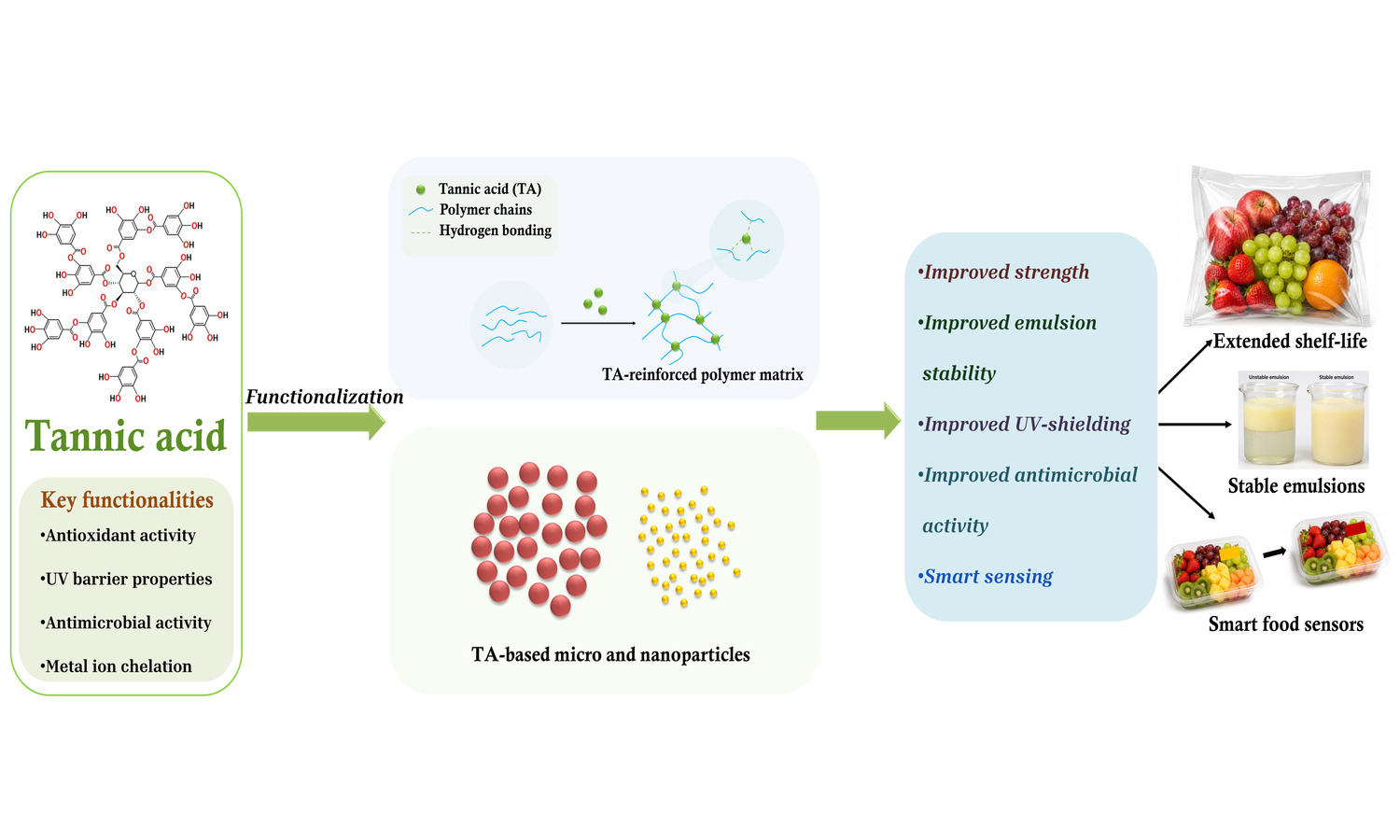
Polyphenols represent a highly abundant group of plant-derived natural compounds, characterized by remarkable structural diversity and potent antioxidant activity. Based on their chemical structures, polyphenols are broadly categorized into flavonoids, phenolic acids, stilbenes, tannins and lignans. Among these polyphenolic groups, tannins stand out for their large and complex polyphenolic frameworks and strong metal-chelating abilities. Tannic acid, a well-known hydrolyzable tannin, is one of the most extensively utilized polyphenols because of its dense phenolic composition, strong metal-chelating ability and capacity to form diverse non-covalent interactions. This review highlights recent advancements and applications of tannic acid-based micro- and nano-formulations, with particular emphasis on their roles in emulsion stabilization, enhancement of UV-barrier properties and food safety sensor applications.
Anthony Allen Parker, Joseph John Marcinko
Vol. 20., No.9., Pages 885-904, 2026
DOI: 10.3144/expresspolymlett.2026.66
Vol. 20., No.9., Pages 885-904, 2026
DOI: 10.3144/expresspolymlett.2026.66
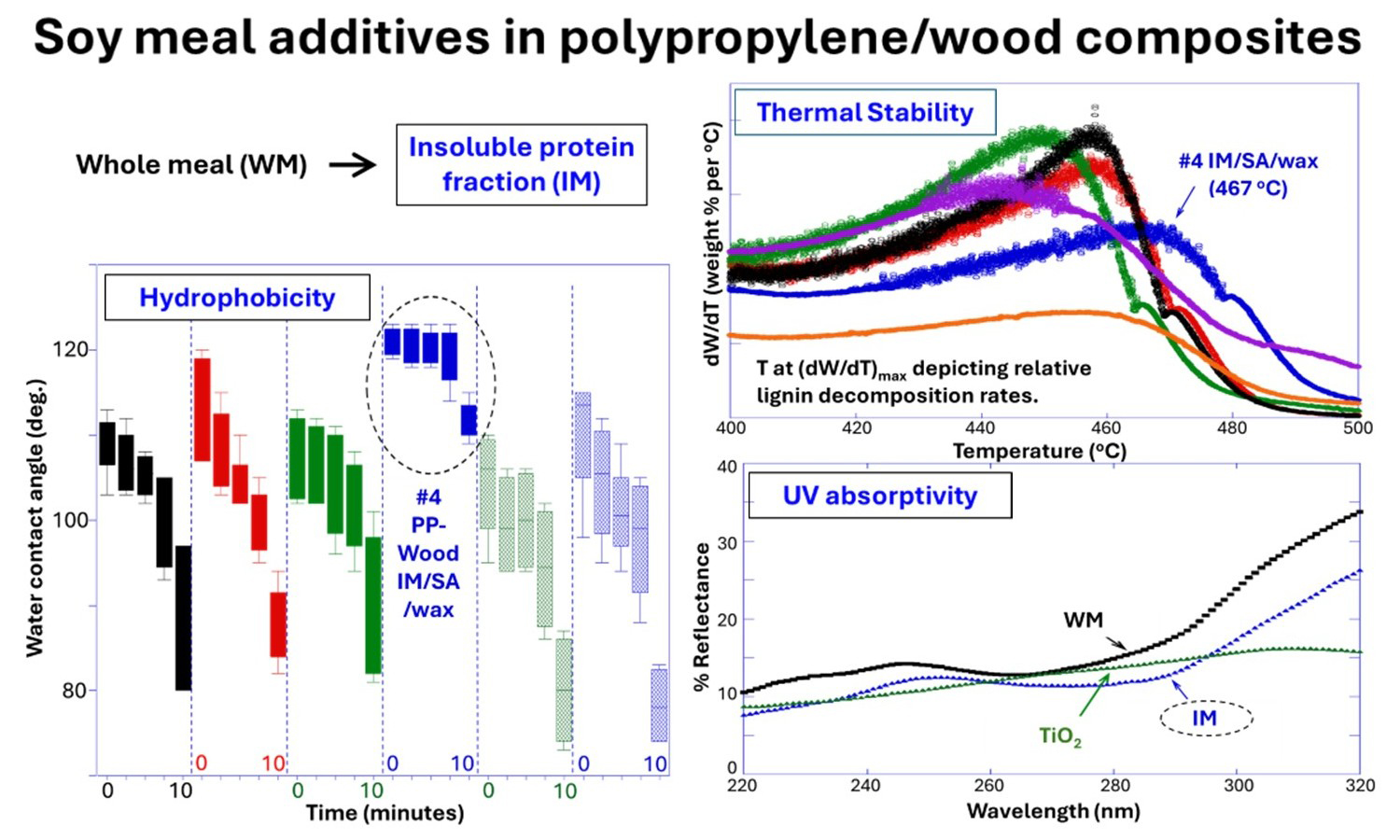
We have discovered that water-insoluble proteins (IM) isolated from whole soy meal (WM) have the capacity to improve the thermal stability of polypropylene (PP) wood composites without negatively impacting mechanical properties. We compared an undiluted composite to composites diluted with 5% by weight of a 3/1 w/w mixture of stearic acid and paraffin wax (SA/wax), 5% by weight IM, 5% by weight WM, 5% by weight of a 50/50 w/w mixture of IM in combination with SA/wax, and 5% by weight WM in combination with SA/wax. Water contact angle (CA) measurements and Fourier transform infrared spectroscopy (FTIR) revealed a synergy between IM and SA/wax, resulting in enhanced surface hydro - phobicity. Thermogravimetric analysis (TGA) showed lower weight loss in composites made with IM up to the onset of the degradation of PP, and reduced rates of lignin degradation, independently of the presence of SA/wax. Dynamic mechanical analysis (DMA) revealed higher modulus and lower viscoelastic loss resulting from the removal of water-soluble soy components from WM. Total reflectance ultraviolet spectroscopy (UV) showed that IM absorbs UV radiation strongly in the UV-B and UV-C regions. Collectively, these findings suggest that IM has the potential to become a multi-purpose additive for use in PP wood composites.
György Marosi
Vol. 20., No.8., Pages 761-762, 2026
DOI: 10.3144/expresspolymlett.2026.57
Vol. 20., No.8., Pages 761-762, 2026
DOI: 10.3144/expresspolymlett.2026.57
This is an editorial article. It has no abstract.
Praveenkumara Jagadeesh, Gokul Kannan, Mat Jusoh Suriani, Madhu Puttegowda, Sanjay Mavinkere Rangappa, Suchart Siengchin
Vol. 20., No.8., Pages 799-839, 2026
DOI: 10.3144/expresspolymlett.2026.61
Vol. 20., No.8., Pages 799-839, 2026
DOI: 10.3144/expresspolymlett.2026.61
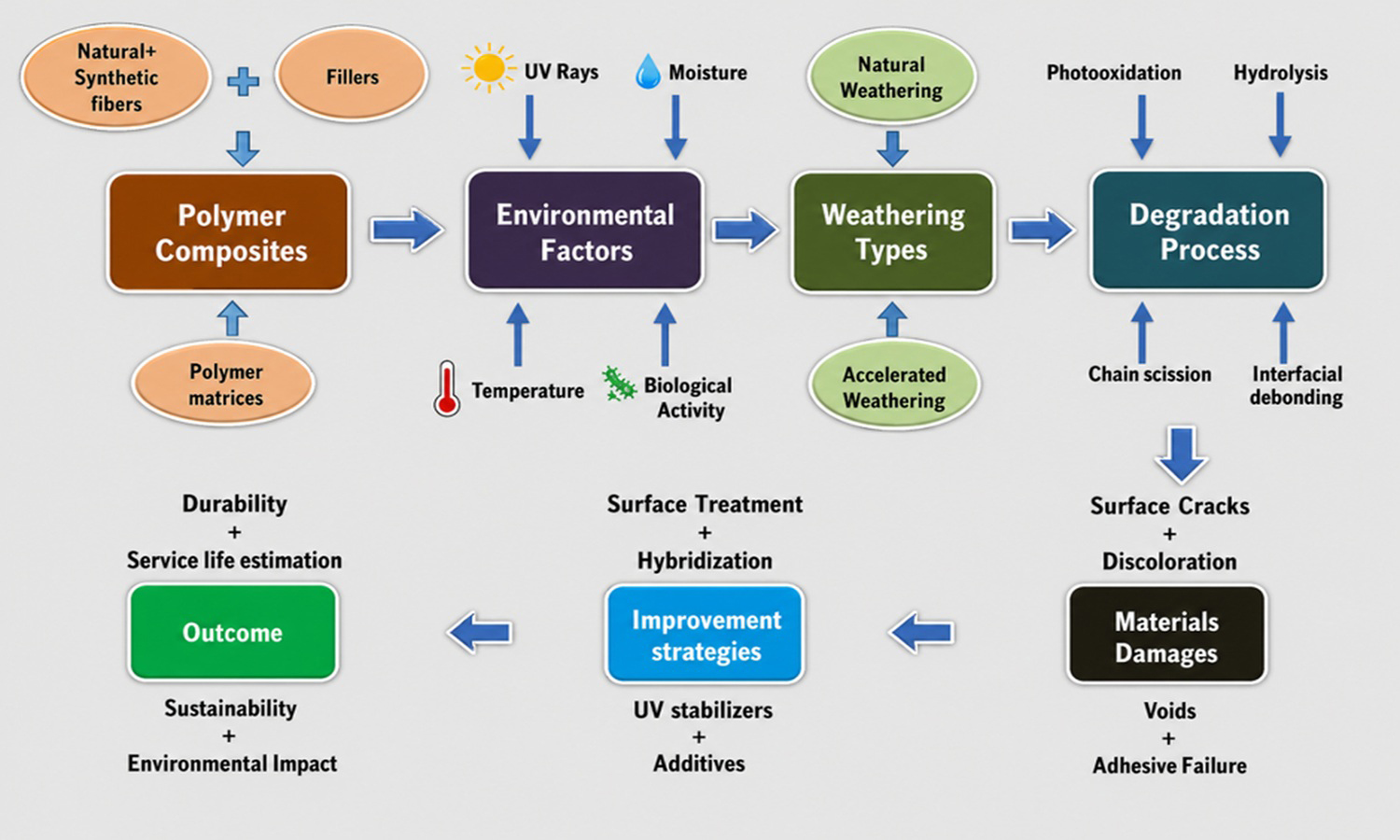
Polymer composites are widely used in indoor and outdoor applications owing to their high strength-to-weight ratio, corrosion resistance, and design flexibility. However, exposure to environmental factors such as ultraviolet (UV) radiation, humidity, temperature fluctuations, and biological agents significantly affect their long-term durability and performance. In this review, we comprehensively examine the degradation mechanisms of polymer composites under both natural and accelerated weathering, with particular emphasis on degradation mechanisms, characterization techniques, and durability assessment. We critically discuss the fundamental degradation mechanisms, including photo-oxidation, hydrolysis, polymer chain scission, crosslinking and interfacial debonding. We also evaluated accelerated weathering techniques, conducted under standardized testing conditions, for their ability to simulate long-term outdoor exposure within significantly shorter timeframes, by controlling key environmental parameters such as UV radiation, humidity, and temperature. We also examine the influence of reinforcements, including natural fibres, synthetic fibres, and nanofillers, on the weathering resistance of polymer composites. Attention is given to natural fibre–reinforced composites because their inherent hydrophilicity promotes moisture absorption, accelerating degradation and weakening the fibre–matrix interface. Furthermore, we critically evaluate the effects of weathering on the mechanical properties, crystalline structure and barrier performance of polymer composite films, and discuss recent advances in enhancing weather resistance through hybridization, surface modification, and the incorporation of stabilizing additives. Finally, the review highlights the key challenges and future research directions for the development of durable, high-performance, and sustainable polymer composite systems for long-term outdoor applications.
Malgorzata Latos-Brozio, Aleksandra Drzazga, Anna Masek, Zdzisława Mrozińska, Marcin H. Kudzin
Vol. 20., No.7., Pages 742-760, 2026
DOI: 10.3144/expresspolymlett.2026.56
Vol. 20., No.7., Pages 742-760, 2026
DOI: 10.3144/expresspolymlett.2026.56
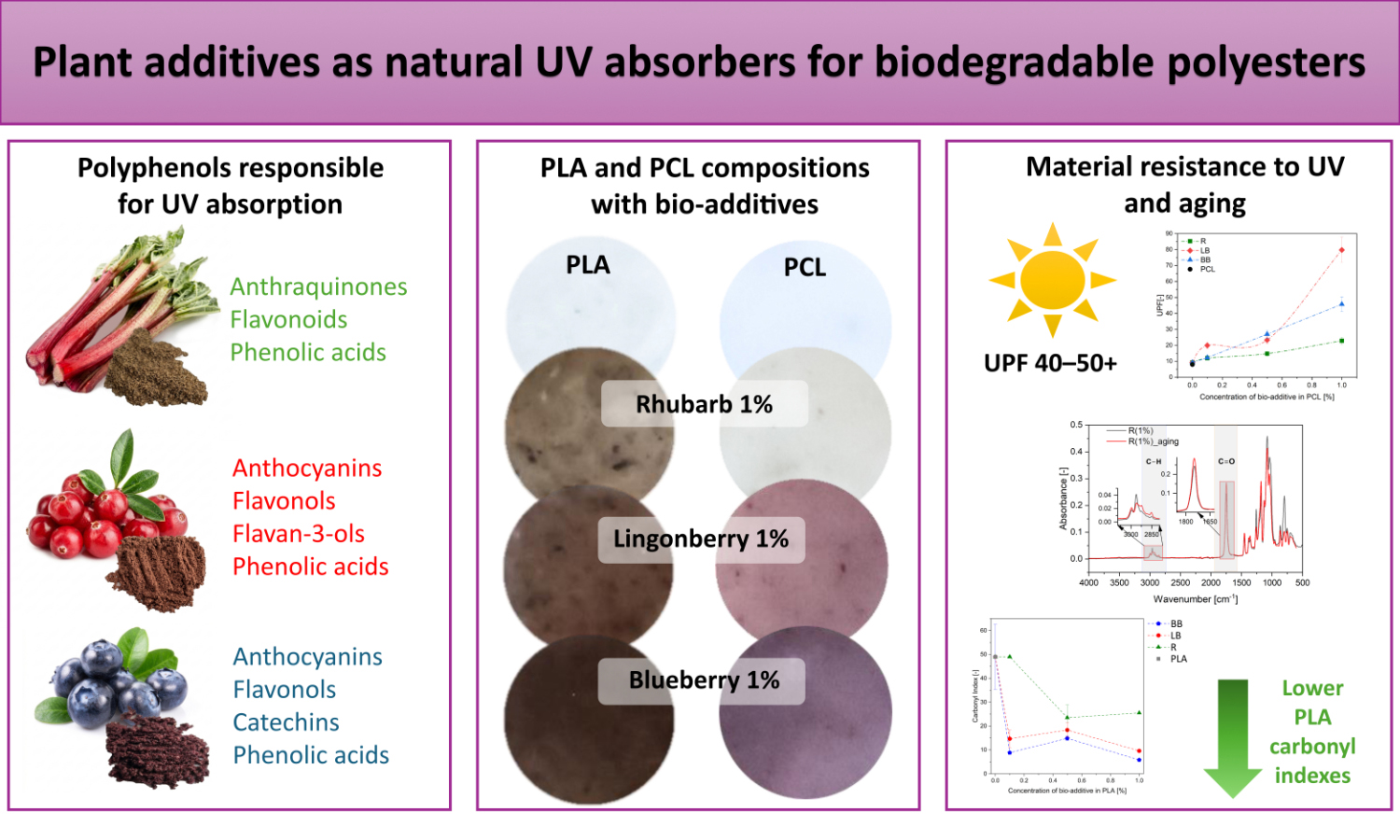
We investigated the effectiveness of plant-based bio-additives – rhubarb, lingonberry, and blueberry (0.1–1%) – as natural UV absorbers in biodegradable polymers polylactide (PLA) and polycaprolactone (PCL). A novelty of this work is the direct use of plant-based raw materials as UV absorbers in polymers. We performed Fourier transformed infrared spectroscopy (FT-IR) and UV-Vis analysis of the bio-additives, determined the ultraviolet protection factor (UPF) for the polymer samples, and evaluated their physicochemical properties (structural changes, colour, hardness, surface energy) after weathering (PLA) and thermo-oxidative (PCL) aging. Spectroscopic tests confirmed the presence of UV-A/UV-B-absorbing chromophores in the additives. Samples with 1% berries had excellent UV protection (UPF 40–50+), while PLA and PCL containing 1% rhubarb had lower UPF values (around 22), indicating good UV blocking properties. After aging, PLA-containing berries showed a significantly lower carbonyl index (CI), indicating reduced photodegradation. For PCL with lingonberry, this additive gave the greatest reduction in thermo-oxidative degradation (lowest CI). All plant additives increased material hardness by acting as nucleating agents; they increased the crystallinity of polyester, and aging further strengthened this effect. Bio-additives, especially berries, can increase the hardness and UV resistance of polymers and limit material aging. These polymer compositions are suitable for packaging materials.