
Organic recycling challenges of (bio)degradable packages: Degradation studies of polylactide/cork composites
Marta Musioł , Joanna Rydz, Wanda Sikorska, Henryk Janeczek, Sebastian Jurczyk
, Joanna Rydz, Wanda Sikorska, Henryk Janeczek, Sebastian JurczykVol. 18., No.8., Pages 868-880, 2024
DOI: 10.3144/expresspolymlett.2024.64
DOI: 10.3144/expresspolymlett.2024.64
Corresponding author: Marta Musioł 
GRAPHICAL ABSTRACT
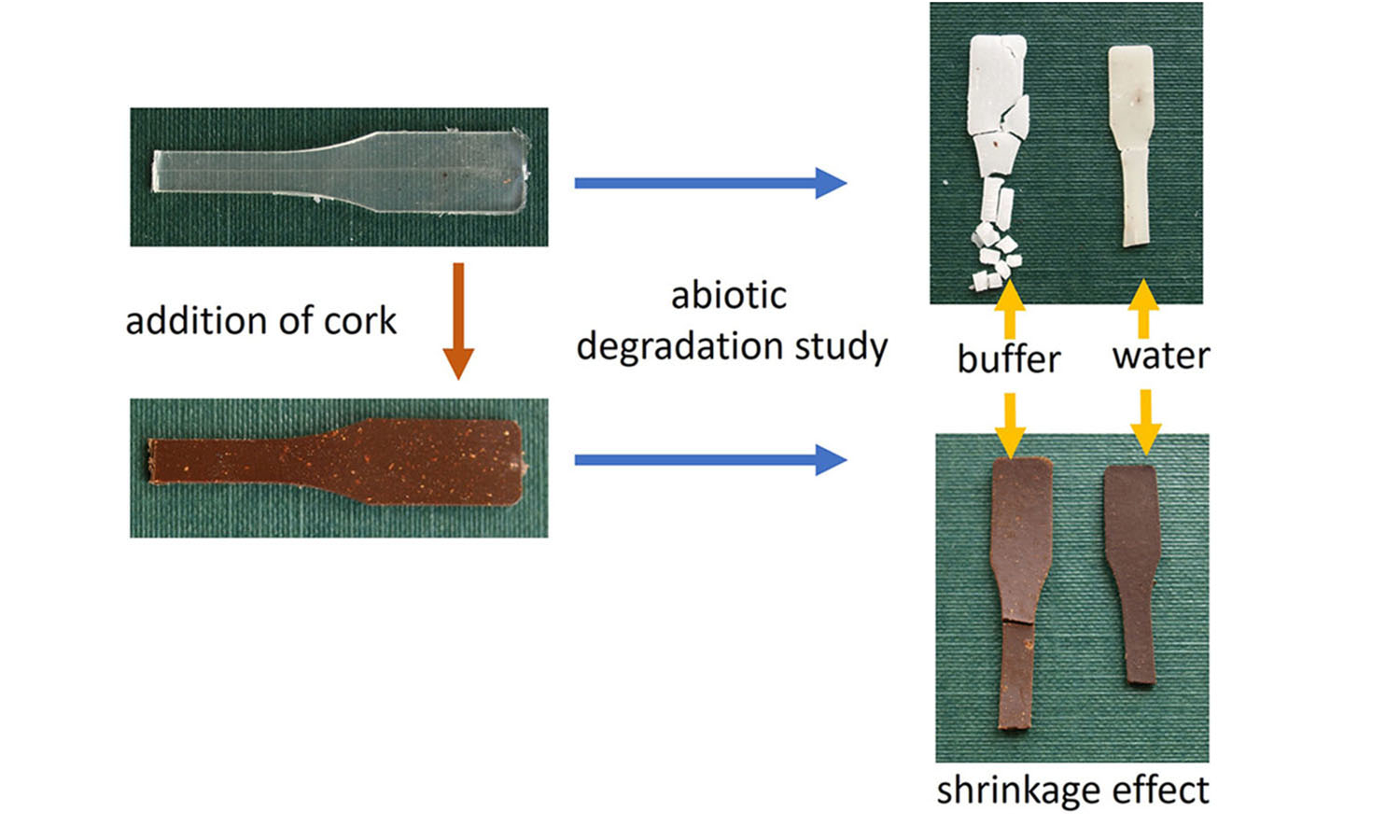
ABSTRACT
The drastic increase in the amount of packaging waste from conventional plastics, caused by improper waste management, is a serious challenge for the planet. It is therefore worth considering how we can solve this problem. Thus, it is necessary to develop new polymeric materials that retain the functional properties of traditional plastics but are susceptible to degradation with the participation of microorganisms. The development of new eco-friendly materials requires a holistic approach in terms of their disposal. Organic recycling enables the disposal of biodegradable packaging along with food remains that are difficult to remove. The article presents a study on the degradation of biocomposites of polylactide with cork in various environments (water, buffer, and compost). The obtained results indicate a clear influence of the presence of the filler and its amount on the degradation profile of the composites. In addition, the effect of sample shrinkage was observed, especially during degradation in water, where the pH decreases during the process due to the appearance of degradation products. This effect may be important not only for the degradation profile of the packaging but also during its use. Packaging distorted due to shrinkage may be a sign of improper product storage.
RELATED ARTICLES
Nikita V. Eremin, Svetlana Y. Voronina, Taisiya A. Shalygina, Valery V. Vlasov, Semyon A. Fesik, Anna A. Sukhanova
Vol. 20., No.2., Pages 168-185, 2026
DOI: 10.3144/expresspolymlett.2026.14
Vol. 20., No.2., Pages 168-185, 2026
DOI: 10.3144/expresspolymlett.2026.14
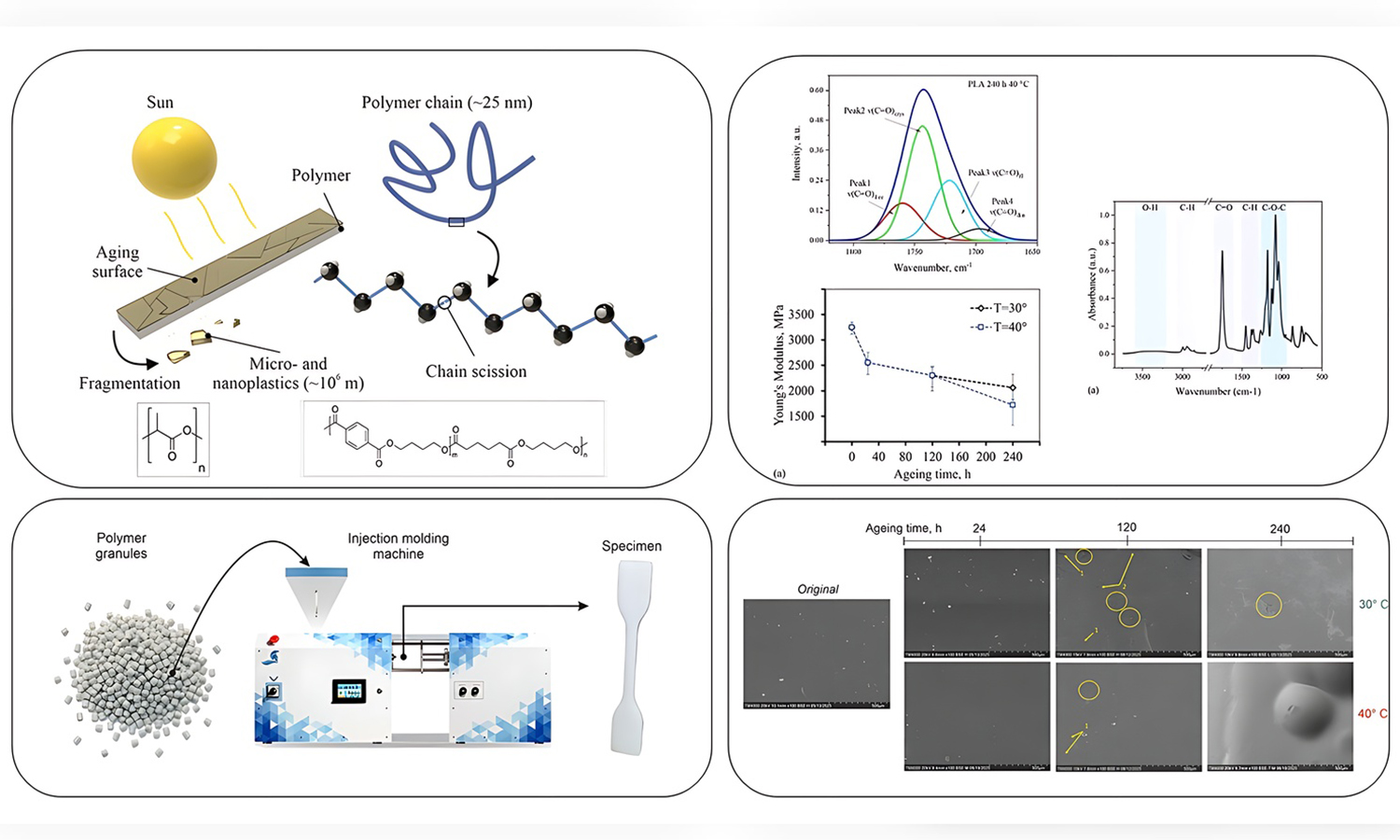
This article is devoted to the study of the degradation of two widely used biodegradable polymers, polylactic acid (PLA) and poly(butylene adipate-co-terephthalate) (PBAT), which are in demand in packaging, medicine, and agriculture. The effect of ultraviolet radiation (UV) at elevated temperatures on polymer ageing was investigated for 24, 120, and 240 h using a specially designed setup. Scanning electron microscopy, Fourier transform infrared spectroscopy, and tensile testing were employed to provide a comprehensive assessment of changes. PLA showed rapid degradation: after 120 h, its surface developed cracks and voids, and at 240 h, it became heavily damaged with cavities. PBAT degraded more gradually: at 240 h, large cracks and cavities were observed. For PLA, early ageing led to a shift and broadening of the carbonyl band, reflecting disorder and ester scission. For PBAT, a decrease in the intensity of the carbonyl shoulder and a slight shift of the main peak at elevated temperature indicated phase redistribution and the formation of new functional groups. Mechanically, PLA exhibited a sharp loss of strength and ductility in the first day of ageing, while PBAT showed greater stability, with slower reductions in stiffness and strength but a strong temperature-dependent decline in elongation. These findings are important for guiding the design of biodegradable polymers with improved durability.
Mpho Phillip Motloung, Mokgaotsa Jonas Mochane
Vol. 19., No.11., Pages 1092-1132, 2025
DOI: 10.3144/expresspolymlett.2025.82
Vol. 19., No.11., Pages 1092-1132, 2025
DOI: 10.3144/expresspolymlett.2025.82
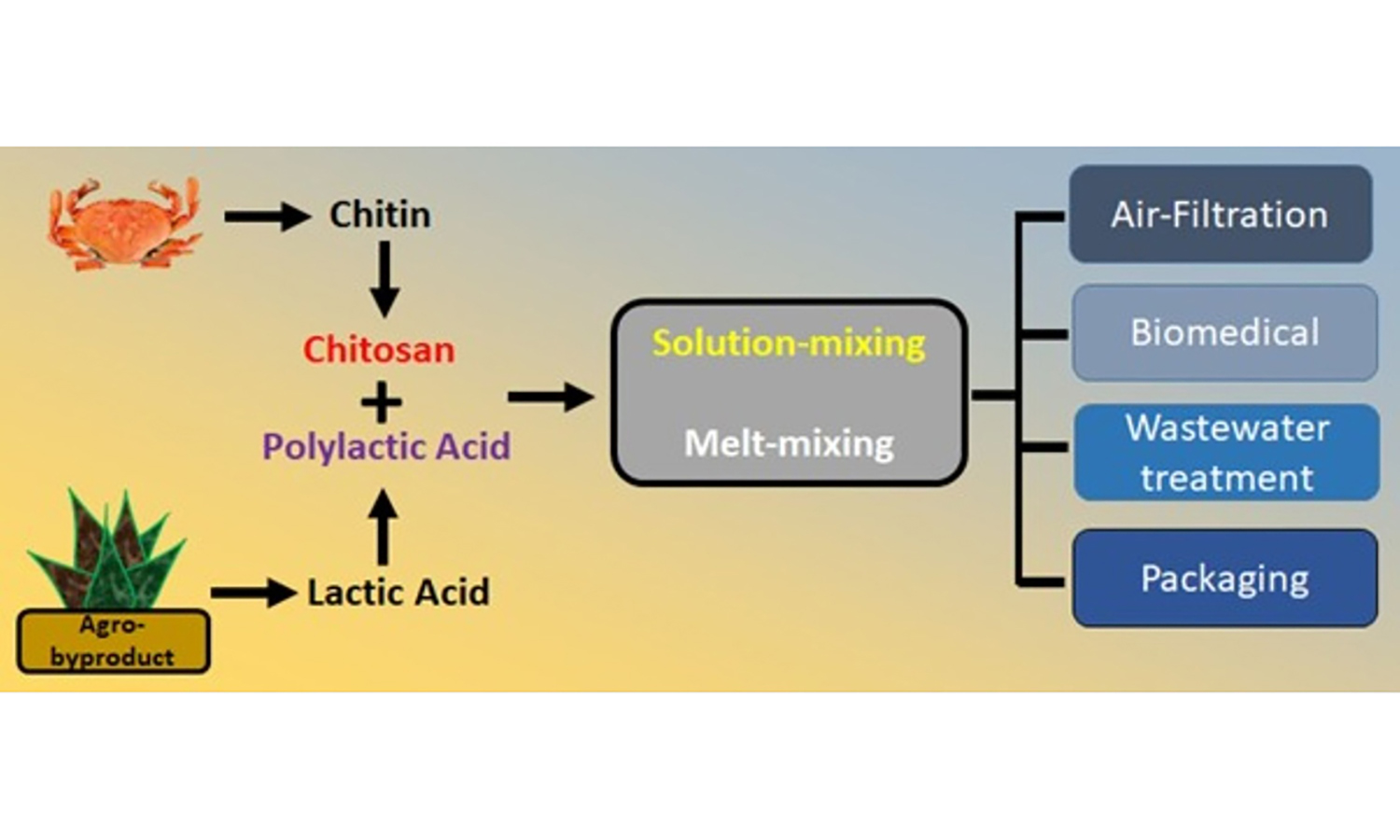
Polylactic acid (PLA) is one of the most widely used biopolymers, and it has demonstrated a huge potential for replacing some of the conventional plastics in certain application fields. However, due to a lack of other attributes such as antimicrobial properties and slow degradation rates, it is often blended with other polymers to impart these properties. Chitosan has desirable features including antimicrobial and antioxidant properties, biodegradability and biocompatibility, and environmental friendliness. Thus, it is widely blended with PLA to generate materials that can be applied in various fields. In recent years, PLA/chitosan blend composites and nanocomposites have been produced to develop sustainable and ecofriendly materials that can be suitable in active food packaging, water treatment, air filtration, and biomedical applications. This review provides an overview of the recent advancements in the development of PLA/chitosan blend composites and nanocomposites for various applications. The processing strategies, mechanical and thermal properties, together with utilization in biomedical, air filtration, water treatment, and packaging applications, are provided.
Marta Musioł, Michał Sobota, Henryk Janeczek, Anna Smola -Dmochowska, Brian Johnston, Iza Radecka
Vol. 19., No.8., Pages 773-782, 2025
DOI: 10.3144/expresspolymlett.2025.59
Vol. 19., No.8., Pages 773-782, 2025
DOI: 10.3144/expresspolymlett.2025.59
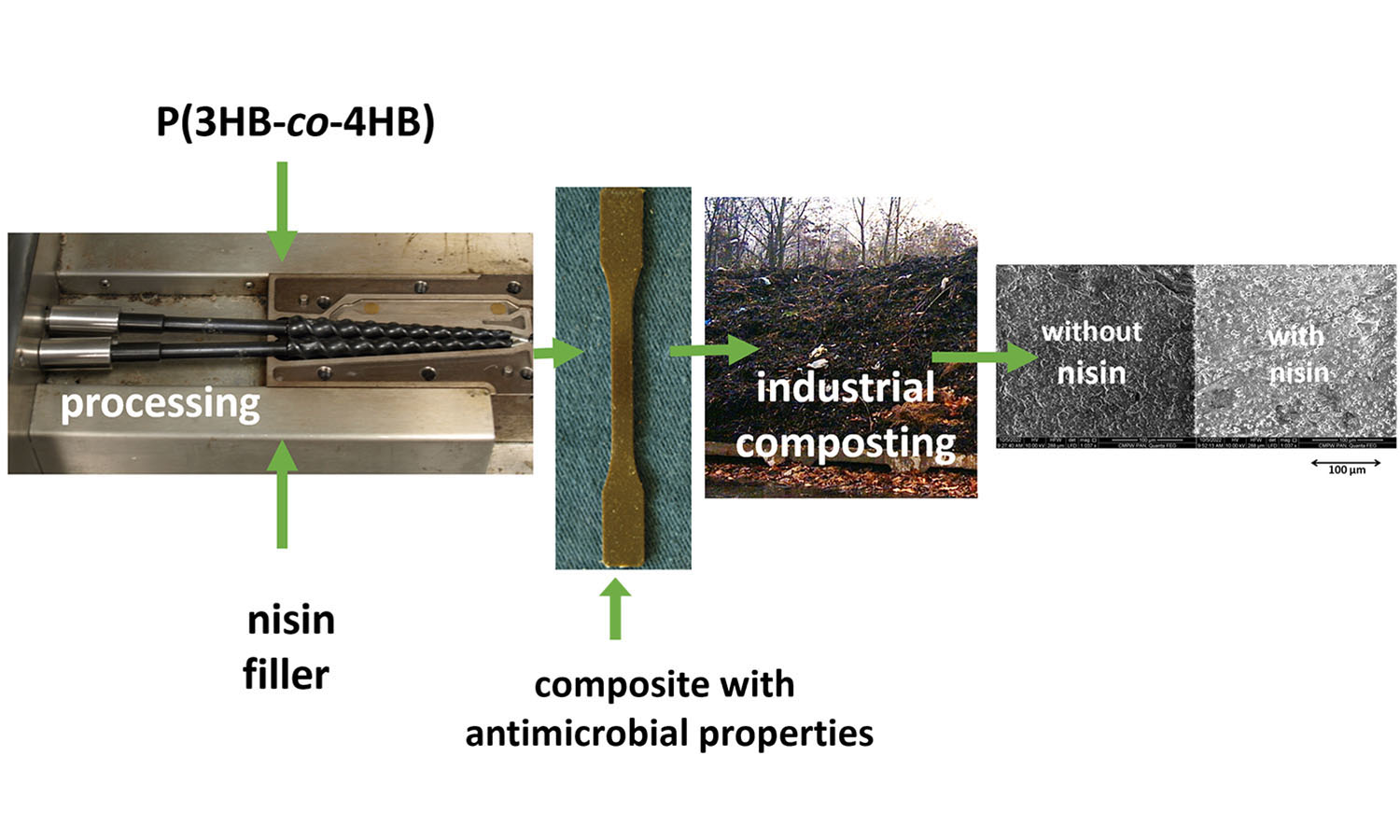
This study focused on developing compostable packaging materials possessing beneficial microbiological characteristics and evaluating their degradation process. We explore the use of nisin as a versatile antimicrobial additive in biodegradable materials. Our findings demonstrate nisin’s significant influence on the processing and degradation of composites. Nisin’s amphiphilic structure, characterized by both hydrophobic and hydrophilic components, enhances its interaction with the polymer matrix. This interaction affects smaller molar mass reduction during processing and leads to variations in degradation dynamics. The results suggest that nisin has minimal impact on the thermal stability of the matrix during processing, with less than a one-degree increase observed. Thermal stability improved for all materials during degradation, but nisin’s presence slowed this increase. Nisin’s influence on the matrix of jute fiber composites, was more pronounced, affecting the material during processing and subsequent degradation. The results indicate that samples containing nisin inhibit the growth of the gram-positive bacterium Staphylococcus aureus (S. aureus) after 24 h of incubation. The inclusion of fillers in composites elevates the microbiological activity by filler ‘antibacterial promotion’ effects in samples containing nisin. Connection with previous studies highlights the significance of polymer chain length on the composite’s antimicrobial properties.
Lilla Bubenkó, Násfa Németh, Sára Frey, Tamás Molnár, Károly Belina, Orsolya Viktória Semperger
Vol. 19., No.7., Pages 726-735, 2025
DOI: 10.3144/expresspolymlett.2025.55
Vol. 19., No.7., Pages 726-735, 2025
DOI: 10.3144/expresspolymlett.2025.55
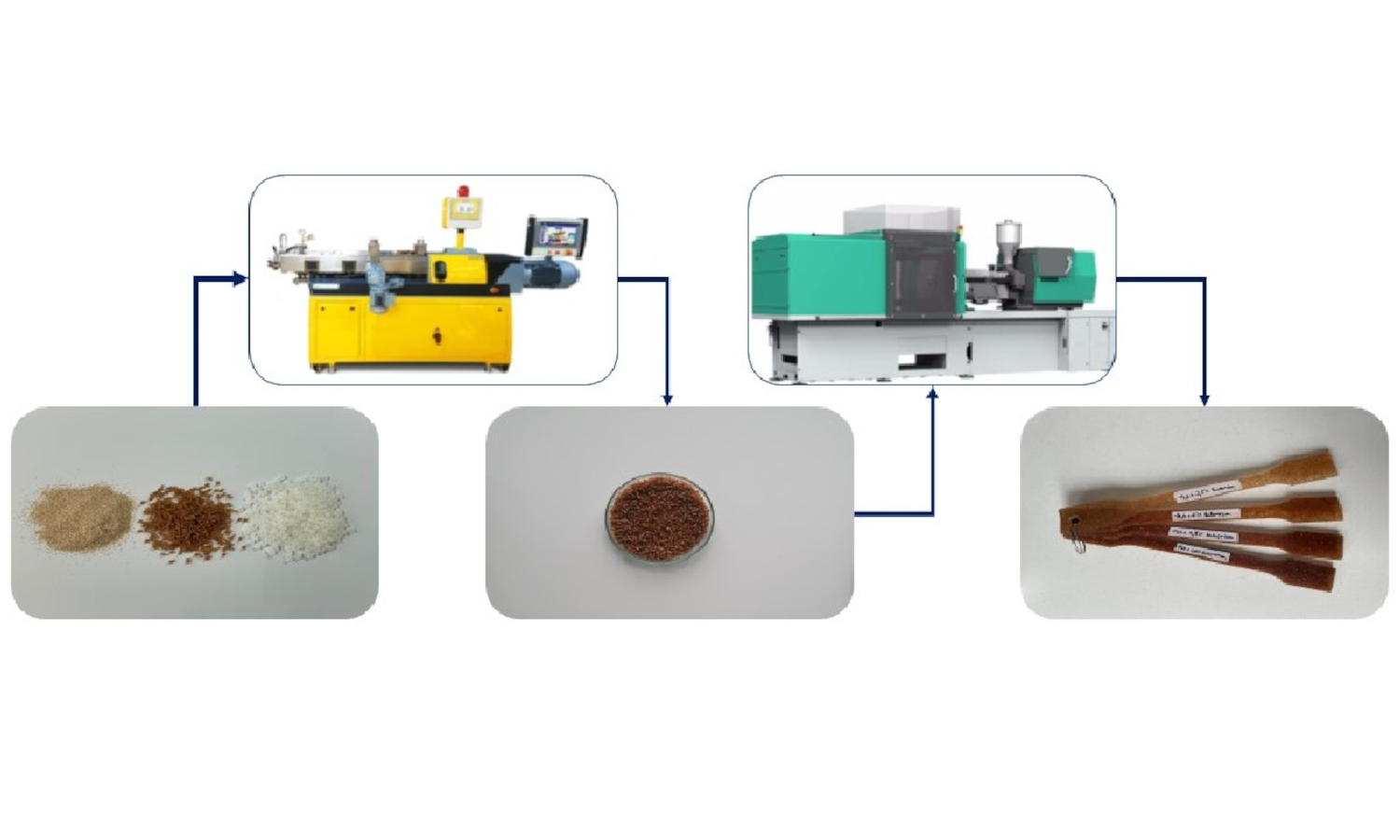
Biocomposites have recently received more attention because of raising environmental awareness and the drive toward sustainable technologies. The most common biodegradable polymer is poly(lactic acid) (PLA), which has an excellent balance of physical and rheological properties, but there is some limit to its usage. PLA properties can be improved by adding different types of fibers or fillers that come from agricultural waste. In this study, corn cob and lavender stem were used to reinforce PLA without any coupling agent, and the properties of the composites were investigated. The melt flow rate (MFR) values decreased with the corn cob content and increased with the addition of lavender stem. Mechanical tests showed that the tensile and flexural modulus of the composites increased and the strengths decreased with the reinforcement material content. The rigidness of PLA slightly decreased with the addition of fillers. There was no significant effect on the thermal properties. The unremarkable improvement of the reinforcement was due to the lack of appropriate adhesion of the two phases. The structure of the compounds was found to be homogenous on the scanning electron microscopy (SEM) micrographs. The incorporation of corn cob and lavender stem can reduce the production cost of materials.
Katalin Litauszki, Tamás Tábi, László Mészáros
Vol. 19., No.5., Pages 455-456, 2025
DOI: 10.3144/expresspolymlett.2025.33
Vol. 19., No.5., Pages 455-456, 2025
DOI: 10.3144/expresspolymlett.2025.33
This is an editorial article. It has no abstract.