
Multilayer graphene-modified TPU nanocomposites: Superior wear resistance and friction reduction at ultra-low filler content
Amanda Legnani , André Luis Marcomini, Philipe Augusto Pocidonio Silva, Ricardo Geraldo de Sousa, Anderson Júnior dos Santos, João Paulo Ferreira Santos
, André Luis Marcomini, Philipe Augusto Pocidonio Silva, Ricardo Geraldo de Sousa, Anderson Júnior dos Santos, João Paulo Ferreira SantosVol. 20., No.4., Pages 326-341, 2026
DOI: 10.3144/expresspolymlett.2026.26
DOI: 10.3144/expresspolymlett.2026.26
Corresponding author: Amanda Legnani 
GRAPHICAL ABSTRACT
ABSTRACT
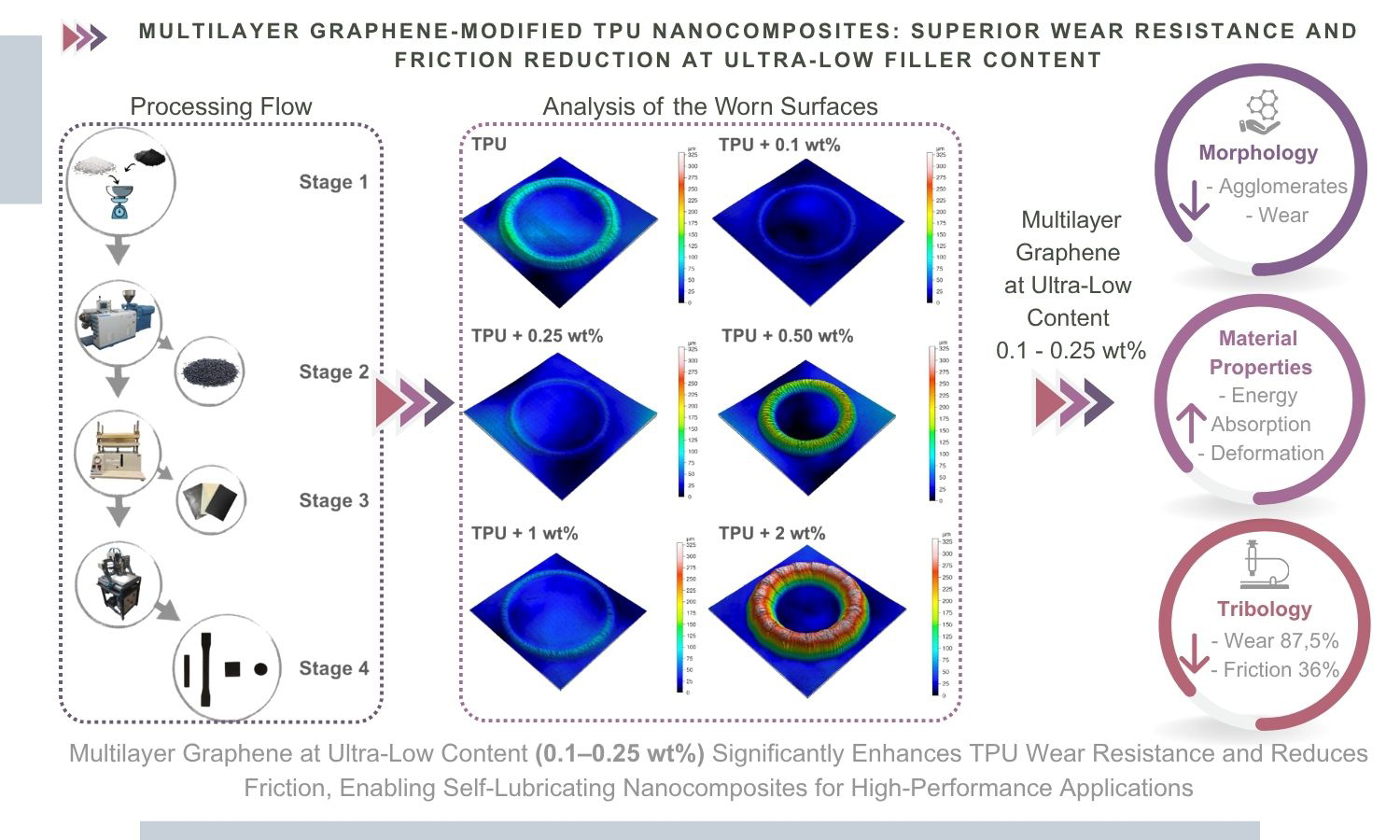
This work presents the development of high-performance thermoplastic polyurethane (TPU) nanocomposites reinforced with low contents of multilayer graphene (mG), aiming to improve their tribological behavior. Using twin-screw extrusion followed by hot pressing, nanocomposites containing 0.1, 0.25, 0.5, 1, and 2% mG weight were fabricated and systematically evaluated. Nanocomposites with only 0.1–0.25 wt% mG achieved a 36% reduction in friction coefficient and 87.5% reduction in wear volume compared to neat TPU. Results are rarely reported at such low filler loadings. Scanning electron microscopy (SEM) analysis revealed uniform dispersion at these optimal concentrations, while higher mG contents led to agglomeration and performance loss. Rheological studies indicated improved flow behavior, and dynamic-mechanical analysis confirmed increased energy dissipation and thermal response. These results suggest that the concentrations of 0.1% and 0.25% of multilayer graphene used in the study are promising for improving the performance of TPU nanocomposites in applications requiring high wear resistance for advanced applications in automotive, biomedical, and high-load engineering components, where durability and low friction are essential.
RELATED ARTICLES
Kaja Kupnik, Jure Dobnik, Patricija Skrivarnik, Rebeka Lorber, Irena Pulko, Janez Slapnik
Vol. 20., No.5., Pages 454-472, 2026
DOI: 10.3144/expresspolymlett.2026.35
Vol. 20., No.5., Pages 454-472, 2026
DOI: 10.3144/expresspolymlett.2026.35
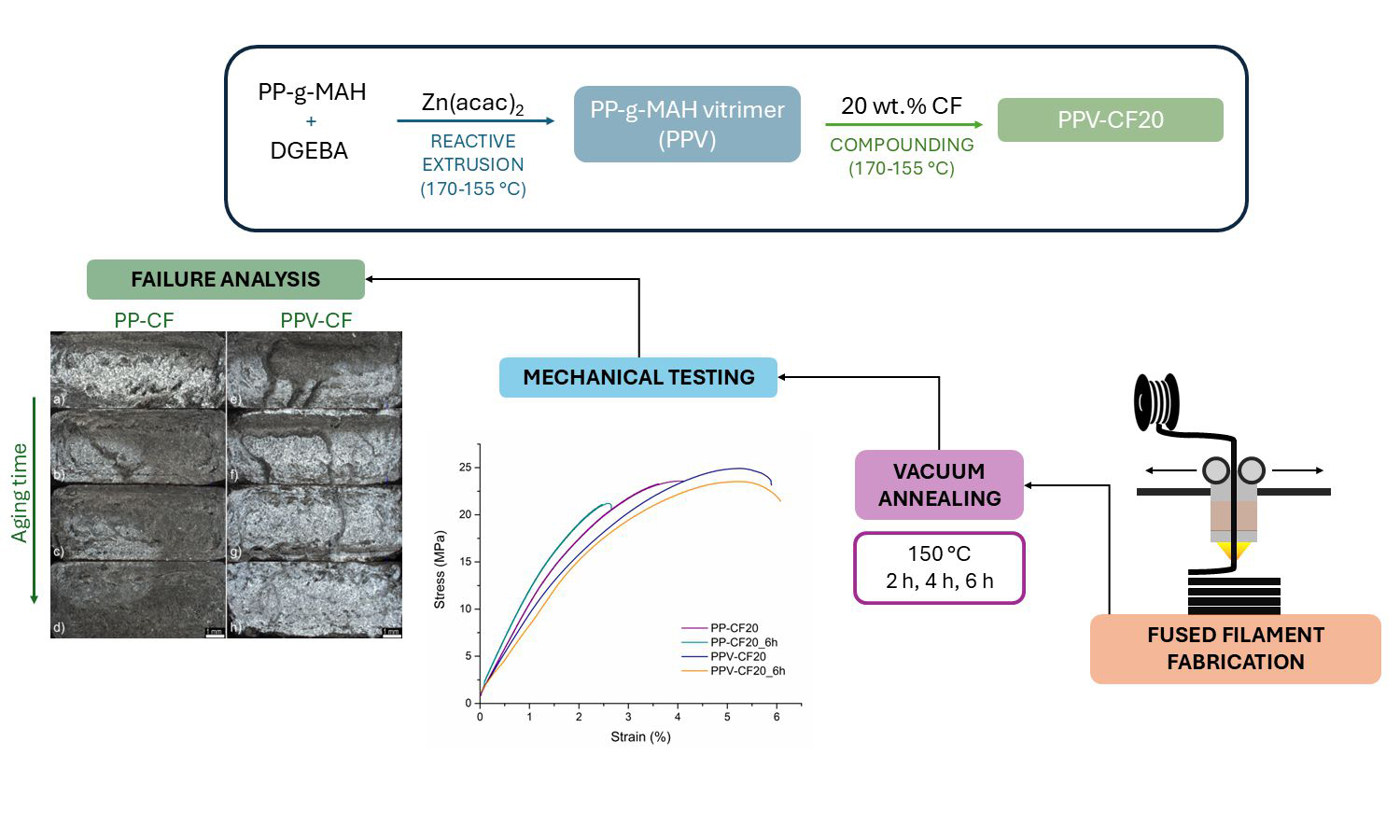
Fused filament fabrication (FFF) notoriously suffers from weak interlayer adhesion, leading to anisotropic mechanical properties in the fabricated parts. The present study addresses this challenge by developing thermoplastic-based vitrimers via reactive extrusion of maleic anhydride-grafted polypropylene (PP-g-MAH) with an epoxy crosslinker and a transesterification catalyst. The vitrimers were further compounded with carbon fibres (CF), processed into filaments, and used for FFF to fabricate specimens for testing interlayer adhesion. Spectroscopic and thermomechanical analyses revealed the formation of a crosslinked network, characterised by β-hydroxyester linkages and a pronounced rubbery plateau. Vitrimers exhibited enhanced mechanical properties, with notched Charpy impact strength increasing by up to 155%. As-printed vitrimeric FFF specimens demonstrated enhanced flexural toughness, indicating that dynamic transesterification reactions during layer deposition promote more consistent interlayer bonding. Vitrimeric specimens exhibited slightly increased flexural strength and preserved toughness upon post-printing thermal annealing at 150 °C, while non-vitrimeric specimens exhibited systematic embrittlement. The results demonstrate that vitrimerisation of thermoplastic polymers is a viable and effective strategy for improving interlayer adhesion in FFF fabricated parts.
Xue Xu, Rujie Li, Li Gao, Beibei Sun, Hongming Liu, Shiai Xu
Vol. 19., No.9., Pages 959-976, 2025
DOI: 10.3144/expresspolymlett.2025.72
Vol. 19., No.9., Pages 959-976, 2025
DOI: 10.3144/expresspolymlett.2025.72
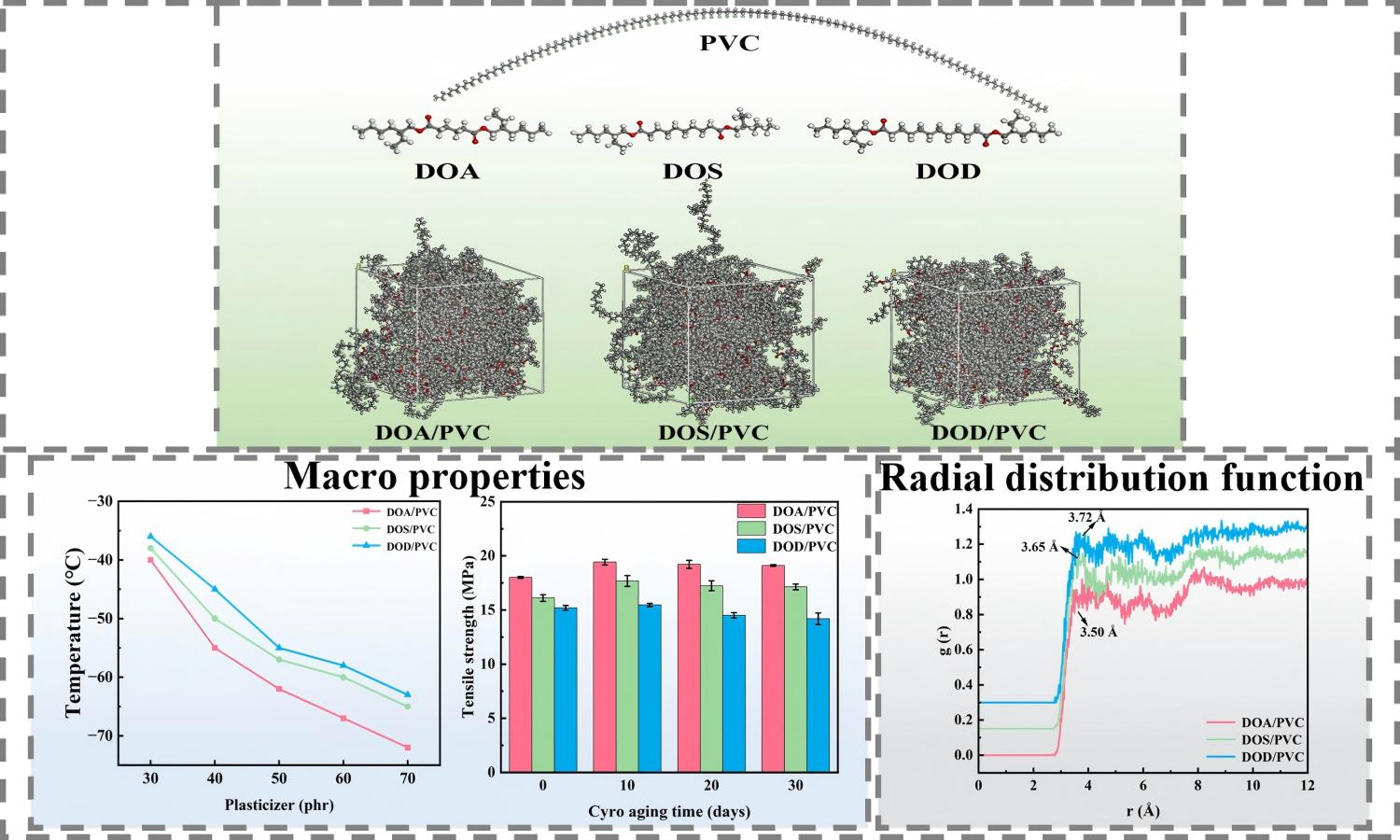
As polyvinyl chloride (PVC) films are hard and brittle in a low-temperature environment, aliphatic dibasic acid ester plasticizers with different acid chain lengths were fabricated, i.e. di(2-ethylhexyl) adipate (DOA), di(2-ethylhexyl) sebacate (DOS) and dioctyl dodecanedioate (DOD), and their effects on the cold-resistant properties of PVC were investigated using experiments and molecular dynamics (MD) simulations. The brittleness temperature and tensile properties of plasticizers/PVC are negatively related to the acid chain length of the aliphatic dibasic acid esters. The brittleness temperatures of the three systems are all below –50 °C. In-situ low-temperature tensile tests and aging tests indicate that DOA/PVC exhibits the best cold resistance and stability. MD simulations further reveal that the best compatibility between DOA and PVC is attributed to its strong binding energy and weak hydrogen bonding interactions, while van der Waals forces are dominant in DOS/PVC and DOD/PVC. This study elucidates the structure-property relationship between aliphatic dibasic acid ester plasticizers and PVC from the perspective of molecular interactions, and provides insights into the design of cold-resistant PVC plasticizers.
Szabolcs Horváth, József Gábor Kovács
Vol. 19., No.3., Pages 246-257, 2025
DOI: 10.3144/expresspolymlett.2025.19
Vol. 19., No.3., Pages 246-257, 2025
DOI: 10.3144/expresspolymlett.2025.19
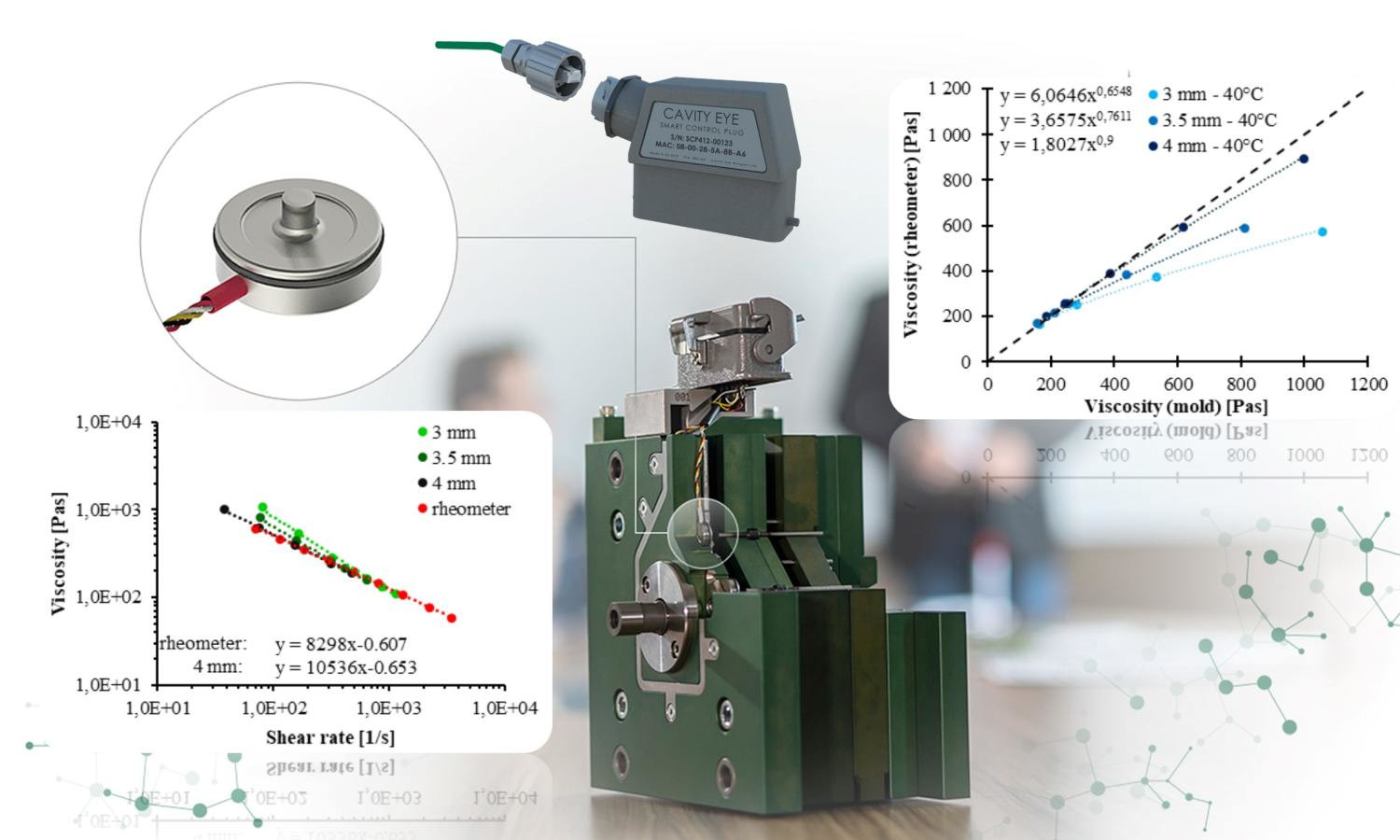
Measuring the viscosity of the melt contributes to the quality of injection molded products. Injection molding machines cannot give much feedback on the processes in the cavity, so pressure measurement inside the mold facilitates quality supervision. Our goal is to get more information about the viscosity of the material during filling in a traditional injection mold. A suitable and cost-effective method is to install cavity pressure sensors for the in-situ viscosity measurement. We prepared an experimental mold with variable wall thickness and 80×80 mm cavity dimensions. We implemented eight pressure sensors in each cavity. The wall thickness varied from 1 to 4 mm, and apparent viscosity was determined at different shear rates and mold temperatures. We measured non-isothermal and non-adiabatic flow during filling. The environment was quite different from that of standard measuring equipment. Based on the results, we effectively measured the material viscosity with a non-heated mold in the case of acrylonitrile-butadiene-styrene (ABS) and polypropylene (PP) material. The results were validated by measuring viscosity with a capillary rheometer and compared to our method using the non-heated mold, and the error was less than 10%. The results were accurate in a specific speed wall thickness range with PP and ABS.
Abderrahmane Ayadi, Patricia Krawczak
Vol. 19., No.2., Pages 122-123, 2025
DOI: 10.3144/expresspolymlett.2025.9
Vol. 19., No.2., Pages 122-123, 2025
DOI: 10.3144/expresspolymlett.2025.9
This is an editorial article. It has no abstract.
Widtawad Reantong, Siriluk Chiarakorn, Pornsawan Leangwutwong, Akanitt Jittmittraphap, Nanjaporn Roungpaisan, Natee Srisawat
Vol. 19., No.2., Pages 176-191, 2025
DOI: 10.3144/expresspolymlett.2025.13
Vol. 19., No.2., Pages 176-191, 2025
DOI: 10.3144/expresspolymlett.2025.13
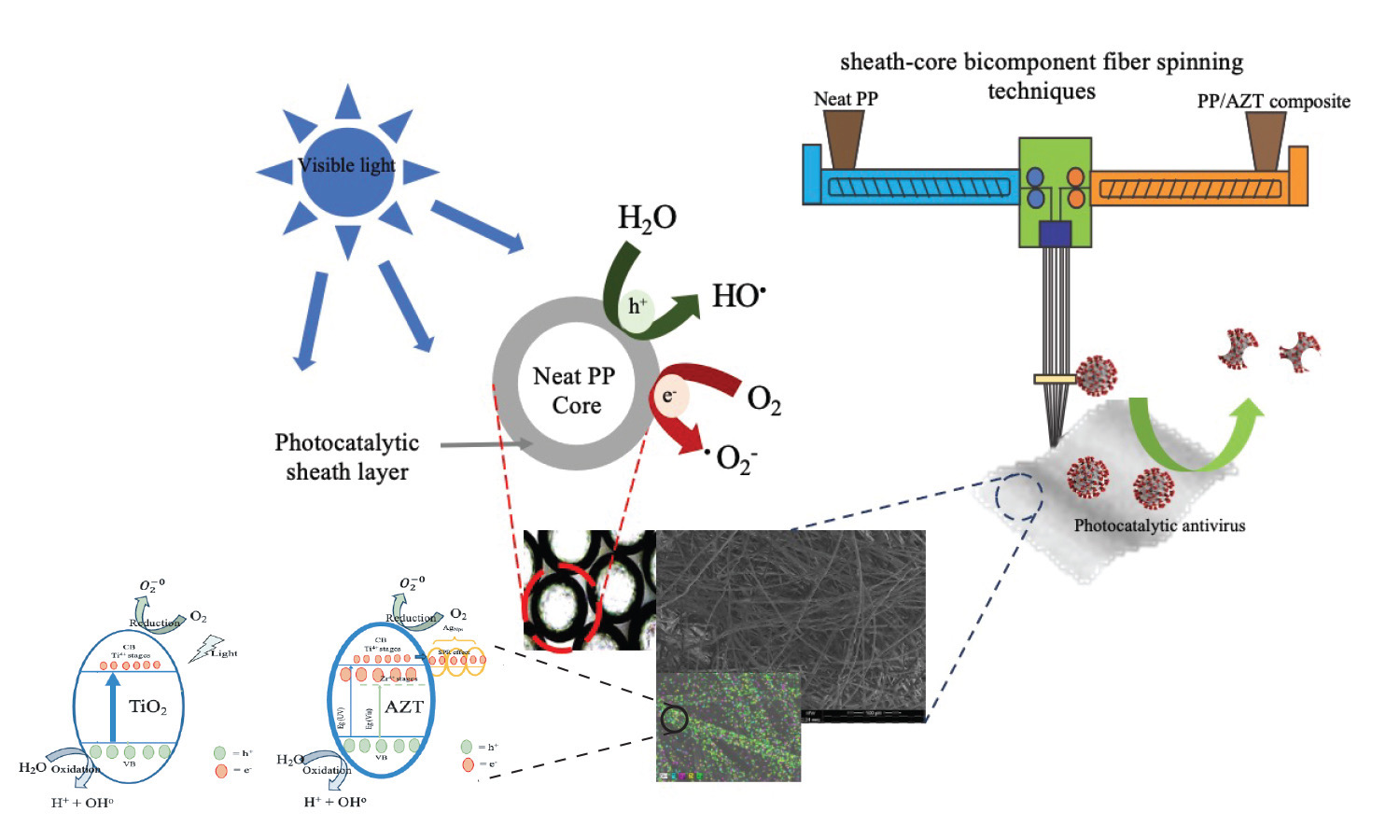
The coronavirus disease of 2019 (COVID-19) has become a global pandemic, leading to severe health issues such as pneumonia, organ failure, and death. Face masks made of non-woven textiles have been widely used to protect against SARS-CoV-2, but concerns arose regarding the potential infection from contaminated masks. To address this, titanium dioxide, a photocatalyst, shows promise in antimicrobial applications, including virus inhibition. This study explores the development of a sheath-core bicomponent fibre with a polypropylene core and a sheath containing an Ag and Zr co-doped TiO2 photocatalyst (AZT). Zr-Ag-TiO2 The fibres were produced using a double-extrusion spinning system, and the effects of the sheath-core ratio (50:50 and 80:20 w/w) and AZT content (1–3 wt%) on mechanical and antiviral properties were analysed. The fibres demonstrated improved mechanical strength and thermal stability, with the highest anti-SARS-CoV-2 activity (99.91%) observed in fibres with 2 wt% AZT at a 50:50 ratio after 30 min of fluorescent irradiation.