
Wet-spinning of sodium alginate fibers: Establishing reproducible structure–process–property relationships for potential biomedical textile applications
Khmais Zdiri, Annaëlle Erard, Aurélie Cayla, Fabien Salaun
Vol. 20., No.10., Pages 1072-1088, 2026
DOI: 10.3144/expresspolymlett.2026.78
DOI: 10.3144/expresspolymlett.2026.78
Corresponding author: Khmais Zdiri 
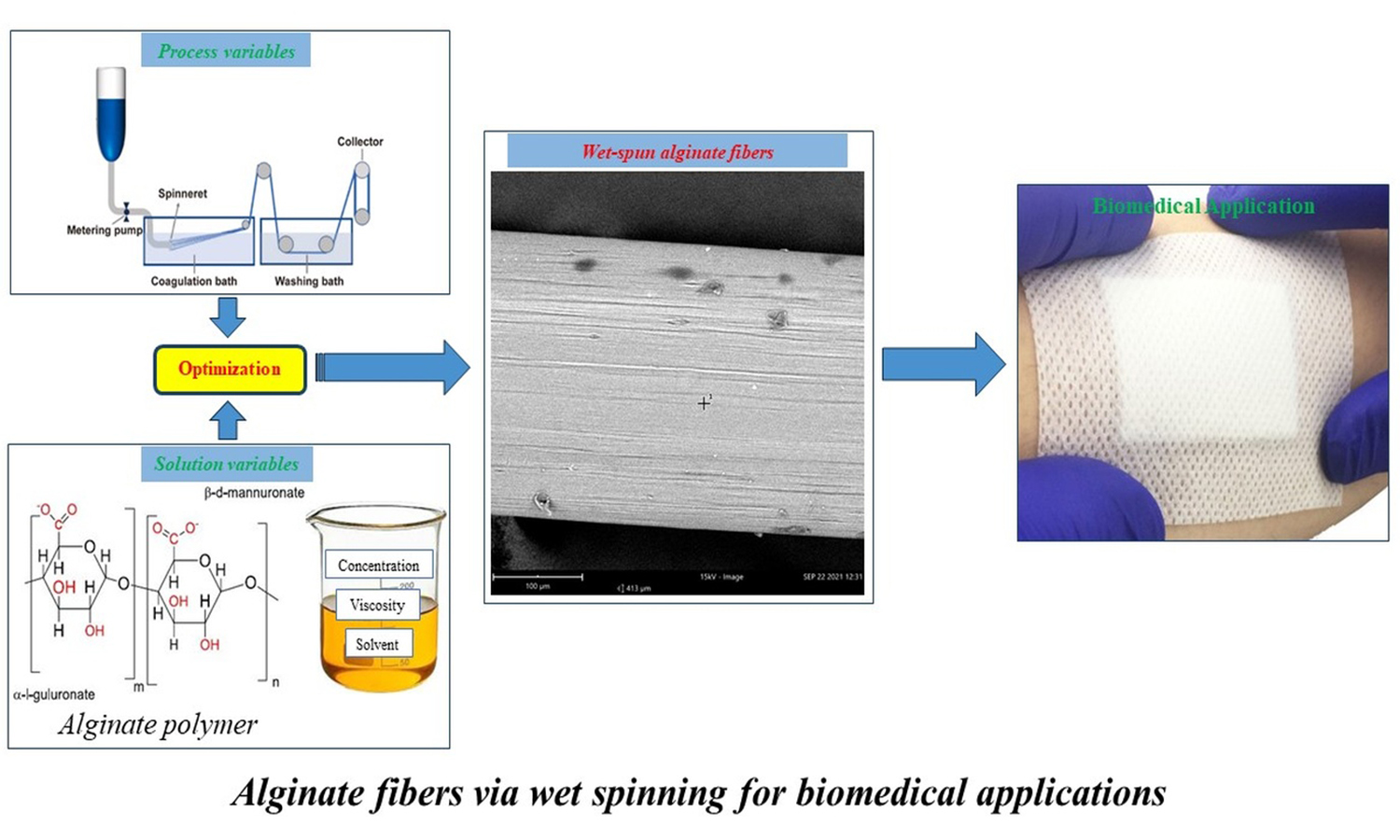
GRAPHICAL ABSTRACT
ABSTRACT
Alginate fibers are attractive for biomedical applications because of their biocompatibility and mild ionic crosslinking. This study investigated the effects of alginate concentration, calcium chloride (CaCl2) concentration, and coagulation time on fiber morphology and mechanical properties. Alginate solutions (6–10 wt%) were wet-spun through a 0.58 mm spinneret into CaCl2 baths (0.5–3 wt%). Rheological analysis showed dominant viscous behavior (G″ > G′), ensuring stable extrusion without premature gelation. Fiber morphology was examined by optical microscopy and scanning electron microscopy, while mechanical properties were evaluated by tensile testing. Among the conditions investigated, 8 wt% alginate, 1 wt% CaCl2, and 5 min coagulation provided smooth and homogeneous fibers with favorable mechanical performance. Higher CaCl2 concentrations or longer coagulation times were associated with more heterogeneous fibrillar structures and, under some conditions, reduced mechanical performance. These results provide insights into process–structure–property relationships in wet-spun alginate fibers and identify favorable processing conditions among those investigated for producing flexible filaments with characteristics of interest for biomedical textile materials, including knitted wound dressings. Biomedical performance and biocompatibility were not evaluated in the present study.
RELATED ARTICLES
Lilla Bubenkó, Násfa Németh, Sára Frey, Tamás Molnár, Károly Belina, Orsolya Viktória Semperger
Vol. 19., No.7., Pages 726-735, 2025
DOI: 10.3144/expresspolymlett.2025.55
Vol. 19., No.7., Pages 726-735, 2025
DOI: 10.3144/expresspolymlett.2025.55
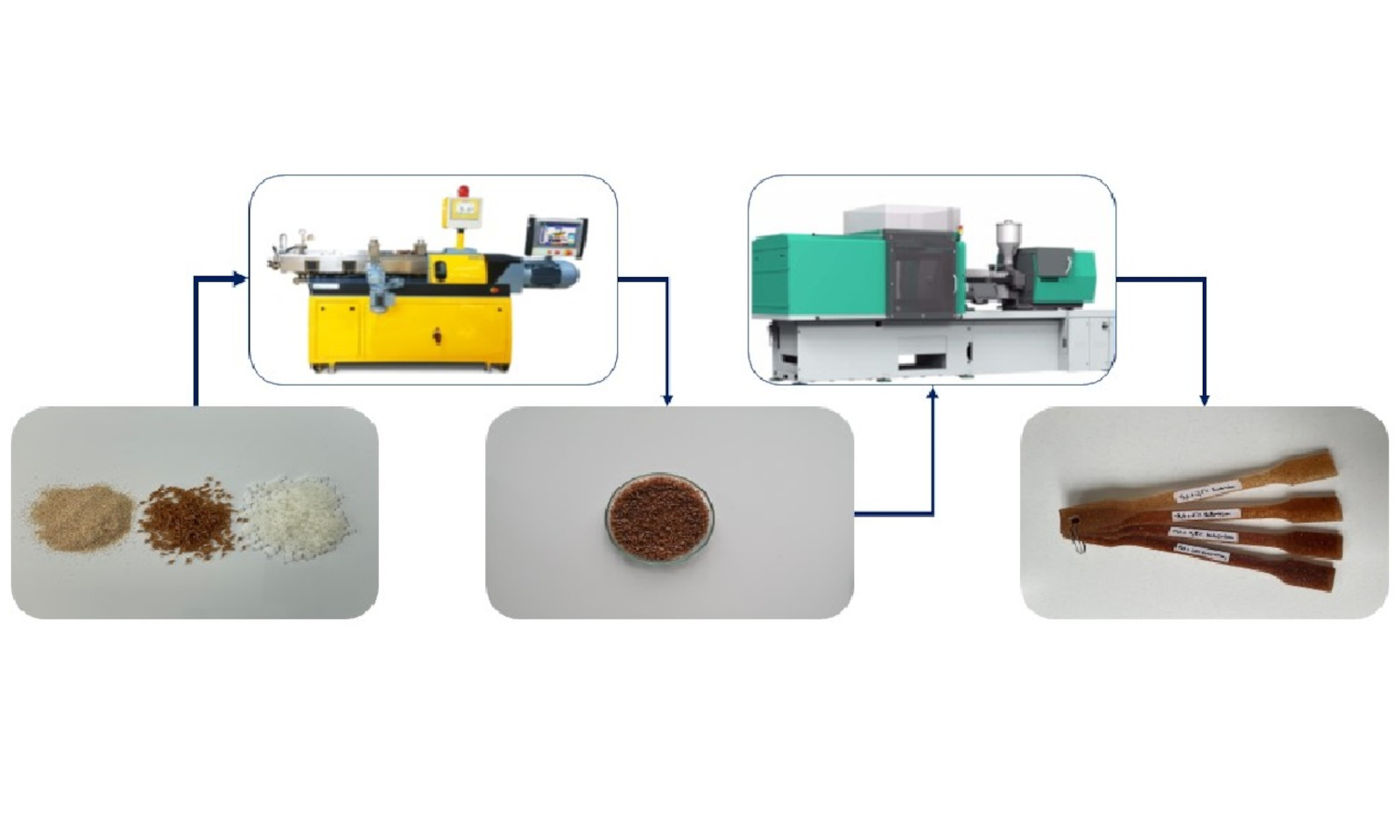
Biocomposites have recently received more attention because of raising environmental awareness and the drive toward sustainable technologies. The most common biodegradable polymer is poly(lactic acid) (PLA), which has an excellent balance of physical and rheological properties, but there is some limit to its usage. PLA properties can be improved by adding different types of fibers or fillers that come from agricultural waste. In this study, corn cob and lavender stem were used to reinforce PLA without any coupling agent, and the properties of the composites were investigated. The melt flow rate (MFR) values decreased with the corn cob content and increased with the addition of lavender stem. Mechanical tests showed that the tensile and flexural modulus of the composites increased and the strengths decreased with the reinforcement material content. The rigidness of PLA slightly decreased with the addition of fillers. There was no significant effect on the thermal properties. The unremarkable improvement of the reinforcement was due to the lack of appropriate adhesion of the two phases. The structure of the compounds was found to be homogenous on the scanning electron microscopy (SEM) micrographs. The incorporation of corn cob and lavender stem can reduce the production cost of materials.
Rayan Y. Mushtaq, Azfaralariff Ahmad, Abdul Khalil H.P.S., Rana Baker Bakhaidar, Waleed Y. Rizg, Shazlina Abd Hamid, Abdulmohsin J. Alamoudi, Che Ku Abdullah, Tata Alfatah
Vol. 18., No.7., Pages 760-777, 2024
DOI: 10.3144/expresspolymlett.2024.56
Vol. 18., No.7., Pages 760-777, 2024
DOI: 10.3144/expresspolymlett.2024.56

Seaweed
from macroalgae and cellulose from nonwood materials have gained attention in
various fields. This study explores how seaweed and cellulose nanofibers (CNF)
interact to form 3D networks in composite bioaerogels. The ratio of CNF and
seaweed was varied to see how it affects the aerogel’s inside and its
properties. The observations show that the biocomposite aerogel is more rigid
and shrinks less than using a single biopolymer. The CNF aerogel has a fine,
thin network structure, and the seaweed aerogel has a thin sheet structure. The
biocomposite aerogel combines both a fine network and a thin sheet structure.
The composite aerogel’s mechanical properties are significantly influenced by
seaweed composition. The introduction of CNF increases elasticity, while
seaweed enhances firmness. Generated computer modelling revealed that the
abundant hydroxyl groups in CNF facilitated the formation of intermolecular
bonds with seaweed. The bonding led to increased adhesion and entanglement
between biopolymers, consequently enhancing elasticity and establishing a
stable intermolecular interaction. The 3D X-ray imaging model shows that the
skeletal framework primarily consists of seaweed biopolymer, with CNF serving
to reinforce this structure thus enhancing the mechanical properties and
robustness of the composite bioaerogels.
Warda Masoom, Ayesha Khan, Amna Sarwar, Sara Musaddiq, Zahoor Hussain Farooqi, Sadia Iqbal
Vol. 18., No.3., Pages 260-281, 2024
DOI: 10.3144/expresspolymlett.2024.19
Vol. 18., No.3., Pages 260-281, 2024
DOI: 10.3144/expresspolymlett.2024.19
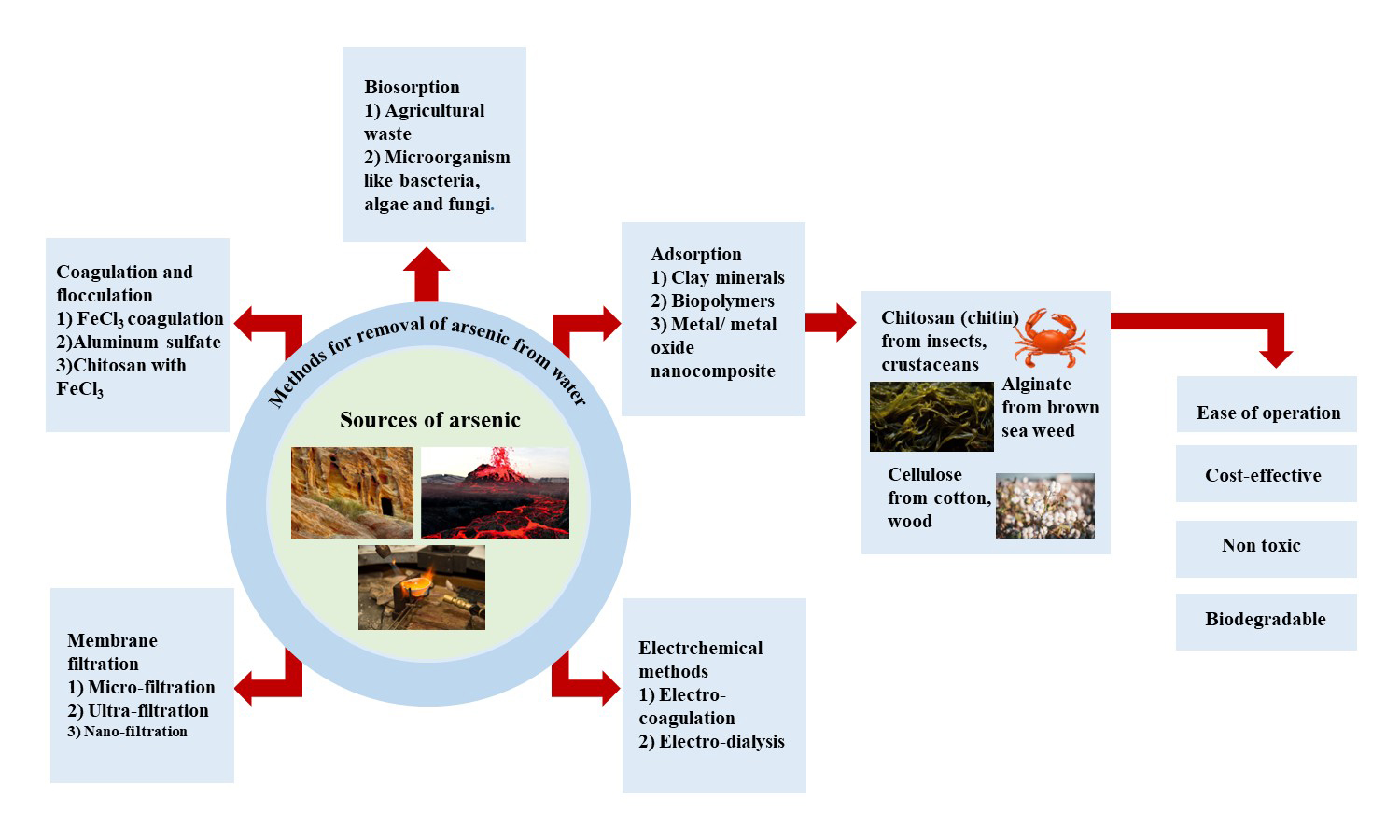
Arsenic, an element found in the Earth’s mantle, can be highly toxic, especially in its As (III) form. It enters our food chain through human activities like melting metals, using arsenic-based pesticides, and natural processes like volcanoes and rock breakdown. Consuming too much arsenic is extremely dangerous, impacting many countries worldwide. To tackle this issue, various methods like filtering, adding chemicals, and using electricity have been developed to clean arsenic-contaminated water. Among these, adsorption is a standout approach due to its simplicity and effectiveness. Biopolymers from living sources offer a natural solution, easily tweaked for arsenic removal. These biopolymers contain functionalities that can strongly latch onto toxic materials, acting like magnets. By customizing them with compounds like titanium dioxide (TiO2), magnetite (Fe3O4), and others, they become even better at capturing arsenic, shaped into tiny particles or beads. This adaptation makes biopolymers a promising choice for cleaning arsenic from water. This review focuses on ways to clean water, specifically exploring how materials like chitosan, alginate, and modified cellulose can be used to remove arsenic by adsorption. It investigates how these materials work under different conditions, highlighting important details. By sharing these insights, this article contributes to the ongoing efforts to ensure cleaner water resources.