Towards a greener future: The rise of biodegradable polymeric materials for energy harvesting and storage
Kalappa Prashantha, Guddenahalli Shivanna Kariyappa Gowda
Vol. 19., No.11., Pages 1090-1091, 2025
DOI: 10.3144/expresspolymlett.2025.81
DOI: 10.3144/expresspolymlett.2025.81
Corresponding author: Kalappa Prashantha 
GRAPHICAL ABSTRACT

RELATED ARTICLES
Karthikeyan Sowmiyadevi, Dhesingh Ravi Shankaran
Vol. 20., No.10., Pages 990-1004, 2026
DOI: 10.3144/expresspolymlett.2026.73
Vol. 20., No.10., Pages 990-1004, 2026
DOI: 10.3144/expresspolymlett.2026.73
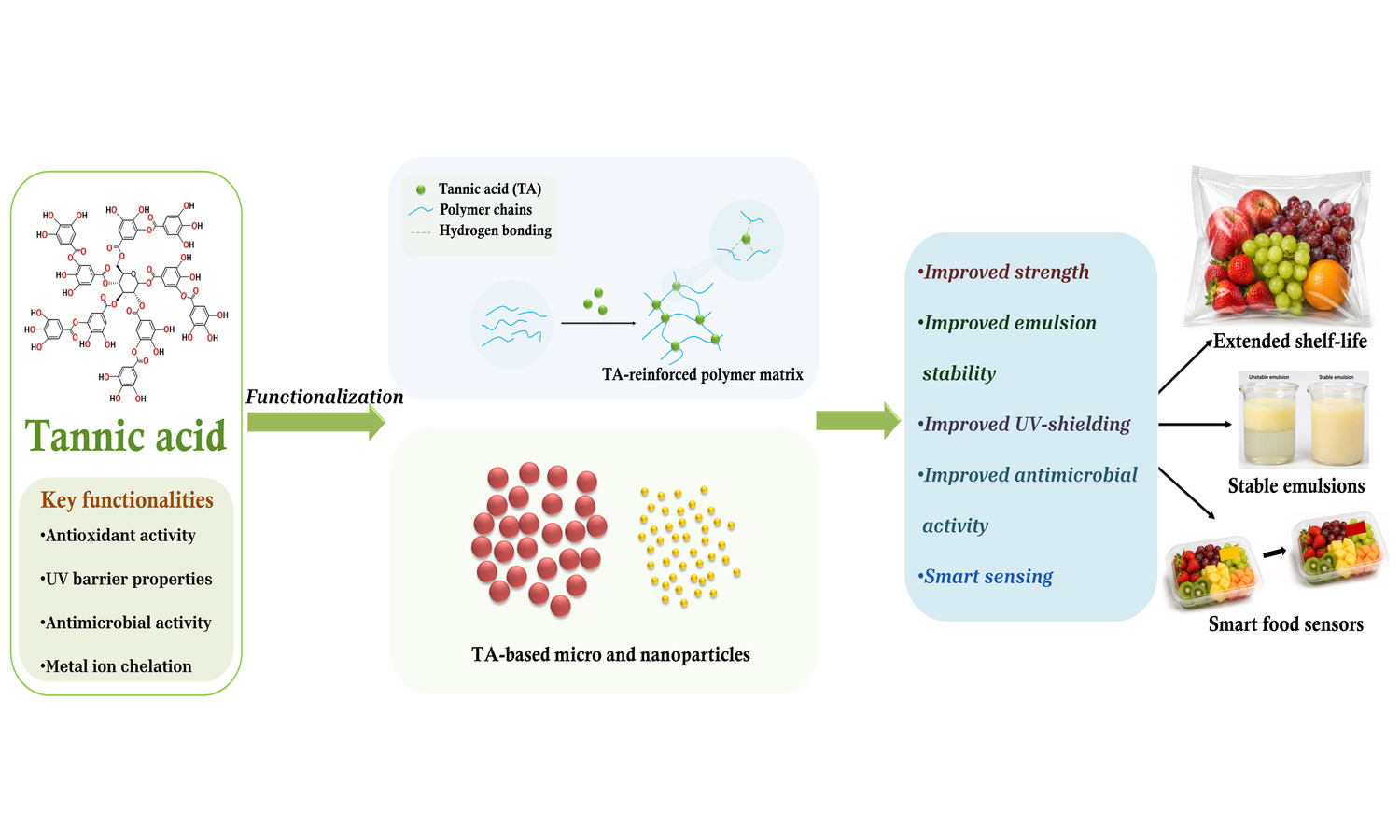
Polyphenols represent a highly abundant group of plant-derived natural compounds, characterized by remarkable structural diversity and potent antioxidant activity. Based on their chemical structures, polyphenols are broadly categorized into flavonoids, phenolic acids, stilbenes, tannins and lignans. Among these polyphenolic groups, tannins stand out for their large and complex polyphenolic frameworks and strong metal-chelating abilities. Tannic acid, a well-known hydrolyzable tannin, is one of the most extensively utilized polyphenols because of its dense phenolic composition, strong metal-chelating ability and capacity to form diverse non-covalent interactions. This review highlights recent advancements and applications of tannic acid-based micro- and nano-formulations, with particular emphasis on their roles in emulsion stabilization, enhancement of UV-barrier properties and food safety sensor applications.
Georgios C. Psarras
Vol. 19., No.8., Pages 751-752, 2025
DOI: 10.3144/expresspolymlett.2025.57
Vol. 19., No.8., Pages 751-752, 2025
DOI: 10.3144/expresspolymlett.2025.57

This is an editorial article. It has no abstract.
Nguyen Hoc Thang, Nguyen Van Phuc, Tran Thi Tu Nhi, Dang Xuan Cuong, Do Quang Minh
Vol. 18., No.2., Pages 160-192, 2024
DOI: 10.3144/expresspolymlett.2024.13
Vol. 18., No.2., Pages 160-192, 2024
DOI: 10.3144/expresspolymlett.2024.13
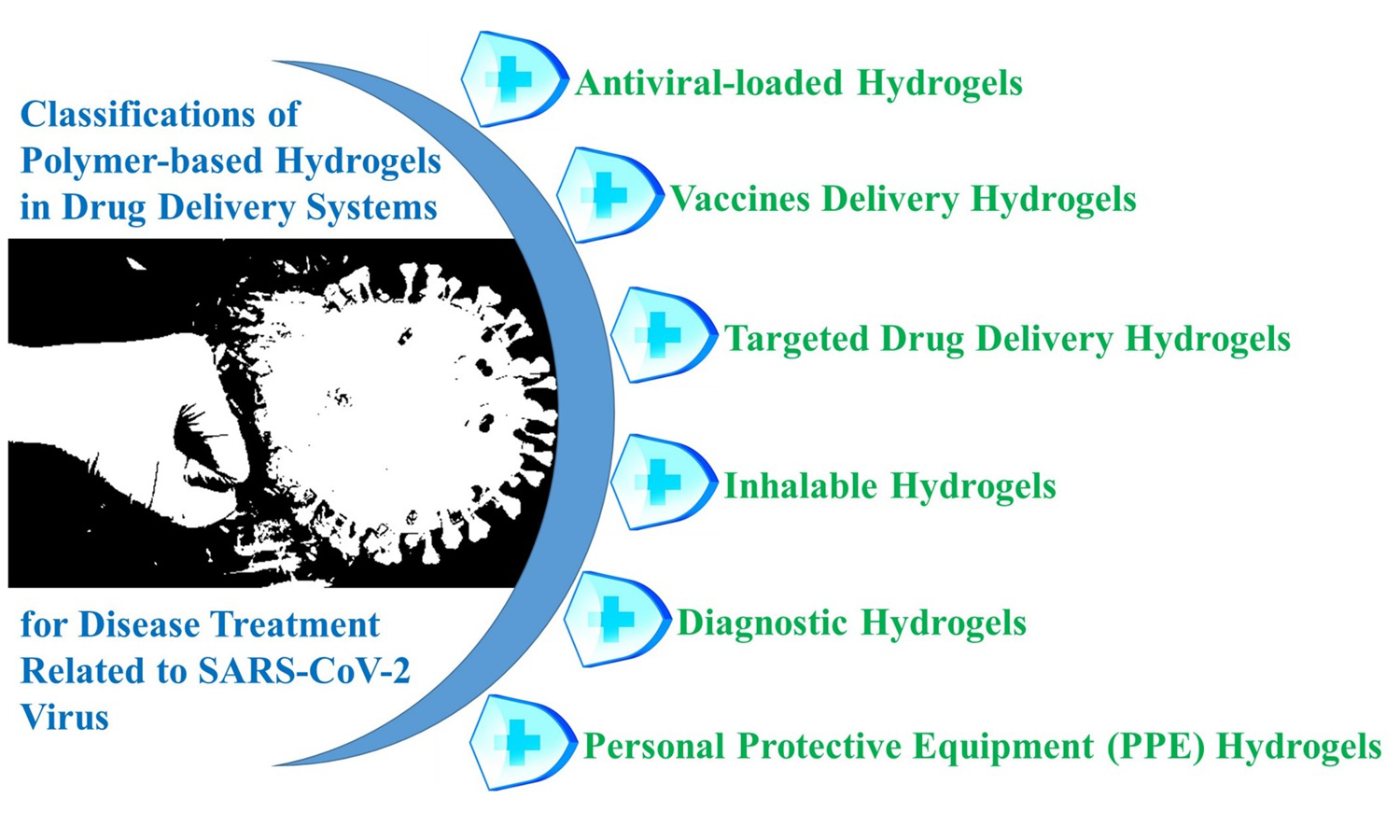
Polymer-based hydrogels are hydrophilic polymer networks with a remarkable capacity to absorb substantial amounts of water and biological fluids, rendering them highly attractive for drug delivery applications. The COVID-19 pandemic has acted as a catalyst for research and innovation in the realm of polymer-based hydrogels for drug delivery, with a particular emphasis on antiviral therapeutics, vaccines, diagnostics, and precision delivery to the respiratory system. The distinctive attributes of hydrogels, such as their biocompatibility, customizable drug release profiles, and ease of functionalization, establish them as versatile platforms for the development of advanced drug delivery systems to combat not only COVID-19 but also a spectrum of other infectious diseases. This study is dedicated to scruti-nizing and evaluating the characteristics of polymer-based hydrogels employed in drug delivery for the treatment of diseases associated with the SARS-CoV-2 virus. Furthermore, the investigation introduces a novel classification system for polymer-based hydrogels deployed in drug delivery for SARS-CoV-2-related diseases. Additionally, the paper provides an up-to-date evaluation of the latest developed hydrogels utilized in drug delivery for the treatment of dis-eases linked to the SARS-CoV-2 virus, based on research conducted through the recent months of 2023.