
Quaternized cassava starch-based film reinforced by nanocrystalline cellulose with antimicrobial activity against bacteria and coronavirus
Guilherme Ribeiro de Carvalho , Rafael Affonso Netto, Camila Delarmelina, Marta Cristina Teixeira Duarte, Liliane Maria Ferrareso Lona
, Rafael Affonso Netto, Camila Delarmelina, Marta Cristina Teixeira Duarte, Liliane Maria Ferrareso LonaVol. 19., No.7., Pages 686-696, 2025
DOI: 10.3144/expresspolymlett.2025.52
DOI: 10.3144/expresspolymlett.2025.52
Corresponding author: Guilherme Ribeiro de Carvalho 
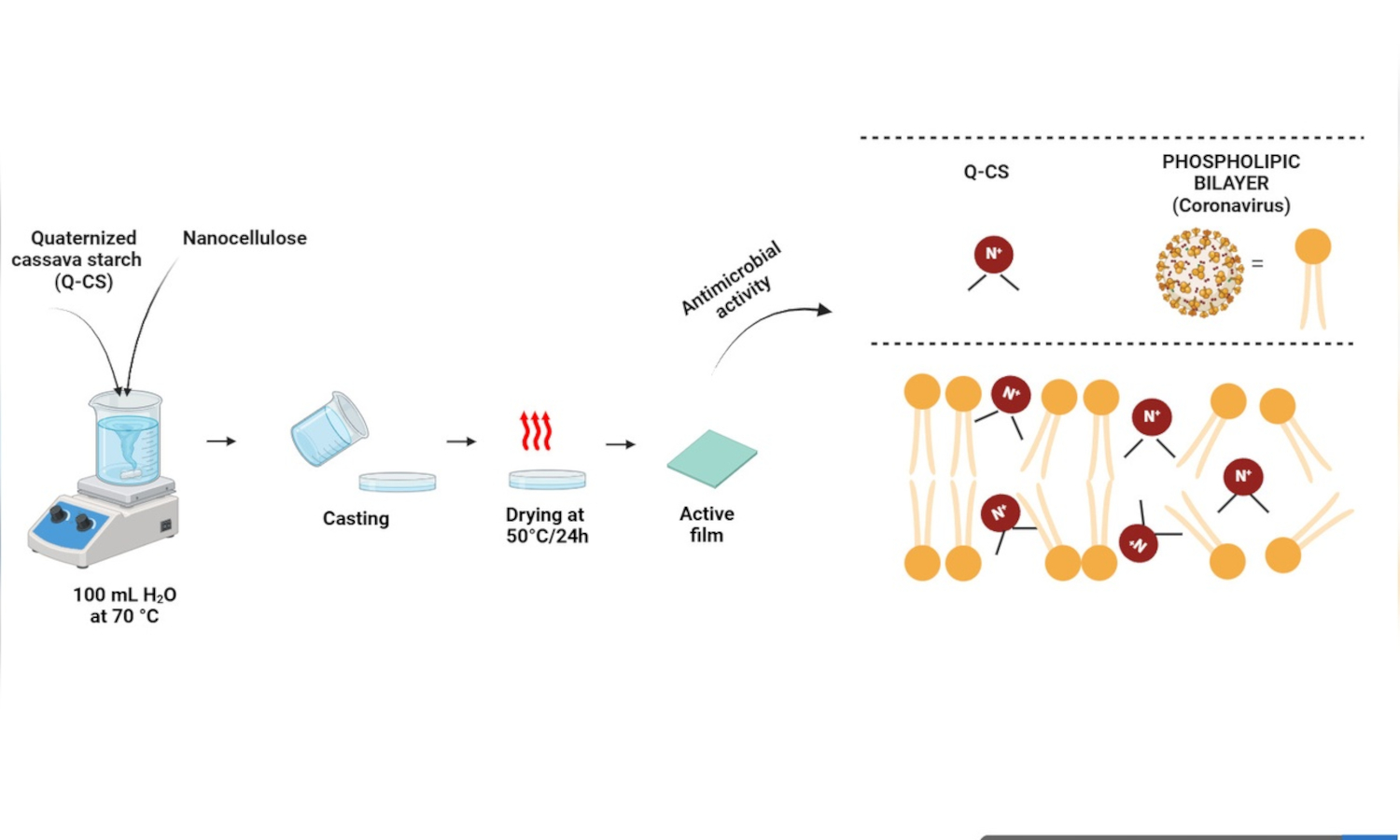
GRAPHICAL ABSTRACT
ABSTRACT
In this study, a new plastic film with antiviral and antibacterial properties was developed using modified cassava starch with glycidyltrimethylammonium chloride (GTMAC) and reinforced by crystalline nanocellulose (CNC), called Q-CS/CNC. For comparison, a control film (Q-CS) was produced without the addition of CNC. Elemental analysis revealed a degree of substitution (DS) of 0.552, indicating the replacement of the OH groups of starch by the NR4+ groups of GTMAC during the quaternization reaction. The addition of CNC resulted in significant increases (p < 0.05) of 38.9, 38.2, and 43.1% in thickness, opacity, and water vapor permeability measurements, respectively, compared to Q-CS. Incorporating CNC also contributed to an increase of 43.6% in tensile strength and 109% in stiffness but slightly decreased thermal stability. The Q-CS/CNC film demonstrated efficacy by inactivating 99% of the coronavirus in 1 min and inhibiting the growth of Staphylococcus aureus and Escherichia coli. This action is attributed to the electrostatic interaction of quaternary amino groups, grafted onto starch, with the phospholipid membrane of microorganisms, resulting in the inactivation of these microorganisms. Therefore, these results highlight the potential use of Q-CS/CNC film as antimicrobial packaging, especially against coronavirus.
RELATED ARTICLES
Karthikeyan Sowmiyadevi, Dhesingh Ravi Shankaran
Vol. 20., No.10., Pages 990-1004, 2026
DOI: 10.3144/expresspolymlett.2026.73
Vol. 20., No.10., Pages 990-1004, 2026
DOI: 10.3144/expresspolymlett.2026.73
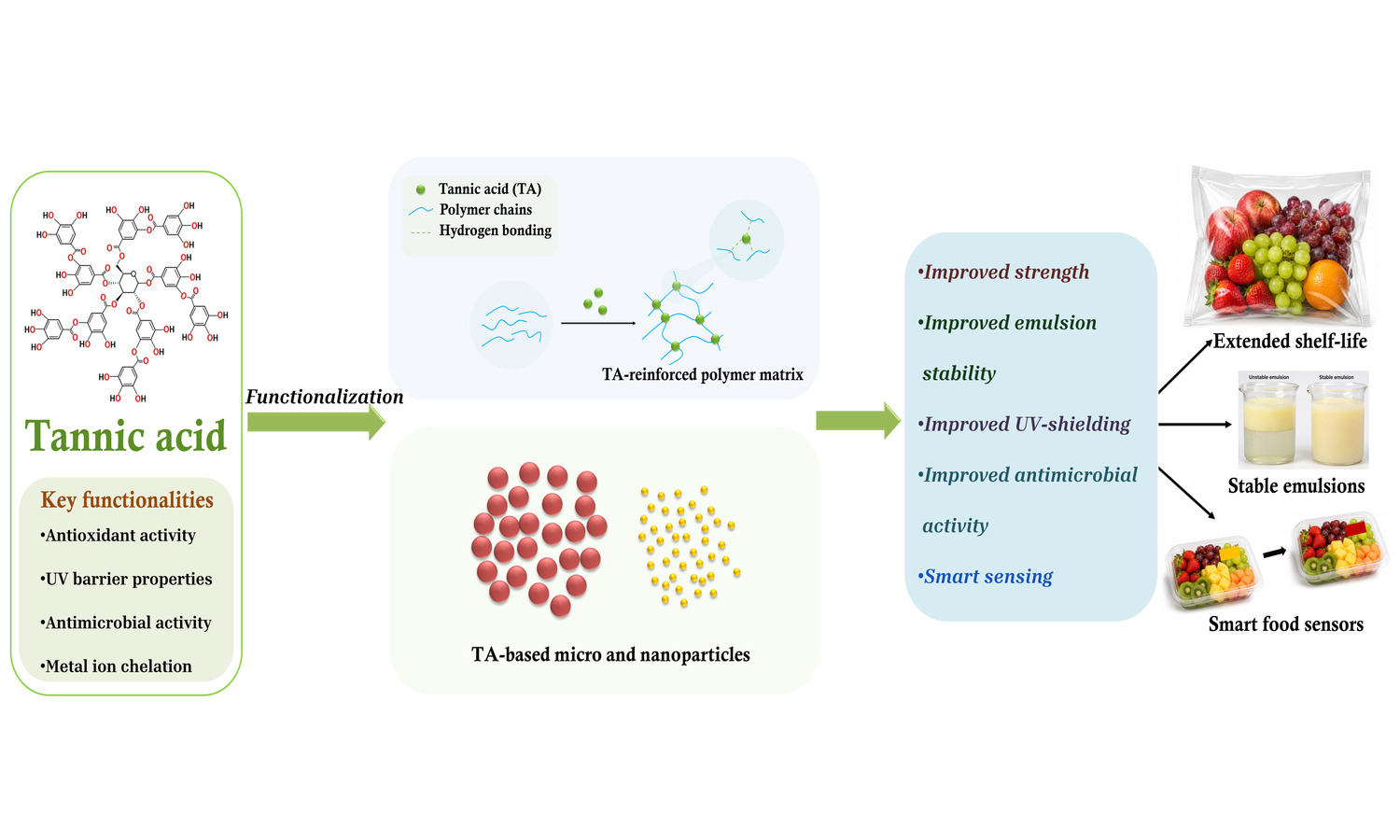
Polyphenols represent a highly abundant group of plant-derived natural compounds, characterized by remarkable structural diversity and potent antioxidant activity. Based on their chemical structures, polyphenols are broadly categorized into flavonoids, phenolic acids, stilbenes, tannins and lignans. Among these polyphenolic groups, tannins stand out for their large and complex polyphenolic frameworks and strong metal-chelating abilities. Tannic acid, a well-known hydrolyzable tannin, is one of the most extensively utilized polyphenols because of its dense phenolic composition, strong metal-chelating ability and capacity to form diverse non-covalent interactions. This review highlights recent advancements and applications of tannic acid-based micro- and nano-formulations, with particular emphasis on their roles in emulsion stabilization, enhancement of UV-barrier properties and food safety sensor applications.
Praveenkumara Jagadeesh, Gokul Kannan, Mat Jusoh Suriani, Madhu Puttegowda, Sanjay Mavinkere Rangappa, Suchart Siengchin
Vol. 20., No.8., Pages 799-839, 2026
DOI: 10.3144/expresspolymlett.2026.61
Vol. 20., No.8., Pages 799-839, 2026
DOI: 10.3144/expresspolymlett.2026.61
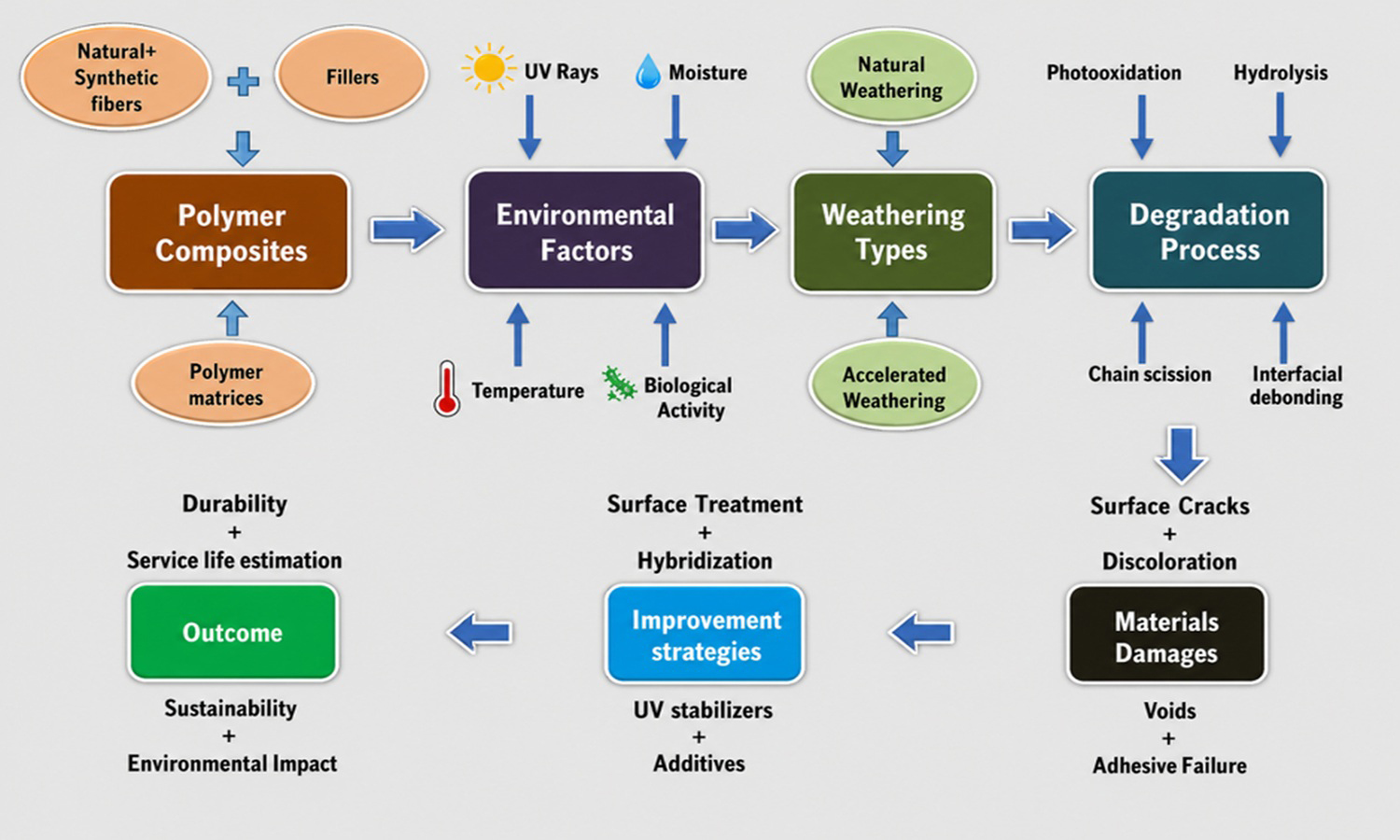
Polymer composites are widely used in indoor and outdoor applications owing to their high strength-to-weight ratio, corrosion resistance, and design flexibility. However, exposure to environmental factors such as ultraviolet (UV) radiation, humidity, temperature fluctuations, and biological agents significantly affect their long-term durability and performance. In this review, we comprehensively examine the degradation mechanisms of polymer composites under both natural and accelerated weathering, with particular emphasis on degradation mechanisms, characterization techniques, and durability assessment. We critically discuss the fundamental degradation mechanisms, including photo-oxidation, hydrolysis, polymer chain scission, crosslinking and interfacial debonding. We also evaluated accelerated weathering techniques, conducted under standardized testing conditions, for their ability to simulate long-term outdoor exposure within significantly shorter timeframes, by controlling key environmental parameters such as UV radiation, humidity, and temperature. We also examine the influence of reinforcements, including natural fibres, synthetic fibres, and nanofillers, on the weathering resistance of polymer composites. Attention is given to natural fibre–reinforced composites because their inherent hydrophilicity promotes moisture absorption, accelerating degradation and weakening the fibre–matrix interface. Furthermore, we critically evaluate the effects of weathering on the mechanical properties, crystalline structure and barrier performance of polymer composite films, and discuss recent advances in enhancing weather resistance through hybridization, surface modification, and the incorporation of stabilizing additives. Finally, the review highlights the key challenges and future research directions for the development of durable, high-performance, and sustainable polymer composite systems for long-term outdoor applications.
Wen Shyang Chow
Vol. 20., No.4., Pages 324-325, 2026
DOI: 10.3144/expresspolymlett.2026.25
Vol. 20., No.4., Pages 324-325, 2026
DOI: 10.3144/expresspolymlett.2026.25
This is an editorial article. It has no abstract.
Paulina Bednarczyk, Kamil Rożniakowski
Vol. 20., No.3., Pages 233-245, 2026
DOI: 10.3144/expresspolymlett.2026.19
Vol. 20., No.3., Pages 233-245, 2026
DOI: 10.3144/expresspolymlett.2026.19
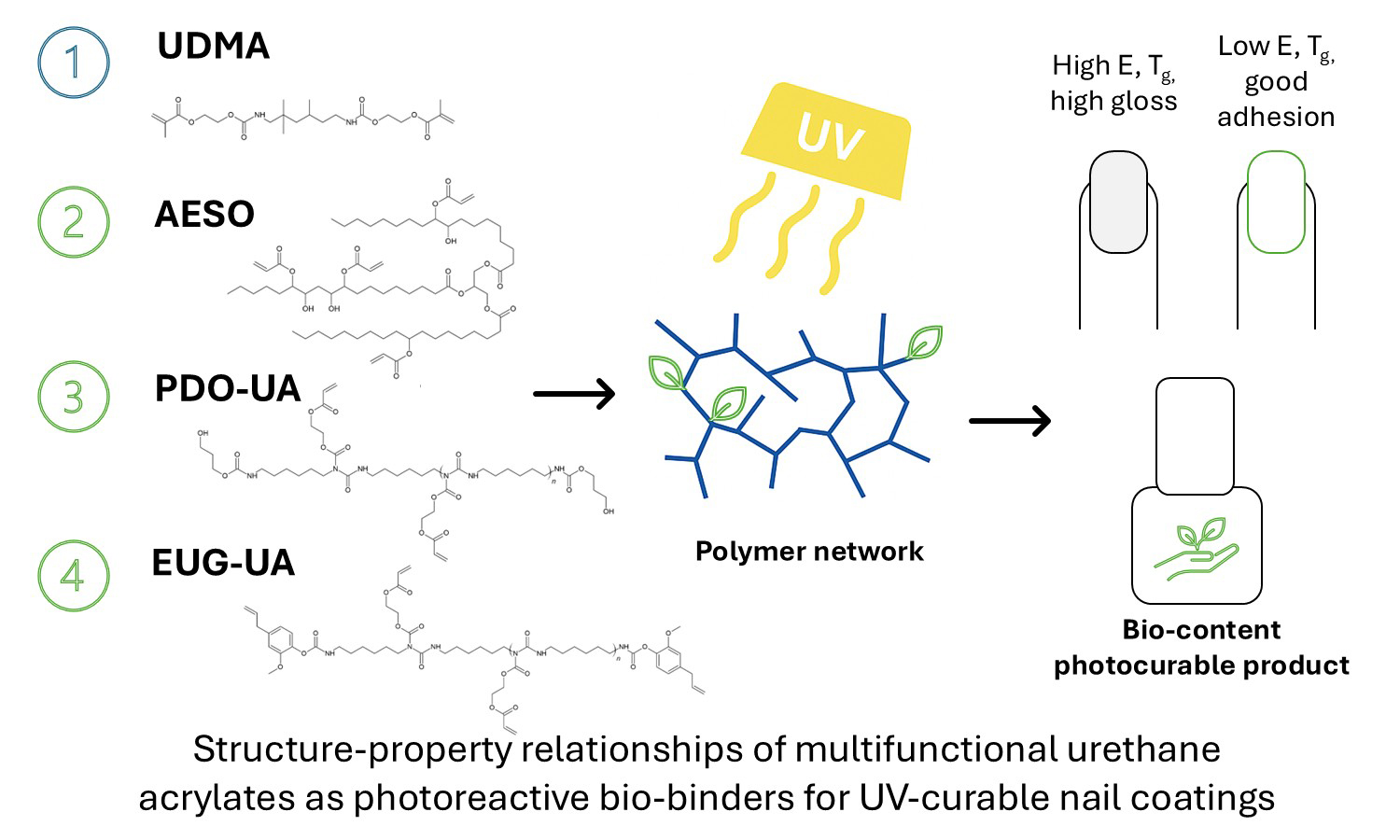
This study investigates the structure–property relationships of multi-functional urethane acrylate resins designed as photoreactive binders for UV-curable nail coatings. Four systems were examined: a commercial resin urethane dimethacrylate (UDMA), a bio-based acrylated epoxidized soybean oil (AESO), and two newly synthesized bio-based urethane acrylates derived from 1,3-propanediol (PDO–UA) and eugenol (EUG–UA). Photopolymerization kinetics were analyzed by realtime FTIR, while the properties of the cured coatings were also determined. The mechanical and thermal behavior of selfsupporting polymer films was evaluated by tensile testing and DSC analysis. The UDMA network exhibited the highest crosslink density, reflected in its high modulus (≈0.5 GPa), tensile strength (≈15 MPa), and Tg (≈60°C), making it suitable for use as a top coat. AESO showed moderate stiffness and flexibility, whereas PDO–UA and EUG–UA formed soft, low-Tg (–12 and –17°C) and highly deformable networks typical of elastomeric materials. The combined mechanical and thermal results confirmed that crosslink density strongly governs coating performance and applicability. This study demonstrates that blending UDMA with bio-based oligomers enables the design of sustainable, UV-curable nail lacquers with an optimal balance of hardness, flexibility, and adhesion to the natural nail plate.
Cláudia Andréa Batista dos Santos, Bartłomiej Kryszak, Rafał Malinowski, Aleksandra Ujćič, Konrad Szustakiewicz
Vol. 20., No.3., Pages 264-278, 2026
DOI: 10.3144/expresspolymlett.2026.21
Vol. 20., No.3., Pages 264-278, 2026
DOI: 10.3144/expresspolymlett.2026.21
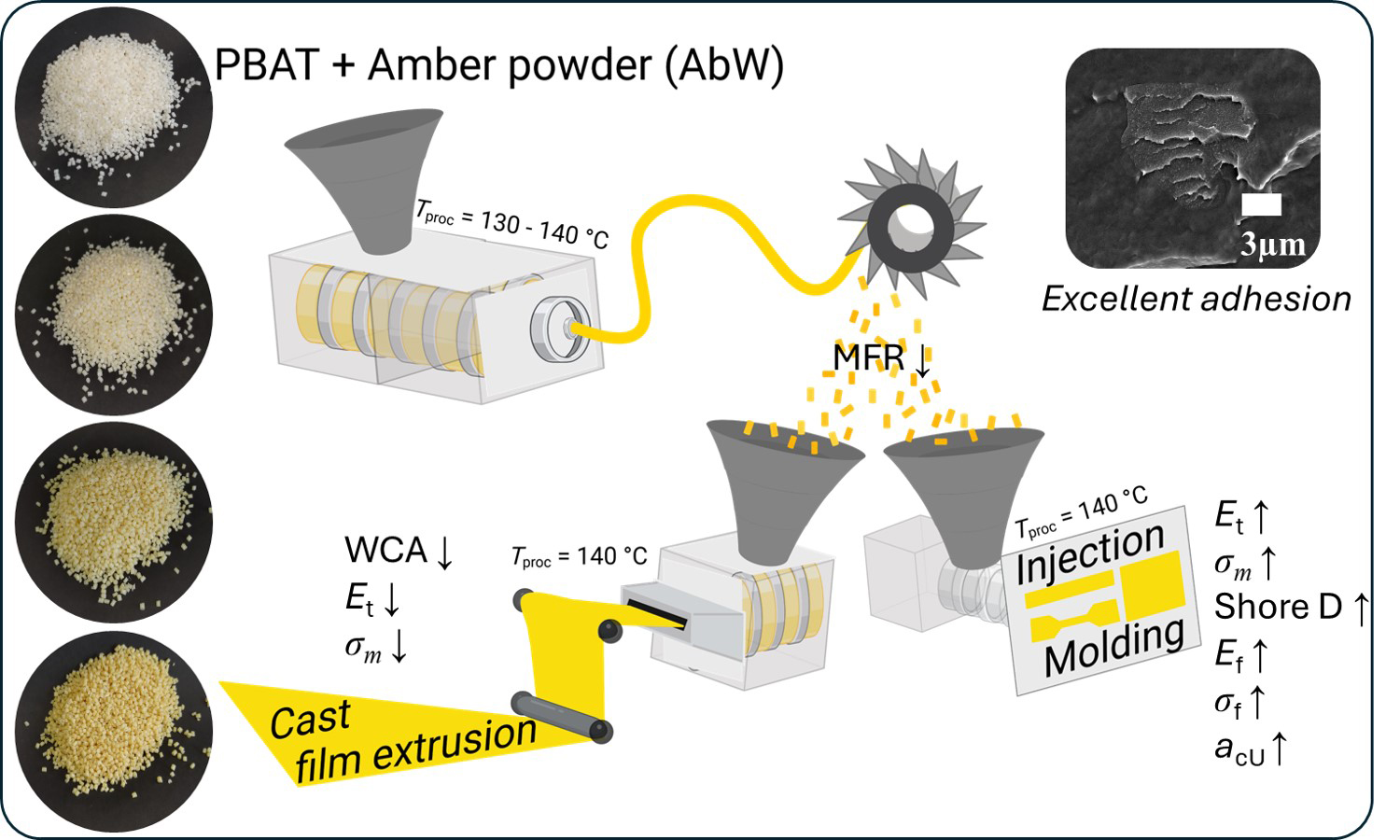
This study investigates the interaction between poly(butylene adipate-co-terephthalate) (PBAT) and amber powdered waste (AbW) from jewelry at different filler concentrations (0, 1, 2.5, and 5 wt%) obtained via melt mixing in a corotating twin screw extruder. The resulting materials were pelletized and processed using two techniques: 1) cast film extrusion and 2) injection molding. The shaped specimens exhibited excellent interfacial adhesion. Thermal behavior, as assessed by Vicat softening temperature (VST), differential scanning calorimetry (DSC), and thermogravimetric analysis (TGA), showed minimal variation among the composites. Despite similar melt flow rate (MFR) values among the samples, the incorporation of AbW affected the behavior of the polymer during cast film extrusion. Consequently, the composite films exhibited lower tensile mechanical parameters (tensile strength, Young’s modulus, stress and strain at break) compared to the neat PBAT film. In turn, the injection molded composites showed improved tensile, flexural, and impact parameters compared to their neat counterpart. Additionally, a slight decrease in water contact angle (WCA) suggested increased surface hydrophilicity of the extruded films. These findings demonstrate the potential of AbW as an additive for biopolymer composites with enhanced mechanical performance. The increased surface hydrophilicity is particularly relevant for applications targeting biocompatibility and biodegradability.