
Biodegradable scaffold: integration of polylactic acid, hydroxyapatite, and graphene oxide via FDM 3D printing
André da Silva Siqueira, Natália Ferreira Braga, Pablo Andrés Riveros Muñoz, Lucas Freitas de Freitas, Aryel Heitor Ferreira , Guilhermino Jose Macêdo Fechine
, Guilhermino Jose Macêdo FechineVol. 18., No.6., Pages 656-672, 2024
DOI: 10.3144/expresspolymlett.2024.48
DOI: 10.3144/expresspolymlett.2024.48
Corresponding author: Guilhermino Jose Macêdo Fechine 
GRAPHICAL ABSTRACT
ABSTRACT
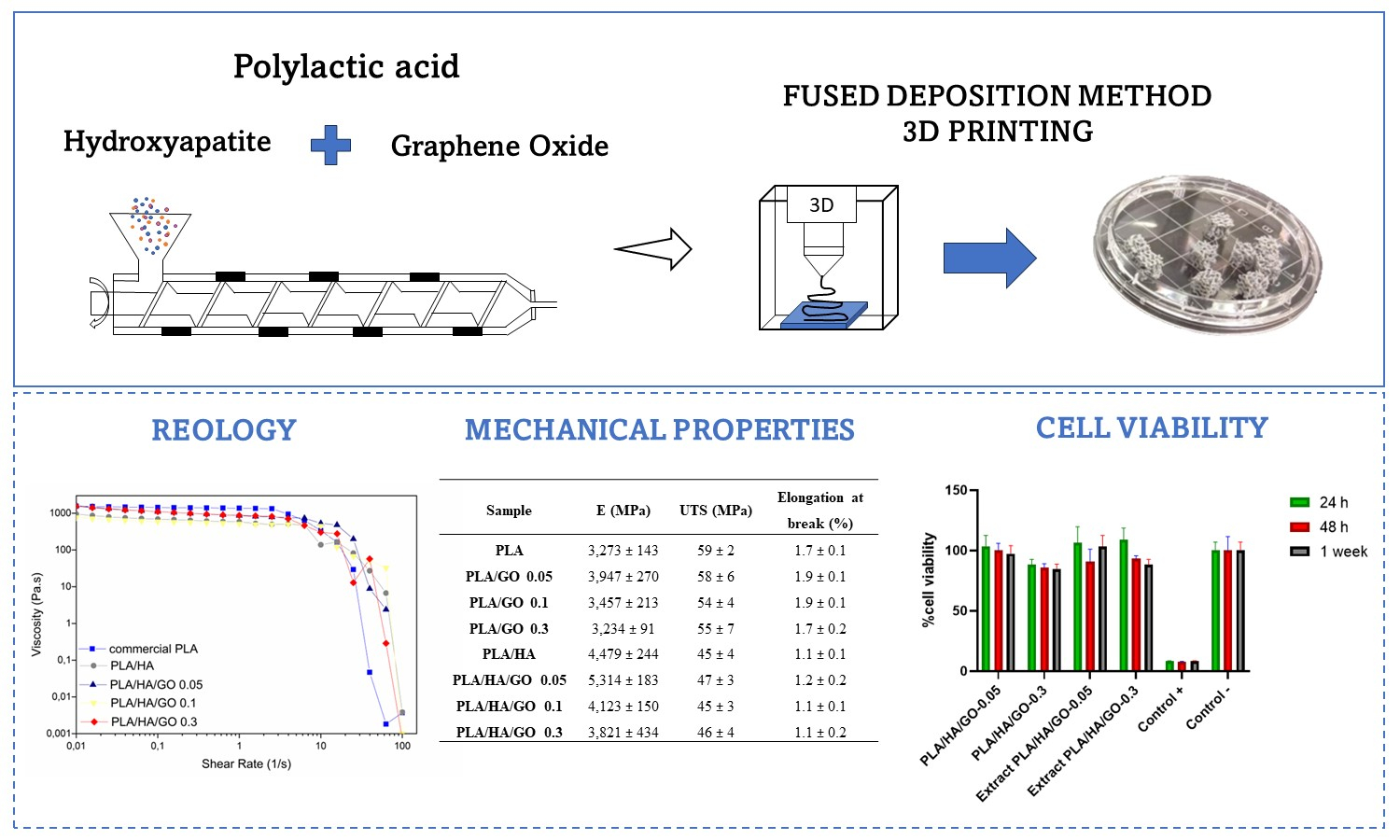
Extensive research and practical applications have been conducted within the biomaterials domain, focusing on polylactic acid (PLA) based composite. These composites have been explored for their favorable attributes, such as excellent processability, biodegradability, and bioactivity properties, but still lack mechanical properties. In this work, PLA-based nanocomposites were prepared by incorporating hydroxyapatite (HA) and graphene oxide (GO) via melt mixing (extruder). Filaments were obtained to develop scaffolds through 3D printing, utilizing the fused deposition method (FDM). The GO was produced using Hummer’s method and characterized by X-ray diffraction (XRD), thermogravimetric analysis (TGA), and Raman Spectroscopy. The composites were analyzed using Fourier-transform infrared spectroscopy (FTIR), molecular weight, contact angle measurements, and thermal, mechanical, and rheological analysis. Adding only 0.05 wt% of GO to both PLA and PLA/HA resulted in enhancements in mechanical properties, particularly tensile strength, and significantly modified the surface properties of the materials studied. Specifically, formulation involving PLA/HA/GO was the only one to exhibit rheological properties compatible with the scaffold production process via FDM. These specific formulations were also investigated regarding cytotoxicity, and the presence of GO induces good cytocompatibility in mouse osteoblast cells (MC3T3). These results suggest that FDM technology can be used to fabricate higher-performance (mechanical and biological) scaffolds for tissue engineering.
RELATED ARTICLES
Anna Morawska-Chochół, João Gabriel Antoniazzi, Murilo Daniel de Mello Innocentini
Vol. 20., No.6., Pages 579-593, 2026
DOI: 10.3144/expresspolymlett.2026.44
Vol. 20., No.6., Pages 579-593, 2026
DOI: 10.3144/expresspolymlett.2026.44
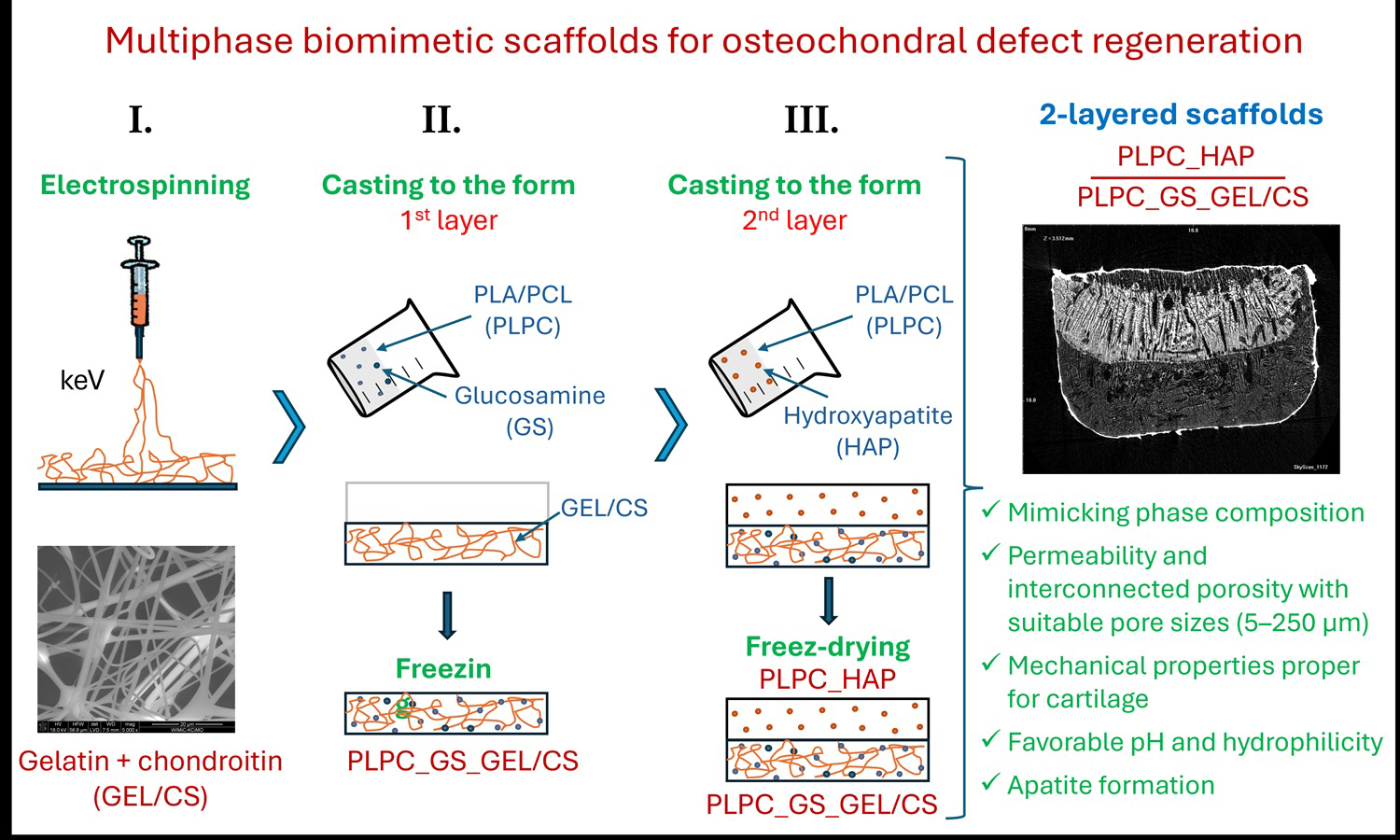
This study reports the fabrication and evaluation of layered scaffolds based on polylactide/polycaprolactone (PLPC) matrices for osteochondral-inspired designs. Bilayer architectures comprised a bone-facing layer with mineral phase (PLPC containing hydroxyapatite, HAP) and a cartilage-facing layer (PLPC containing only glucosamine sulfate (GS) or with simultaneous use of GS and an integrated electrospun gelatin/chondroitin sulfate (GEL/CS) fabric). The scaffolds exhibited interconnected porosity (55–60%) with a pore-size gradient (5–250 μm). Mechanical testing showed compressive strength up to 1 MPa and a layer-dependent compressive modulus, remaining within ranges reported for osteochondral tissues after six weeks of incubation. The layered configuration provided controlled GS release and reduced incubation-induced acidification; FTIR/XRD confirmed apatite precipitation in phosphate-buffered saline (PBS), enhanced when the GEL/CS fabric was present. After incubation, surface wettability shifted toward increased hydrophilicity, and permeability was modulated by scaffold composition, indicating tunable fluid-transport behavior. Overall, spatial separation of additives combined with a fibrous GEL/CS modifier enables control over mechanical response, release/medium evolution during incubation, and in vitro apatite-forming ability in PBS in a bilayer PLPC scaffold system.
Xuecheng Lu, Ke Feng, Zhiqiang Zhang, Xuyan Lü, Yujie Xiao, Haijun Wang
Vol. 20., No.4., Pages 371-382, 2026
DOI: 10.3144/expresspolymlett.2026.29
Vol. 20., No.4., Pages 371-382, 2026
DOI: 10.3144/expresspolymlett.2026.29
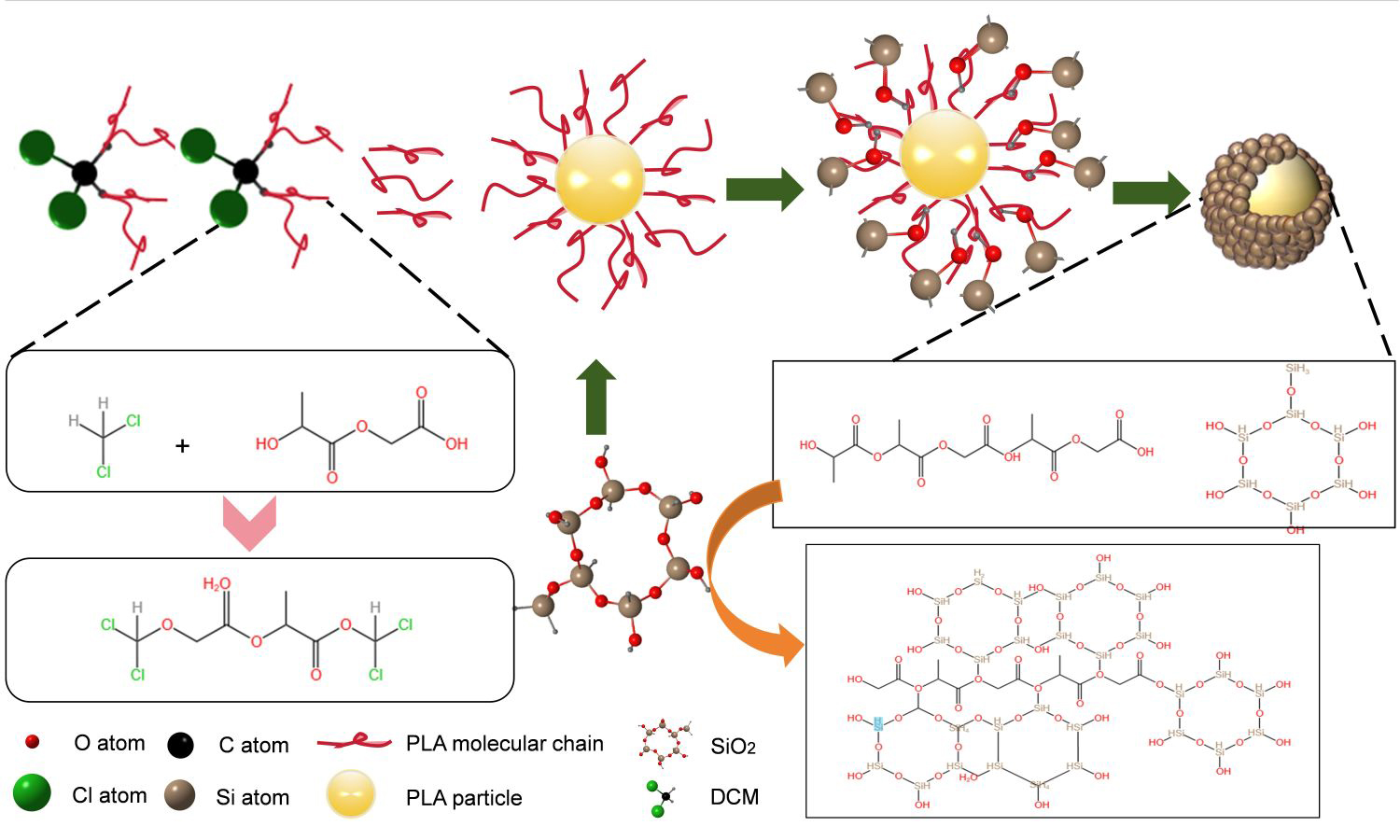
To improve the toughness, thermal stability, and melt processability of polylactic acid (PLA), this study introduced chlorinated polyethylene-polyethylene glycol (CPE-PEG, 10 wt%) into the PLA matrix and investigated the effect of the content of nano-SiO2 surface-modified with the silane coupling agent KH570 (K-SiO2) on the composite properties. Composite filaments were prepared via single-screw extrusion, and standard specimens were printed using fused deposition modeling (FDM) technology. Comprehensive characterization indicated that the composite achieved optimal mechanical properties at a K-SiO2 content of 1.5 wt%; simultaneously, the material’s thermal stability and crystallization behavior were optimized. Rheological behavior demonstrated that K-SiO2 could regulate the melt viscoelasticity, broadening the FDM processing window. This study provides an effective strategy for developing high-performance PLA composites for FDM printing.
Yi-jie Yang, Qiang Dou
Vol. 20., No.4., Pages 349-370, 2026
DOI: 10.3144/expresspolymlett.2026.28
Vol. 20., No.4., Pages 349-370, 2026
DOI: 10.3144/expresspolymlett.2026.28
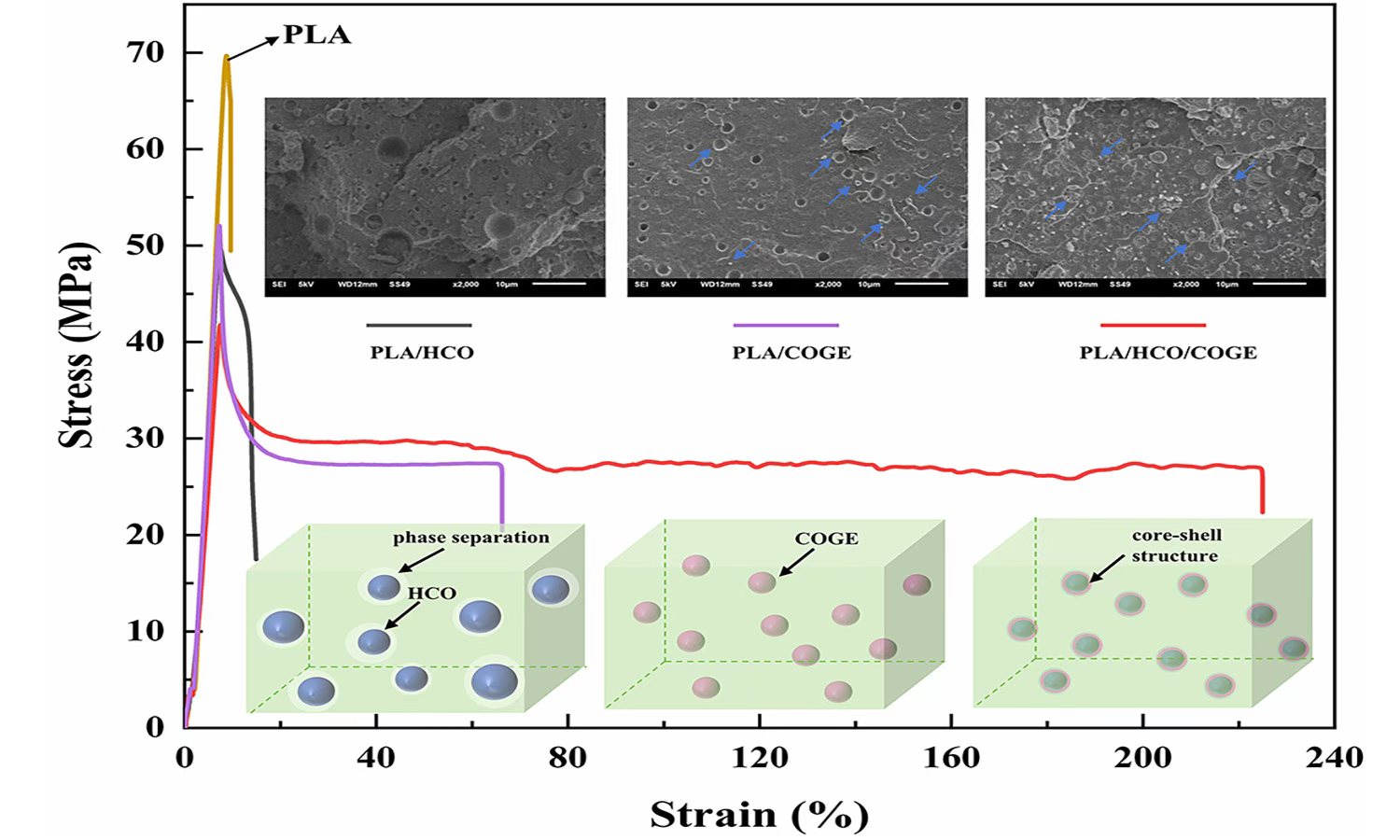
Poly(lactic acid) (PLA) has attracted much attention and shows promising applications in numerous fields. In this study, PLA was plasticized using bio-based castor oil derivatives - hydrogenated castor oil (HCO) and castor oil glycidyl ether (COGE). These eco-blends were measured using a Fourier transform infrared spectrometer, a scanning electron microscope, a contact angle test, rheology, a differential scanning calorimeter, thermogravimetry, polarized optical microscopy, and a tensile test, respectively. The findings show that a core-shell morphology of COGE-HCO encapsulation is formed in PLA matrix, and the hydrogen bonding interaction and ring-opening chemical reaction among functional groups of the components greatly improve the compatibility, ductility, cold crystallization ability, and thermostability of the eco-blends, but the melt crystallization ability is hindered. The incorporation of HCO improves the hydrophobicity and oleophobicity of the eco-blends. Due to the combined effect of HCO and COGE, the melt viscosity reduces, and the Newtonian behavior enhances; the nucleation density and spherulitic growth of PLA increase. The strain at break of the PLA/HCO/COGE (90/7.5/2.5) blend reached 221%, which is 22.6 times higher than that of the neat PLA. These eco-blends present appropriate rheological, thermal, and mechanical properties, showing application scenarios in biodegradable packaging and disposable appliances.
Elumalai Vengadesan, Swaminathan Muralidharan, Dhanjit Das, Thirugnanasambandam Arunkumar
Vol. 19., No.8., Pages 822-842, 2025
DOI: 10.3144/expresspolymlett.2025.63
Vol. 19., No.8., Pages 822-842, 2025
DOI: 10.3144/expresspolymlett.2025.63
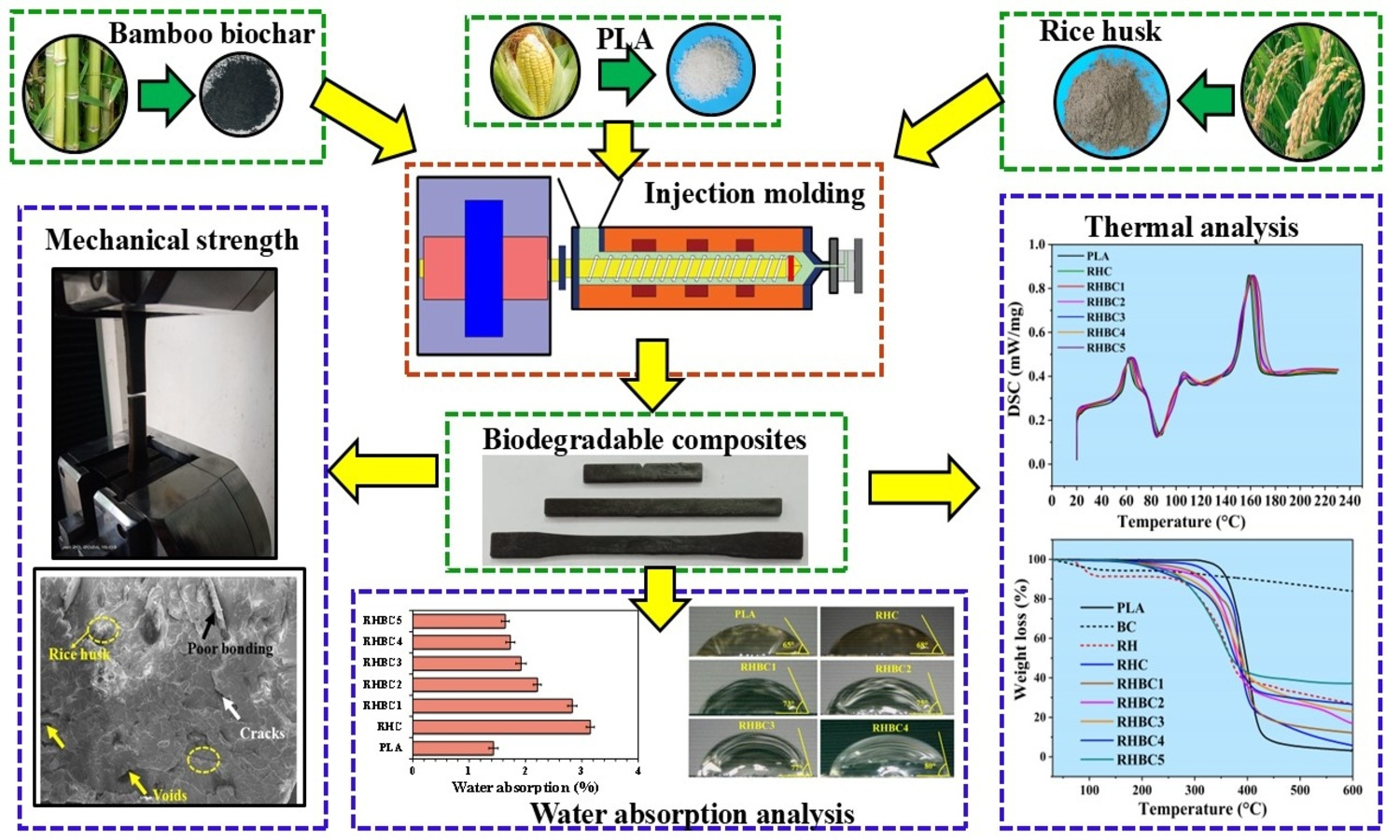
The growing need for sustainable materials has stimulated research into eco-friendly composites, with biochar emerging as an important reinforcement in polymer matrices. Biochar is a carbon-rich material produced by pyrolyzing organic biomass, offering various benefits over traditional fillers, including sustainability, waste reduction, and carbon sequestration. This study explores the effects of bamboo biochar as a hybrid reinforcement on the properties of polylactic acid (PLA)-rice husk composites. The present hybrid composites are prepared by varying the bamboo biochar from 5–25% and have better mechanical properties than PLA and its composite reinforced with a rice husk filler. The tensile, flexural, and compressive strengths of 51.5, 166.0, and 77.5 MPa are measured for the biochar percentage of 10%, representing increases of 73.1, 150.0, and 58.2% compared to PLA, and 158.2, 98.6, and 31% compared to the PLA composite with rice husk. Higher tensile and flexural moduli of 1.46 and 7.34 GPa are observed for 10 and 15%, respectively. However, the impact strength decreases with higher biochar content due to increased rigidity. The material’s hardness increases at higher biochar content due to enhanced stiffness. Thermal transition and degradation points rise due to increased crystallinity from the biochar reinforcement’s nucleation effect. Additionally, the hydrophobic biochar reinforcement reduces water absorption of PLA composite from 3.2 to 1.6%.
Syaifullah Muhammad, Rahul Dev Bairwan, H.P.S. Abdul Khalil, Marwan M, Mohd Syukri Baharudin, Mardiana Idayu Ahmad
Vol. 19., No.6., Pages 556-567, 2025
DOI: 10.3144/expresspolymlett.2025.42
Vol. 19., No.6., Pages 556-567, 2025
DOI: 10.3144/expresspolymlett.2025.42
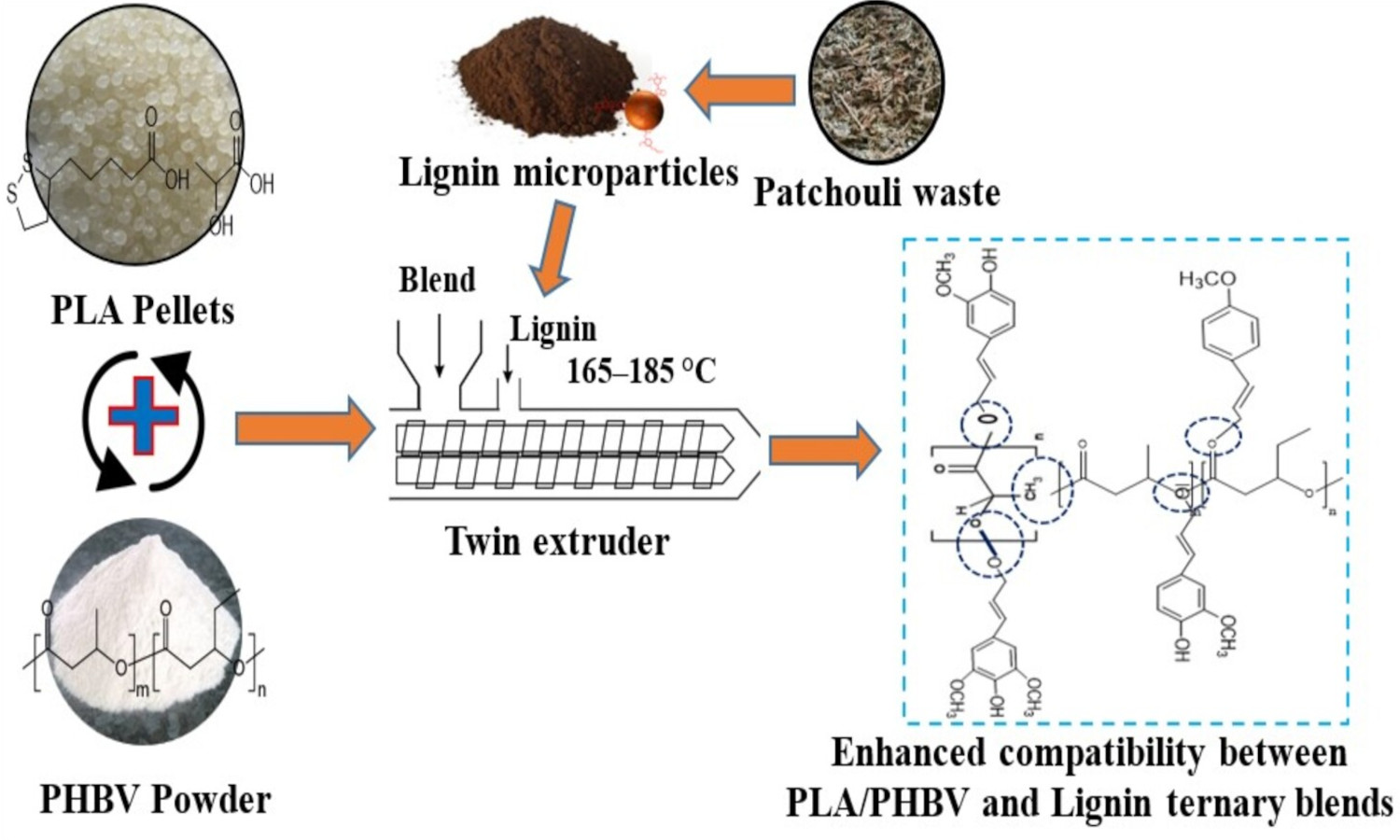
The study investigates a ternary biopolymer blend composed of biopolymers polylactic acid (PLA), polyhydroxybutyrate- co-valerate (PHBV), and lignin extracted from patchouli fiber waste for sustainable packaging applications. A PLA: PHBV blend (70:30) was enhanced by incorporating hydrophobic lignin as a filler in varying loadings of 0, 3, 6, 9, and 12 wt%. The ternary blend was prepared using twin-screw extrusion process, pelletized, and compression-molded into specimens. Comprehensive characterization of the ternary blend included evaluations of water barrier, mechanical, functional, thermal, and morphological properties. Results demonstrated that lignin addition notably improved the compatibility between PLA and PHBV, leading to enhanced barrier performance, mechanical strength, and thermal stability. SEM morphology confirmed improved interfacial adhesion due to hydrophobic nature of lignin, which facilitated better dispersion at lower filler loadings. However, at 12 wt% lignin, property reductions were observed, attributed to lignin agglomeration and poor dispersion. Optimal performance was achieved at 9 wt% lignin loading, offering a balance of improved properties without compromising processability or structural integrity. This study highlights the potential of the PLA/PHBV/lignin ternary blend as a viable, eco-friendly material for sustainable packaging, showcasing improved functionality and environmental compatibility compared to conventional polymers.