Engineering highly aligned continuous nanofibers via electrospinning: A comprehensive study on collector design, electrode geometry, and collector speed
Mehmet Selim Demirtaş , Mrinal C. Saha
, Mrinal C. SahaVol. 18., No.8., Pages 851-867, 2024
DOI: 10.3144/expresspolymlett.2024.63
DOI: 10.3144/expresspolymlett.2024.63
Corresponding author: Mehmet Selim Demirtaş 
GRAPHICAL ABSTRACT
ABSTRACT
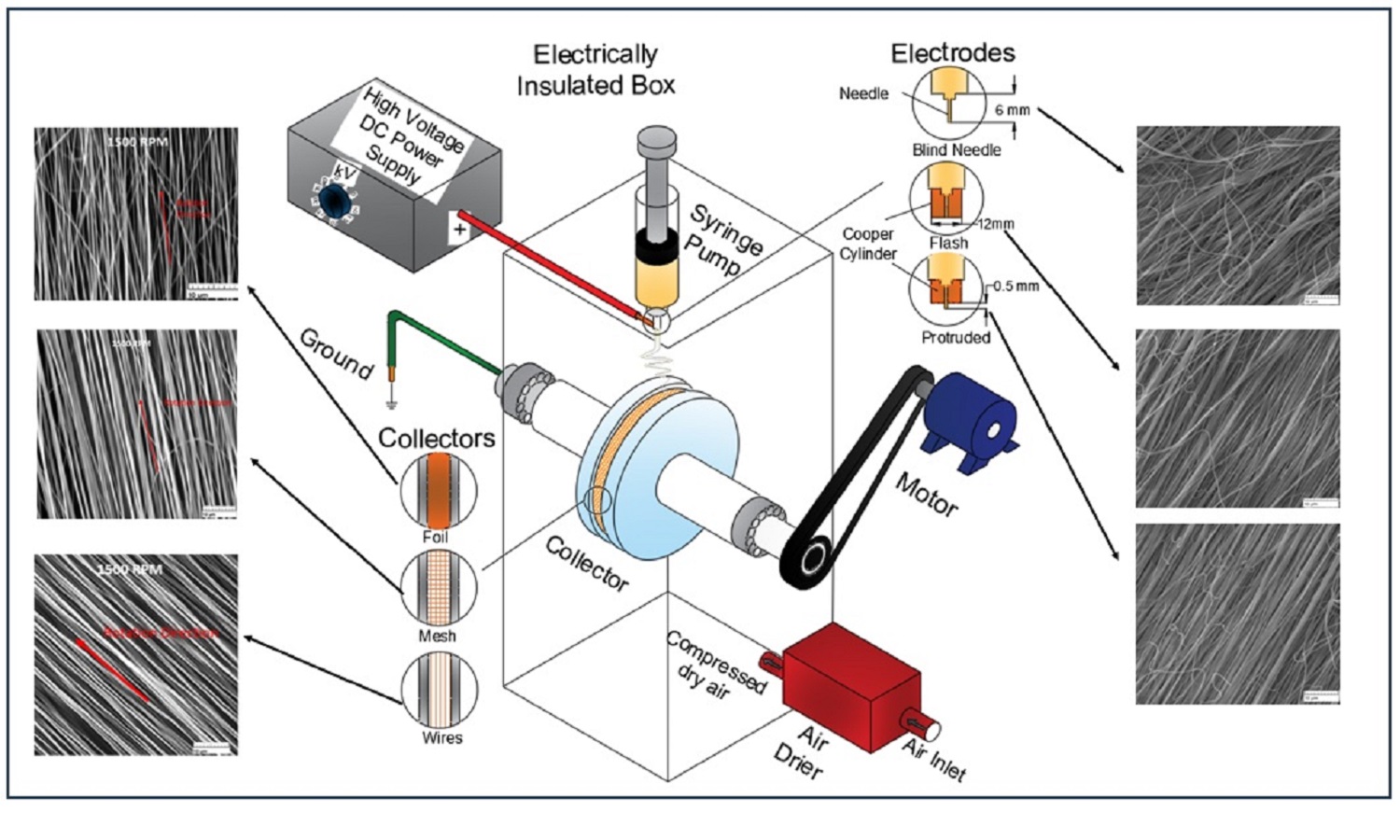
Nanomaterials, particularly nanofibers produced through electrospinning, have garnered significant attention due to their unique properties and diverse applications. This research explores the influence of collector design, electrode geometry, and collector speed on the properties of electrospun polyacrylonitrile (PAN) nanofibers. Finite element analysis (FEA) was employed to simulate electric fields, revealing the impact of collector geometry on field intensity. The experimental setup, enclosed in an isolated chamber, employed various collector types and electrode configurations. Scanning electron microscope (SEM) analysis showcased the effect of collector speed on fiber alignment and diameter. Furthermore, FEA simulations elucidated the role of electrode geometry and voltage in shaping the electric field, impacting fiber properties. The study introduces a novel, in-house method for producing highly aligned nanofibers and provides insights into optimizing electrospinning parameters for enhanced fiber properties. A testing protocol is devised to minimize surface damage when conducting mechanical tests on nanofiber films, employing a dynamic mechanical analyzer (DMA). Mechanical testing demonstrated the correlation between alignment and tensile strength. Overall, this research contributes valuable insights for tailoring electrospinning processes for tissue engineering and energy storage.
RELATED ARTICLES
Eva Kuželová Košťáková
Vol. 20., No.1., Pages 1-2, 2026
DOI: 10.3144/expresspolymlett.2026.1
Vol. 20., No.1., Pages 1-2, 2026
DOI: 10.3144/expresspolymlett.2026.1
This is an editorial article. It has no abstract.
Jordi Puiggalí
Vol. 19., No.12., Pages 1214-1215, 2025
DOI: 10.3144/expresspolymlett.2025.89
Vol. 19., No.12., Pages 1214-1215, 2025
DOI: 10.3144/expresspolymlett.2025.89
This is an editorial article. It has no abstract.
Mark Shneider, Xiaomeng Sui, Iddo Pinkas, Ulyana Shimanovich, Israel Greenfeld, Daniel Wagner
Vol. 19., No.10., Pages 1012-1026, 2025
DOI: 10.3144/expresspolymlett.2025.76
Vol. 19., No.10., Pages 1012-1026, 2025
DOI: 10.3144/expresspolymlett.2025.76
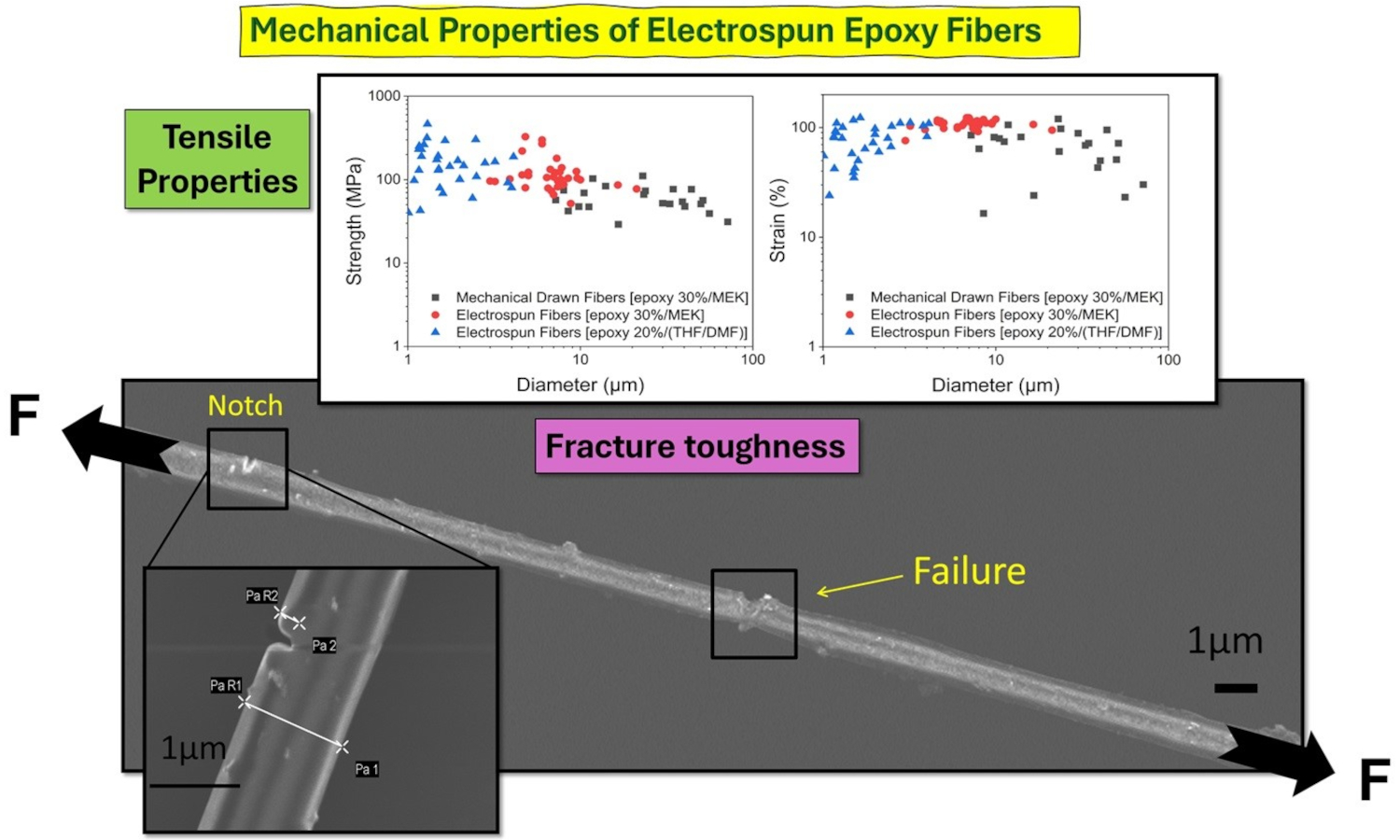
Electrospinning is a widely used technique for manufacturing nanofibers from polymers. The formation of continuous fibers during the drawing of a viscous solution typically depends on entanglements between polymer chains, making thermoplastics the preferred choice. In this study, we have shown that thermosetting polymers such as epoxy, which have crosslinked covalent bonds, can also be electrospun. The resulting fibers have diameters ranging from 150 nm to 6 μm. Tensile mechanical properties of fibers with diameters varying between 410 nm and 4 μm are compared with those of molded epoxy bulk. The electrospun fibers exhibit approximately 555% higher strength, 300% greater stiffness, and a strain of about 109% compared to the equivalent properties of bulk epoxy. When compared with brittle molded bulk, these fibers showed ductile properties. We also observed a correlation between the fiber diameter and the mechanical properties. The molecular morphology of the fibers was monitored and analyzed using polarized micro-Raman spectroscopy to detect molecular orientation. A comparison with epoxy fibers of different diameters from previous studies was conducted to better understand the size effect. This study shows, explains and models the evolution of epoxy molecular morphology from the solution (soft matter) to fiber (solid-state), explaining the transition from brittle to ductile in epoxy fibers, and clarifying the molecular mechanisms that lead to improved mechanical properties.
Timothy K. Mulenga, Sanjay Mavinkere Rangappa, Suchart Siengchin
Vol. 19., No.5., Pages 470-493, 2025
DOI: 10.3144/expresspolymlett.2025.35
Vol. 19., No.5., Pages 470-493, 2025
DOI: 10.3144/expresspolymlett.2025.35
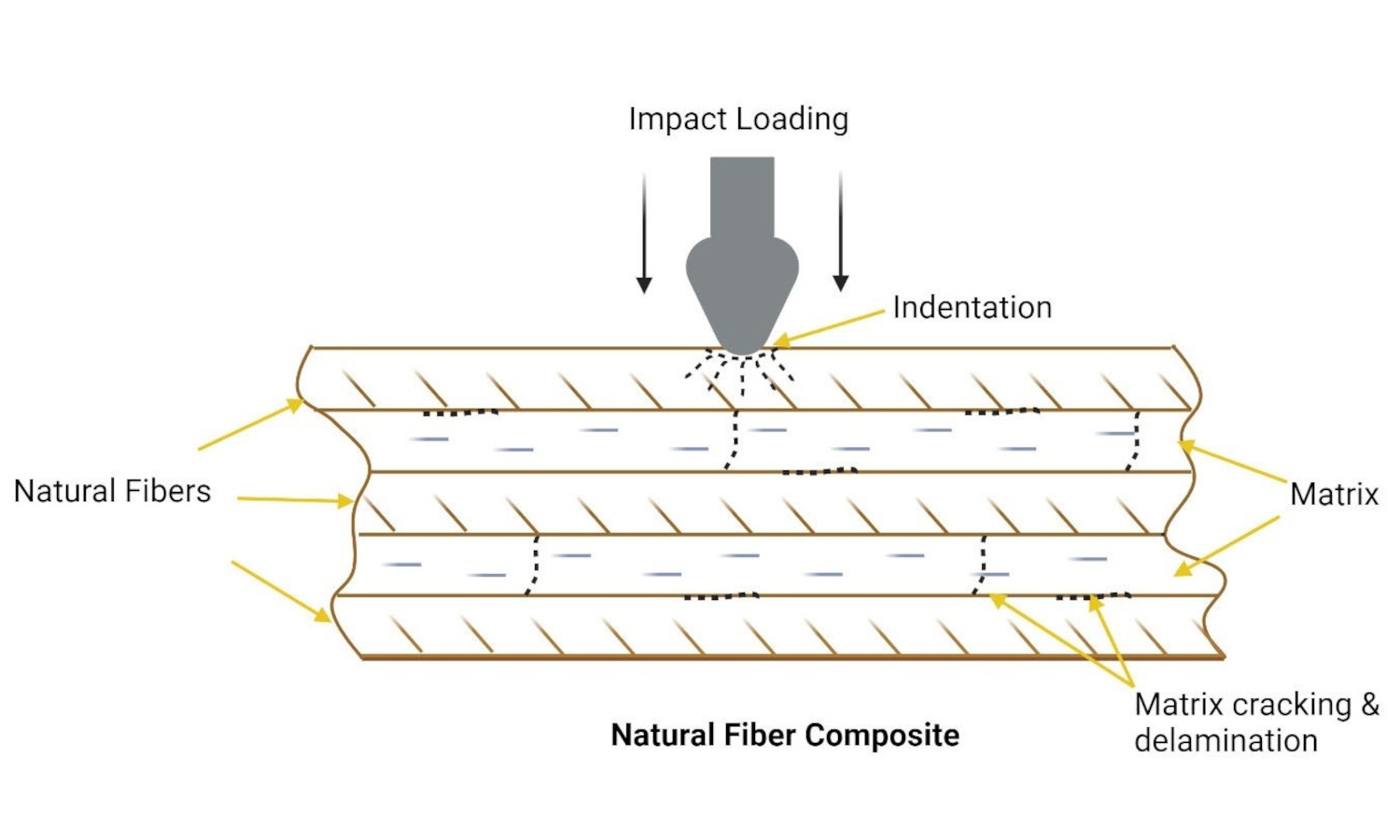
Natural fiber composites (NFC) have emerged as promising sustainable alternatives to conventional synthetic materials due to the increasing environmental concerns and unsustainable reliance on depleting petroleum resources. NFCs offer various advantages, such as reduced costs, low density, biodegradability, and good specific mechanical properties. However, their impact resistance remains a crucial factor that greatly influences their suitability for sectors like automotive, construction, and aerospace, where impact loading is prevalent. This review comprehensively analyzes the impact resistance of NFCs, aiming to elucidate the factors governing their behavior under varying impact loading conditions. The study delves into the influence of key parameters such as fiber type, matrix properties, and fiber-matrix adhesion on the impact response of NFCs. Different impact loading methods, including low-velocity impact and high-velocity impact, are examined, highlighting their distinct effects on NFC failure mechanisms. Furthermore, the review investigates the effectiveness of various methods employed to enhance the impact strength of NFCs. Finally, it identifies current challenges and limitations associated with impact-resistant NFCs and outlines potential future research directions to overcome these obstacles and unlock the full potential of these sustainable materials.
Quentin Watel, Aurélie Cayla, Fabien Salaün, François Boussu
Vol. 19., No.5., Pages 494-503, 2025
DOI: 10.3144/expresspolymlett.2025.36
Vol. 19., No.5., Pages 494-503, 2025
DOI: 10.3144/expresspolymlett.2025.36
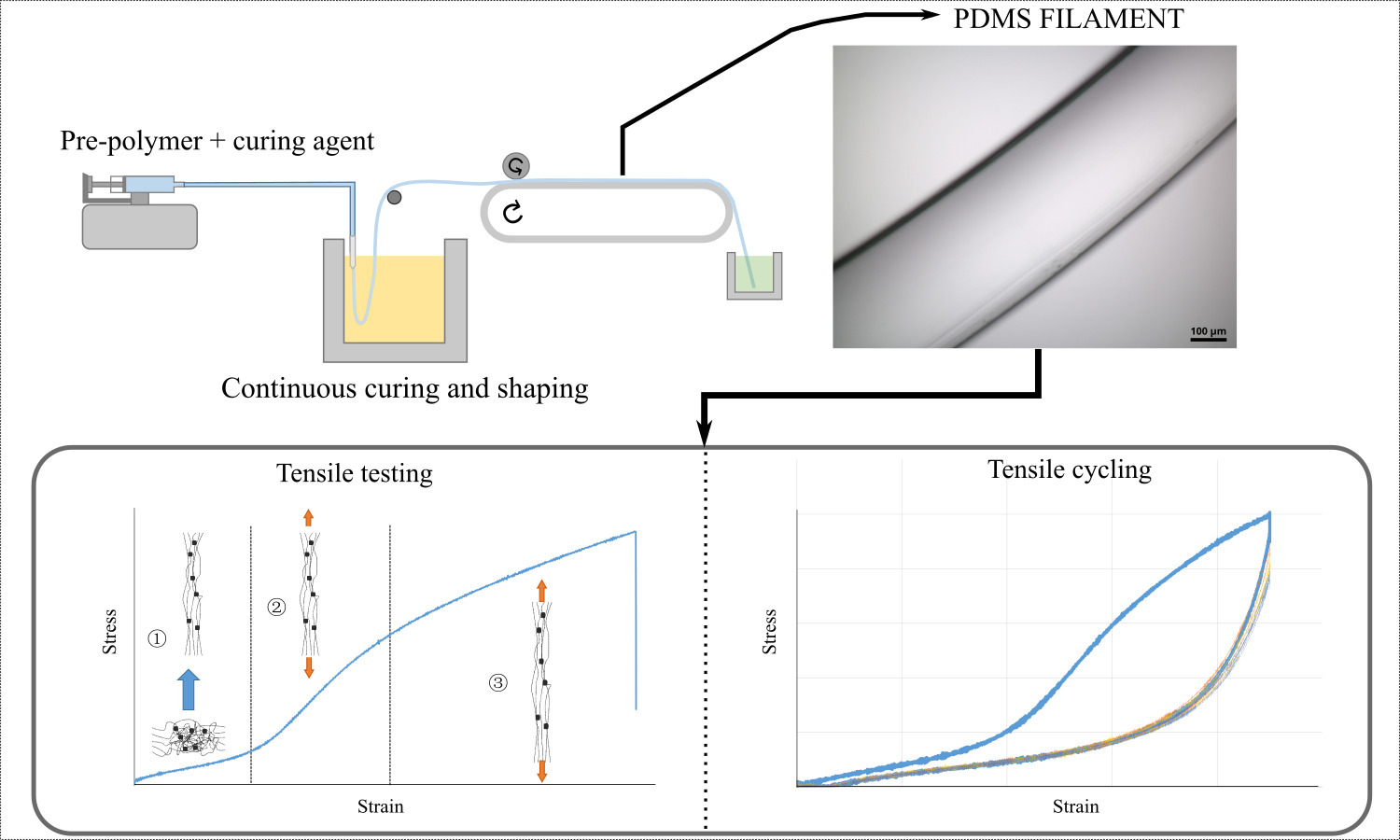
In this work, a PDMS spinning technique is developed and enables the continuous production of a filament with a circular cross-section (~500 μm diameter). The production of continuous silicone polymer filaments can be useful in the textile field to provide new properties in applications such as weaving, knitting or composite reinforcement. The method involves injecting the pre-polymer and curing agent mixture into a heated oil bath (202–215 °C) to simultaneously shape and cure the PDMS. The morphological and mechanical properties of the filament are studied regarding the production parameters (formulation, needle diameter, bath temperature, conveyor belt speed). The most homogeneous filament is produced at the highest temperature (215°C) and conveyor belt speed (13.6 m∙min–1). When subjected to cyclic mechanical stress, the PDMS filament produced exhibits stable mechanical behavior, making it suitable for a wide range of applications.