Preparation and characterization of novel nanofibrous composites prepared by electrospinning as potential nerve guidance conduits (NGCs)
Aleksandra Sierakowska-Byczek , Julia Radwan-Pragłowska, Łukasz Janus, Tomasz Galek, Karol Łysiak, Mirosław Tupaj, Dariusz Bogdał
, Julia Radwan-Pragłowska, Łukasz Janus, Tomasz Galek, Karol Łysiak, Mirosław Tupaj, Dariusz BogdałVol. 18., No.8., Pages 819-834, 2024
DOI: 10.3144/expresspolymlett.2024.61
DOI: 10.3144/expresspolymlett.2024.61
Corresponding author: Aleksandra Sierakowska-Byczek 
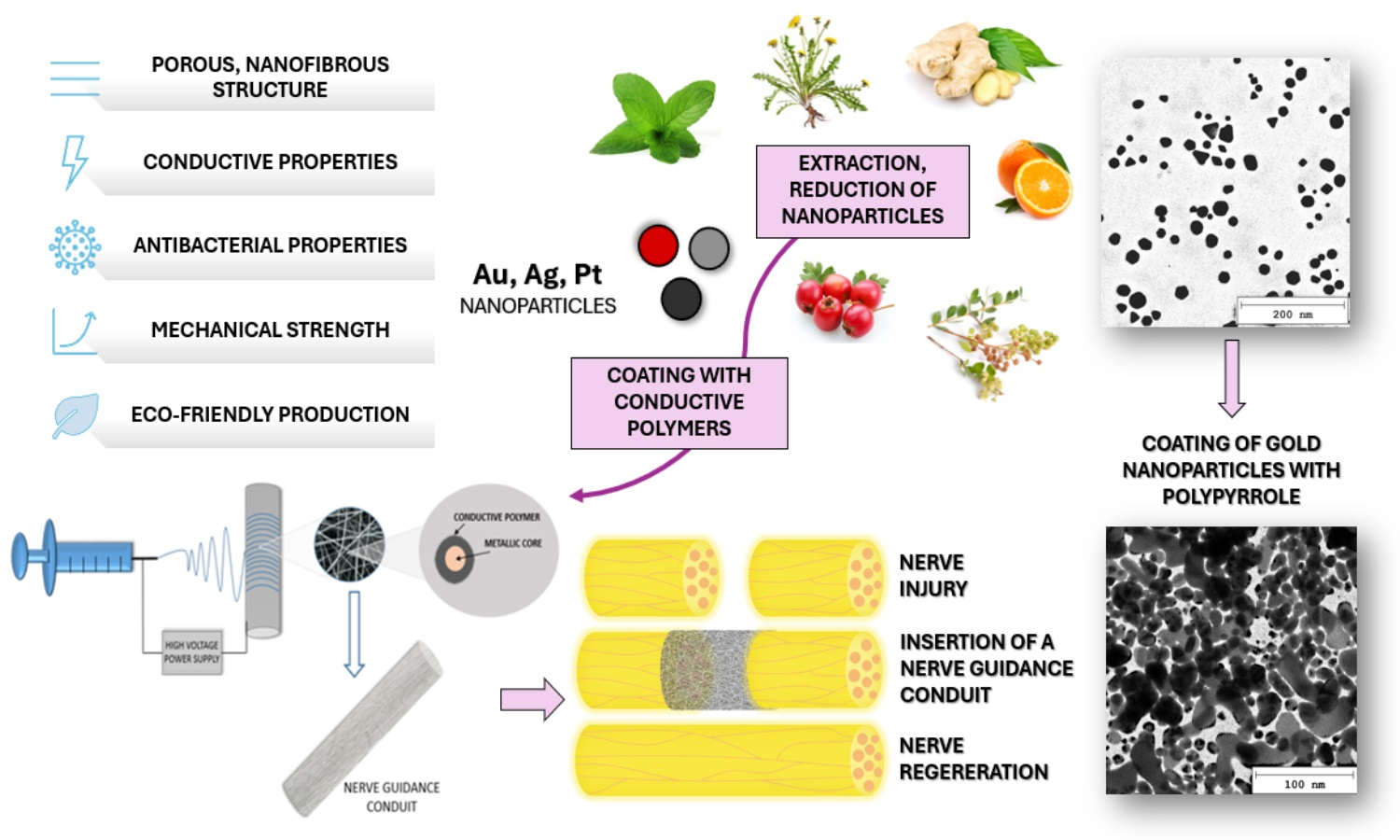
GRAPHICAL ABSTRACT
ABSTRACT
Appropriate protection and guiding are crucial during peripheral nerves repair. New generation nerve guidance conduits (NGCs) should not only provide mechanical support for the damaged nerve but also support healing processes. One of the most promising tissue regeneration applications is fibrous biomaterials since they are characterized by high porosity, flexibility, and strength. Additionally, they enable cell adhesion and proliferation. In this study, novel fibrous nanocomposites were obtained by applying the electrospinning technique, using polylactic acid (PLA) as a polymeric matrix which was further modified with metallic nanoparticles coated with conductive polymers. Such an approach resulted in the obtainment of biomaterials with a potential ability to conduct nerve impulses. The chemical structure of the obtained composites, as well as the morphology of ready products and separate nanocomponents, were investigated using Fourier-transform infrared spectroscopy (FTIR), transmission electron microscope (TEM) and scanning electron microscope (SEM) techniques. Furthermore, conductive and swelling properties in various media were determined. Finally, biomaterials were confirmed to be non-cytotoxic to L929 mouse fibroblasts and 1321N1 human glial cells. Based on the presented results, it can be concluded that nanofibrous nerve guidance conduits have all the key properties in the process of peripheral nerve regeneration and may constitute an important step in novel NGCs development.
RELATED ARTICLES
György Marosi
Vol. 20., No.8., Pages 761-762, 2026
DOI: 10.3144/expresspolymlett.2026.57
Vol. 20., No.8., Pages 761-762, 2026
DOI: 10.3144/expresspolymlett.2026.57
This is an editorial article. It has no abstract.
Simran Bansal, Neha Jain, Divya Nagri Bhan, Pankaj Dhawan
Vol. 20., No.7., Pages 698-707, 2026
DOI: 10.3144/expresspolymlett.2026.53
Vol. 20., No.7., Pages 698-707, 2026
DOI: 10.3144/expresspolymlett.2026.53
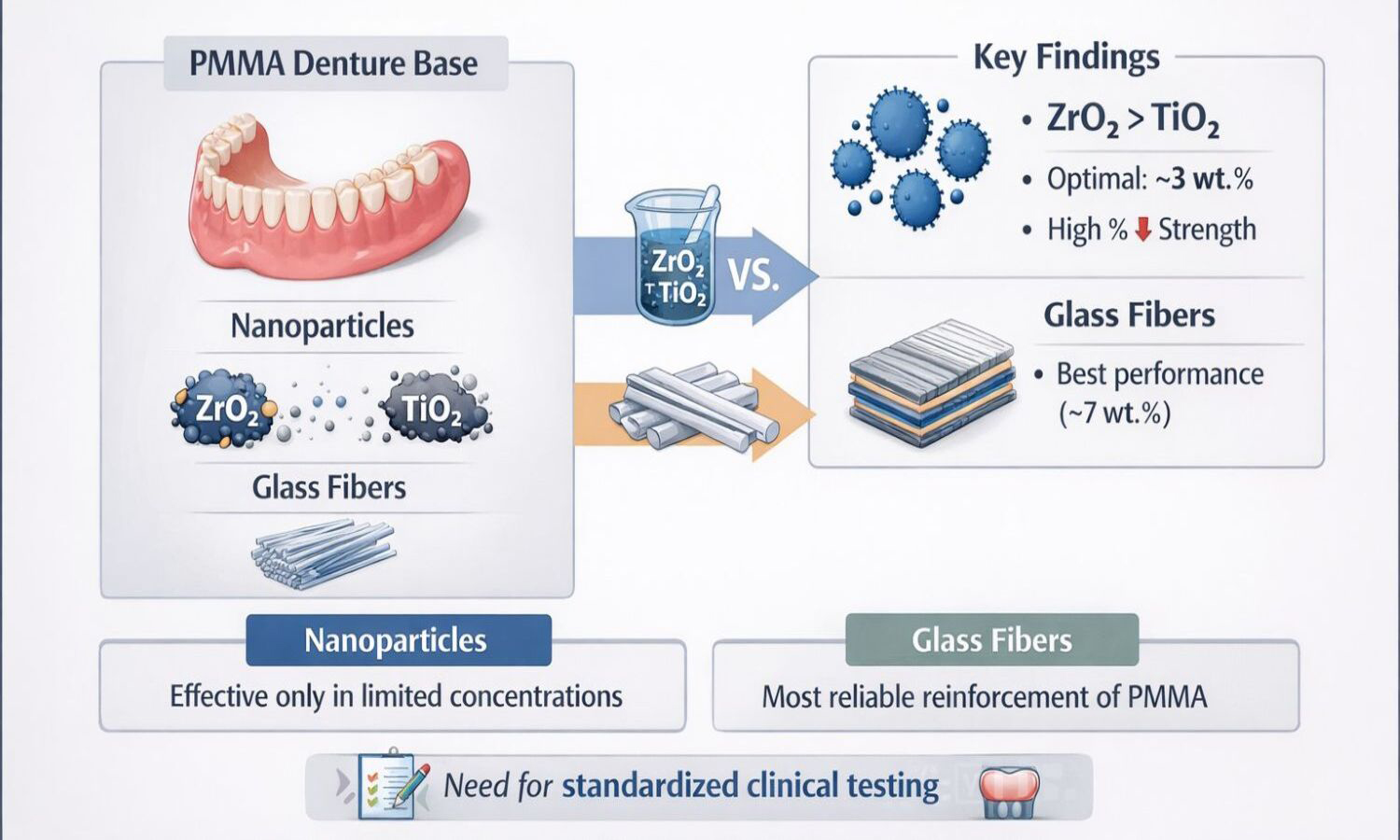
Polymethyl methacrylate (PMMA) remains the material of choice for denture base fabrication; however, its relatively low flexural and impact strength predisposes dentures to fracture during function and accidental loading. Various reinforcement strategies, particularly metal oxide nanoparticles and glass fibres, have been investigated in vitro, although comparative evidence remains limited and methodologically heterogeneous. This systematic review critically compared the effects of zirconium oxide (ZrO2) and titanium oxide (TiO2) nanoparticles versus glass fiber reinforcement on the flexural and impact strength of PMMA denture base resins. The review was conducted in accordance with PRISMA 2020 guidelines and a systematic search of PubMed, Scopus, EBSCOhost, and Google Scholar identified eligible in vitro studies published between 2014 and 2024. Five studies met the inclusion criteria. Glass fiber reinforcement consistently demonstrated the greatest improvement in flexural and impact strength, with progressive enhancements reported up to approximately 7 wt%fiber content. Among nanoparticle reinforcements, ZrO2 showed superior mechanical performance compared with TiO2, with optimal reinforcement observed at concentrations around 3 wt%, while higher concentrations were associated with reduced strength due to particle agglomeration and poor dispersion. Considerable heterogeneity was observed across studies in terms of PMMA type, reinforcement concentration, specimen preparation and mechanical testing protocols, precluding meta-analysis. Overall, the available in vitro evidence indicates that glass fiber reinforcement provides the most reliable mechanical enhancement of PMMA denture base resins, whereas nanoparticle-based reinforcement offers benefits only within narrow concentration ranges, underscoring the need for standardized methodologies and clinically relevant testing in future research.
Alessandro Pegoretti
Vol. 20., No.7., Pages 662-663, 2026
DOI: 10.3144/expresspolymlett.2026.49
Vol. 20., No.7., Pages 662-663, 2026
DOI: 10.3144/expresspolymlett.2026.49
This is an editorial article. It has no abstract.
Soni Thakur, Amal M. Sindi, Rahul Dev Bairwan, Rasha A. Mahmoud, Eman Alfayez, Nurul Fazita Mohammad Rawi, Kanchan Jha, H.P.S. Abdul Khalil
Vol. 20., No.2., Pages 197-214, 2026
DOI: 10.3144/expresspolymlett.2026.16
Vol. 20., No.2., Pages 197-214, 2026
DOI: 10.3144/expresspolymlett.2026.16
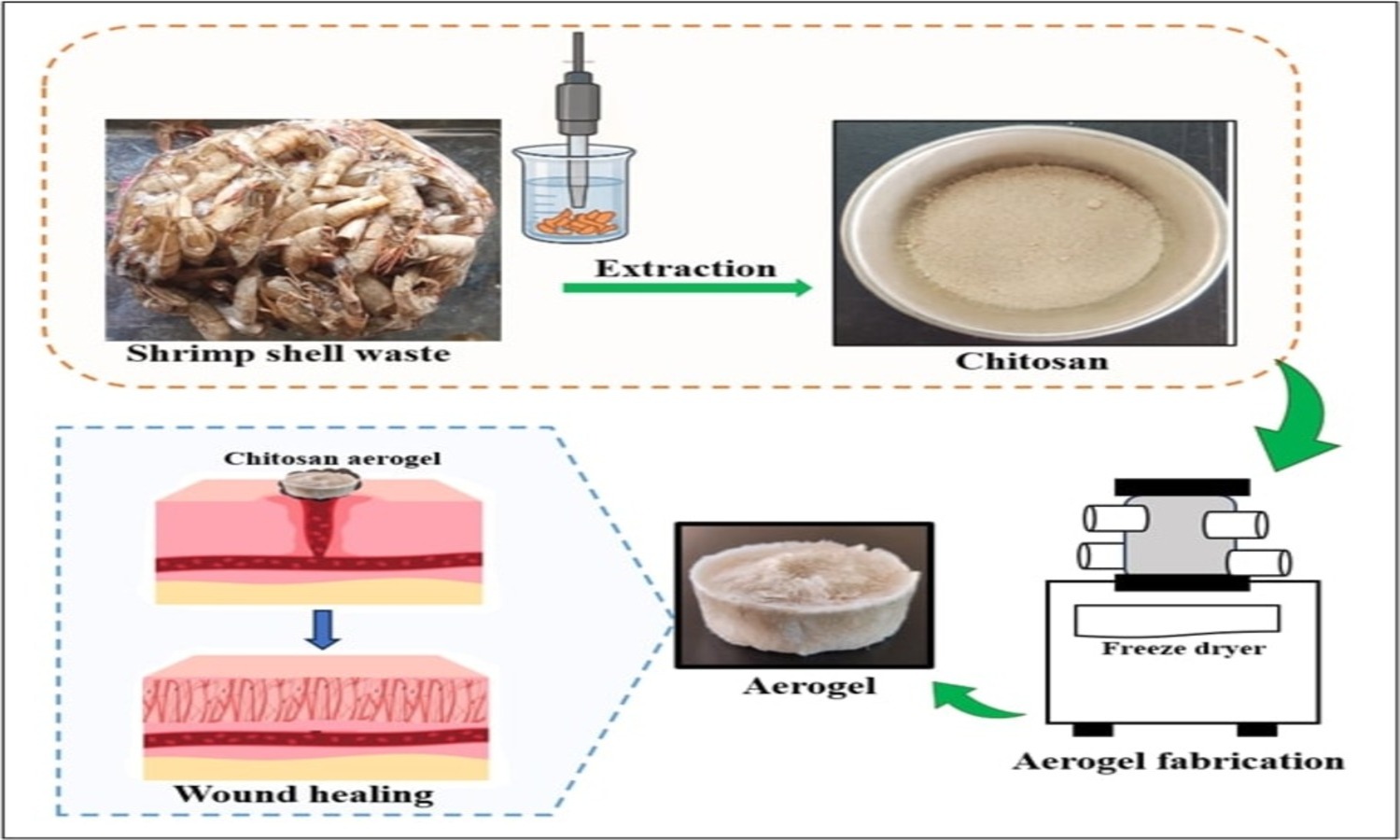
This research presents an eco-friendly approach for extracting chitosan from shrimp shell waste through ultrasound-assisted extraction (UAE) to prepare biocompatible aerogel scaffolds for biomedical applications. The study investigates the influence of various ultrasonic treatment times (10, 20, 30, 40 min) on the yield and structural and physicochemical properties of the extracted chitosan via characterization using Fourier-transform infrared spectroscopy (FTIR), scanning electron microscopy (SEM), and thermogravimetric analysis (TGA). Among the tested conditions, the 30 min UAE-treated chitosan aerogels showed optimal porosity and structural integrity. Biocompatibility of the aerogels was evaluated, and the results confirmed their non-cytotoxic nature. The bioactivity of the chitosan aerogels was evaluated in terms of their in vitro wound closure ability and antibacterial properties. The aerogels demonstrated a wound closure rate of around 51% after 72 h, significantly higher than the untreated control (37%). In addition, they exhibited clear antibacterial activity against Escherichia coli and Staphylococcus aureus. This sustainable extraction and fabrication method not only adds value to marine waste but also produces functional biomaterials with potential applications in wound healing, tissue engineering, and regenerative medicine, supporting global efforts toward sustainability and circular bioeconomy.
Eva Kuželová Košťáková
Vol. 20., No.1., Pages 1-2, 2026
DOI: 10.3144/expresspolymlett.2026.1
Vol. 20., No.1., Pages 1-2, 2026
DOI: 10.3144/expresspolymlett.2026.1
This is an editorial article. It has no abstract.