
Linear Drucker-Prager yield criterion calibration for polypropylene under multiaxial load
Adam Kasprzak
Vol. 19., No.2., Pages 192-200, 2025
DOI: 10.3144/expresspolymlett.2025.14
DOI: 10.3144/expresspolymlett.2025.14
Corresponding author: Adam Kasprzak 
GRAPHICAL ABSTRACT
ABSTRACT
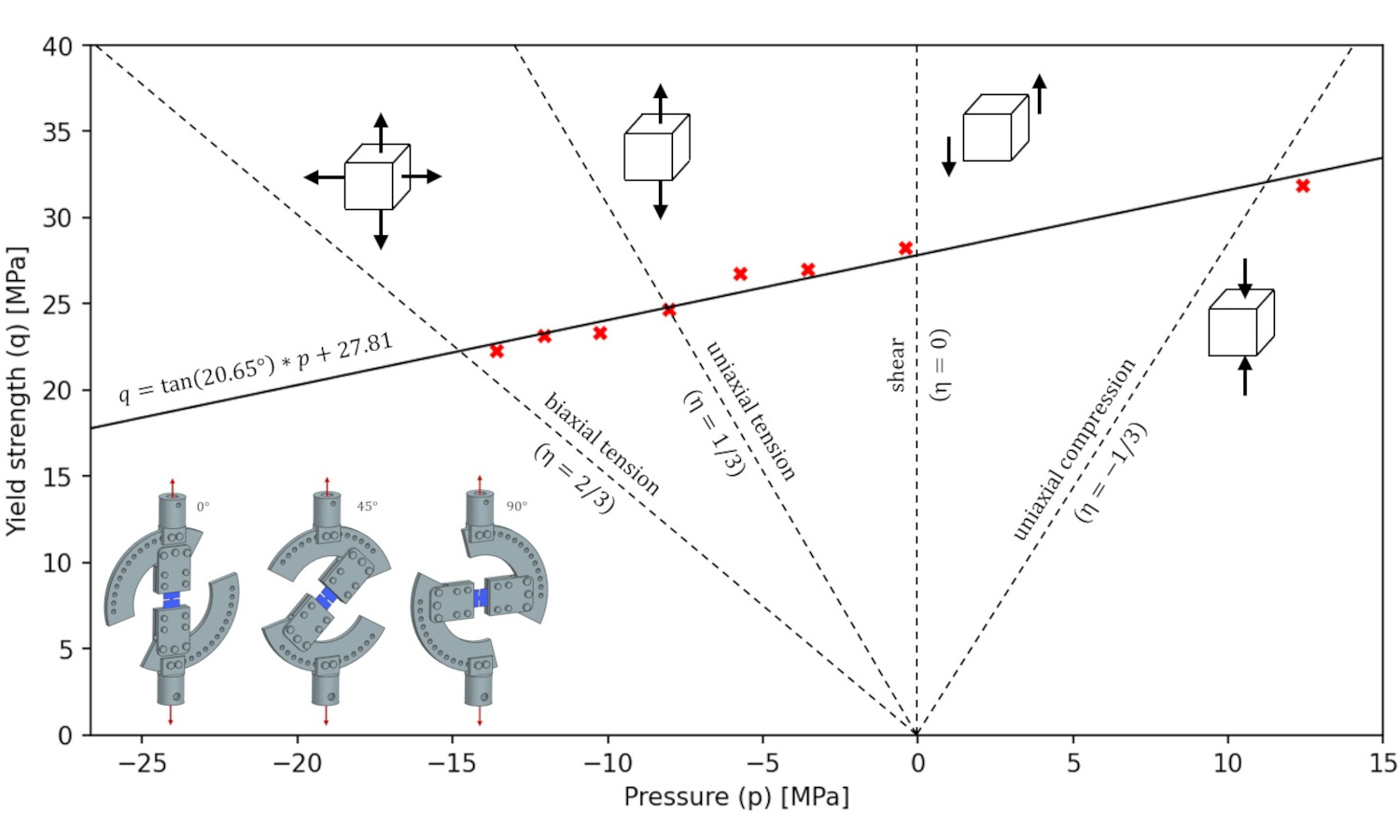
This study focuses on calibrating the linear Drucker-Prager yield criterion for polypropylene under multiaxial loading conditions, using the Arcana fixture to achieve a wide range of triaxiality states. The Drucker-Prager criterion has been adapted for polymers, composites, and metals due to its ability to reflect the influence of hydrostatic pressure on yield stress. This study employs the Arcana fixture, which allows for testing flat plate samples under various angles, thereby simulating different stress states from pure shear to biaxial tension. Additionally, uniaxial compression tests were conducted to extend the range of triaxiality. The material used in this study is Sabic 83MF10, a polypropylene polymer. Samples were prepared by injection moulding and cut to specific dimensions. Tests were performed using a universal testing machine with the Arcana fixture, and the results were analysed to determine the yield strength, pressure, and triaxiality for each sample. The results showed a linear relationship between von Mises stress and hydrostatic pressure, with a friction angle (β) of 20.65° and material cohesion (d) of 27.81. The numerical simulations in Abaqus confirmed the validity of the Drucker- Prager model, accurately reflecting the moment of yielding for the tested samples.
RELATED ARTICLES
Junxiu Xue, Kaituo Fang, Zhenchun Xu, Huiguang Bian, Yu Wang, Yongming Zhang
Vol. 20., No.5., Pages 489-500, 2026
DOI: 10.3144/expresspolymlett.2026.37
Vol. 20., No.5., Pages 489-500, 2026
DOI: 10.3144/expresspolymlett.2026.37
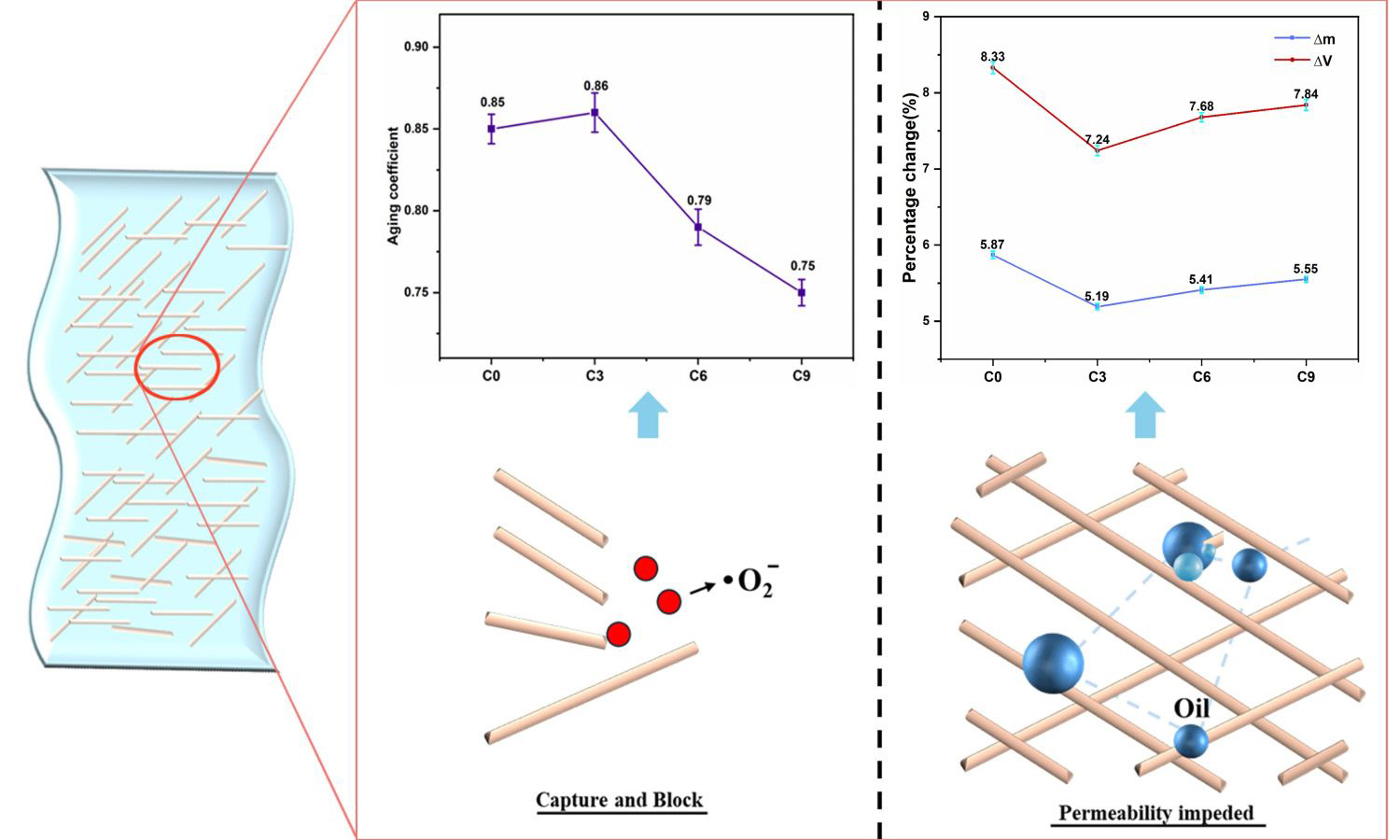
This study investigates the effects of renewable chopped cellulose fiber (CCleF) on the physical and mechanical properties, oil resistance, and thermal-oxidative aging behavior of acrylonitrile-butadiene rubber (NBR), aiming to determine the optimal filler content. CCleF/NBR composites with varying CCleF loadings were prepared and systematically characterized through analyses of vulcanization behavior, three-dimensional morphology, mechanical properties, thermal-oxidative aging, and oil resistance. The results indicate that the composite with 3 phr CCleF exhibits uniform fiber dispersion and optimal overall performance, showing enhanced processability, a reduced vulcanization time, and improved physical and mechanical properties. After thermal-oxygen aging, the composite demonstrated superior stability: the percentage change in tensile modulus, rebound resilience, and DIN abrasion decreased significantly by 13.73, 49.82, and 74.9%, respectively, while the aging coefficient reached 0.86. Notably, this composite also exhibited excellent oil resistance, with a volume expansion rate of 7.24%, which is 13.1% lower than that of unfilled NBR. Correspondingly, the tensile product’s retention rate decreased by 37.72%, while rebound resilience and abrasion resistance improved. This study demonstrates that incorporating 3 phr CCleF is a practical approach to achieving high-performance NBR, providing a material basis for its use in demanding environments such as the petrochemical industry.
Kai Du, Qiang Ben, Xiaoqiang Wang
Vol. 19., No.8., Pages 796-808, 2025
DOI: 10.3144/expresspolymlett.2025.61
Vol. 19., No.8., Pages 796-808, 2025
DOI: 10.3144/expresspolymlett.2025.61
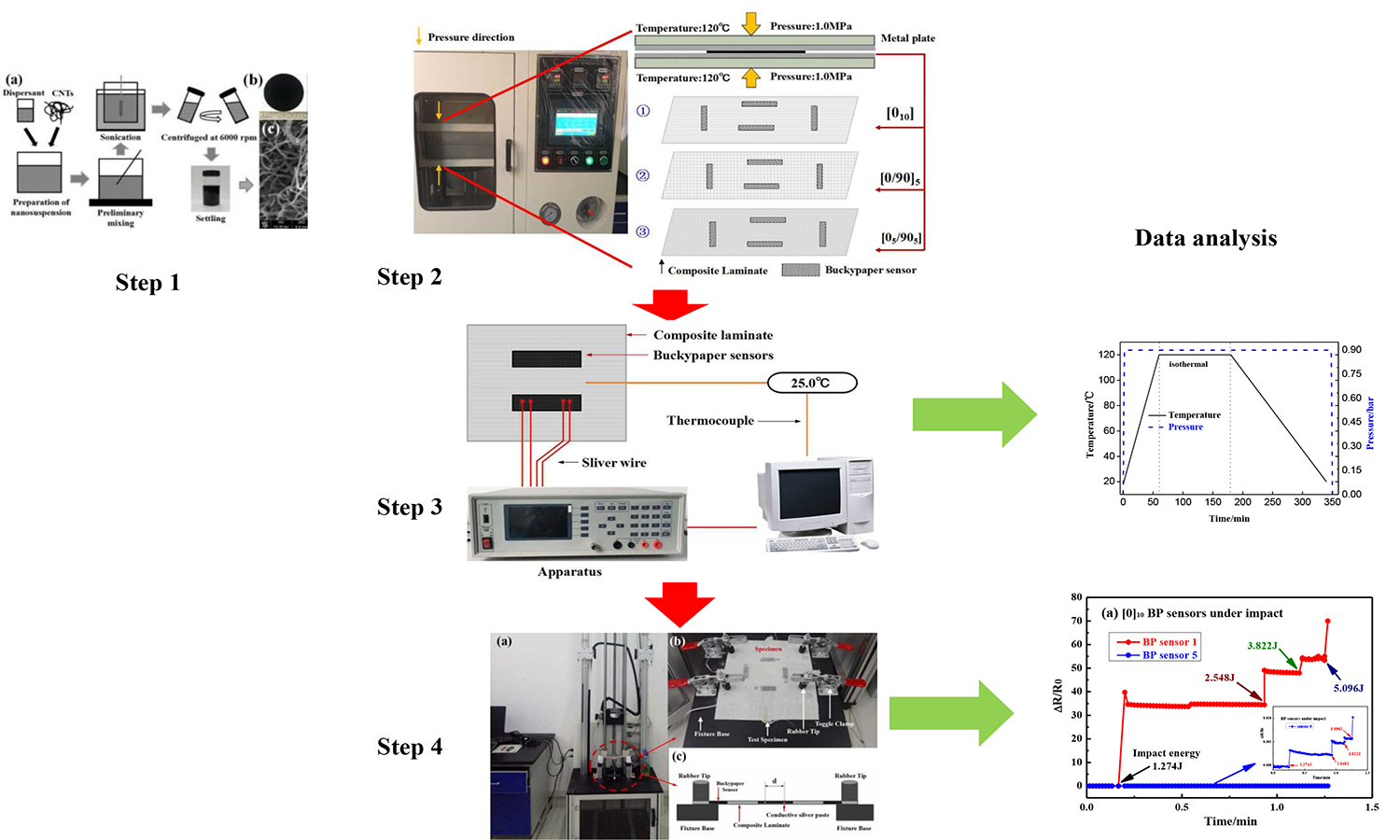
The main purpose of structural health monitoring (SHM) is to detect damage at its earliest possible stage to prevent severe deterioration and reduce subsequent repair costs. Carbon nanotubes (CNTs) buckypaper (BP) was embedded into different cross-ply glass fibre composites to monitor the curing process and impact damage as an in situ sensor in this research. BP sensor can capture the four stages of the curing process, the gel point of the resin and residual stresses of the composite structure can be achieved by analysing the change of the resistance curve. Numerical and experimental analyses were performed to predict the damage in composite structures subjected to low-velocity impact. BP sensors’ electrical resistance increases with repeated impact loading; composite structure elastic deformation and damage evolution can be identified from resistance change. Experiment results show that structure monitoring based on the BP sensors cannot only detect small, barely visible impact damage flaws and the damage evaluation of composite structures subjected to impact, but also provide a new method to monitor the curing process through the analysis of results. This work makes some constructive contributions to monitoring the manufacturing process of composites and long-term SHM to evaluate impact resistance and damage prediction of composite structures.
Yuanyuan Zhang, Xiaojian Wang, Honghong Li, Xinru Fu, Simin Huang, Hao Zhou
Vol. 18., No.11., Pages 1065-1076, 2024
DOI: 10.3144/expresspolymlett.2024.82
Vol. 18., No.11., Pages 1065-1076, 2024
DOI: 10.3144/expresspolymlett.2024.82
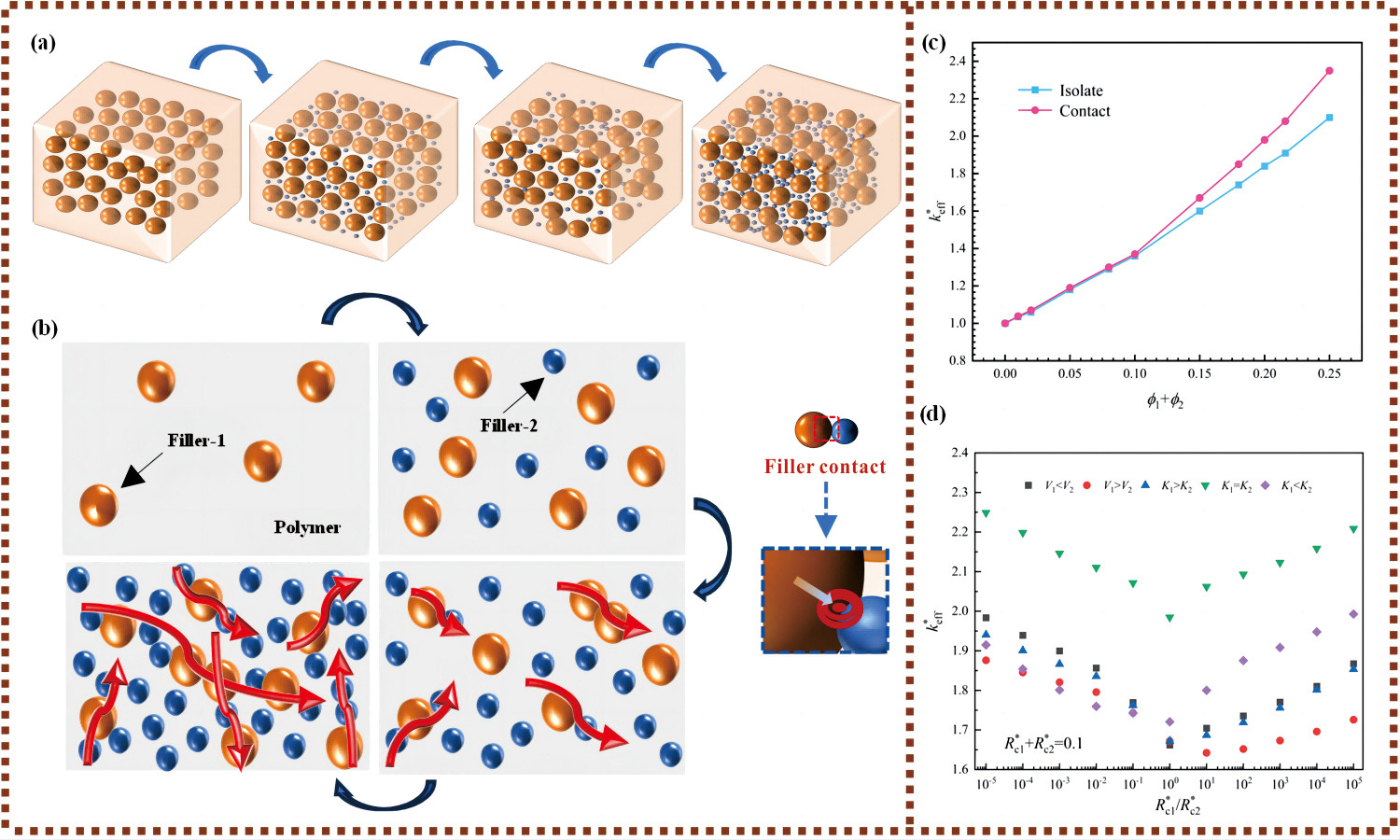
Adding heterogeneous fillers with high thermal conductivity (TC) to polymer has been recognized as an effective way to increase the effective thermal conductivity (ETC) of polymer composites. Extensive researches have been conducted on the ETC of composites with heterogeneous fillers. However, the heat transfer enhancement mechanism of heterogeneous fillers remains unknown, and the combined effects of filler size, filler contact, interface thermal resistance (Rc) and other parameters on the ETC have not been explored. In this study, above combined effects are investigated. The results show that the filler contact and Rc are the key factors determining the ETC. The ETC of composite with filler contacts reaches 2.35 at filler content of 25%, which is 11.9% higher than that without filler contacts. The ETC also strongly depends on the R*c (dimensionless form of Rc) ratio (R*c1/R*c2) between two fillers, with it becoming asymmetrical when the amount of R*c(R*c1 + R*c2) is larger. The ETCs decrease with the increase of R*c1/R*c2 when the R*c1/R*c2<1, while they increase with R*c1/R*c2 when the R*c1/R*c2>1. When R*c1 + R*c2 is a constant, the ETC increases with the competing effects of R*c. The models with filler contacts exhibit higher accuracy than other classical models in calculating the ETC across the entire range of filler content.