
New perspectives on high-performance polymer composites: Continuous fiber additive manufacturing, structural optimization, and artificial intelligence
Bence Szederkényi , Norbert K. Kovács, Tibor Czigány
, Norbert K. Kovács, Tibor CzigányVol. 20., No.9., Pages 868-869, 2026
DOI: 10.3144/expresspolymlett.2026.64
DOI: 10.3144/expresspolymlett.2026.64
Corresponding author: Tibor Czigány 
GRAPHICAL ABSTRACT
RELATED ARTICLES
Zheng Ling, Xiaojian Wang, Haidong Kou, Weili Liu
Vol. 20., No.7., Pages 677-686, 2026
DOI: 10.3144/expresspolymlett.2026.51
Vol. 20., No.7., Pages 677-686, 2026
DOI: 10.3144/expresspolymlett.2026.51
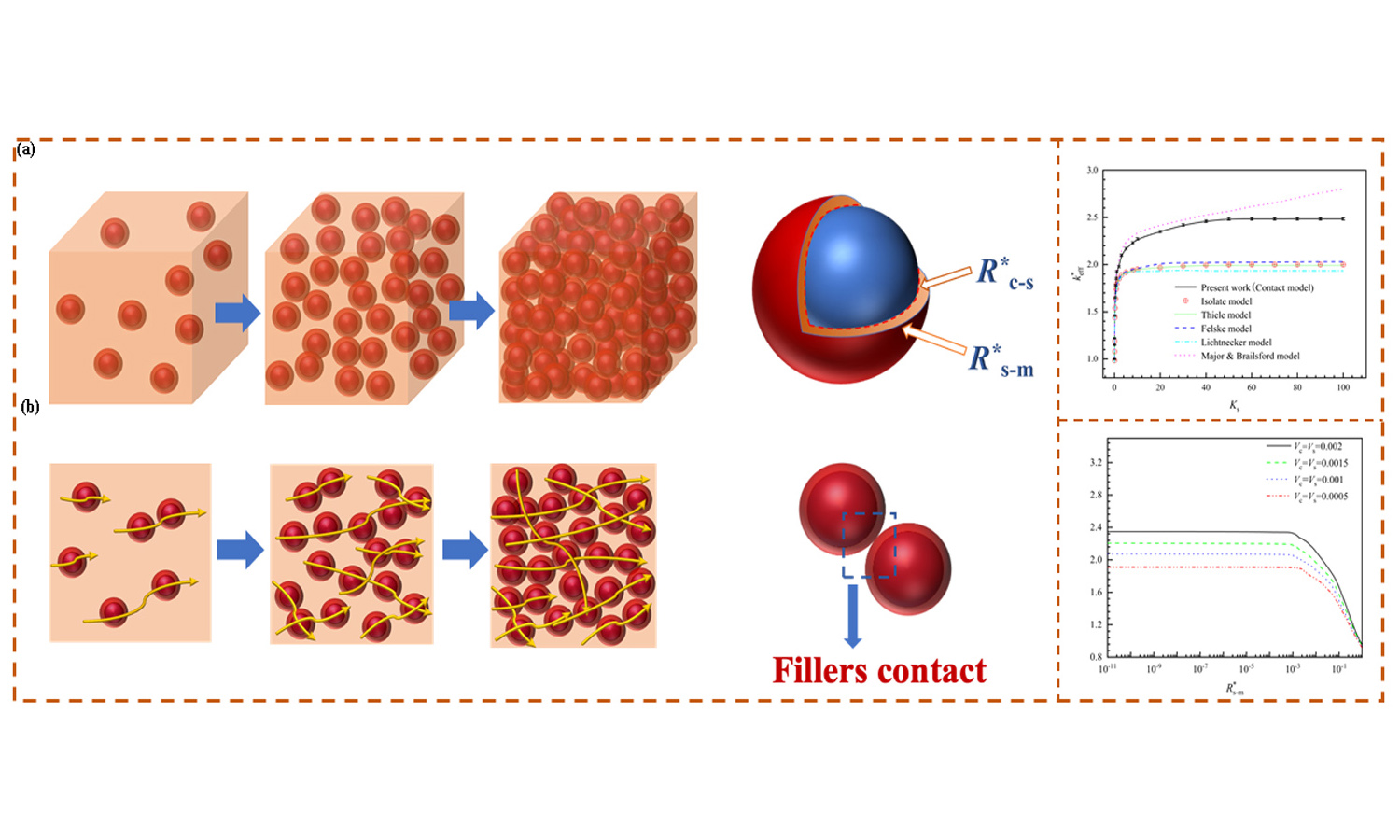
Core-shell fillers represent an innovative class of fillers distinct from conventional fillers. This study explores the combined effects of filler contact, thermal contact resistance at the shell-matrix interface (R*s-m) and shell-core interface (R*c-s), core-to-shell volume fraction ratio (Vc/Vs), and core-to-shell thermal conductivity ratio (Kc/Ks) on the effective thermal conductivity of composites (k*eff). Through numerical simulation and experimental validation, the key mechanisms governing heat transfer in core-shell filler composites are elucidated: thermal contact resistance and filler contact exert a dominant regulatory effect on k*eff, while the influences of filler geometric dimensions and component thermal conductivities (Kc/Ks) are conditional on interfacial properties and threshold values. Notably, the proposed numerical model achieves high prediction accuracy by incorporating filler contact, comprehensively quantifies the interactive effects of previously neglected key factors and establishes a reliable predictive framework. The findings not only advance the fundamental understanding of heat transfer mechanisms in core-shell filler-filled composites but also provide crucial theoretical guidance for practical applications.
Kaja Kupnik, Jure Dobnik, Patricija Skrivarnik, Rebeka Lorber, Irena Pulko, Janez Slapnik
Vol. 20., No.5., Pages 454-472, 2026
DOI: 10.3144/expresspolymlett.2026.35
Vol. 20., No.5., Pages 454-472, 2026
DOI: 10.3144/expresspolymlett.2026.35
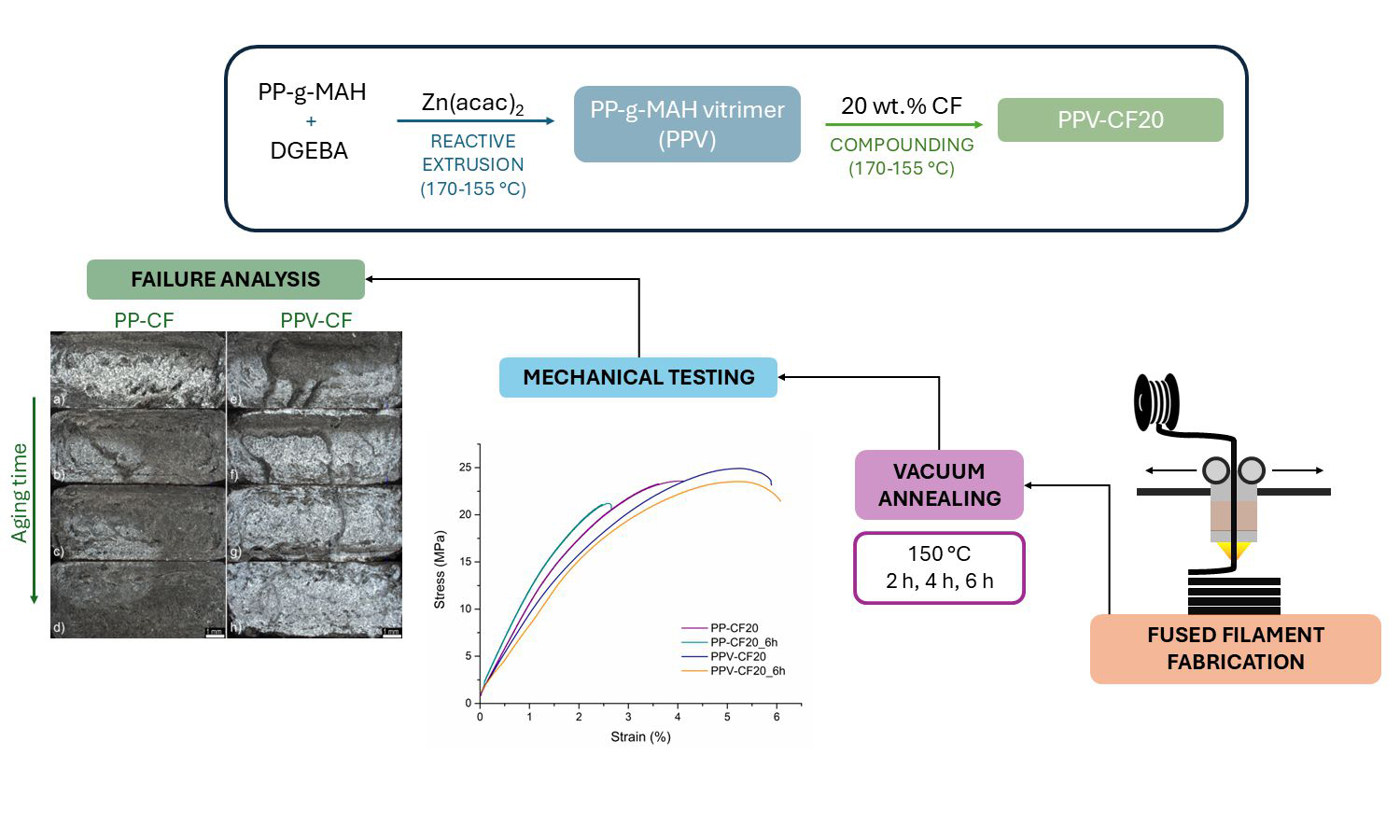
Fused filament fabrication (FFF) notoriously suffers from weak interlayer adhesion, leading to anisotropic mechanical properties in the fabricated parts. The present study addresses this challenge by developing thermoplastic-based vitrimers via reactive extrusion of maleic anhydride-grafted polypropylene (PP-g-MAH) with an epoxy crosslinker and a transesterification catalyst. The vitrimers were further compounded with carbon fibres (CF), processed into filaments, and used for FFF to fabricate specimens for testing interlayer adhesion. Spectroscopic and thermomechanical analyses revealed the formation of a crosslinked network, characterised by β-hydroxyester linkages and a pronounced rubbery plateau. Vitrimers exhibited enhanced mechanical properties, with notched Charpy impact strength increasing by up to 155%. As-printed vitrimeric FFF specimens demonstrated enhanced flexural toughness, indicating that dynamic transesterification reactions during layer deposition promote more consistent interlayer bonding. Vitrimeric specimens exhibited slightly increased flexural strength and preserved toughness upon post-printing thermal annealing at 150 °C, while non-vitrimeric specimens exhibited systematic embrittlement. The results demonstrate that vitrimerisation of thermoplastic polymers is a viable and effective strategy for improving interlayer adhesion in FFF fabricated parts.
Hamza Qayyum, Borhen Louhichi, Malik Hassan, Babar Ashfaq, Muhammad Sulaiman, Muhammad Bilal Khan, Nashmi H. Alrasheedi, Ghulam Hussain
Vol. 19., No.11., Pages 1173-1187, 2025
DOI: 10.3144/expresspolymlett.2025.86
Vol. 19., No.11., Pages 1173-1187, 2025
DOI: 10.3144/expresspolymlett.2025.86
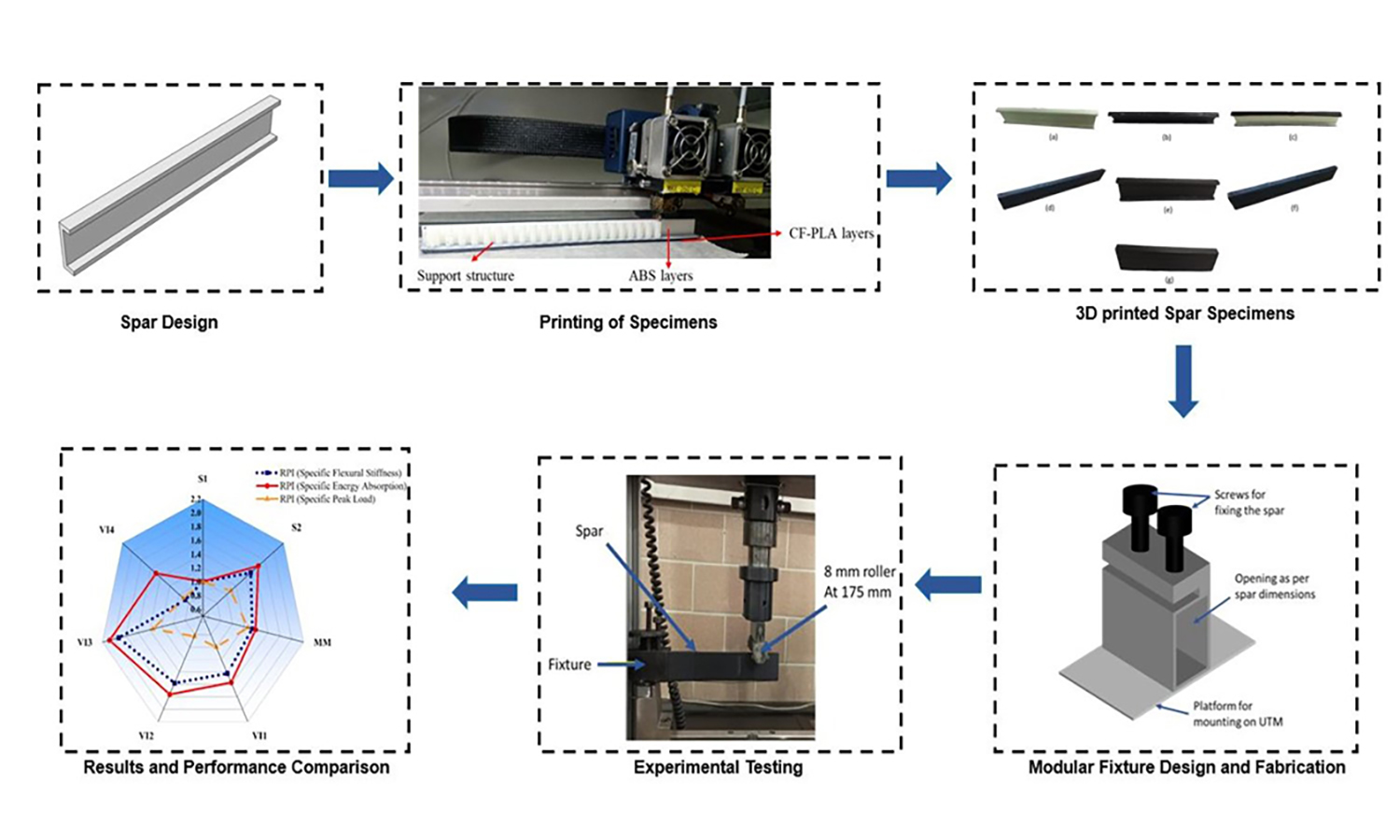
To reduce fuel consumption and extend flight time, the aerospace industry has focused on lightweight design. Achieving this without compromising structural integrity has been challenging. However, innovative additive manufacturing offers new opportunities for practical solutions. This study presents two methods: multi-material additive manufacturing (MMAM) and variable infill density additive manufacturing (VIDAM), aimed at reducing structural weight while maintaining mechanical performance. These methods were applied to a wing spar, a test geometry based on stress distribution principles from laminated beam mechanics. The structures produced with these new approaches showed improved mechanical responses compared to those made with traditional additive manufacturing techniques. A maximum increase of 91% in load-carrying capacity and a 34.8% increase in specific energy absorption were observed. scanning electron microscopy analysis revealed that layer bonding and material diffusion greatly influenced the mechanical performance. Although the study was conducted on small-scale models, the design concepts can be adapted to large-scale industrial applications that benefit from lightweight structures, such as the aerospace and automotive.
Xue Xu, Rujie Li, Li Gao, Beibei Sun, Hongming Liu, Shiai Xu
Vol. 19., No.9., Pages 959-976, 2025
DOI: 10.3144/expresspolymlett.2025.72
Vol. 19., No.9., Pages 959-976, 2025
DOI: 10.3144/expresspolymlett.2025.72
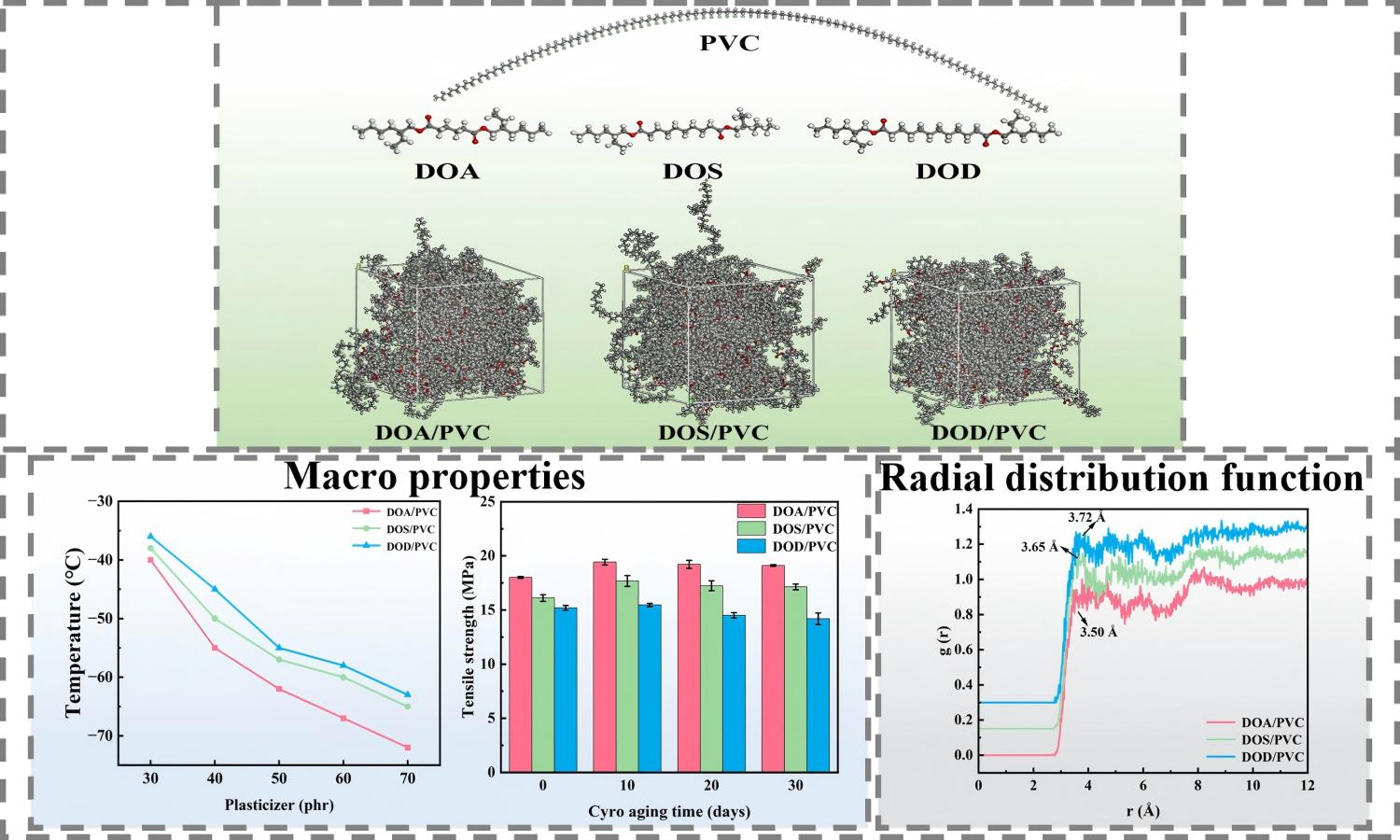
As polyvinyl chloride (PVC) films are hard and brittle in a low-temperature environment, aliphatic dibasic acid ester plasticizers with different acid chain lengths were fabricated, i.e. di(2-ethylhexyl) adipate (DOA), di(2-ethylhexyl) sebacate (DOS) and dioctyl dodecanedioate (DOD), and their effects on the cold-resistant properties of PVC were investigated using experiments and molecular dynamics (MD) simulations. The brittleness temperature and tensile properties of plasticizers/PVC are negatively related to the acid chain length of the aliphatic dibasic acid esters. The brittleness temperatures of the three systems are all below –50 °C. In-situ low-temperature tensile tests and aging tests indicate that DOA/PVC exhibits the best cold resistance and stability. MD simulations further reveal that the best compatibility between DOA and PVC is attributed to its strong binding energy and weak hydrogen bonding interactions, while van der Waals forces are dominant in DOS/PVC and DOD/PVC. This study elucidates the structure-property relationship between aliphatic dibasic acid ester plasticizers and PVC from the perspective of molecular interactions, and provides insights into the design of cold-resistant PVC plasticizers.
Yuanyuan Zhang, Xiaojian Wang, Honghong Li, Xinru Fu, Simin Huang, Hao Zhou
Vol. 18., No.11., Pages 1065-1076, 2024
DOI: 10.3144/expresspolymlett.2024.82
Vol. 18., No.11., Pages 1065-1076, 2024
DOI: 10.3144/expresspolymlett.2024.82
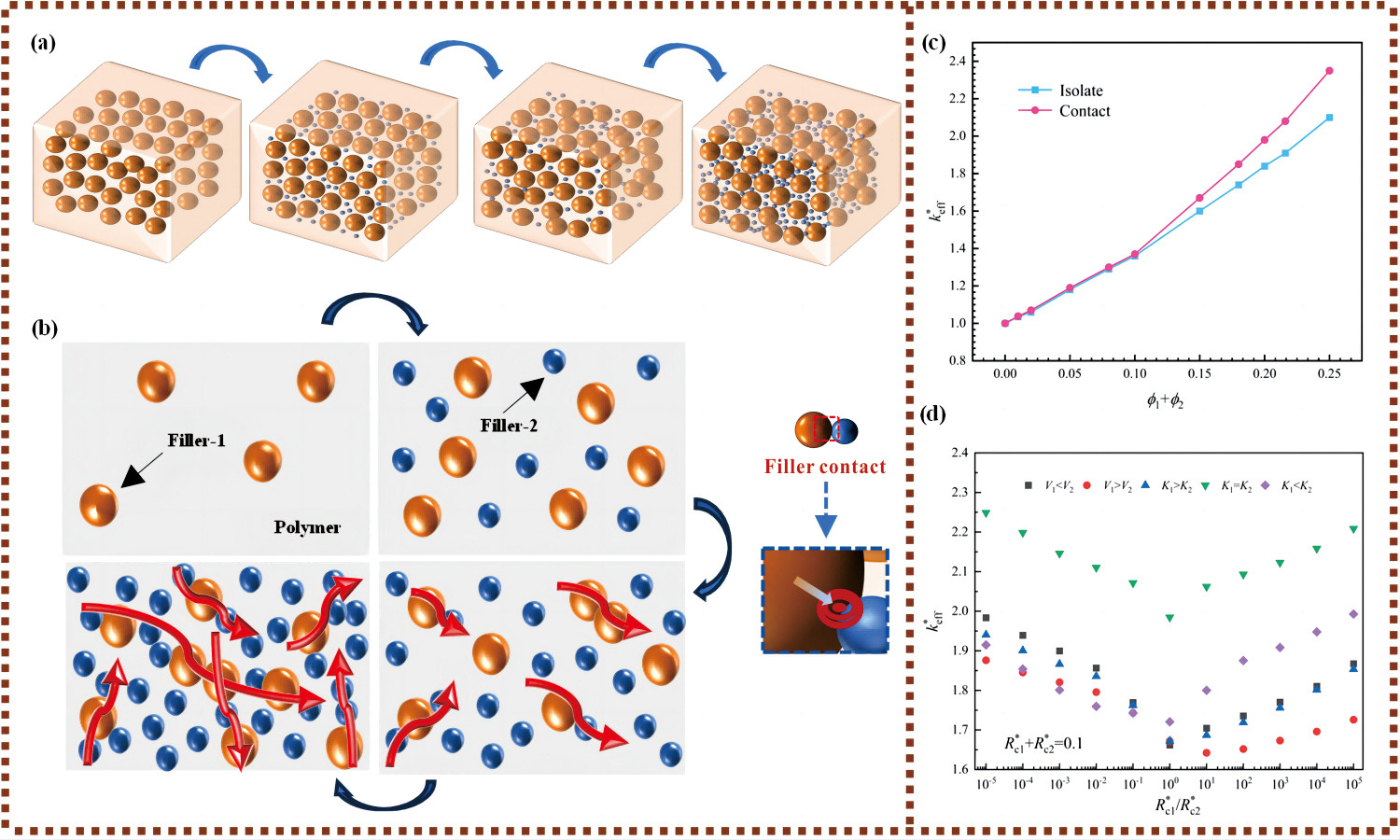
Adding heterogeneous fillers with high thermal conductivity (TC) to polymer has been recognized as an effective way to increase the effective thermal conductivity (ETC) of polymer composites. Extensive researches have been conducted on the ETC of composites with heterogeneous fillers. However, the heat transfer enhancement mechanism of heterogeneous fillers remains unknown, and the combined effects of filler size, filler contact, interface thermal resistance (Rc) and other parameters on the ETC have not been explored. In this study, above combined effects are investigated. The results show that the filler contact and Rc are the key factors determining the ETC. The ETC of composite with filler contacts reaches 2.35 at filler content of 25%, which is 11.9% higher than that without filler contacts. The ETC also strongly depends on the R*c (dimensionless form of Rc) ratio (R*c1/R*c2) between two fillers, with it becoming asymmetrical when the amount of R*c(R*c1 + R*c2) is larger. The ETCs decrease with the increase of R*c1/R*c2 when the R*c1/R*c2<1, while they increase with R*c1/R*c2 when the R*c1/R*c2>1. When R*c1 + R*c2 is a constant, the ETC increases with the competing effects of R*c. The models with filler contacts exhibit higher accuracy than other classical models in calculating the ETC across the entire range of filler content.