
Functionalization of aramid/polypropylene composite membranes with chitosan-magnetite nanocomposites for superior performance
Javaria Kanwal, Sara Musaddiq , Duncan H. Gregory, Alishba Naz, Sajjad Ahmad, Sadia Iqbal, Saikh Mohammad Wabaidur, Ayman A. Ghfar
, Duncan H. Gregory, Alishba Naz, Sajjad Ahmad, Sadia Iqbal, Saikh Mohammad Wabaidur, Ayman A. GhfarVol. 20., No.9., Pages 870-884, 2026
DOI: 10.3144/expresspolymlett.2026.65
DOI: 10.3144/expresspolymlett.2026.65
Corresponding author: Saikh Mohammad Wabaidur 
GRAPHICAL ABSTRACT
ABSTRACT
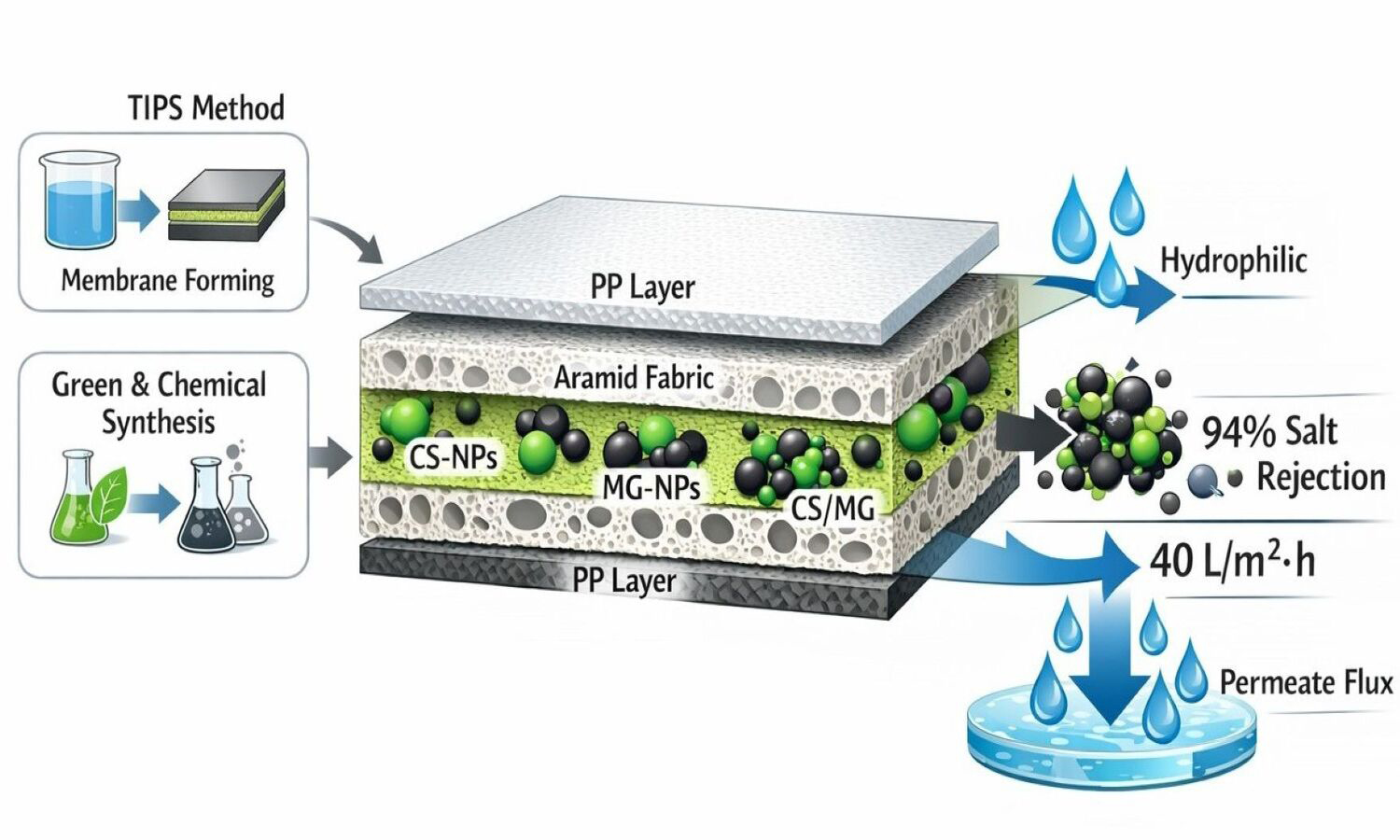
We developed nanomaterial-functionalized composite membranes (APM-1 to APM-3) using aramid fabric enclosed between two isotactic polypropylene (PP) layers. Membranes were created and porosity was produced within the structure by thermally induced phase separation (TIPS). The embedded nanomaterials, chitosan nanoparticles (CS-NPs) and magnetite nanoparticles (MG-NPs), were prepared via green routes, while chitosan/magnetite (CS/MG) nanocomposites were synthesized chemically. The formation of CS-NPs, MG-NPs, and CS/MG nanocomposites was confirmed through UV/visible spectroscopy. Moreover, the crystallite size of the nanomaterials was estimated with the use of X-ray diffraction (XRD) analysis. We also used Fourier transform infrared microscopy (FTIR) to ensure the successful integration of nanomaterials into the membrane matrix. The surface morphologies were observed and the presence of micropores was confirmed in the membranes by scanning electron microscopy (SEM). Mechanical analysis showed that the fabricated membranes have excellent structural integrity and durability under operational conditions. Contact angle measurements confirmed the enhanced hydrophilicity of the modified membranes, which plays a crucial role in improving water transport and desalination performance. The salt rejection and flux characteristics of the membranes were tested in a custom-made filtration cell. Our results revealed that APM-3, functionalized with CS/MG nanocomposites, exhibited a 94% desalination efficiency against NaCl with a high permeate flux rate of 40.00 L/(m2·h). The outstanding stability and hydrophilicity of our novel composite membranes, coupled with their remarkable efficiency, make them an ideal choice for desalination.
RELATED ARTICLES
Nurul Ain Arjuna, Noor Maizura Ismail, S. M. Anisuzzaman, Rachel Fran Mansa, Murni Sundang, Akhtar Razul Razali
Vol. 19., No.4., Pages 441-454, 2025
DOI: 10.3144/expresspolymlett.2025.32
Vol. 19., No.4., Pages 441-454, 2025
DOI: 10.3144/expresspolymlett.2025.32
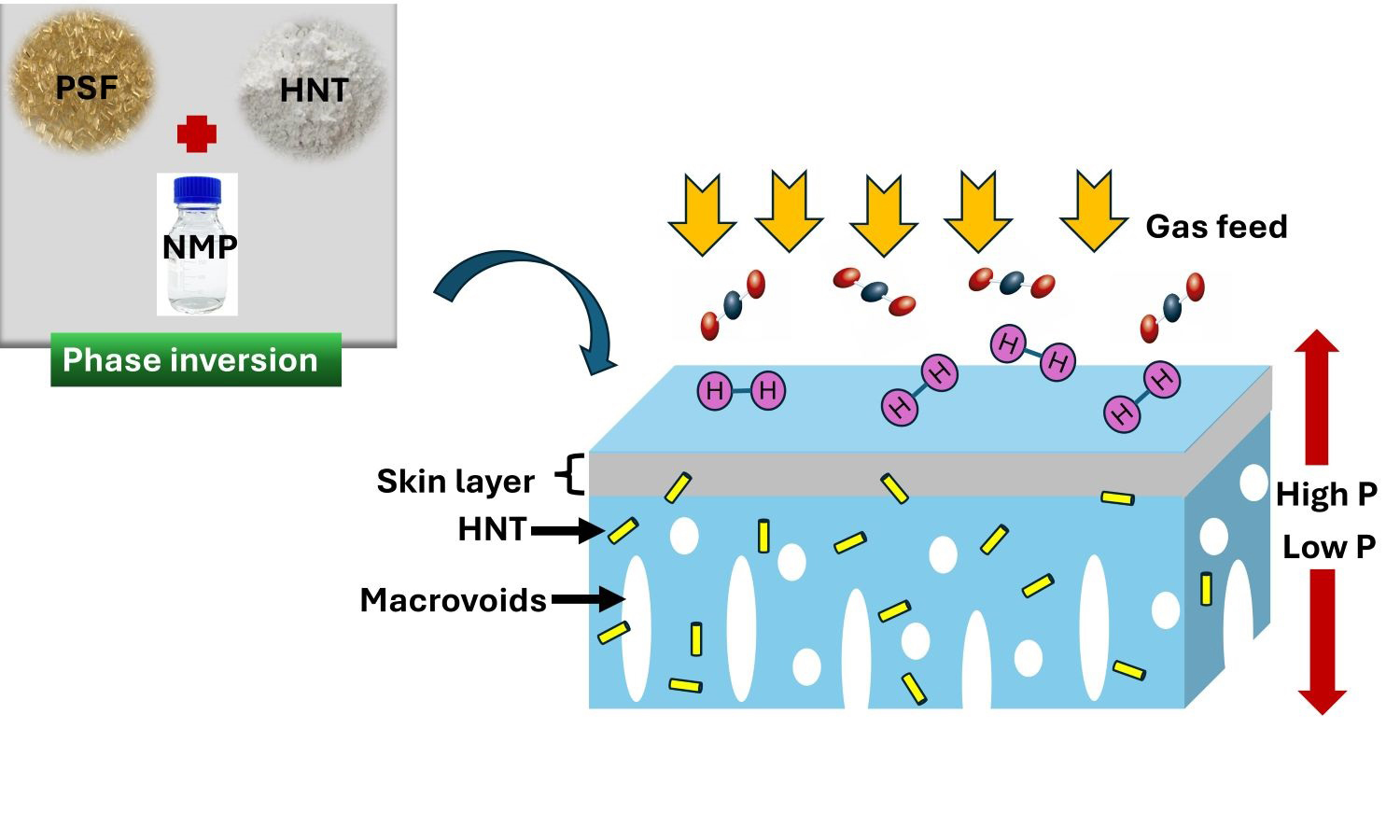
Membrane-based gas separation offers practical advantages for hydrogen (H2) and carbon dioxide (CO2) separation for steam methane reforming units. Modification of membrane materials can optimize membrane performance. In this study, the central focus is on investigating the effect of different loadings of halloysite nanotubes (HNTs) (0, 0.5, 1.0, 1.5, and 2.0 wt%) incorporated into a blend of cellulose acetate (CA) and polysulfone (PSF) polymers with the aim of improving the membrane properties. The Fourier transform infrared spectroscopy-attenuated total reflectance (FTIR-ATR) results confirmed that the primary functional groups of PSF and CA remained intact upon HNTs incorporation, with no distinct HNT peaks altering the main chemical functionalities. Field emission scanning electron microscopy- energy dispersive X-ray spectroscopy (FESEM-EDX) analyses showed that low concentrations of HNTs (0.5 wt%) improved surface smoothness and reduced macrovoids, beneficial for gas separation. Cross-sectional images of FESEM micrographs showed no evidence of obvious agglomeration, suggesting a good dispersion of HNTs. From the X-ray diffraction (XRD) analysis, all the membrane samples retained an amorphous structure, indicating that the incorporation of HNT has less effect on the polymer chain properties of the membranes.
Péter Csvila, Tibor Czigány
Vol. 18., No.10., Pages 1023-1038, 2024
DOI: 10.3144/expresspolymlett.2024.78
Vol. 18., No.10., Pages 1023-1038, 2024
DOI: 10.3144/expresspolymlett.2024.78
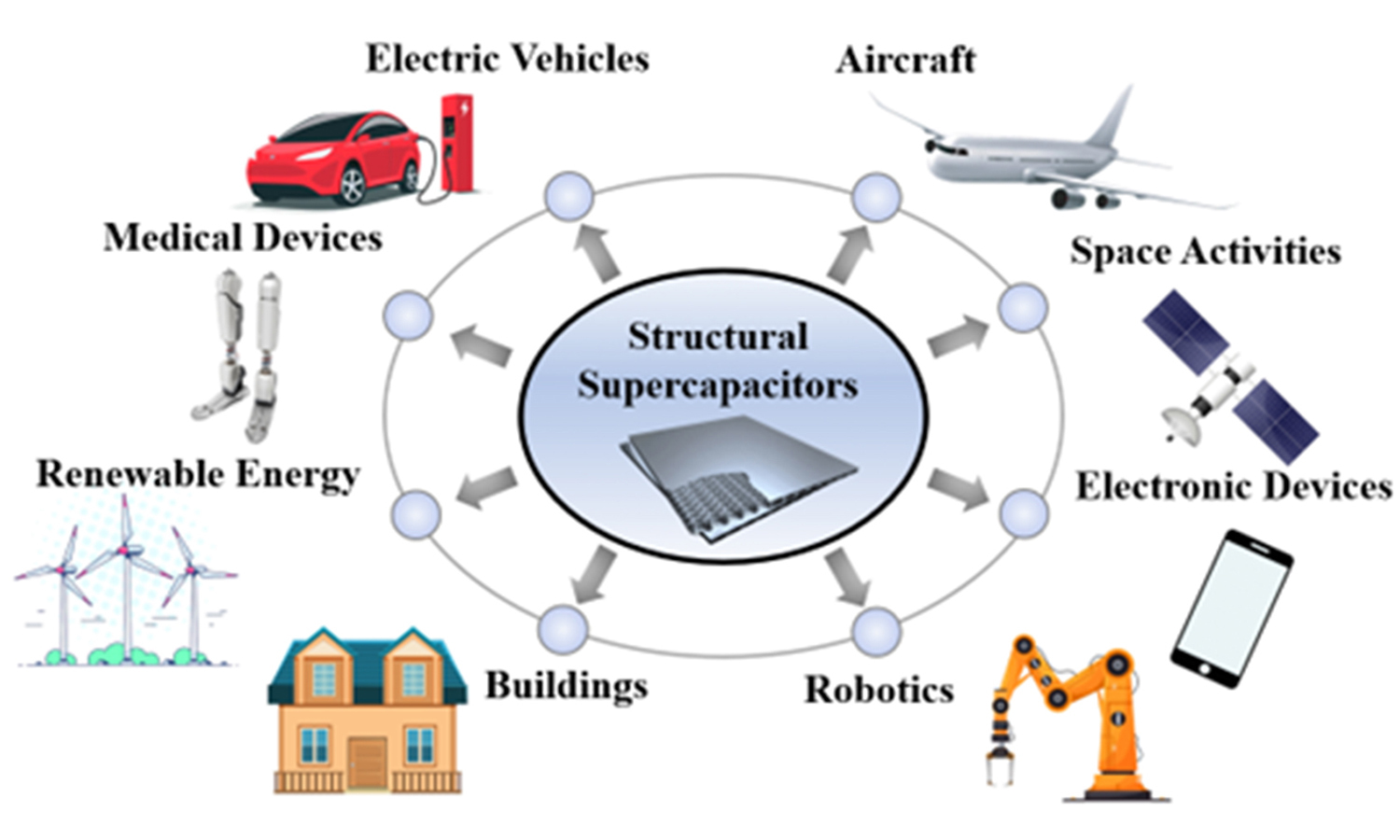
The article gives an overview of energy storage composites, their materials, manufacturing processes, and applications. Carbon- and metal-based nanoparticles and their relevant properties are presented. We focus on multifunctional structural supercapacitors and their components. Thus, we describe the main structural electrolytes and elements of the structural electrodes. We show that the nanoparticles significantly influence the electrochemical properties of the electrode. For example, carbon-based nanoparticles can achieve low energy density but high power density, while the opposite is true for metal-based nanoparticles. We show that when carbon- and metal-based nanoparticles are used together, a positive synergy is created between them, promoting the development of favorable electrochemical properties in the electrodes. Furthermore, we present structural supercapacitors and possible ways to introduce nanoparticles into the system. Finally, we present a summary of the progress achieved so far and the advancements expected in the future, as well as potential areas where structural supercapacitors could be used.
Fatima Al-Zohbi, Fouad Ghamouss, Bruno Schmaltz, Mohamad Fadel Tabcheh, Mohamed Abarbri, Khalil Cherry, Mustapha Zaghrioui, François Tran-Van
Vol. 18., No.9., Pages 901-910, 2024
DOI: 10.3144/expresspolymlett.2024.67
Vol. 18., No.9., Pages 901-910, 2024
DOI: 10.3144/expresspolymlett.2024.67
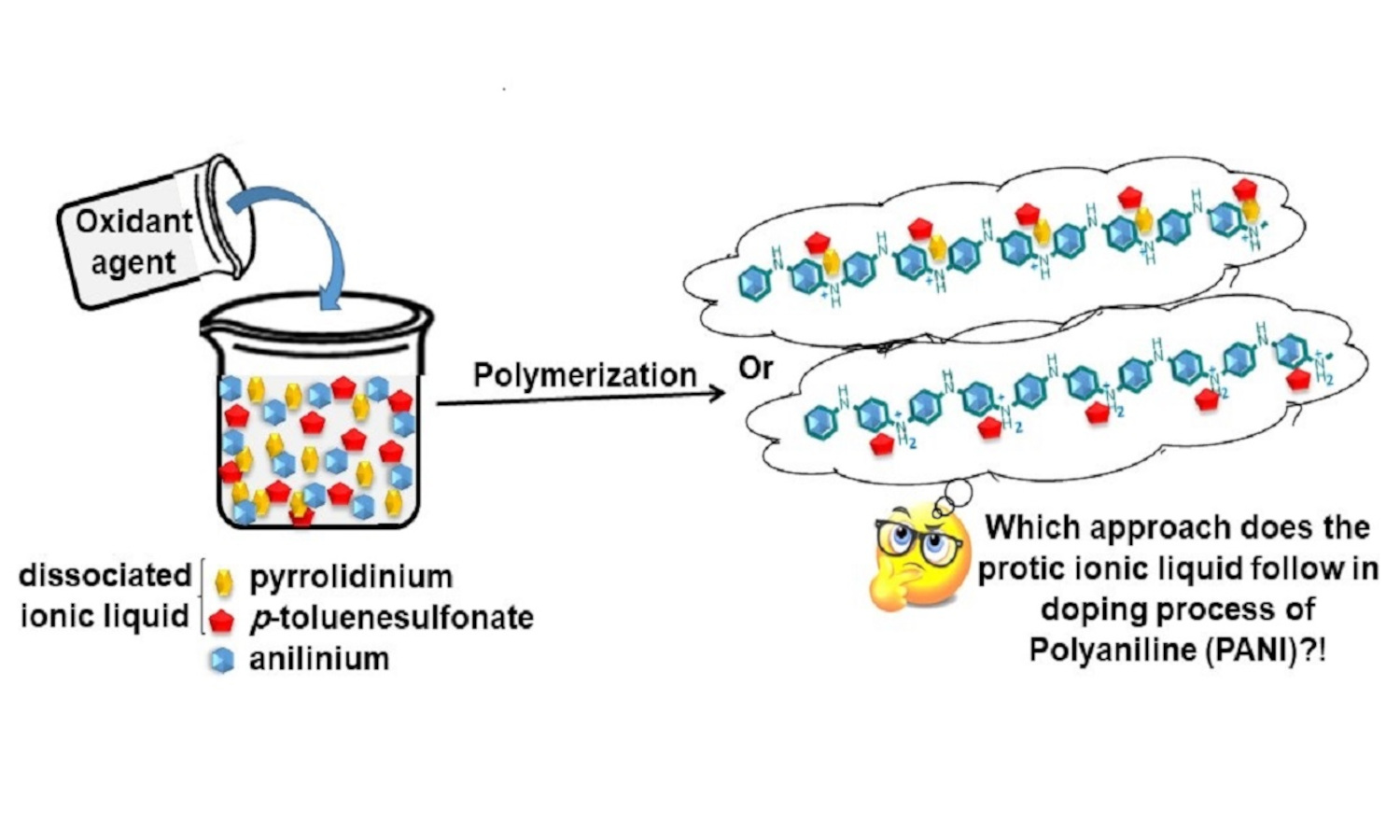
Since the properties of polyaniline (PANI) are widely related to the type of its dopant, the present manuscript has an objective to define whether and to what extent the protic ionic liquids contribute to doping PANI. Hence, pyrrolidinium p-toluenesulfonate [Pyrr][PTS] – a protic ionic liquid – has been investigated either as a polymerisation medium or as a secondary dopant. As for the polymerisation medium, it was found that binary mixtures of [Pyrr][PTS]/water, with different weight ratios, are convenient to prepare PANI in emeraldine salt form. Furthermore, the structural analysis of the resulted PANI has revealed that the cation of [Pyrr][PTS] does not functionalise PANI backbone and [Pyrr][PTS] acts like the typical Brřnsted acid in doping PANI, regardless of the amount of [Pyrr][PTS] in the polymerisation medium. To confirm this conclusion, [Pyrr][PTS] has also been studied as a secondary dopant: the conventional PANI has been prepared, deprotonated then dispersed into [Pyrr][PTS]/water with different formulations. The results have shown that [Pyrr][PTS] leads to the formation of reprotonated PANI without altering structural change. One can thus conclude that the noncovalent functionalisation of PANI with the cation of the protic ionic liquids is not an exigent requirement to prepare the emeraldine salt form of PANI in aqueous solutions of protic ionic liquids.
Xianli Sun, Jiahao Xu, Xiaoke Zhi, Jingpeng Zhang, Kangwei Hou, Yuhan Bian, Xiaolin Li, Li Wang, Guangchuan Liang
Vol. 18., No.6., Pages 575-591, 2024
DOI: 10.3144/expresspolymlett.2024.43
Vol. 18., No.6., Pages 575-591, 2024
DOI: 10.3144/expresspolymlett.2024.43
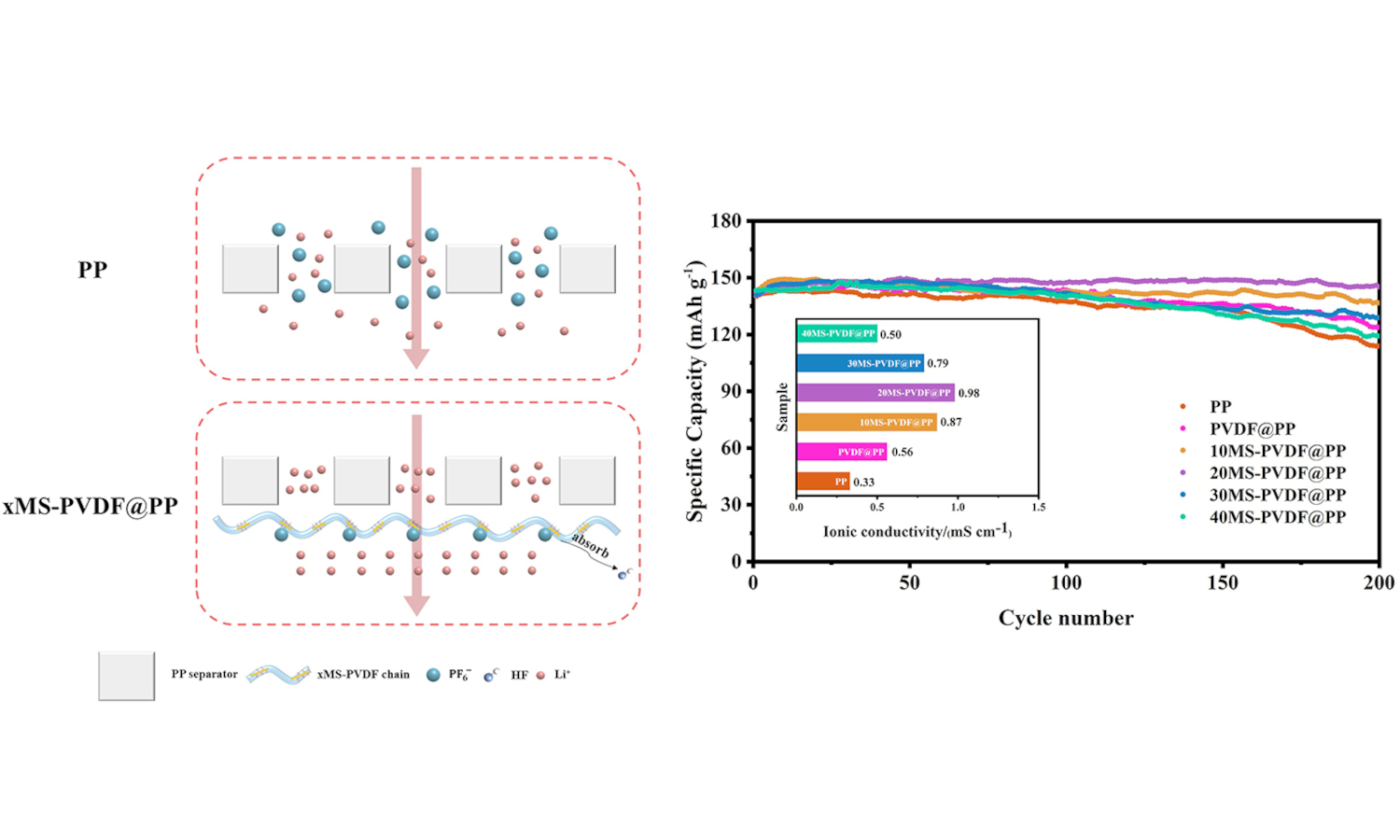
As a key component of lithium-ion batteries, a separator with excellent electrolyte wettability and good thermal stability has an important impact on the overall performance of lithium-ion batteries. Herein, a PVDF/sepiolite electrospun layer was coated on one side of the PP separator via electrospinning technology to prepare the composite separator (xMS-PVDF@PP) with sepiolite nanofibers modified with vinyltriethoxysilane (VTES) to ameliorate their dispersibility and compatibility with PVDF polymer matrix. The effect of modified sepiolite addition amounts on the physical and electrochemical properties of composite separator was intensively studied. It is found that the as-prepared xMS-PVDF@PP composite separator displays enhanced porosity, electrolyte uptake, thermal stability and Li+ ion transport kinetics than pristine PP separator. Specifically, Li|LiFePO4 battery with 20MS-PVDF@PP as separator shows the best rate and cycling performance, with a specific discharge capacity of 115.3 mAh·g–1 at 10C rate and a capacity retention rate of 97.06% after 200 cycles at 1C rate. The sepiolite in the electrospun layer can immobilize PF6– anion to facilitate the uniform distribution of Li+ ions and then inhibit the lithium dendrite growth, as well as absorb HF to alleviate Fe2+ dissolution from LiFePO4 cathode, thereby further improving the electrochemical performance of LiFePO4 battery.